Auburn grad creates free app for student athletes
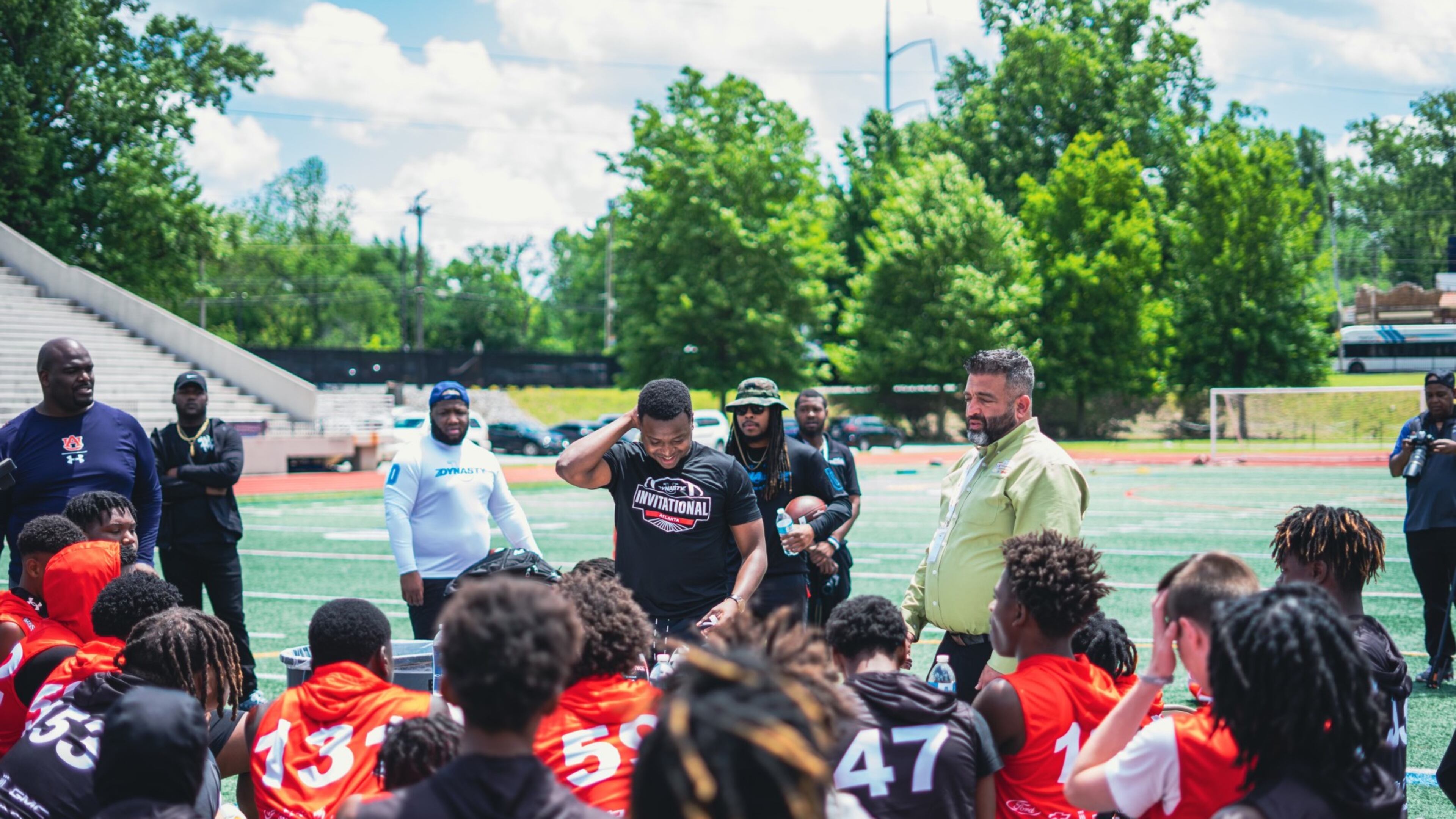
It’s been a few weeks since a video of Atlanta native and former NFL star Cam Newton fending off several attackers went viral. As views surged, the tussle slightly overshadowed the reason Newton and everyone else were there.
More than 500 youth football players, including Newton’s C1N 7-on-7 team, had gathered for a two-day camp at B.E.S.T. Academy in southwest Atlanta. The camp was the brainchild of Zerian Stewart, a 26-year-old Atlanta entrepreneur with a mission to help high school players navigate the lucrative and sometimes treacherous college recruitment process.
Over the past three years, Stewart created a skills camp for youth players, and partnered with apparel brand WeBallSports to host the now-famous camp from the Newton viral video. He’s also the creator of DynastyU, a social-networking app to help high school athletes connect with college coaches and recruiters free of charge. The ventures, he says, are all concepts that might have changed the lives of some of his friends who were youth athletes.
“I watched my friends in high school pay to use platforms just to chase their dreams,” Stewart said. “To me, it’s crazy to try to charge a kid to chase their journey.”
On the app, players can input biometric information about themselves, contact information for their coaches, and upload skill videos to showcase their highlights to college recruiters, who can then talk directly to the athletes through the app. Fans and high school coaches can also use the app to receive up-to-date information on where their favorite players are in the recruiting process.
Stewart relies on donations and investments from community partners to sustain the app, which he says is necessary to provide a resource to students who lack the means to invest in their dreams. Stewart says the app is undergoing restructuring now, but had more than 700 users at its peak.
”Some of the guys get a lot more attention than others due to their home situation, whether they have the funds or the means to attend different scouting camps and combine,” Stewart said.
Stewart’s ideology appealed to Xavier Turner, a freshman cornerback at Bluefield University, a small, private, National Association of Intercollegiate Athletics college in Bluefield, Virginia.
Turner was introduced to DynastyU in his sophomore year at Southwest DeKalb High School in 2021. Before DynastyU, Turner says his recruitment process was hindered largely by lack of accessibility.
“My dad and I didn’t really know about all of that,” Turner said of the college recruiting process. “We weren’t big on Twitter and you have to really pay to do 7-on-7 and camps.”
As Turner looked for ways to reach college recruiters, one of his friends mentioned attending a free DynastyU camp that connected him with the app. Bluefield, in turn, discovered Turner through the camp and eventually offered him a scholarship.
“That camp not only helped me learn about DU but it also boosted my confidence majorly,” Turner says. “At the time, I was transitioning from wide receiver to cornerback and after that camp, I went from zero to 100 in my confidence. The next season, I had a great year.”
Turner’s experience figuring out how to get noticed reflects a lack of information that often leaves students and their parents at a disadvantage. College recruiting is a system where gatekeepers can control access to top universities and camps for high school players, said Ken Blocker, founder of 1st and Goal 365, a player development consulting agency. Over the past two decades, Blocker has been a director at Football University and Nike Summer sports camps and is a former running backs coach at Shaw University.
“We don’t have access to resources, when it comes down to information of how the actual process works,” Blocker told Capital B ATL. “There are gatekeepers when it comes down to recruiting.”
Having direct access to coaches, athletic directors, and administrators is vital, because often high school coaches get to choose which athletes they put in front of college recruiters. And camps, like those that Stewart offers for free, are often “money grabs,” where organizers charge athletes and their families high prices for dubious promises of access to recruiters, Blocker said.
“They’ll say that there’s recruiters there or they’ve invited coaches who may or may not come. You need to cut out the middleman, if possible,” he said.

MEET OUR PARTNER
Today’s story comes from our partner, Capital B Atlanta, which is part of Capital B, a Black-led, nonprofit local and national news organization reporting for Black communities across the country. Visit them at atlanta.capitalbnews.org or on Twitter @CapitalB_ATL.
If you have any feedback or questions about our partnerships, you can contact Senior Manager of Partnerships Nicole Williams via email at nicole.williams@ajc.com.