Poverty: now there’s an app for that
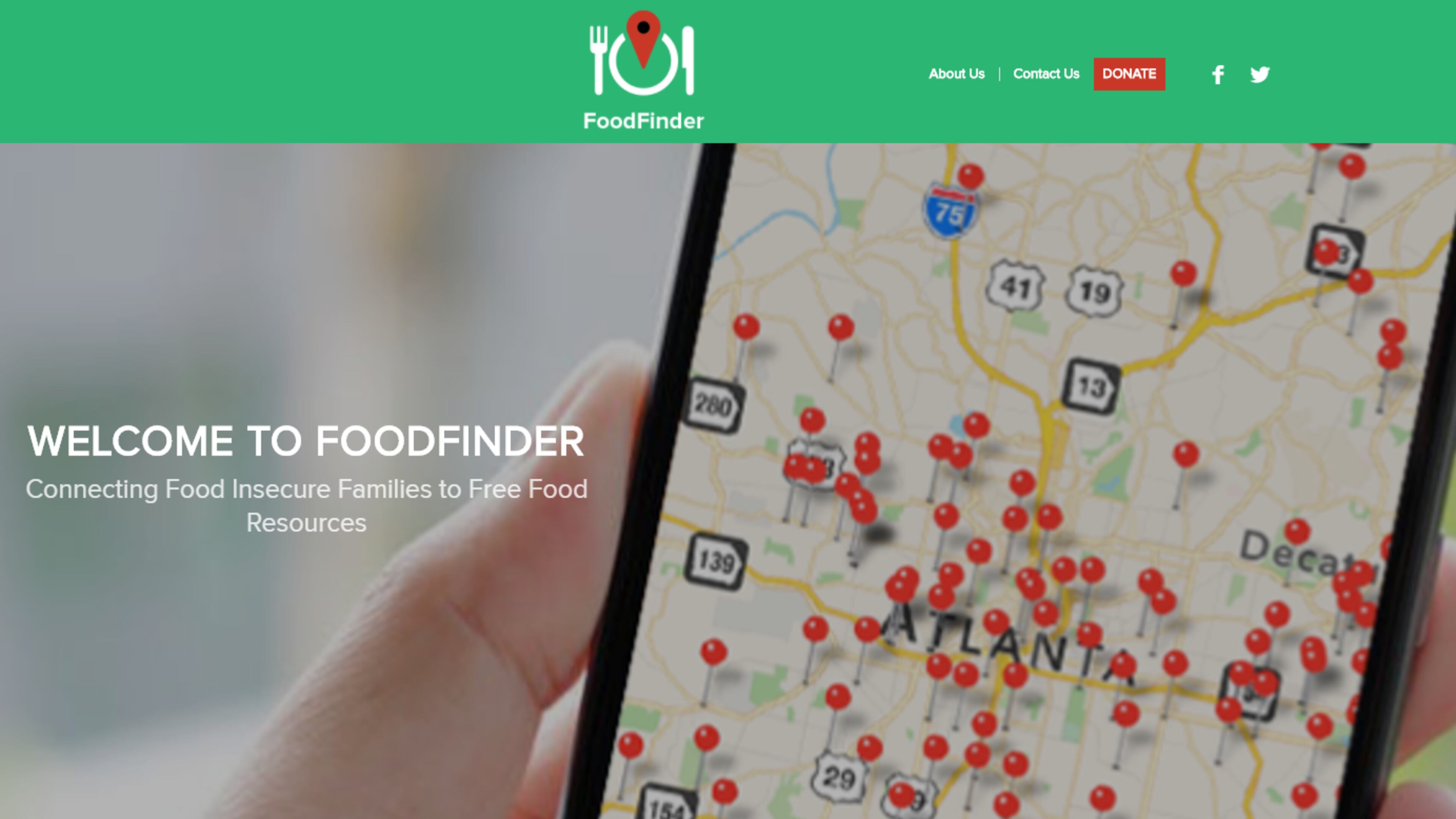
A Duluth high school student saw a news program about homeless children, and instead of changing the channel he decided to help.
Four years and thousands of dollars later, Jack Griffin has developed a free online service that links the hungry with food.
Griffin was a student at Peachtree Ridge High School when he saw a "60 Minutes" report that moved him: a family with elementary school-aged kids had been rendered homeless by medical bills and was living out of a truck.
Shocked, he talked to his teachers and school administrators and learned that homelessness was a hidden but significant problem in the schools around him in Gwinnett County. He considered volunteering in a pantry or shelter, but had a hard time finding one nearby.
Then, it dawned on him: if a tech-adept teen in a stable home couldn’t find one of these places, how was a desperate person living on the road supposed to do it?
Thus was planted the seeds of FoodFinder, the nonprofit he established to do just what the name says. After years of research and crowd-funding, Griffin has gone online with a new website -- https://foodfinder.us -- plus apps on the two major mobile platforms, Apple and Google.
With the self-location ability of a computer, tablet or phone, users in Georgia and four other states can quickly pinpoint nearby organizations that feed the hungry. Besides an address and phone number, some listings include operating days and hours, which can be helpful for people on the move.
Griffin, 19, said he hopes to take the service nationwide. It started in Georgia -- with kudos from Georgia Superintendent Richard Woods in 2015 -- and expanded to Florida, the Carolinas and southeast Michigan (because he's a business major and community action minor at the University of Michigan in Ann Arbor).
He said he raised about $6,000 from a crowd-funding website plus $18,000 from the Arby’s Foundation, and paid two Atlanta firms -- Innoppl and stablekernel -- to do the technical work.
Poverty is a growing concern for Georgia schools. Despite that, Griffin said homelessness and hunger seem all but invisible, in part because people hide their suffering. "It's almost seen as shameful," he said. "A lot of times, the shame prevents them from getting the help they need."