Choice for ATL police chief: Insider or outsider?
When Atlanta Mayor Kasim Reed introduces his three candidates for Atlanta police chief to the community on Thursday, he'll confront the public with a simple question:
Inside guy or outside guy?
Do Atlantans want George N. Turner, a 28-year veteran of the Atlanta Police Department, who has been the interim chief since January and who has the backing of many of the current force?
Or do they want Cedric L. Alexander, the security director at Dallas/Fort Worth International Airport, or Louisville, Ky., Police Chief Robert Crump White?
Alexander and White have been chiefs in major U.S. cities and bring a different set of skills that some observers say they are looking for.
Ultimately, the decision will be Reed’s, who had promised to conduct a nationwide search for a “Super Cop” who could lower crime, address gang violence, engage with the community and relate to the rank and file.
But that new chief will also inherit a 1,550-member force with a host of problems. Cops are still smarting from mandatory furloughs last year and from short staffing. The pay isn't good enough to keep people around: 125 officers a year quit the force. Tension is high, morale is low, and recruitment and retention are tougher than ever.
Even as it moves to cut pensions, the city is debating whether to give the officers pay raises.
"It is the mayor's decision, we just have to ratify it and ask the tough questions," Councilman Kwanza Hall said of the chief selection. "Based on what people are saying, they want a hands-on chief who knows the city, who is willing to arrest people and who works to increase the morale of the officers. Leadership should inspire and encourage those down the line."
Reed, who said he wanted an open and transparent process in picking the chief, unveiled his finalists last Tuesday after a four-month search.
Lt. Scott Kreher, president of the local chapter of the International Brotherhood of Police Officers, interviewed the candidates as part of the search committee and concluded, "I think we can work with all three of them."
But Kreher was emphatic about who he wants: Turner.
“If you ask the rank and file, I think they were battered around pretty hard from their first outside chief,” Kreher said, referring to former chief Richard Pennington.
Pennington was hired by former Mayor Shirley Franklin with great fanfare from New Orleans. But toward the end of his tenure, although crime numbers were down, he was characterized as aloof and distant.
"Turner has given us self-ownership of the department and a sense of pride, of being run by someone who grew up inside the police department," Kreher said. "At the end of the day, the men and woman in our police department are pulling for Chief Turner.”
Turner joined Atlanta's police force in 1981, and before becoming interim chief had most recently been a zone commander and the deputy chief in charge of support services division, which included the crime lab and the 911 communications center. In 2008, he was a finalist for the police chief position in Fort Worth, Texas.
But while Turner is popular inside the department, some community activists say it is time to look outside of the department for a leader. Moki Macias, a member of Building Locally to Organize for Community Safety (BLOCS), said Turner would be a return to the status quo.
“He came up in the APD and was mentored by Pennington," Macias said. "He has been on the job for four months. We have been able to see how he would lead as chief and he has failed. The other two have more experience and the relevant experience that Mayor Reed is looking for.”
In White, Atlanta would get a man who has been chief of three departments. He ran the District of Columbia’s Housing Authority Police Department, the department in Greensboro, N.C., and, since 2003, has been the chief of the Louisville Metro Police Department. In essence, he created the department, serving as the first chief of a merged city and county police force and subsequently setting the department’s agenda.
He is perhaps best known in Louisville for his ability to relate to the community. He took office facing a community on edge after a string of controversial police shootings.
During his tenure, according to the Louisville Courier-Journal, the number of neighborhood watch groups went from about 350 to 750. The paper also reported that violent crime in Louisville decreased 12 percent n 2009.
“He has made the police force more respectable and for the African-American community, that has been a major difference,” said community activist Mattie Jones, 77. “The respect has grown from the community to the police department.
But while he was winning points in the community, his reputation inside the department was mixed. He was said to be unafraid of disciplining officrers, which would not endear him to the force at large. At one point, he attempted to charge officers to take home their vehicles.
Of the three, Alexander has the most diverse career, working for police departments from Florida to New York before settling in Dallas to lead the Transportation Security Administration at DFW. In the meantime, he earned his Ph.D. in psychology and worked primarily with police officers.
His most significant related experience was a brief stint, in 2005, as the chief of police in Rochester, N.Y. He was appointed chief in March 2005, after the former chief quit to run for mayor.
“When he accepted the position, he knew it was for a short time,” said the retired mayor who hired him, William A. Johnson Jr., now a professor of public policy at the Rochester Institute of Technology. “I told him that this would give him an opportunity to put another level of experience on his resume. Because of his background as a police officer, he wasn’t an academic to them. He developed a level of respect that would not normally be accorded to an outsider.”
But even before he became chief, Alexander had an impact on the department. While he was on the faculty at the University of Rochester, Johnson brought him in as a consultant, and he essentially became the police department’s "psychologist." And soon the deputy chief.
“He hadn’t been a police officer in many years, but his law enforcement career was never far out of his mind," Johnson said. "This was my introduction to a man that was thoughtful and analytical, who was able to take police work from the realm of theory and apply it.”
At one point, after four black men were killed by police officers, he introduced Tasers to the department as a way to subdue suspects without lethal force. When two mentally ill men died during confrontations with police, he developed a special unit within the department to deal specifically with the emotionally disturbed.
But after nine months as chief, Alexander left to become deputy commissioner of the New York State Division of Criminal Justice Services. He went to the TSA in July of 2007 as federal security director for the Dallas airport.
The Atlanta position would be his fourth major job in his fourth major city in five years. Johnson said Alexander’s moves have always been strategic.
“I know Cedric as well as anybody. In dealing with this guy, he thinks methodically about career options. He can settle in for the long term,” Johnson said. “This man has a rich, rich background and he understands victimology and he understands the perpetrator. When he became the chief in Rochester, he knew it was for a short time. The upside was he knew he had 270 days to put his program to work. And he did it.”
The candidates file
Dr. Cedric L. Alexander
Lives in: Dallas
Current job: U.S. Department of Homeland Security, Transportation Security Administration, Dallas/Fort Worth International Airport
Background: Sheriff's departments of Leon and Orange counties. Police officer, Miami-Dade Police Department. Assistant professor at the University of Rochester Medical Center. Rochester Police Department as deputy chief and then chief of police. Deputy commissioner for the New York State Division of Criminal Justice Services.
George N. Turner
Lives in: Atlanta
Current job: Interim Police Chief, Atlanta Police Department
Background: A 28-year veteran of the APD, Turner has worked as a family and youth services section police major, zone commander, human resources commander, police deputy chief and now interim chief of police.
Robert Crump White
Lives in: Louisville, Ky.
Current job: Chief of Police, Louisville Metro Police Department.
Background: Washington, D.C., assistant chief of police. District of Columbia Housing Authority police chief. Greensboro, N.C., police chief.
About the Author
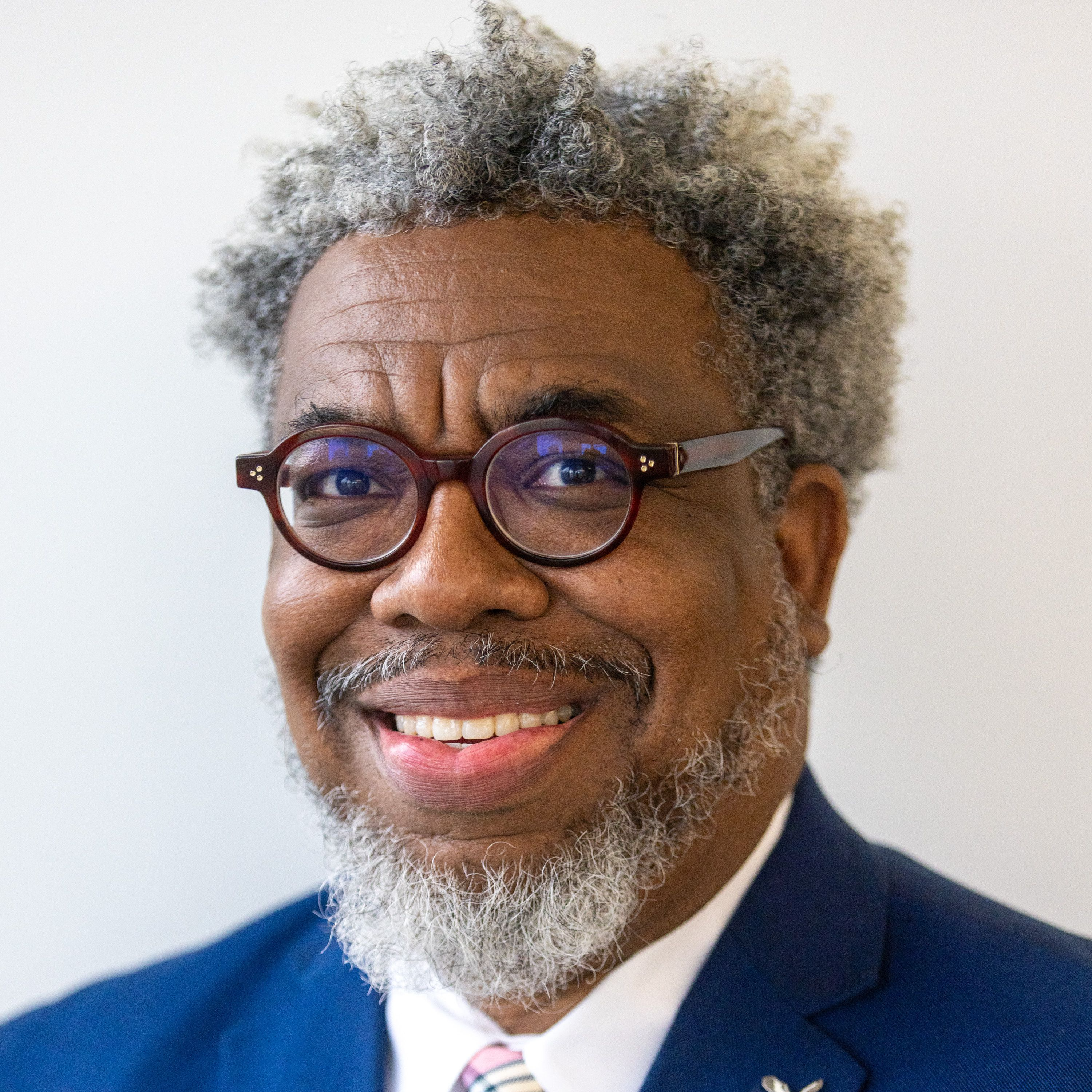
Ernie Suggs is an enterprise reporter covering race and culture for the AJC since 1997. A 1990 graduate of N.C. Central University and a 2009 Harvard University Nieman Fellow, he is also the former vice president of the National Association of Black Journalists. His obsession with Prince, Spike Lee movies, Hamilton and the New York Yankees is odd.

