Star witness in Bickers trial is grilled on cross examination about his role with the FBI
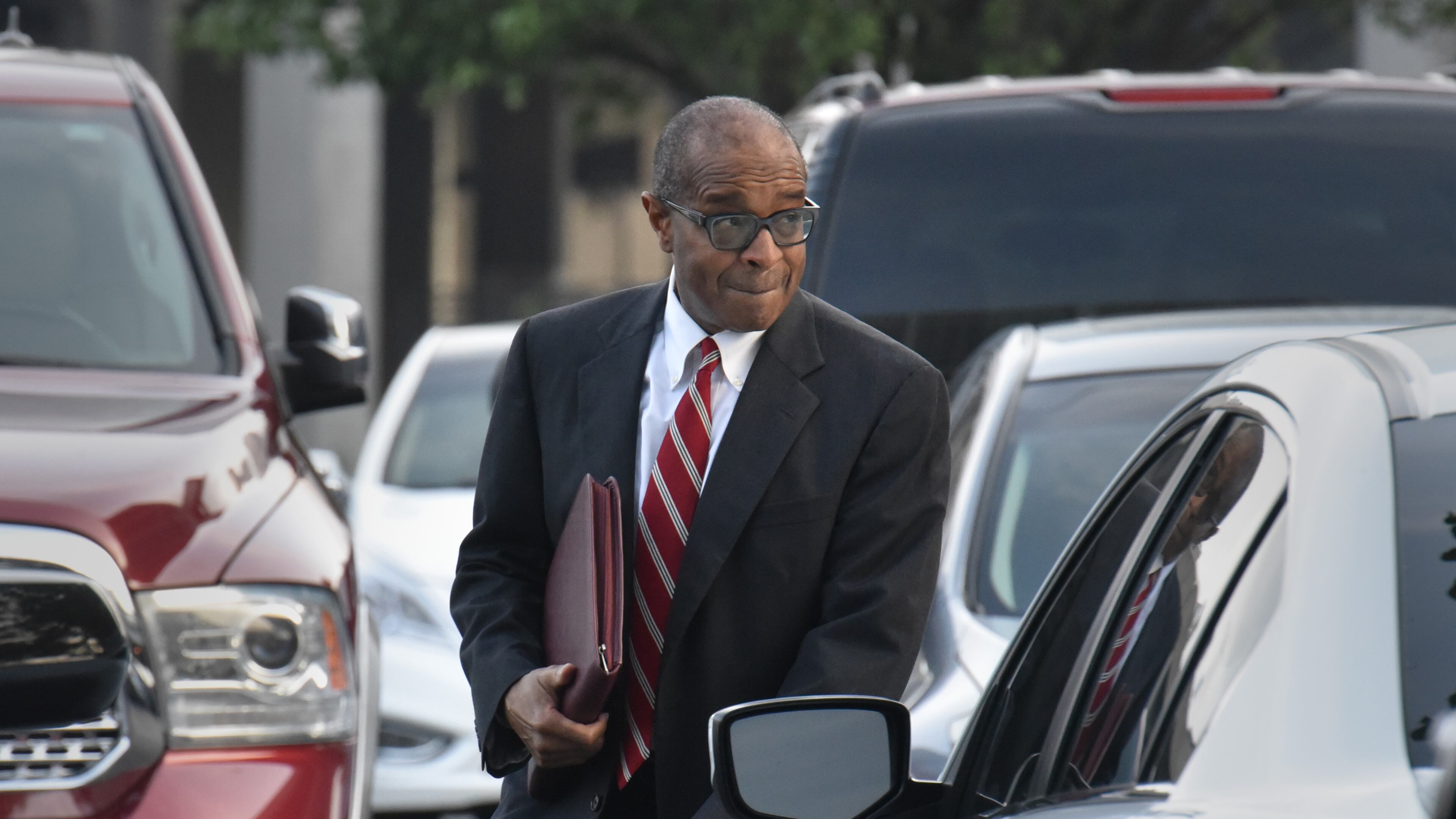
The attorney for Mitzi Bickers said Thursday in the former city of Atlanta employee’s bribery trial that a star witness in the case against her was working as a government informant far longer than he admits.
Drew Findling said in U.S. District Court that Elvin “E.R.” Mitchell Jr., a former contractor who has accused Bickers of accepting bribes from him and then paying another Atlanta city official to help him get lucrative contracts, was secretly working with the FBI when the alleged pay-for-play scheme began in 2010.
Findling said Mitchell, who began cooperating with the federal government in 2006 as part of an agreement to avoid prosecution over charges of construction overbilling at Fulton County Schools, continued to work for the Justice Department until 2012.
“They assigned a specialty for you,” Findling said. “Your goal was to create bribery cases in the public sector.”
Mitchell denied the charge over and over, saying his cooperation with the FBI ended in late 2008 or early 2009 and had nothing to do with the allegations against Bickers.
“What you have just said is totally incorrect,” Mitchell responded.
The confrontation between Findling and Mitchell came after the contractor finished testifying for the prosecution around noon Thursday on the sixth day of the trial.
Mitchell took the witness stand on Wednesday, relaying how he and another contractor, Charles P. Richards, secured about $17 million in contracts over four years because of bribes allegedly paid to Bickers and others at City Hall.
Thursday afternoon, it was Findling’s turn to cross-examine the key witness.
Findling said Mitchell told federal authorities years ago how he had control of projects available at City Hall. Findling also said Mitchell asked the federal investigators if he and Bickers were “targets,” and that he asked if he would be in their “good graces” if he helped them.
But Mitchell said Findling was taking his remarks out of context and that he just wanted to know the ramifications of his cooperation.
Findling nonetheless alleged the authorities trained Mitchell on how to wear a wire.
“I never wore a wire, what they gave me was a tape recorder to stick under a seat,” Mitchell said, adding that he only used it once.
Findling then said Mitchell used the recorder on his partner, Richards, like a professional spy.
“Well obviously I didn’t do too good a job because they sent me to prison,” Mitchell said.
Bickers, pastor of Emmanuel Baptist Church, allegedly received about $2 million from the scheme. She is credited with helping to elect former Mayor Kasim Reed in his first term because of her get-out-the-vote skills, and then became the city’s director of human services from 2010-13 during Reed’s first term. Prosecutors allege that Bickers continued to receive bribes after she left City Hall by leaning on her contacts in city government.
Mitchell said that he was contacted by the FBI in July 2015 when an agent left a card in his mailbox asking the builder to give him a call. Mitchell said he told Bickers, who allegedly said she thought the agent was just following up on Mitchell’s past work for the bureau.
After small talk, Mitchell said the agents started asking about bribery and City Hall and how Bickers and he were connected. Mitchell said he lied to the officers, claiming ignorance of the bribery they were describing and telling them Bickers ‘was a good person.’”
When asked by prosecutors why he lied, Mitchell said, “To hide my crimes, to protect myself.”
Mitchell testified that he told Bickers what happened hours after the FBI interview, and he said she was stunned. Over the coming days the two created a back-dated $350,000 promissory note to explain why Mitchell had been giving her hundreds of thousands in cash, checks and wired funds. Mitchell said the loan never existed in reality.
In September of 2015, Mitchell met the FBI and officials with the U.S. Attorney’s Office to talk more about the charges and he did an about-face on his earlier claims.
“At that meeting, I had decided to just come clean and tell them what happened,” Mitchell said, adding that he did not tell them about the forged promissory note.
Findling grilled Mitchell on the meetings with federal authorities, saying that there weren’t just one or two, but around 16. He went through each date — which stretched from July 2015 to December 2021 — asking Mitchell if he remembered them. The contractor said he did not recall most of them.
“You don’t remember 14 meetings, but you remember a meeting on July 29, 2015?” Findling asked incredulously.
Atlanta City Hall investigation: previous AJC coverage
The ongoing investigation into corruption at Atlanta City Hall has taken many twists and turns since the first charges were filed in 2017. Here are some links to previous coverage by The Atlanta Journal-Constitution.
March 22: Closing arguments in the Mitzi Bickers trial
March 16: Key details of the trial
March 10: Opening arguments in the Mitzi Bickers trial
A timeline of key events in the investigation
Who’s who: Photos and details about some of the people mentioned in the investigation
Full coverage: Atlanta City Hall investigation stories from the AJC