Is November in Georgia bleak or beautiful? It depends on how you look at it.
Among many of the world’s celebrated writers and poets, November gets little respect. For several writers, the month represents bleakness, isolation and despair.
“So dull and dark are the November days,” wrote 19th-century English poet John Clare. In his classic novel “Moby-Dick,” Herman Melville wrote of a “damp, drizzly November in my soul.” In “Little Women” by Louisa May Alcott, Meg, one of the book’s main characters, peers at a frost-covered garden and utters: “November is the most disagreeable month in the whole year.”
Indeed, November is generally viewed as the month that ushers in freezing weather, chilly winds and drab landscapes.

Beauty in all months of the year
Even so, I love November — as I do all months. All 12 have their own natural splendor, beauty and charm. Contrary to being a month of decline and dullness, November is filled with life, magic and joy. It’s the time of Thanksgiving, a joyous occasion to celebrate with family and friends and mark the start of the holidays.
Life might slow down for some wildlife, but for some others, November means new birth. On Georgia’s coast, migratory right whales — Georgia’s official marine mammals — are arriving to spend the winter and give birth. The coastal waters of Georgia and northern Florida are the only known calving grounds for right whales, which are some of the world’s most endangered creatures.
For romantically inclined white-tailed deer, November is prime rutting, or breeding, season. Be on extra lookout for deer running across highways.
In wetlands, some winter breeding frogs, such as upland and ornate chorus frogs, start calling for mates in November.
In woods, parks and backyards, oaks, maples, hickories and other deciduous hardwoods are rapidly shedding leaves that were brilliant with fall color only a few weeks ago. With their limbs bare, the trees now reveal their intricate architecture and structural grace — beautiful sculpture-like patterns against the late autumn sky.
Fallen leaves play a vital role
The fallen leaves add rich layers to the forest floor‘s “leaf litter,” crucial for helping an array of seeds, insects, reptiles, amphibians and other wild species survive winter. One species is Georgia’s state butterfly, the Eastern tiger swallowtail, whose caterpillars crawl into the leaves and form chrysalises. The leaves act as a natural blanket, shielding the dormant chrysalises and pupae from severe weather and predators until spring, when fully formed butterflies emerge from the chrysalises.
November also is a key time for acorns. For numerous creatures — wild turkeys, squirrels, blue jays, white-tailed deer — acorns, high in calories and fat, are vital food for winter survival. In particular, black bears are ravenously gobbling up acorns now to fatten up as they enter their winter dens.
In the bird world, ruby-throated hummingbirds and migratory warblers, vireos, tanagers and other neo-tropical songbirds are in Latin America for the winter. Replacing them now are Georgia‘s “winter birds.” They include kinglets, yellow-rumped warblers, cedar waxwings, yellow-bellied sapsuckers and others that nested up north in spring and migrate to Georgia for the winter.
A good time to see woodpeckers
The sapsucker, Georgia’s only migratory woodpecker, increases the state’s woodpecker population to eight species. Several of the year-round species — downy, hairy, red-bellied and red-headed woodpeckers — start showing up more frequently at backyard feeders in November as cooler temperatures prevail and insect supplies dwindle.
Georgia’s bald eagles are especially busy now as they shore up their ponderous nests to prepare for their breeding season. Some nests may have newly hatched chicks by Christmas.
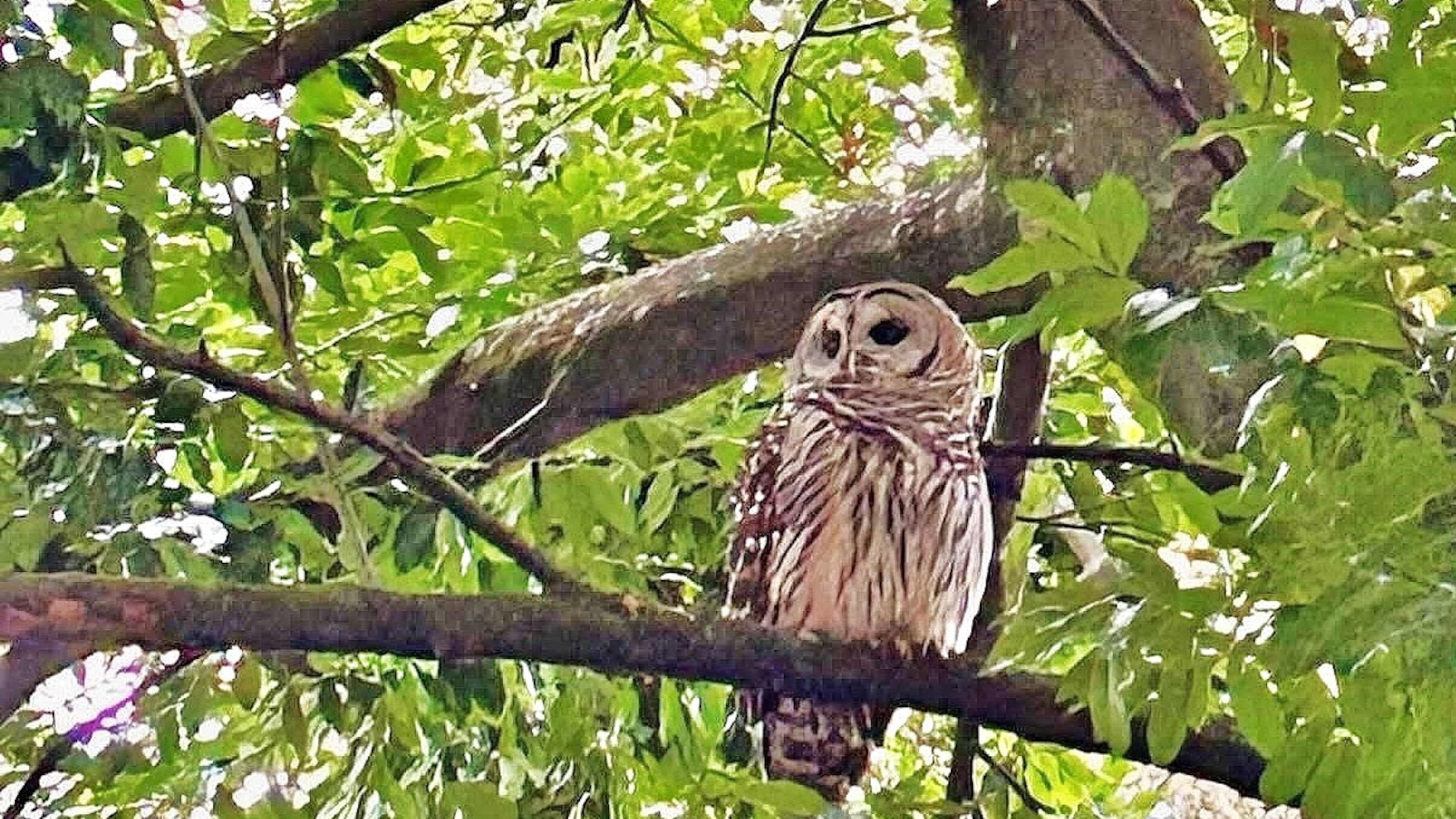
Songbirds are mostly silent now, but cawing crows and hooting owls — barred and great horned — fill the void; they seem to become louder and more frequently heard during November. Any day now, high-flying sand hill cranes, awe-inspiring sights, will be seen and heard flying in V-formations over Atlanta and other areas as they head south for the winter. A variety of northern-breeding duck species are settling in on Georgia’s rivers and lakes for the cold season. Several other birds — robins, red-winged blackbirds, wild turkeys and others — are gathering in large flocks to forage and protect themselves from predators.
So, hooray for November, a beautiful, splendid month like all the rest.
IN THE SKY: From David Dundee, retired Tellus Science Museum astronomer: The moon will be full — the Beaver Moon — on Tuesday night and last quarter on Dec. 1. Over the next two weeks, Mercury and Venus are low in the east just before sunrise. Mars and Jupiter rise in the east before midnight. Saturn is in the southeast just after dark.
Charles Seabrook can be reached at Charles.seabrook@yahoo.com.