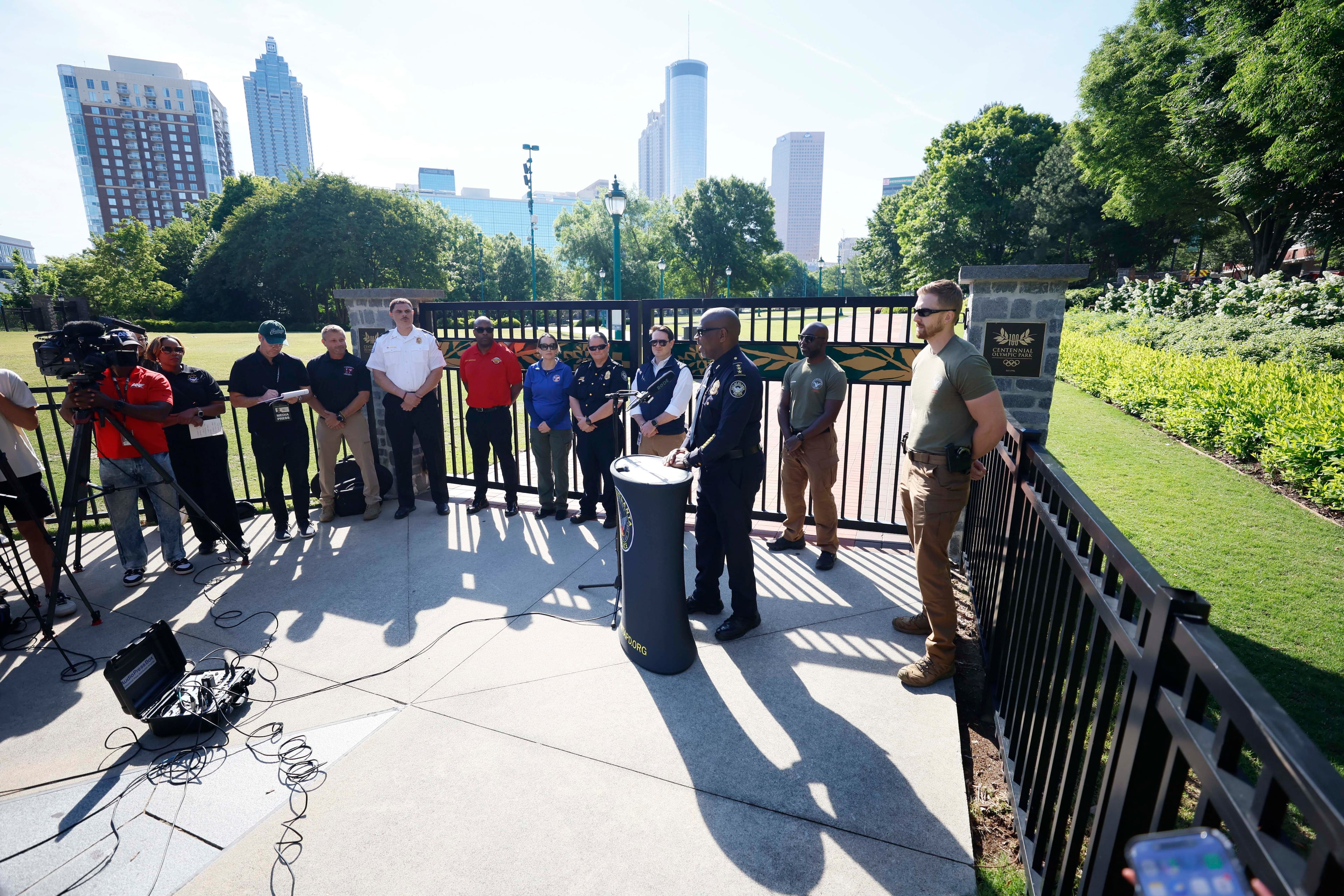
Police, fire officials hold active shooter training at Centennial Olympic Park
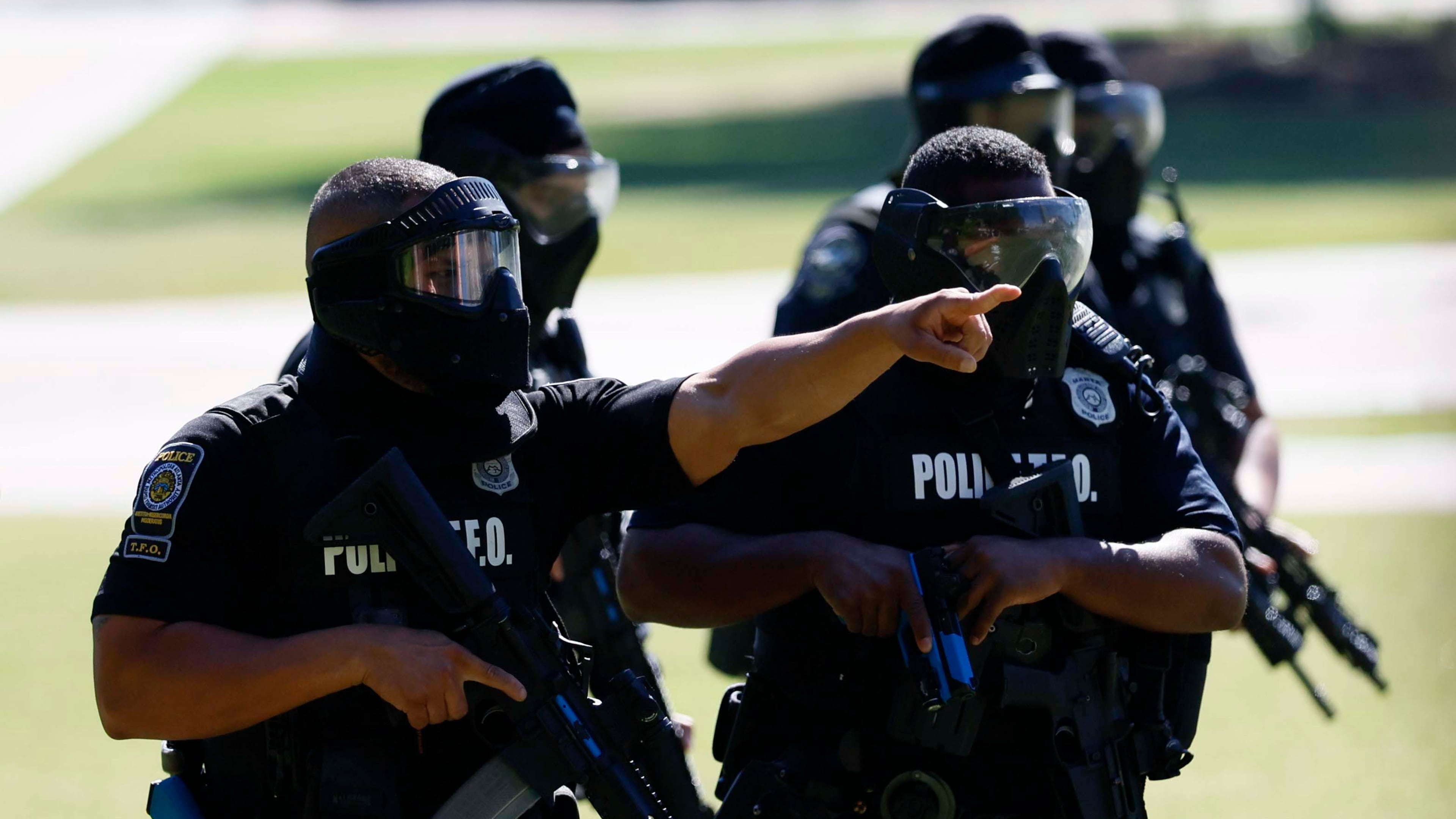
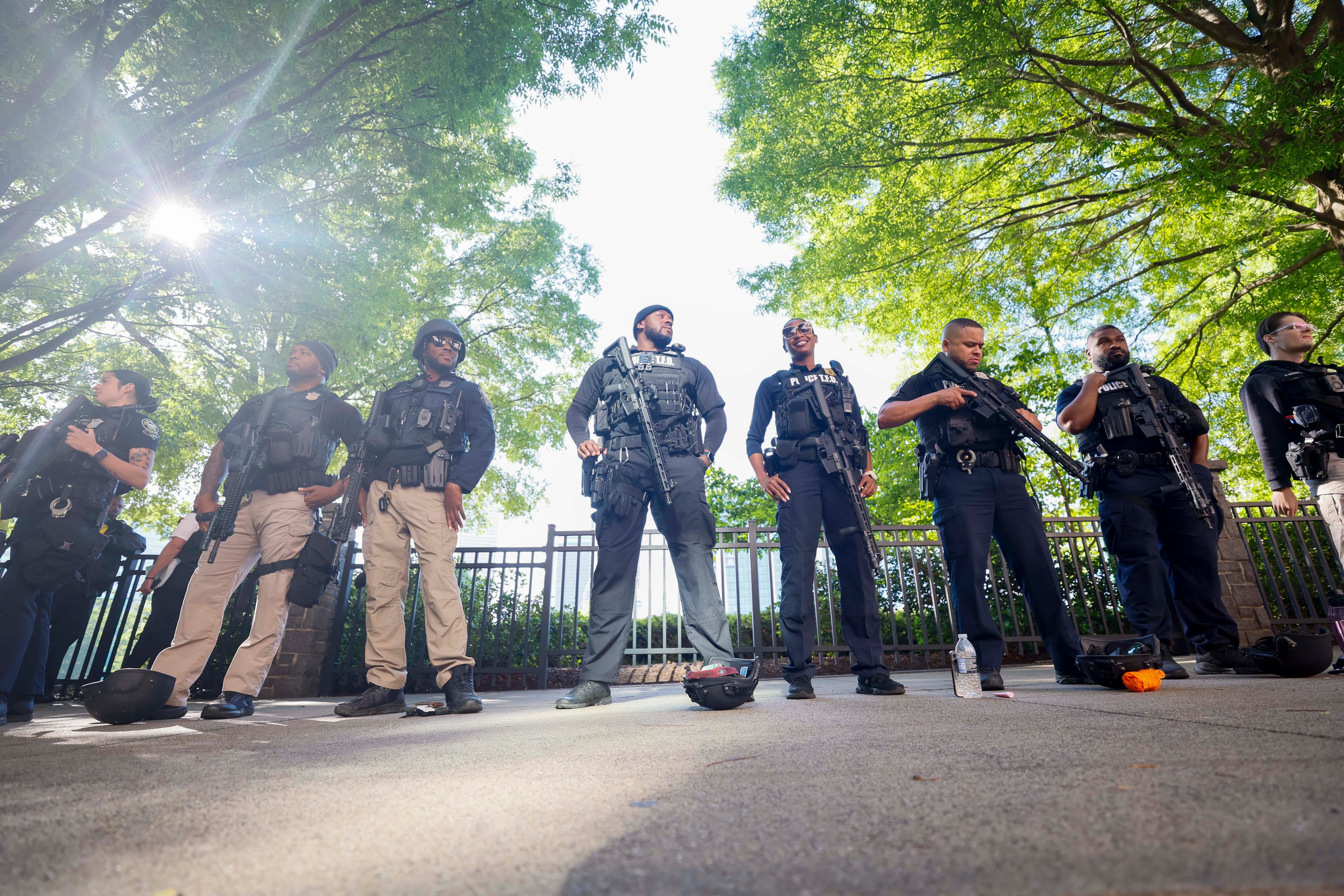
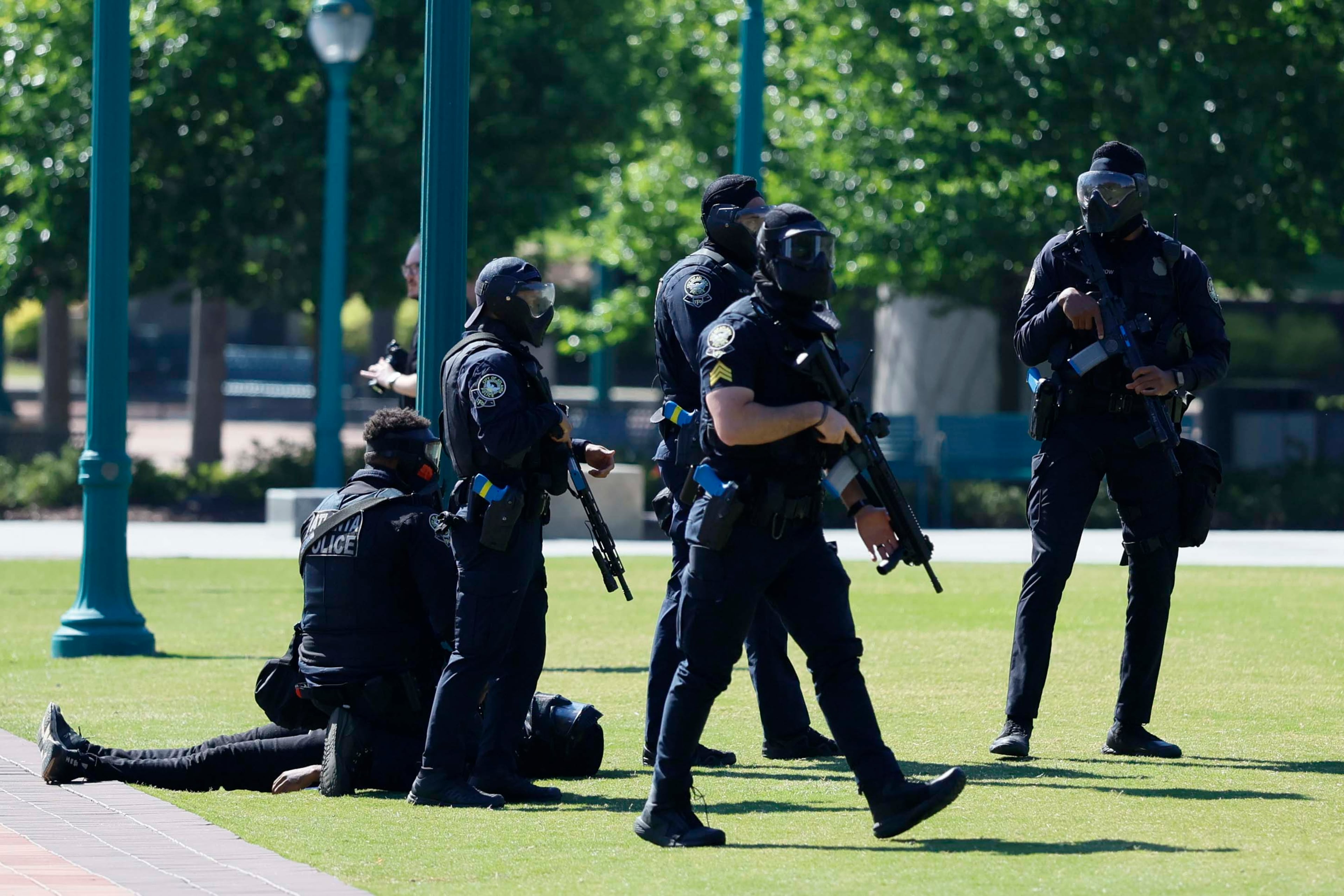
Dozens of police officers wore protective gear Monday as they moved into Centennial Olympic Park with people lying on the ground.
It was just a drill.
About one month away from the start of the FIFA World Cup matches in Atlanta, about 100 police officers from several agencies joined about 50 Atlanta firefighters on an active shooter drill involving mass (fake) casualties.
Officials said they held the training at Centennial Olympic Park because it will host “fan fest” activities during the soccer tournament. It also was the site of the 1996 Olympic bombing.
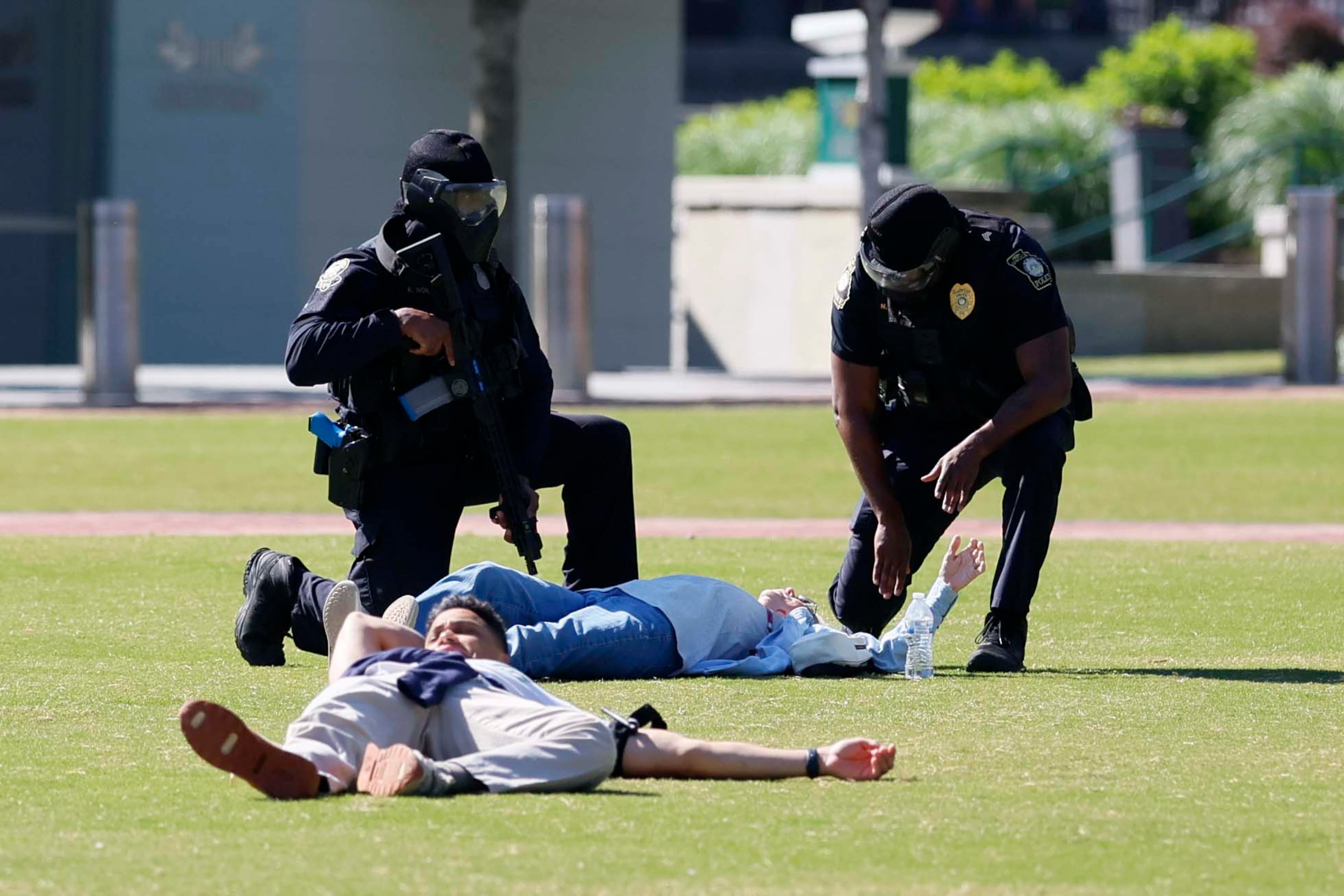
The “wounded” people on the ground were also part of the drill, meant to bring a touch of realism to the event.
“You’re getting ready to watch a full-scale exercise where the Number One thing is to stop the violence,” Assistant Fire Chief Terrance Simon told reporters shortly before the exercise. “After we stop the violence, then we want to save as many lives as possible.“
While the “wounded” were lying in the grass, a woman walked around and appeared to yell, “Where is my son?” A crowd of others darted anxiously away from the scene. Officers arrived and appeared to check on those lying down.
The drill left some human rights advocates wondering if enough emphasis is being placed on human rights issues ahead of the games.
Michael Collins is director of Play Fair ATL, a watchdog coalition focused on monitoring the city’s handling of housing, labor, justice and other human rights issues during the World Cup. He said there should be more emphasis on enhancing the number of people police refer to the Center for Diversion & Services for minor offenses in lieu of incarceration.
“There has been a singular focus on security and almost no focus on justice,” Collins said.
A spokesperson for Atlanta Mayor Andre Dickens pushed back on that characterization, noting the city developed and released a Human Rights Action Plan for the World Cup and that “work included inviting advocacy organizations to the table at the outset.”
Fulton County Superior Court Judge Robert McBurney, co-chair of the Justice Policy Board that oversees the diversion center, said local government authorities have been collaborating in recent months “to develop several meaningful approaches to the possible spike in low-level offenses during the World Cup weeks.”
In an email responding to questions from The Atlanta Journal-Constitution, McBurney said there will be an increased reliance on the diversion center “for proper cases,” and an emphasis on “issuing citations in lieu of actual arrests for qualifying offenses,” all of which he said should keep pressure off the county jail.
In February, the Atlanta City Council’s public safety committee passed a resolution asking APD to prioritize diversion over arrests for low-level offenses. It also requested monthly progress reports.
Officials have said the diversion center, which opened in January 2025, has the potential to divert more than 10,000 jail bookings each year.
But last year, the APD brought just 1,265 diversion cases to the center, an average of about 105 per month, according to data from Grady Health System obtained by the AJC. Other metro police departments made about 249 combined diversions last year.
In April of this year, there were 218 total diversions, about 124 of those by APD, according to a report from Grady, which operates the center.
The Policing Alternatives & Diversion Initiative, known as PAD, is a nonprofit that also provides alternatives to police response and diversion from jail for people experiencing extreme poverty, substance use or mental health issues.
According to new data from PAD, the city of Atlanta received nearly 31,000 calls to 911 last year that led to an officer being dispatched for diversion-eligible offenses.
Yet police made just 115 referrals to PAD, according to the data. Another 1,595 service requests were made by people who called 311 in Atlanta and requested that PAD send a team out.
The numbers do not include how many of the nearly 31,000 calls resulted in an arrest instead of diversion.
Moki Macias, executive director of PAD, said the data show that if more people reported these relatively low-level offenses to PAD by calling 311, it would free up police officers to focus time and energy on more serious issues.
Referring to readiness for the World Cup, Macias noted that officials have announced that the APD is hiring hundreds of officers from across the state to help out during the games.
“I think what we are seeing right now is a very police-focused response,” Macias said. “We’ve heard that there will be dozens of other jurisdictions coming into town to support with enforcement. But I think what we need ... is to ensure that we are being really strategic about what police are being used for.”
Last month, the city’s chief operating officer, LaChandra Burks, told City Council members that officers from other jurisdictions who are providing security during the World Cup will be trained to use the diversion center.