In 1974, ancient pottery was stolen in Georgia. A piece was just returned.

The afternoon of April 8 started like many others at Kolomoki Mounds State Park, a nearly 1,300-acre Native American historic site in remote southwest Georgia.
Travelers trickled in and out of the visitor center, as park staff fielded questions about navigating the vast site. Then, at around 2:45 p.m., a bald man wearing glasses walked in carrying a cardboard box.
Surveillance video shared with The Atlanta Journal-Constitution shows him approach the counter, place the box on top and then tell a park staffer, “I believe this belongs here.”
“Now, be careful with it,” he advised. “It’s pottery.”
The employee, seemingly taken aback, asked the man where it came from.
“It’s a long, long story and I don’t even know half of it,” he said, adding, “I think y’all will be happy to get this.”
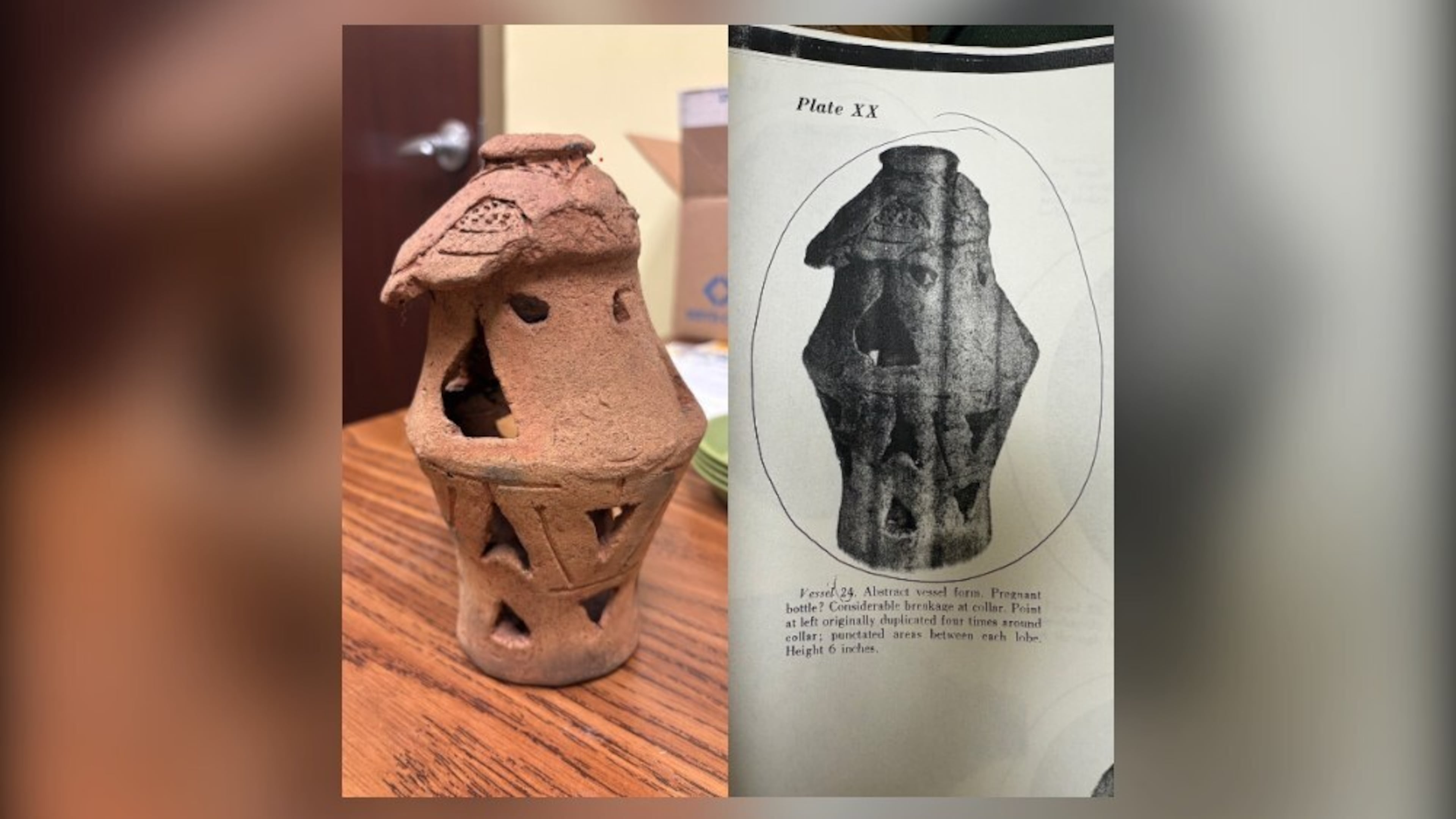
The man, who did not identify himself, walked out before staff could open the box. But when they did, they were indeed excited and stunned at what was inside: a 1,500-year-old piece of Native American pottery, one of dozens of artifacts stolen from the park more than 50 years ago.
The pottery — roughly 6 inches tall and featuring an “abstract” design, according to Georgia’s state archaeologist, Rachel Black — had been missing since 1974, when thieves stole more than 120 ancient relics from the visitor center.
Lauren Bryant, the Kolomoki Mounds’ park manager who opened the box and recognized the pottery as one of the stolen relics, said she was honored to see this “important piece of history returned to its home.”
“The return of this missing pottery vessel restores a part of our shared heritage and ensures it can once again be appreciated in its rightful place,” Bryant said in a statement.
Meanwhile, the mystery of the 1974 heist — and the identity of the man who returned the piece last month — remain unsolved, the Georgia Department of Natural Resources’ Law Enforcement Division says.
Still, DNR officials say they are “encouraged” by this latest twist and hope it will lead others in possession of the stolen artifacts to come forward.
“These artifacts are an irreplaceable part of Georgia’s history and belong to the people and cultures connected to this site,” State Parks and Historic Sites Division Director Angie Johnson said in a written statement.
How were artifacts stolen from Kolomoki Mounds?
Kolomoki is the Southeast’s oldest and largest site from the historical period known as the Woodland era, which stretched from 3,000 B.C. to around A.D. 1,000.
For a time between A.D. 350 and 600, some historians believe Kolomoki was home to one of the most populous Native American settlements north of Mexico.
Kolomoki’s inhabitants were the ancestors of many of the Muskogean-speaking tribes who lived across Georgia, said Black, Georgia’s state archaeologist. But they — like many other Native American tribes — were forcibly removed from their homelands by the U.S. government in the 1800s.
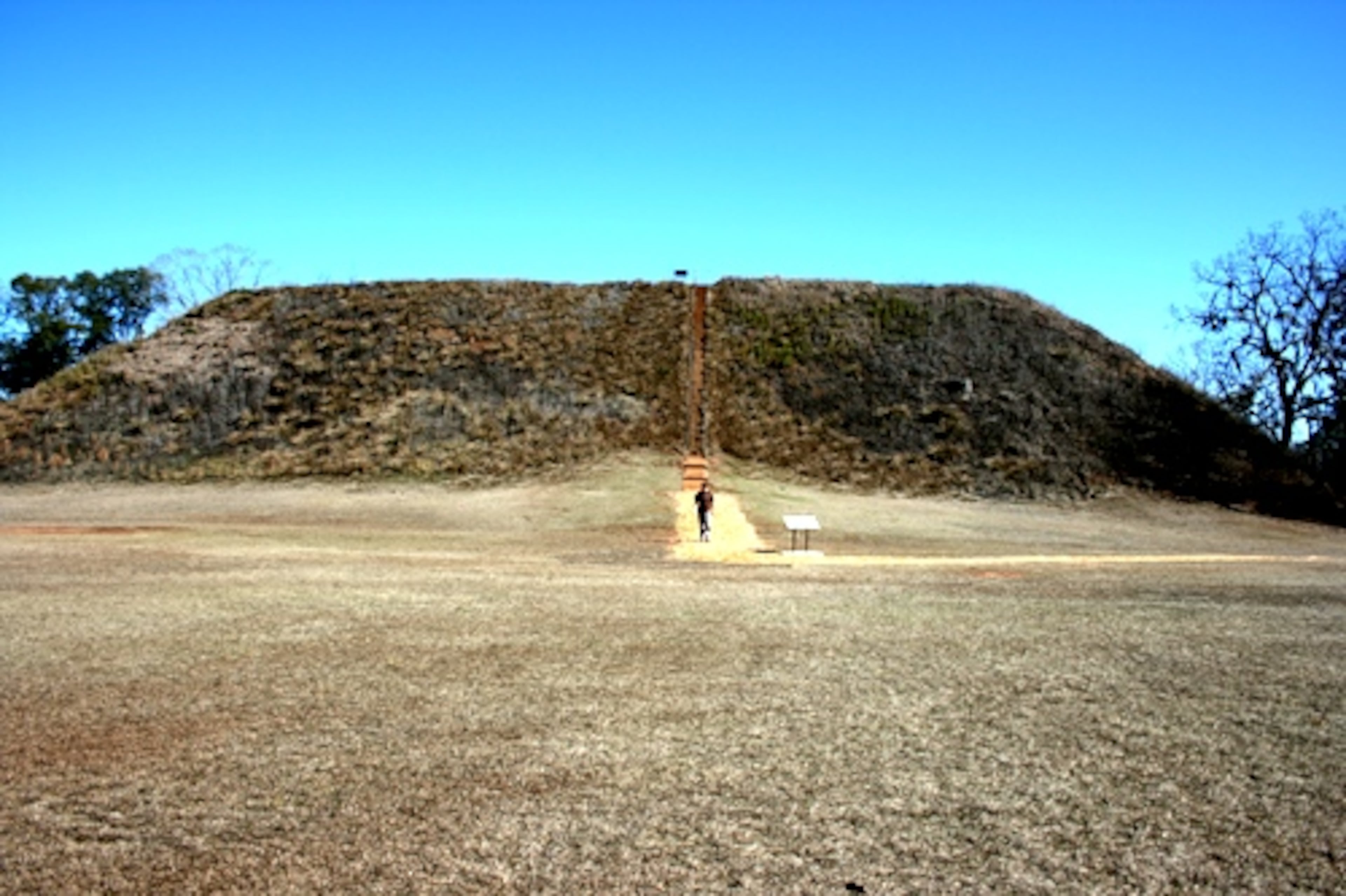
Today, visitors to Kolomoki can see several of the ancient burial and ceremonial mounds, including North America’s largest Woodland-era platform mound.
Over the decades, excavations at the site have yielded troves of ancient pottery and other artifacts. For years, many pieces that were unearthed were stored inside the Kolomoki Mounds visitor center.
But in March 1974, thieves broke into the building and took almost all of the artifacts housed there. The stolen items included pottery, arrowheads, axes and more.
A story about the heist that ran in The Atlanta Constitution on March 8, 1974, said investigators believed the thieves pried open the backdoor of the center with a large implement, possibly a screwdriver. At the time, a local sheriff told the Constitution “excellent” fingerprints were lifted from the scene. But since then, the case has mostly been cold.
Over the years, a handful of the stolen artifacts have been recovered in Florida and other locations. Still, officials say the crime remains unsolved and most of the ancient relics are still missing.
What’s the status of the investigation?
DNR officials characterized the investigation into the stolen artifacts as “active” and “ongoing,” but say no arrests have been made.
The investigation is being led by DNR’s Law Enforcement Division, with help from itscounterparts at the Florida Fish and Wildlife Conservation Commission.
As for the man who returned the pottery, DNR officials say he’s not considered a suspect in the original heist, but they are asking for the public’s help identifying him. The agency encouraged anyone with information about the pottery — or who wishes to return other artifacts — to contact DNR.
For now, DNR staff say they are pleased one more of the stolen items has made it back to Kolomoki safely, adding that they plan to work “collaboratively with federally recognized tribal partners regarding this artifact and any future recoveries.”