For undocumented immigrants, driving carries big risk of ICE arrest
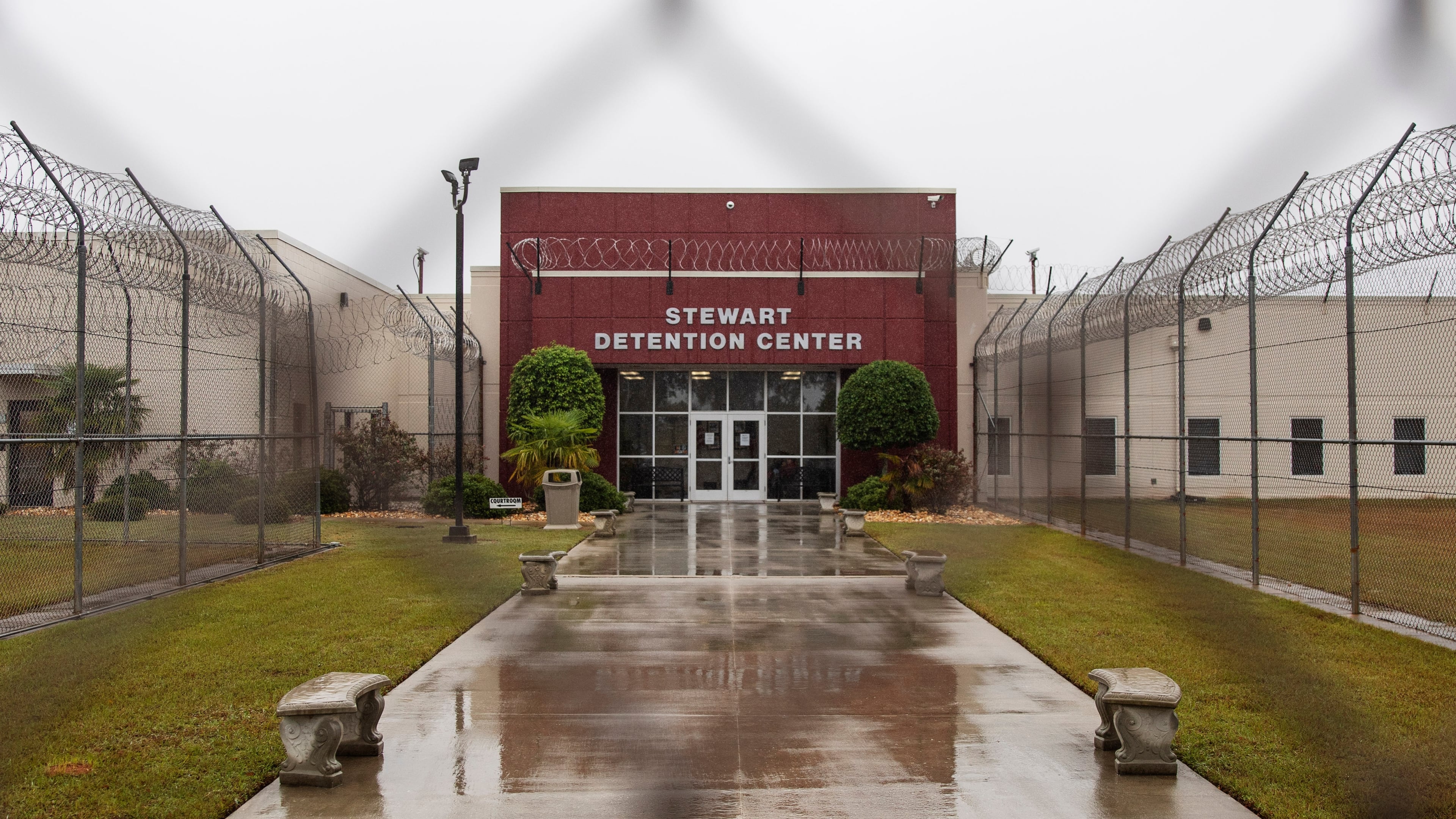
Juan Reyes, 27, was just 1 year old when he was brought by family from Mexico to the U.S. Now, the metro Atlanta resident faces deportation after being arrested for driving without a license following a traffic stop for speeding in Decatur.
Local police arrested Reyes and took him to DeKalb County Jail, which alerted immigration authorities that he lacked legal status to be in the country. Reyes is now being held at ICE’s Stewart Detention Center in South Georgia.
Unlicensed driving continues to be the most common offense landing people in ICE custody, according to recent data from three of the state’s most immigrant-heavy jurisdictions. It’s a particular issue in car-centric Georgia, where licenses are not available to immigrants without legal status.
“I feel like I’ve been hit by a train,” said Courtney Thompkins, Reyes’ wife. In her view, the low-level nature of her husband’s offense shows “it can happen to anybody.”
“Juan is not a criminal; he’s not a bad person. He’s a loving, devoted father, husband, brother and son. People like that don’t deserve this,” Thompkins added.
Across Gwinnett, Hall and Whitfield counties, all home to sizable immigrant hubs, unlicensed driving accounted for the most immigrant arrests by local law enforcement in the first three months of 2026. In Georgia, immigrants lacking legal status who are arrested by police are systemically held in local jails for ICE pickup.
The immigrant arrest data comes from quarterly reports prepared by county sheriffs’ offices, as required by a 2024 Georgia immigration law. The Gwinnett, Hall, and Whitfield sheriff’s office reports include data on the underlying offenses that led to the arrests — a data point not reported by other sheriffs, including those serving the bulk of metro Atlanta.

In Hall County, where census data shows roughly 17% of the population is foreign-born compared to 11% statewide, the local sheriff’s office booked 380 immigrant inmates in the first three months of the year. Eighty-six were arrested for driving without a license.
The second most recurring offense, related to driving under the influence of alcohol, accounted for just 30 arrests.
In Whitfield County (18.5% foreign-born), driving without a license accounted for 41 of 110 immigrant arrests in January through March. The second most recurring offense accounted for six. The county did not identify all 110 arrestees’ crimes.
Gwinnett County (28% foreign-born) produced 529 arrests for unlicensed driving, the single-most recurring named offense. A total of 1,621 foreign-born inmates were booked in Gwinnett County Jail during the first three months of the year.
Not every immigrant arrested and booked into local jails lacks legal status. Across Gwinnett, Hall and Whitfield, roughly half of all foreign-born inmates in January, February and March were unauthorized immigrants.
In DeKalb County, where Reyes was arrested, just over 35% of immigrants arrested by local police turned out to lack legal status.
When unauthorized immigrants do enter local custody, ICE may issue a detainer, which is a request for jailers to hold immigrants for up to 48 hours past their scheduled release time. ICE detainers are not legally binding, and local law enforcement agencies can choose whether to abide by them.
But in Georgia, the 2024 immigration bill took that discretion away. According to the text of the law, HB 1105, sheriffs’ offices must “comply with, honor, and fulfill” detainer requests from ICE.
The risk associated with unlicensed driving by immigrants can reshape everyday habits. In Hall County, a robust taxi culture endures, driven by dozens of companies bearing Spanish-language names. Some advertise special fares for in-demand destinations such as local poultry processing plants — an industry reliant on immigrant labor.
“No license definitely continues to be the primary charge leading to arrests of immigrants in this area,” wrote Arturo Corso, a Gainesville-based attorney, in an email.
Law enforcement, he added, has traditionally located unlicensed drivers through “practices such as roadblocks in front of the Catholic churches on Sunday and traffic stops for nothing more than having one of the two license plate illumination bulbs out. This happens on the roads in immigrant communities — not on (country) club drive.”
In Whitfield County, home to the majority-Hispanic town of Dalton, local advocates operate a hotline for community members to request free rides for attorney appointments, medical visits or weekend grocery shopping trips, an initiative dubbed “la ruta de la libertad,” or “freedom road.”
“Don’t drive without a license, don’t fall in the trap,” social media posts advertising the hotline say.
Across the U.S., 19 states — almost all Democrat-led — and the District of Columbia have enacted laws that make driver’s licenses accessible to immigrants regardless of status.
For Reyes, his arrest for unlicensed driving could trigger a removal to his birth country, Mexico.
According to his sister, Dafry Martinez, that would be an unthinkable development. She launched a GoFundMe account to raise money for an immigration attorney and to support her brother’s wife and daughter.
“We don’t have any family in Mexico; all of our family is here,” she said. “We have nothing in Mexico. Juan doesn’t speak the language. He went to school here, you know? He built a life here. He made a family.”
Martinez said her brother tried telling immigration officers about his background, to no avail.
“He did mention that they mocked him and they laughed at him because he was like: ‘I don’t speak the language. I can’t go back to Mexico. This is my country. This is my home.’”