Former NFL players face their health head-on at Atlanta event
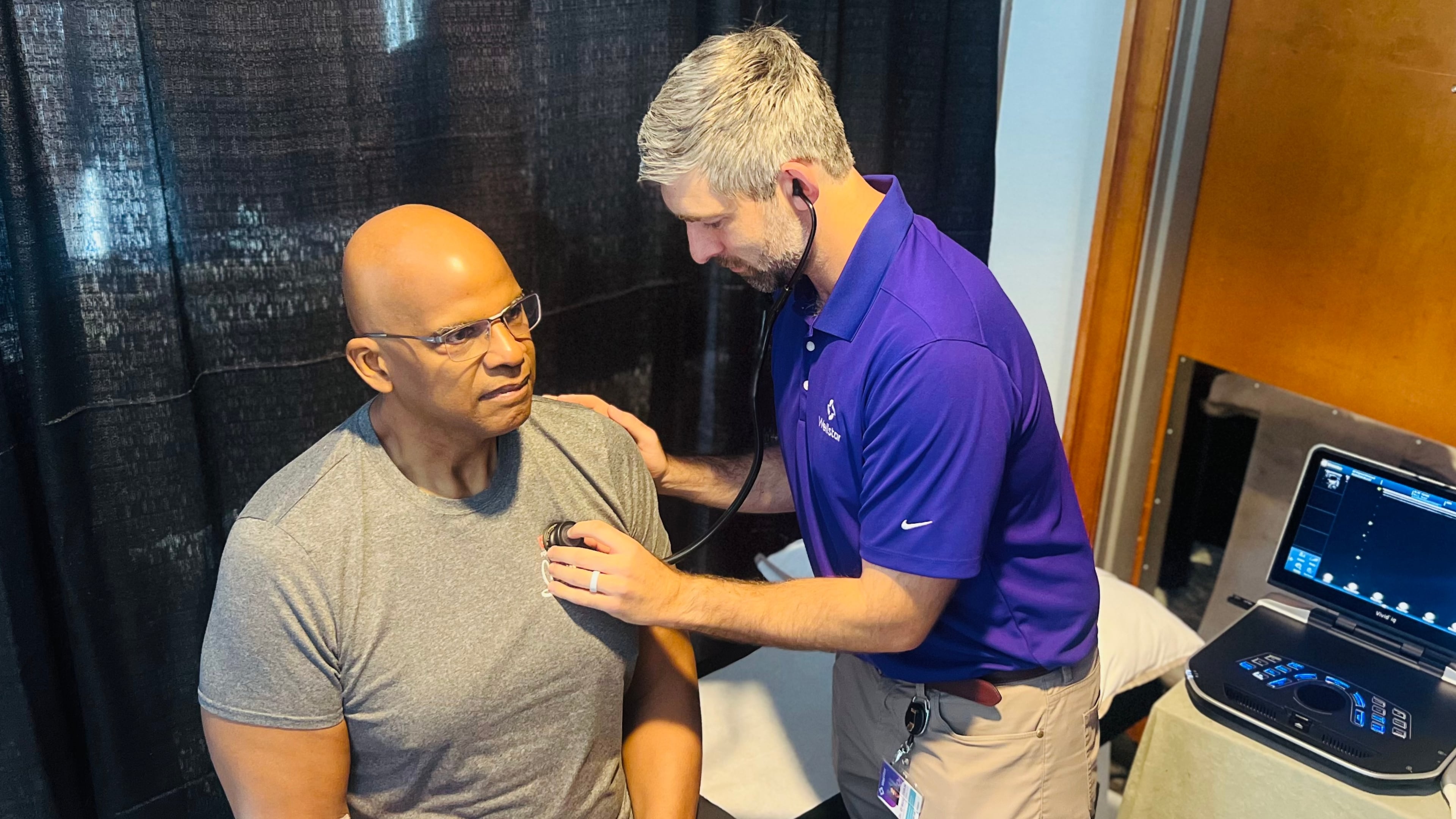
More than a decade of tackles, blocks and pileups has taken a toll on many former professional football players, something former Atlanta Falcons lineman Phil McKinnely knows all too well.
“Being an offensive lineman, I’m hitting somebody every play,” said the 71-year-old Johns Creek retiree. “What happens is that when you get older a lot of injuries start to manifest themselves. All of a sudden, you wake up one morning and it’s ‘Oh, my knees. What’s going on with my knees, or my back?’ This soreness and these injuries come back and haunt you and you haven’t played the game in so long, but there’s a price to pay with your body. You pay the price later on in life.”

Retired players have opportunities to monitor their long-term health through free screenings offered around the country by the Living Heart Foundation, with support from the NFL Players Association. At a recent event in Atlanta, Wellstar Health System provided comprehensive medical evaluations, part of an ongoing effort to identify and address chronic conditions that can emerge years after players leave the game.
Wellstar’s medical staff screened 36 former players and 20 of their spouses for health issues such as heart disease, sleep apnea, mental health, orthopedic and hearing disorders, which are some of the more common ailments affecting former players, according to Dr. Connor O’Sullivan, a Wellstar sports medicine and family medicine physician.
“From a primary care standpoint, we spend a lot of time addressing things that may not have been diagnosed or managed or treated during their time as an athlete,” O’Sullivan said. He cited screenings for high blood pressure, kidney and liver disease that can catch such conditions and manage them before they progress to larger complications.
Atlanta has the nation’s second largest community of NFL alumni following Los Angeles and the largest population of retirees from all sports, said Scott Perryman, chief operating officer for the Living Heart Foundation. This is the seventh time the screening has occurred in Atlanta since the foundation’s wellness program started in 2006 but the first event at which Wellstar provided the services, he said.
The Living Heart Foundation offers health screenings around the country because of the higher risk for heart disease among larger-bodied people such as football players, Perryman explained. His stepfather, Dr. Arthur Roberts, was a former NFL player-turned-heart surgeon who started the foundation.
“We started off as a cardiovascular group and then, from there, we’ve added sleep apnea, which is a very big issue for former NFL players. At each of these events now we have a behavioral health position,” said Perryman.
The Atlanta screening was the first to include local mental health specialists, he shared. Perryman noted that the mental health concerns of former players may stem from addiction or depression.
“It’s similar to the transition from, let’s say, military back into regular society. When you’re taken care of, when you’re playing in front of 80,000 people, when you’re famous, then becoming a regular person again in society is not easy for a lot of these guys.”
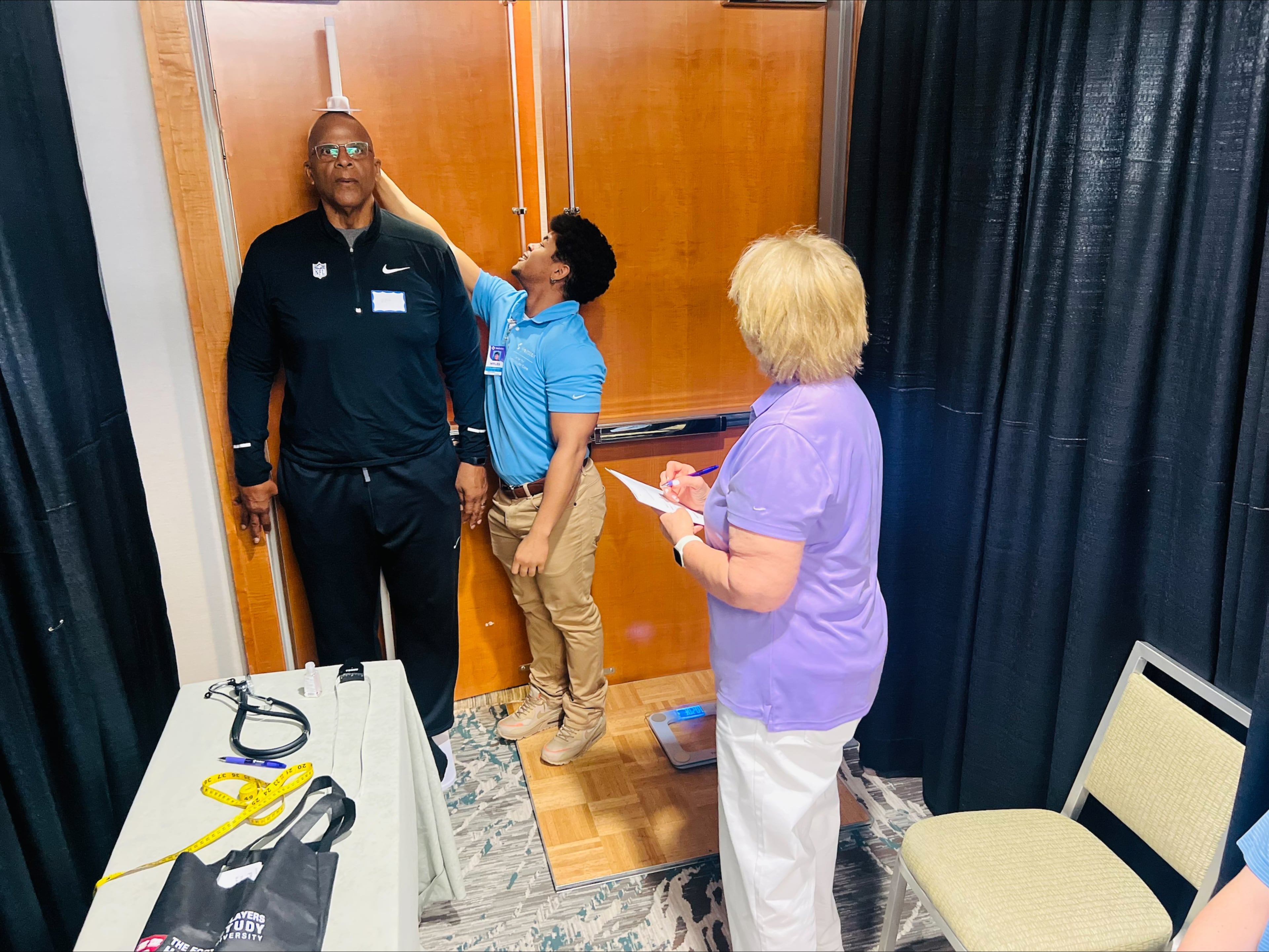
The idea behind the Living Heart Foundation health screenings began about 20 years ago as a way to reintroduce former NFL players to fitness and health after their retirement, shared Andre Collins, an NFL alum and executive director of the NFL Players Association Professional Athletes Foundation. Today, that effort has expanded to include research. Mass General Brigham will use information gained at the screenings to study how athletes age.
“The problem when you train as a world-class athlete and then you stop, you’re sick, your poor health could potentially accelerate, which is why it’s so important to get reengaged with what might be happening to your body,” said Collins.
O’Sullivan explained that once NFL players retire and no longer have daily access to team medical staff, routine care can fall by the wayside. Without the structure of constant checkups and immediate attention to injuries, some former players may delay seeing providers — allowing underlying health issues to go unaddressed for years.
“Ex-athletes will sometimes not see a provider for the number of years after they finished with the league solely because it’s not as in their face. When you’re playing on an NFL team, you’re constantly being exposed to medical staff. Sometimes that can be a little bit of a delay in them coming to us, which is what’s so good about this screening process and this event … being able to get them more plugged into the system so that we can address as many of their concerns as we possibly can,” O’Sullivan said.
McKinnely, who played for the Los Angeles Rams and Chicago Bears before later officiating NFL games, now stays proactive about his health. He regularly visits his doctor and encourages fellow former players to do the same.
“I’ve always been an advocate of sharing and telling guys: ‘Go to the doctor and get a checkup, get a physical. Just like you have a car, you’ve got to get the oil changed every now and then, even though it might be running well. You might look good. You might smell good, but there could be some issues that you have.”
Roni Robbins has been a journalist for nearly four decades. This is her second stint as a freelance reporter for the AJC. She also freelances for Medscape, where she was an editor. Her writing has appeared in WebMD, HuffPost, Forbes, the New York Daily News, BioPharma Dive, MNN, Adweek, Healthline and others. She’s also the author of the award-winning novel, “Hands of Gold: One Man’s Quest to Find the Silver Lining in Misfortune.”