His dream led to an aviation career. He’s still inspiring Black kids to fly.

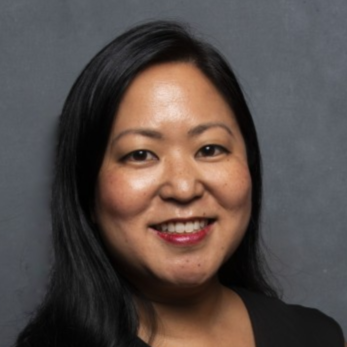
As a child, John Bailey would gaze up at the model airplanes hanging overhead in his bedroom.
“I loved airplanes,” said Bailey, now 80 years old. “But I had no idea about becoming a pilot.”
It wasn’t until college in the 1960s that he first got on an airplane, joining the Air Force ROTC at the University of Buffalo.
His commandant took a group of ROTC cadets on a flight from Niagara Falls Air Reserve Station to Wright-Patterson Air Force Base in Ohio, giving each of them a turn at the controls.
“I was so nervous,” Bailey said. “Well, two days later, he … asked me to join the flight program.”
That first taste of flying was the spark that would eventually lead him to launch Atlanta-based Delta Air Lines’ annual Dream Flight to inspire Black youths to become pilots. It’s a tradition that has now continued for more than 25 years.
Bailey’s own path was not without its challenges. He knew his parents would object to his joining the ROTC flight program. His father, a coal miner in West Virginia who moved to Buffalo and worked at a General Motors plant, dreamed of starting a business with his son and running a service station together.
The commandant offered to talk to Bailey’s parents, visiting their home in Buffalo to make the case.
Bailey got into the flight program — getting the chance to take his first, thrilling solo flight in a Cessna 150.
And after college, he went on to join the Air Force — but when he went for his preentry physical, he has told he had poor eye acuity and sickle cell anemia.
The medical technician “never gave me a blood test,” Bailey said. Still, “I was taken off flight status,” and worked instead as a logistics officer.
Then his commanding officer, after working with Bailey for about a year, one day noticed his background with the ROTC flight program.
“Why aren’t you on flying status?” he asked Bailey. The officer questioned the sickle cell anemia diagnosis. He arranged for blood tests to verify Bailey was, in fact, healthy, and put him into pilot training.
Taking to the skies
Bailey went on to fly C-141 military transports, and then C-47s in Vietnam — before starting a career at Delta as a pilot based in Boston.
There, he learned that pilots volunteered to take terminally ill children on flights around the city.
“I thought it was a great gesture,” Bailey said. When he transferred to Atlanta, “I thought I could do something similar here … maybe just helping kids who were like me, who had never flown before, never been in an airport, had no idea what aviation is about.”
That, he thought, could help plant the kernel of an idea of a pilot career in the minds of young people.
“Never thought (Delta) would approve it,” Bailey said.
When he joined Delta in 1973, he was the 13th Black pilot ever hired by the airline.
Industry leaders and pilots organizations have spent decades working to encourage students to pursue careers as pilots, a highly skilled job that can pay handsomely in the top ranks.
It’s a field where minorities are underrepresented, with Black pilots making up 4.4% of aircraft pilots and flight engineers, according to 2024 data from the U.S. Bureau of Labor Statistics.
About 88.3% of the pilots and flight engineers are white.
Titus Sanders, a United pilot and programs chair for the Organization of Black Aerospace Professionals, said groups like his have seen a substantial decline in funding from sponsors and decreased support from the U.S. Air Force as the Trump administration pushes to halt efforts for diversity, equity and inclusion.
Selling the Dream Flight
Bailey talked with fellow pilots at Delta and others at what was then the Organization of Black Airline Pilots, pitching his idea of a flight to inspire interest in aviation among youths.
“He talked about it for years prior,” said Marx Davis, a longtime Delta pilot. “He wants to have this flight for these kids, and he wants Black pilots to fly it. We laughed at him, like, ‘That’s never going to happen.’”
Bailey would respond, “No, I’m going to make it happen,” Davis remembered. “He was very passionate, and he got a lot of resistance, but he was determined.”
It wasn’t until February 2000 that he sent a formal proposal signed by the president of OBAP to a Delta executive.
It was a few months before he finally heard back from his hard-nosed chief pilot, Charlie Tutt, who retired from the Marine Corps Reserve as a colonel. He got his flight — and use of an entire Delta airliner for the day — on two conditions: The flight had to take the students to an aviation-themed destination, and Bailey had to have the airplane back at the gate in Atlanta no later than 6 p.m.
Today, Tutt still remembers Bailey’s effort — and all the reasons he wanted to support it.
“If you want really good pilots, you have to reach out everywhere,” Tutt said. “To do that, you can’t exclude portions of the population. … The net was cast wider to ensure we get the best of the best to be pilots for Delta.”
And, “I knew that if you look at Tuskegee Airmen, they certainly produced a lot of good pilots,” Tutt said.
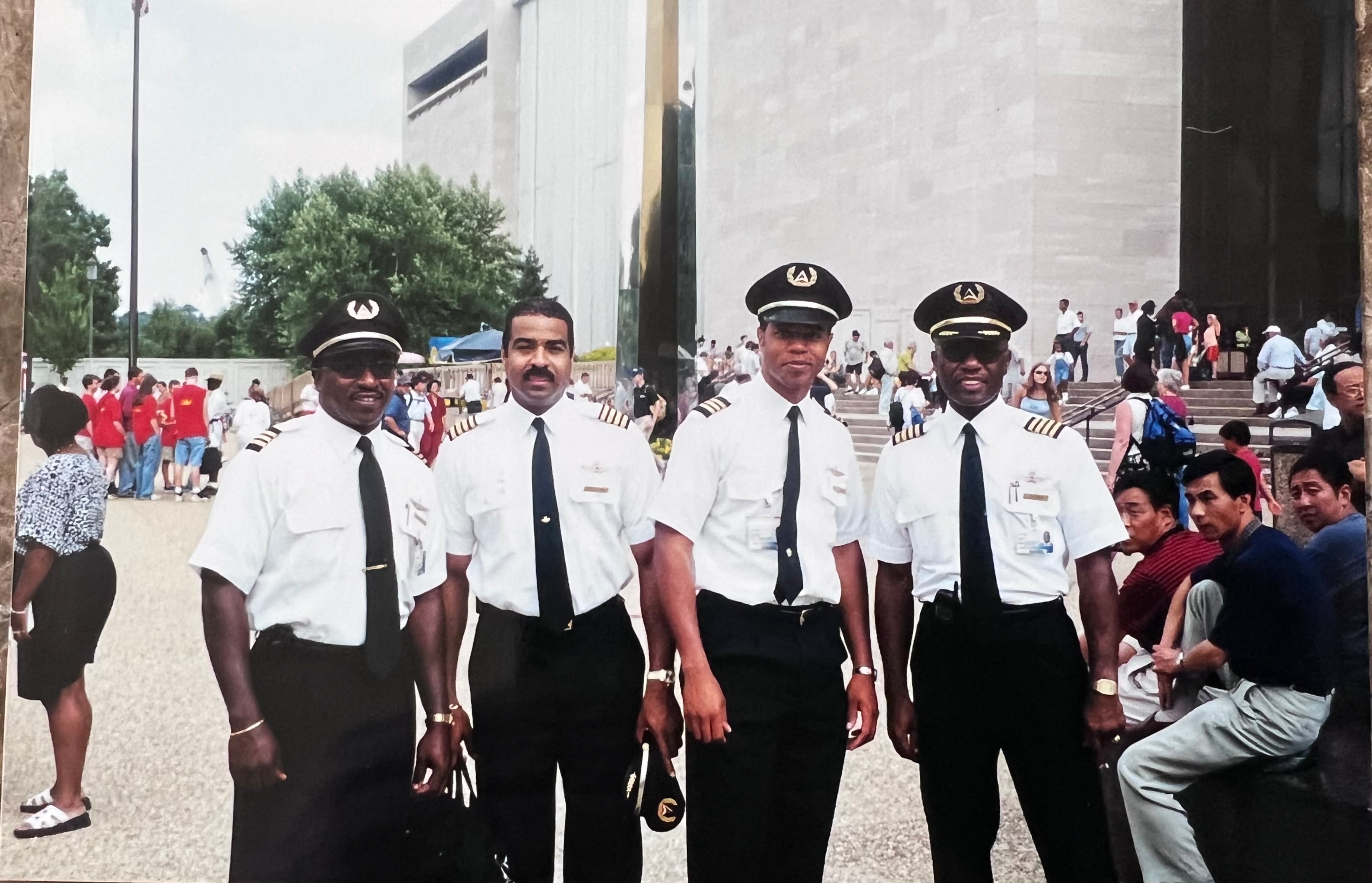
In partnership with OBAP’s Aviation Career Education camp at Delta’s headquarters, the first Dream Flight took off in July 2000 on a Boeing 757 from Atlanta to Washington D.C. to visit the National Air and Space Museum. On board were 30 teens and an all-Black crew of Delta pilots volunteering their time.
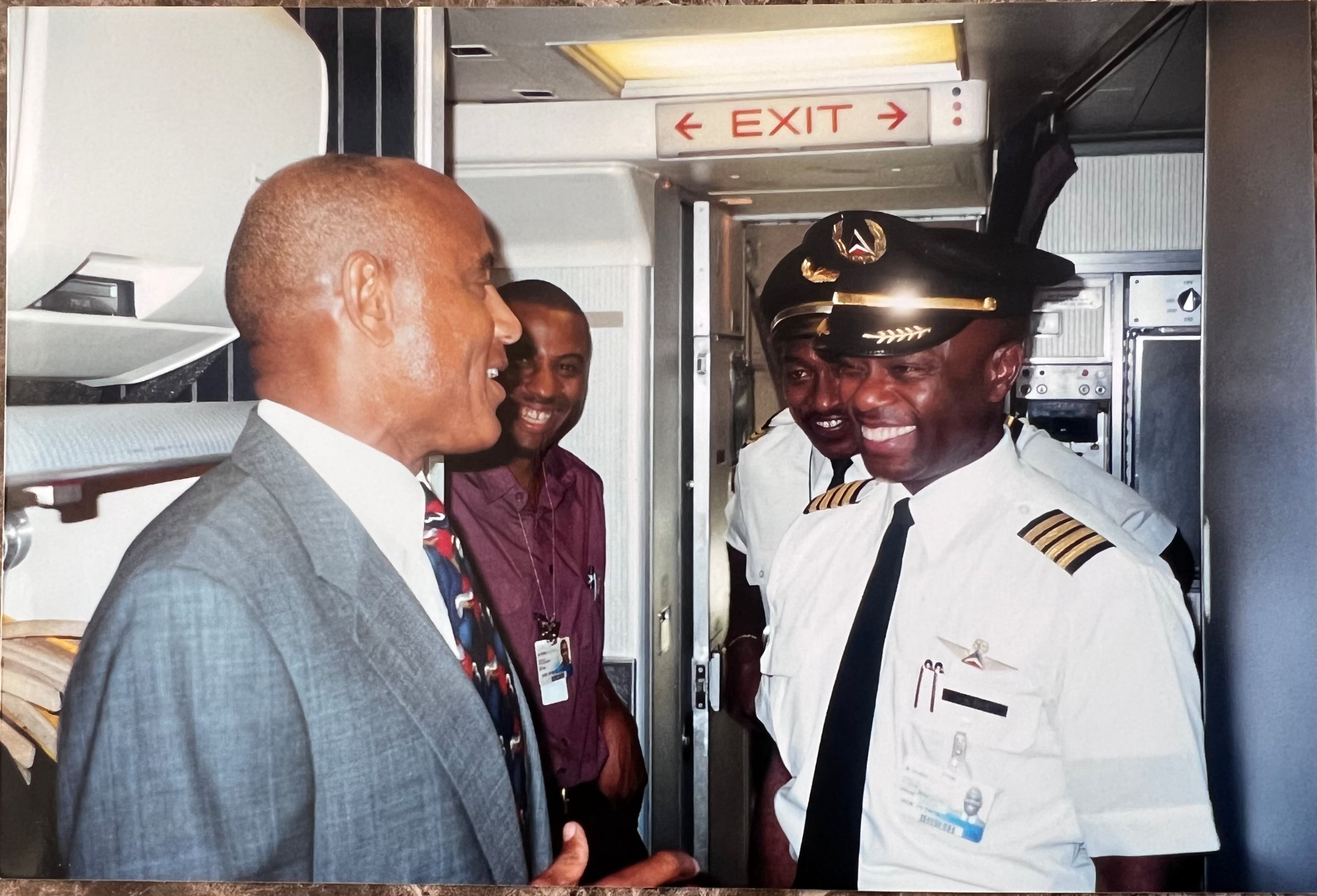
Bailey said he remembers the thrill of finally having his plane, with his hand-picked crew including Marx Davis, and kids coming up to the cockpit to see them flying the aircraft. “Fantastic,” he said.
For Kyle Foley, who was a 12-year-old on that first flight, “It was the very first time that I had really been up front in an airliner.”
“I got to see the pilots … what they actually did, to see all the buttons, see the controls,” he said.
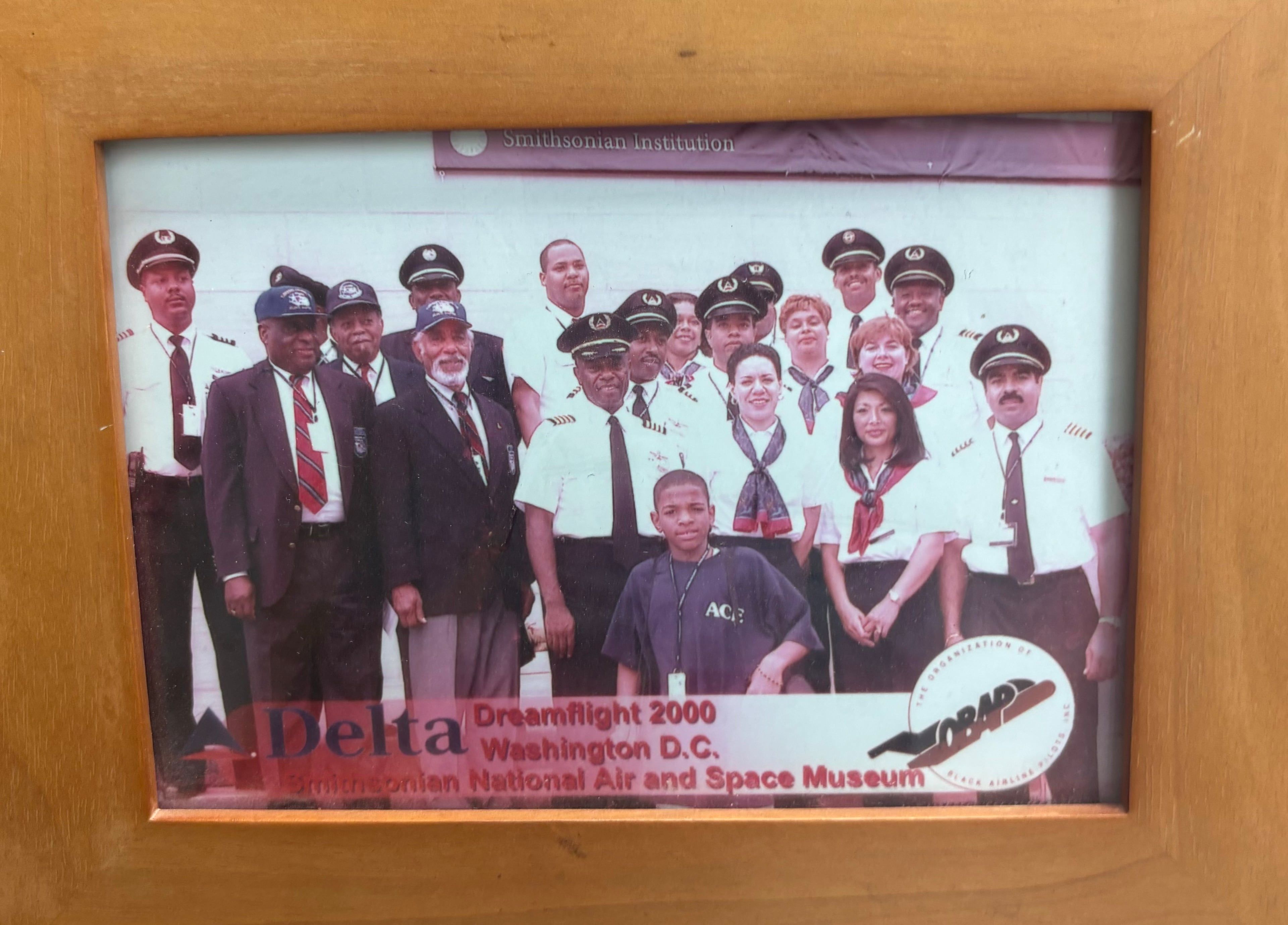
After the charter flight landed in Washington, the students were welcomed by a crowd in the terminal, members of the Tuskegee Airmen, and U.S. Rep. John Lewis and U.S. Secretary of Transportation Rodney Slater delivering remarks.
For Foley, who is now a Delta pilot, and other kids who took a Dream Flight and then went on to become professional pilots, “That early childhood experience gave us enough inspiration to go all the way.”
He said he worries the backlash against DEI could work against that today.
“Young people that I talk to, … they feel like someone’s telling them they’re not qualified,” Foley said. “They feel intimidated, attacked and afraid,” and worry “the first thing somebody’s going to say is, ‘You got this opportunity … because you’re Black.’”
“There’s a barrier there that I didn’t experience,” Foley said. “I think it’s going to take some creativity on our part to figure out how we overcome that.”
A talent incubator
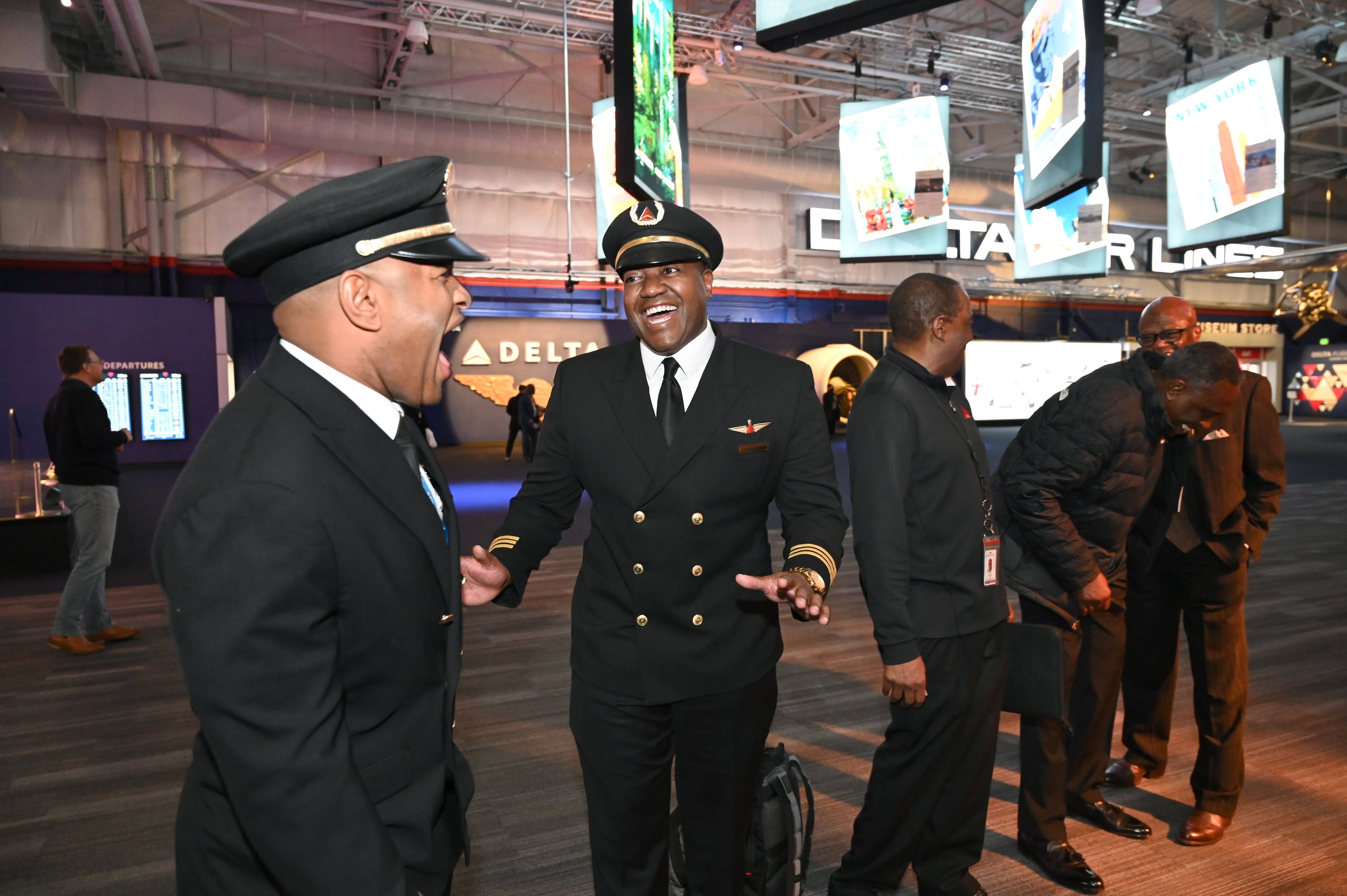
Today, Delta’s Dream Flight is unique in the industry — a commitment by the airline every year to take a jet out of commercial service for the day for a free trip for dozens of students.
“You lose some revenue there and the cost of fuel to operate the airplane,” Tutt said. But, the return on investment lasts for years.

Delta is part of a larger ecosystem in Atlanta that nurtures interest in aviation careers, including through Black-run flight schools and other programs. OBAP runs Aerospace Career Education academies across the country, but the one in Atlanta typically fills up first, Sanders said.
“There’s more interest from young Black Americans to become pilots out of Atlanta than any other place in the country,” Sanders said. “Most of them that are in the area dream of being a Delta pilot.”

Bailey’s biggest accomplishment may be that long after he retired from Delta in 2003, the company has continued the annual Dream Flight.
Last year’s flight took 145 “aspiring aviators” to Kennedy Space Center in Florida.
From the Dream Flights that have taken off over the past quarter-century, Bailey estimates more than 100 of the students have gone on to become pilots. Many of them he has personally mentored.

Curtis Jackson is among them.
He remembers as a kid thinking of Bailey as “the legend” — one of the first Black pilots at Delta.
“It was like if you want to be a basketball player, like LeBron James showed up to your local basketball court and taught you how to, you know, shoot a fadeaway jumper,” Jackson said. “I didn’t come from a rich family, so he always told me to make myself uncomfortable until I got to a place where I wanted to be in life. … That stuck with me.”
Anya Kearns, the first female pilot Bailey mentored, took a Dream Flight when she was a student at Marietta High School. She spent years working to become an airline pilot and joined Delta in 2020.
Bailey “taught me more than just how to fly,” Kearns said. “He taught me how to present myself as professional. He taught me how to stay out of trouble.”
“He told me what was necessary to be a pilot. … It really requires you to be built from the ground up to be the professional that people trust with their lives when they walk onto that airplane.”
When Kearns walks through the terminal, people often come up to her and ask how she became a pilot, or want to take a picture with her. It’s so common that Kearns sometimes has to get to the airport 15 or 20 minutes early, allowing the time to stop, “because I know it’s so rare” for someone to see a Black female pilot.

Today, there is more representation of women and minorities among the pilot population than when Bailey started flying, but not as many as he had once hoped.
Among the inhibiting factors: The cost.
“To become a pilot is very expensive,” Bailey said. It can cost $200 an hour for flight training, and the total price tag for the training to become an airline pilot can top $100,000. “A lot of parents just can’t afford that,” he said.
But he sees the Dream Flight as a way to show what’s possible.
“To see someone who looks like you actually flying the jet makes a lot of difference,” Bailey said. Back when he was a boy who loved airplanes, “I wish I would have known someone in the career field I could have talked to.”
This year’s AJC Black History Month series marks the 100th anniversary of the national observance of Black history and the 11th year the AJC has examined the role African Americans played in building Atlanta and shaping American culture. New installments will appear daily throughout February on ajc.com and uatl.com, as well as at ajc.com/news/atlanta-black-history.