Through twists and turns, Georgia family waits 24 years to find a man’s killer
DAHLONEGA — The smell of cigarettes and coffee is comforting to Brandi Loftin.
It was that scent that lingered when her great uncle used to babysit her while her mother ran errands.
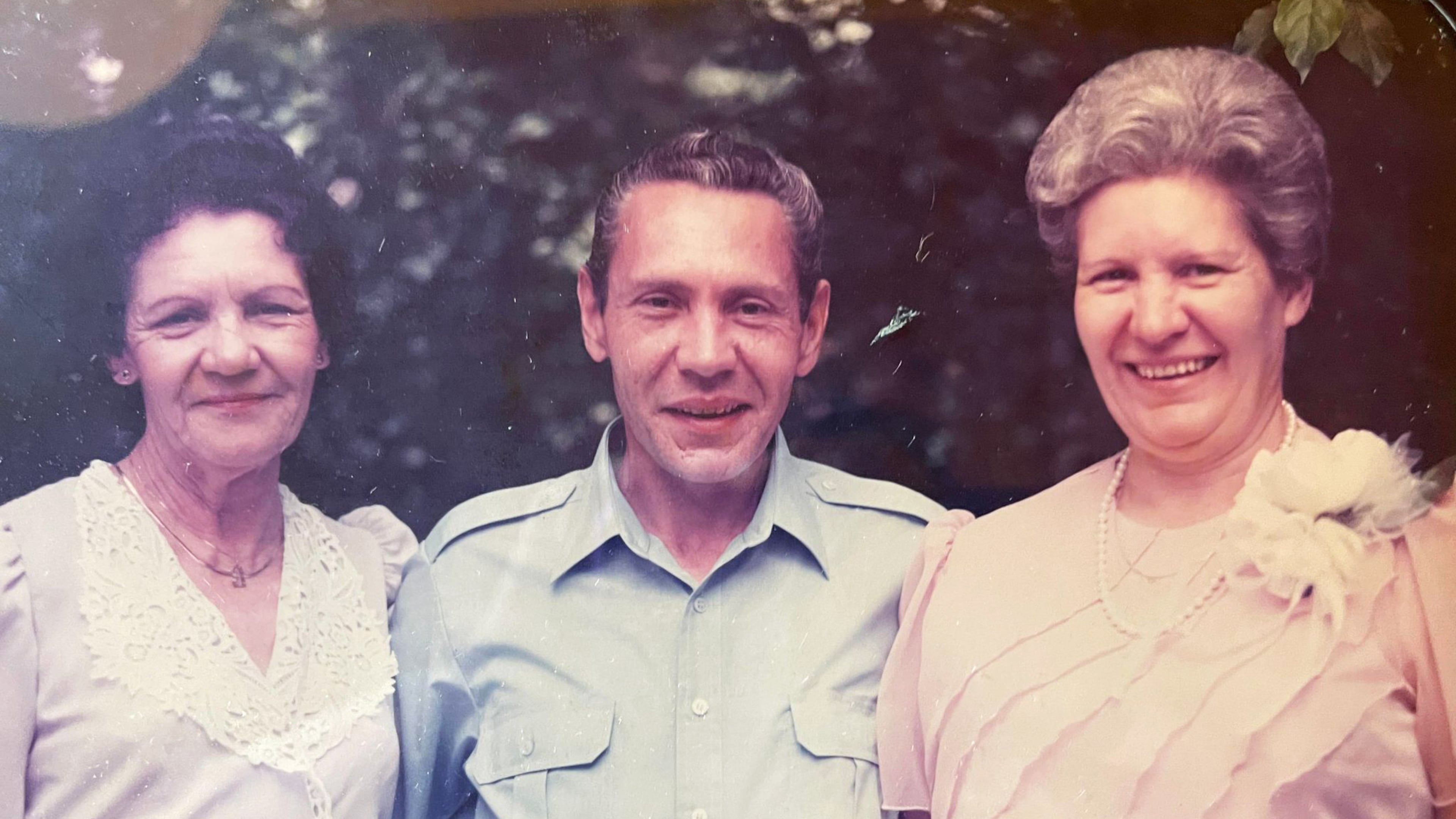
Herman Wilder would hand the young girl handfuls of chocolate-covered cherries while she rambunctiously tore up the northeast Georgia home. Sitting sheepishly in a chair, he’d call Loftin “gal” in between her childish giggles and devious plots to scatter the couch pillows.
Those memories come back scattered to her. But May 25, 2001, stands out. That night is what she calls her first vivid memory.
She remembers first feeling terrified, then uncertain and confused.
Her great uncle had been killed. Brutally.
She understood that. But at such a young age, she didn’t comprehend it meant they would never see each other again.
His death became something that consumed her childhood, adolescence and adulthood as it went unsolved.
“I’ll be 30 in a couple of months, and this has been since I was 5 years old,” Loftin recently told The Atlanta Journal-Constitution while visiting Wilder’s grave in Gainesville. “Getting answers about it finally is just insane to me because it has weighed on me very heavily.”

After years of dead ends, officials cracked the murder in November when forensic genetic genealogy led them to the suspect, who had been only 50 miles away.
In Lumpkin County, where everyone knows everyone, homicides are rare. The sheriff’s office, in fact, has investigated only 12 since 2000.
Stranger-on-stranger homicides are even more scarce. Wilder is the only victim to be killed by a stranger in Lumpkin since at least 2000, which Sheriff Stacy Jarrard said only made the case more difficult to solve.
The family’s persistence kept the tricky investigation alive through all of those years. Clues were scattered across old case files, in years of detective work and in the recollections of neighbors — fragments the AJC spent weeks piecing together during multiple visits to the small mountain town.
The exhaustive case veered down a false path early, stalled for years, then lingered as it went cold.
What finally brought answers was a twist no one expected and technology that didn’t exist when Wilder was killed.
A gruesome scene
A body, bloodstains, a wooden stake and a dark blue ball cap were all that was left near apartment 664 at the Golden Hills complex off Wimpy Mill Road near downtown Dahlonega. Wilder, 56, had lived there for about two years. His apartment was adjacent to 666.
“The story surrounding the murder was someone was speaking things that didn’t make sense; had religious connotations to them about demons or the devil,” said Enotah Circuit District Attorney Jeff Langley, who was assistant district attorney at the time of the killing.

According to investigator Hasley Gipson, who took over the case in 2012, the suspect was yelling things like, “I came here to kill the devil.”
Witnesses told detectives that Wilder had been beaten with a 2-by-2 wooden stake, Gipson said while flipping through a thick case file filled with investigative photos, sketches of the suspect and crime scene, medical records and incident reports. Photographs made exclusively available to the AJC revealed severe head trauma and a wound to Wilder’s chest area.

Mary Conti, who has lived at Golden Hills for 33 years, said Wilder’s unit was just a few steps away from hers. While standing on her small porch recently, she said she shared only brief exchanges with Wilder.
But the night of his killing remains etched in her mind. She didn’t dare peek through her blinds or step outside. She lived alone at the time and was fearful for her life.
“I came home (from work), and all of a sudden, I mean minutes after I came home, I heard somebody screaming,” she reflected.

When Wilder’s body had to be identified, his brother-in-law drove north to Dahlonega. He told his daughter, Wanda Keith, that her uncle was nearly unrecognizable.
“He asked to see his hand, and he had a ring on, and he identified him by his ring,” Keith explained, referring to a bulky mechanic school class ring Wilder wore.
Jarrard, who was an investigator at the sheriff’s office when the homicide happened but was not assigned to the case, said witnesses did not recognize the suspect, who was wearing a Nautica cap that flew off as he ran away prior to dropping the stake nearby.
That cap would become pivotal to the investigation, as it was the source of the suspect’s DNA.
A wrong suspect
Strangely enough, around the time Wilder was killed, a man who did not live in Lumpkin County had been running around Dahlonega in a Superman cape saying things about the devil, Jarrard recounted. That man quickly became the only suspect and was charged with murder.
Following the arrest, investigators conducted an interview, during which authorities said the man confessed to the killing. Based on that, he was indicted.
“At that time, with him confessing and people having made contact with him, and him saying the same things that was being uttered at the scene, it was tracking that it was the right decision,” Jarrard said.
But then the DNA taken from the crime scene wasn’t a match. At that point, it wouldn’t have been possible to move forward with a trial, Langley said.
The district attorney remembers devoting considerable time to rewatching the videotaped confession. He labored over notes and created his own transcript trying to understand how the man confessed but the DNA didn’t match.

“I watched the tape 20 or more times looking for any single thread of information that he supplied on his own, something he said that they did not give him that could be verified at the scene, and I couldn’t find anything.” Langley explained. “That started making me very nervous about trying and convicting this individual for the murder, even though arguably he was confessing to it.”
He was merely a man with mental health challenges and the ability to parrot exactly what investigators were feeding him, Jarrard and Langley agreed.
The charges were dropped March 1, 2002, and the case went cold.
A family in distress
Throughout the years, Wilder’s family could only speculate about what led to the killing. They had no motive, no leads and little information.
“It felt like it had to be personal. It was just too insane and too brutal of an assault,” Loftin said.
Gene Odom grew up with his uncle since they were only a few years apart. Odom said Wilder was born into poverty and didn’t go to school until he was about 10 years old, starting in the first grade with Odom.

They would split 3 Musketeers chocolate bars and ride on a single bicycle together as kids.
In adulthood, Wilder lived with his sister, Keith’s mother, and led a quiet life. He smoked, but never drank. He enjoyed coffee and reading his Bible. He was gifted history books every Christmas.
“He was known to be quiet, very quiet. But when he spoke and when he talked, it was very relevant and very interesting,” said Loftin’s mother, Sherri Burt.
When Wilder moved to Dahlonega from Dawsonville, he lived across the street from Burt, off Ben Higgins Road, she noted. Then he moved to Golden Hills, about 7 miles away. It was Wilder’s first time living alone, something his sister encouraged him to do.
Just a few days before Wilder was killed, Burt had briefly visited him. On May 20, she went to the Golden Hills apartments in search of a button-down shirt for Loftin to use for her kindergarten graduation.
“I said to him, ‘This is going to sound strange, but do you have a light-colored shirt, a little button-down that I can borrow? I’ll bring it back to you,’” Burt said, giggling at first.
Then her voice strained. “And I didn’t get to take it back to him. ... I kept it for a long, long time with the ribbon on it.”
Until recently, when family members finally got answers to what happened to Wilder, they had thought he might have overheard something or someone he shouldn’t have. That a neighbor might have done it and gotten away with it.
“That’s what puzzled us about his murder. He was such a humble person and not into anything that would cause him to be in danger,” Odom said.
New leads
Too young to understand the arrest and subsequent dropped charges, Loftin relied on her cousin, Christi Nation. The two pestered the sheriff’s office for updates over the years.
Nation had a love for everything true crime, an interest her family thinks she acquired because of Wilder’s mystery.
“She dedicated a good bit of her life over the last decade to making sure that there was justice,” Josh Nation said about his wife.
She lived and breathed the case, often calling and emailing Jarrard for updates. Her insistence even got her banned from the sheriff’s office’s Facebook page. Jarrard partly credits her relentlessness for his office never forgetting about the killing.
Christi Nation died in January 2024 from dilated cardiomyopathy.
Investigator Gipson said that since being assigned the homicide in 2012, he would periodically check the facts and examine if anything had changed. Nothing ever did.

But then Wilder’s family said they got a tip, which ended up being faulty. But it invigorated officials to resubmit the DNA evidence in 2023 to third-party company Othram, which used it to build a family tree of the suspect. Othram is a private lab specializing in advanced forensic DNA testing and genetic genealogy research.
Gipson said he began interviewing every relative he could track down. He recounted an interview with a man in Clayton who, based on a description of the suspect, believed he knew who it was.
“He mentioned, ‘This sounds like a cousin of mine.’ Gave his name because he had passed away during the COVID season, but his sons, they’re still living. So, we hunted them down that day and interviewed one of them,” Gipson said, explaining that the other son was out of town.
The son willingly provided DNA. It came back as a 50% match to the crime scene DNA with a father and son relationship.
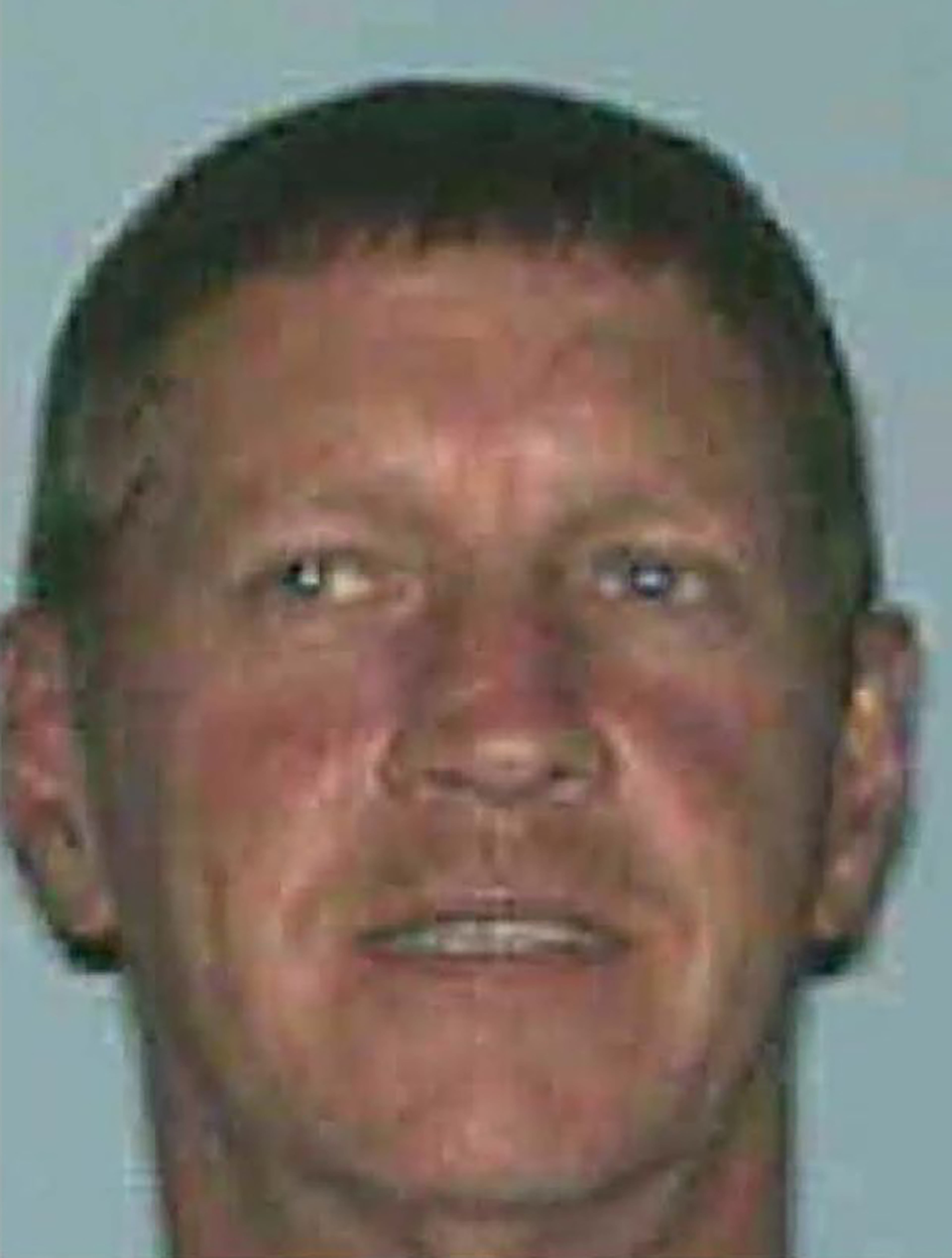
Authorities had their man at last: Carroll Dean Burrell.
A story unraveled
Burrell died in January 2020 at his home in Clayton. He was a carpenter, Christian and had five grandchildren, according to his obituary. He was 41 years old when Wilder was killed.
Soon after Gipson met with one of Burrell’s sons, he got a call from the other.
“He says, ‘Hey, I got a wild story I need to tell you. I was in Dahlonega around the time that murder happened,’” Gipson recalled hearing.
At that point, things started to add up.
Because Burrell’s son was not tied to the killing, the AJC is not naming him.
Gipson said the son told him that Burrell was diagnosed with bipolar disorder and was having an episode the day of the killing. They left their home in Rabun County in Burrell’s brother’s truck, and Gipson said Burrell was convinced people were after him. Gipson said the son, who was 17 years old at the time, said he believed his father.
They ended up near the Etowah River, where they ditched their IDs, wallets and personal belongings in the water and left the truck behind. Then they started walking.
“The son said, ‘We were in the woods for a day or two,’ and his dad wouldn’t let him stay in one spot very long because he was afraid somebody, whoever was after him, was going to get him. And so, he said, ‘We didn’t eat, we didn’t drink, we didn’t sleep, and eventually we wound up in town, and we found this area where the reservoir was getting constructed, and my dad reaches out, and we both get two big sticks. They’re the wooden stakes, and we use them as a walking stick,’” Gipson chronicled, explaining that the stakes came from the silt fence at the construction site.
A wooded area divides the Yahoola Creek Dam and Reservoir off Morrison Moore Parkway from the Golden Hills apartments. The boy and his father eventually made their way to the back side of the complex, Gipson said.

“(The) dad said, ‘I want you to lay down right here. I’ll be right back.’ And then he actually covers the son up with leaves and goes up into the apartments. And the boy said, ‘Once I laid down, I had the leaves on me, it started getting warm, I fell asleep.’ And then he woke up and he heard sirens, it was dark, a lot of commotion,” Gipson said.
He remembered his father returning, leaving and then coming back soaking wet, Gipson said. The two then started walking overnight. They came upon a restaurant in the morning and were able to hitch a ride back home.
The truck Burrell left behind in Dahlonega was eventually reported stolen and found near the Etowah River a few days later. Jarrard said that because it was determined a family member took the vehicle, charges were never pressed.
The AJC contacted Burrell’s son, but after a brief correspondence, he stopped responding. Attempts were also made to contact Burrell’s former wife and his other son.
Case closed
In a sense, nothing much changes for Wilder’s relatives. There are no court dates to attend, no victim impact statements to write. There’s only renewed grief.
“(Christi Nation and I) were like, ‘I know we’re going to get a solution one day,’ and we wanted to see a trial happen. We wanted to see some form of justice carried out,” Loftin said. “It got more and more frustrating as time went on, because this guy was out here living his life. And now knowing he was able to live out his life and never have any consequences. It’s good to have closure, but it wasn’t justice.”
After Burrell was confirmed as the suspect, Jarrard said he spoke with the district attorney Nov. 3 about closing the case. It was the only cold case the sheriff’s office was working.
Gipson said Burrell’s son thought the case had been solved in 2001 after the first arrest and never checked for updates. He said the son asked his father about that night over the years, but Burrell would get “aggressively mad.”
The DNA evidence was clear, but Gipson said it was the son’s recollections that finally gave them answers into what exactly happened to Wilder.
His family always believed it had to be someone he knew. Wilder was too modest, too reserved and too unassuming to aggravate someone who didn’t know him, they theorized.
In the end, they were mistaken.
Keith had convinced herself that the suspect might not have hated her uncle but was full of hatred, she said. Unlike Loftin, she and Odom weren’t sure they would ever get finality.
“It’s a miracle we got closure,” Odom said. “It’s a miracle.”

About the Author