Oracle weighs on Wall Street over AI spending worries even as most stocks rise
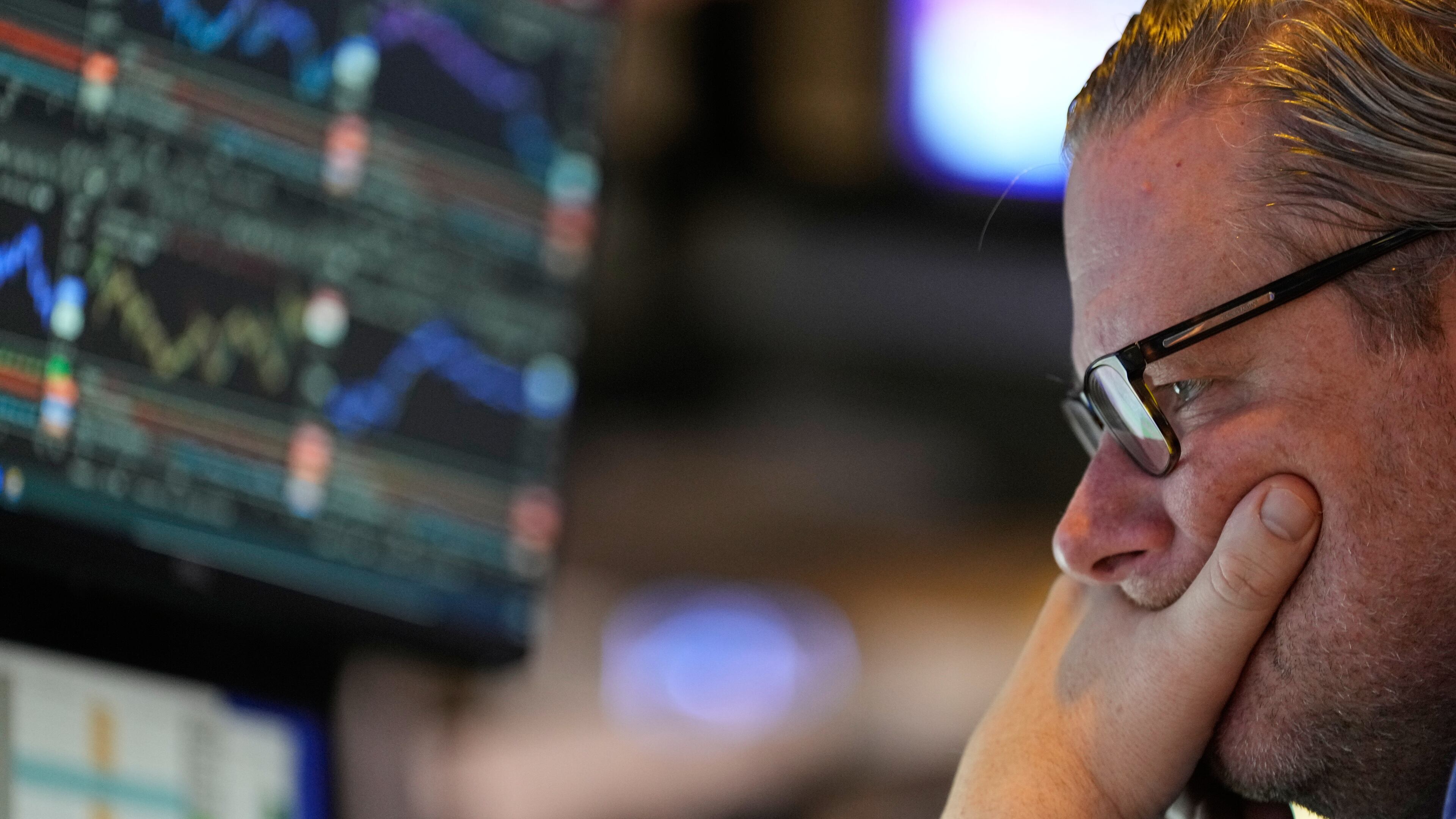
NEW YORK (AP) — Most U.S. stocks are rising on Wall Street, but a big drop for Oracle is holding the market back as the tech giant contends with worries about whether its spending on artificial-intelligence technology will pay off. The S&P 500 fell 0.4% in early trading Thursday, and the Nasdaq composite sank 0.8%. The Dow Jones Industrial Average rose 184 points, or 0.4%. Stocks got some help from easing Treasury yields in the bond market. Yields fell after a report said the number of workers applying for unemployment benefits jumped last week by more than expected.
THIS IS A BREAKING NEWS UPDATE. AP’s earlier story follows below.
Wall Street is pointing toward losses early Thursday after the third consecutive interest rate cut this year sent markets close to record highs, and hints from the Federal Reserve that it may be open to more cuts next year.
Futures for the S&P 500 fell 0.2% while futures for the Dow Jones Industrial Average were unchanged. Nasdaq futures fell 0.4% as AI-related companies were dragged down by concerns about Oracle's cash flow.
Investors took heart from comments by Fed Chair Jerome Powell, which were perceived as more open to rate cuts than they had been anticipating.
Powell said again on Wednesday that the central bank is in a difficult spot because the job market is slowing while inflation is facing upward pressure. By trying to fix one of those problems with interest rates, the Fed can worsen the other half of it's dual mandate to stabilize prices and promote maximum employment.
Powell also said for the first time in this rate-cutting campaign that interest rates are back in a place where they’re pushing neither inflation nor the job market higher or lower. That gives the Fed time to hold and reassess what to do next with interest rates as more data comes in on the job market and on inflation.
Wall Street loves lower interest rates because they can boost the economy and send prices for investments higher, even if they potentially make inflation worse.
Oracle tumbled nearly 12% overnight after the artificial intelligence bellwether's second-quarter revenue came in below Wall Street expectations.
Investors have been increasingly concerned about Oracle's cash flow due to the amount of money the software and cloud computing giant has invested in AI. Oracle reported Wednesday that its capital spending for the quarter was around $12 billion, which is more than 40% more than industry analysts had expected, according to FactSet.
“Frankly, the report was not dramatically bad, but it came to confirm concerns around heavy AI spending, financed by debt, with an unknown timeline for revenue generation,” Ipek Ozkardeskaya of Swissquote said in a commentary.
In other trading, Oxford Industries tumbled more than 22% after the maker of the Tommy Bahama clothing line cut its outlook for the year because customers are pulling back on spending. Net sales guidance was cut to $1.47 billion to $1.49 billion, down from its previous forecast of $1.48 billion to $1.52 billion.
At midday in Europe, Germany's DAX added 0.1%, as did Britain's FTSE 100. France's CAC 40 rose 0.5%.
In Tokyo, the Nikkei 225 index fell 0.9% to 50,148.82, pulled lower by a 7.7% drop in technology and telecoms giant SoftBank Group Corp., another major investor in AI.
Local shares are under pressure from growing expectations that the Bank of Japan will raise interest rates at its meeting next week.
Hong Kong's Hang Seng shed earlier gains and shed less than 0.1% to 25,530.51 after the Hong Kong Monetary Authority followed the Fed’s lead and trimmed borrowing costs to 4.00%, their lowest rate since October 2022. The Shanghai Composite index fell 0.7% to 3,873.32.
Sentiment was cautious ahead of China’s November credit data. New yuan loans fell sharply in October, missing forecasts and showing weaker consumer demand.
Australia's S&P/ASX 200 added nearly 0.2% to 8,592.00 after three days of decline, boosted by strength in gold and mining stocks. The country's seasonally adjusted unemployment rate in November was unchanged from October at 4.3%, below the expected 4.4%
In South Korea, the Kospi shed gains in early session, falling 0.6% to 4,110.62. Chip maker SK Hynix fell 3.8% after the country's main stock exchange issued warnings over its meteoric rise this year.
Taiwan's Taiex index closed 1.3% lower, while India's BSE Sensex rose 0.4%.
In energy trading early Thursday, U.S. benchmark crude oil lost 64 cents to $57.82 per barrel. Brent crude, the international standard, lost 66 cents to $61.56 per barrel.
On Wednesday night, President Donald Trump said that the U.S. had seized an oil tanker off the coast of Venezuela as tensions mount with the government of President Nicolás Maduro. The incident did not affect oil prices, which have struggled to break above $60 since early October due to concerns about the global economy and energy demand.


