Georgia districts forge their own way as troubled program faces a crossroads

The writing was on the wall. That’s what some Georgia school districts thought when state lawmakers intended a few years ago to stop funding a controversial special education program by this year.
Instead, the tens of millions of taxpayer dollars that fund the program would go to school districts to serve those students in local schools.
Three of the state’s biggest school districts — Gwinnett and Fulton counties and Atlanta Public Schools — started making plans for the 2024-25 school year to directly oversee and manage services for those most vulnerable children by separating from the statewide program known as the Georgia Network for Educational and Therapeutic Support, or GNETS. Each district now takes state funding earmarked for GNETS but operates its own programs.
It’s a big change.
For decades, most Georgia school districts have sent students with severe emotional and behavioral disorders to GNETS.
The program, though, has long been a target of public scrutiny. Investigations by the federal Department of Justice and state auditors found a pattern of poor student outcomes, such as lower graduation rates and higher dropout rates, and a lack of access to opportunities, like extracurricular activities and electives.
An Atlanta Journal-Constitution investigation found that GNETS has become a patchwork of programs that vary widely in what students get at the end of the bus ride. Separate facilities, inadequate staffing and services — many of the problems cited in an ongoing federal Department of Justice lawsuit — persist in some programs around the state, raising new questions about the future of GNETS.
Withdrawing from GNETS
The first big metro Atlanta school district to withdraw from GNETS was the Cherokee County school system. In 2010, the district opted to run its own program providing counseling and other therapies. The then-superintendent cited the results of an internal review of the NorthStar GNETS program, which found a lack of communication between staff and parents, paraprofessionals (teachers’ aides) without appropriate credentials and poor overall program performance.
Now, 15 years later, the shift away from GNETS by APS, Fulton and Gwinnett come amid concerns among many Georgia educators that the Trump administration, which has begun dismantling the Department of Education, will cut special education funding, which covers a portion of the GNETS budget. The U.S. Department of Education laid off nearly all employees in its special education division in early October.
Funding for GNETS has dropped in the last decade from $70 million to nearly $52 million as enrollment has fallen from about 4,500 to an estimated 2,500 students.
Separate Schooling
The AJC’s three-part series investigating the Georgia education program that serves students with emotional and behavioral disabilities:
Part 1: Georgia’s special ed program promised help. Families say it delivered them harm.
Ahead of her time 50 years ago, she now laments the state of GNETS
Part 2: How Georgia’s special ed program failed one child
Part 3: School districts forge their own way as troubled program faces a crossroads
Could the models followed by APS, Fulton and Gwinnett be the future of GNETS?
What’s in a name?
Gwinnett, Georgia’s largest school district, calls its program BRIDGE (Building Relationships in Discipline, Goals, and Education). A school district official said BRIDGE gives Gwinnett greater oversight over students with severe emotional and behavioral disorders.
“We now have autonomy to oversee via our usual (district) policies and procedures without the additional GNETS layer of policy implementation,” said district spokesperson Bernard Watson.
That includes hiring their own staff members, including therapists, counselors and special education teachers, Watson said. Before, 20% of the program’s staff were hired by a regional agency.
Fulton named its program PATHS (Partnership for Academics and Therapeutics between Home and School). The program is located at eight different schools across the district.
Receiving therapeutic services in a school means students receive counseling and specialized services during the day but they are still part of the school community.
APS divided its program into four regions — north, south, east and west. Seven schools participate in the new Education and Therapeutic Support program. So, instead of boarding a bus to the North Metro GNETS site — which was housed in a former elementary school near Mercedes-Benz Stadium — kids can go to a school closer to where they live.
“We want all our students to be educated in their home school to the greatest extent possible, but if not, at least within their cluster (group of nearby schools),” said Anne Dirden, director of exceptional education in APS.

Atlanta’s approach
To say Jo’Wan Bellamy has a heart for special education would be an understatement. The Los Angeles native came to Atlanta more than 20 years ago to attend Morris Brown College, the historically Black school near downtown. She planned to be a teacher, but not just any teacher.
“I didn’t want to teach a nice classroom,” she said. “No, I wanted those kids that were incorrigible — that they called incorrigible. There are a lot of kids who may start out that way, but they don’t have to end that way.”
Bellamy taught in the GNETS program for 17 years and recently transferred to Atlanta’s new behavioral program at Crawford Long Middle School.
Most of her students have been diagnosed with an emotional and behavioral disorder, autism or other health impairment, which can include conditions like attention deficit hyperactivity disorder.
On a recent afternoon, in a class that usually has three eighth- grade students, Bellamy and her aide were teaching one of them social studies. The other two students were out sick.
Bellamy reviewed the founding of the original 13 U.S. colonies with the student, who answered her questions before she finished asking them. Bellamy followed the eighth- grade teachers’ lesson plans, so if her students were to transition into one of those classrooms, they would be able to keep up.
Bellamy prefers Atlanta’s new approach to teaching students with severe emotional and behavioral as opposed to the GNETS model, where students with similar emotional problems are grouped together. She believes her students make more progress when they’re in the same building as their nondisabled peers.
“I think they get exposed more to the curriculum,” she said. “They get exposed more to socialization with their peers, which helps them to socialize better (in general).”
Bellamy said there can be some drawbacks to grouping students with severe behavior problems together at a GNETS center.
“They pick up behaviors from other kids that they didn’t come with,” she said.
Now, her students go to art, music and PE classes with other students. They participate in band and chorus and eat lunch in the cafeteria. One of her students recently tried out for the basketball team.
“We’re really doing great, and I think the kids enjoy it also,” she said.

A troubled history
Large, metro Atlanta school districts such as APS have more resources at their disposal and can provide focused support for students.
They receive ample funds from their property tax digests and can partner with Atlanta businesses and corporations. They can pair teachers and configure classes to meet students’ needs more easily than rural school districts.
Many school districts in GNETS partnerships — particularly in rural parts of Georgia — say the program is beneficial, but they need more funding.
Funding challenges are just the latest problem for GNETS. The biggest challenge is a decade-old federal lawsuit that accuses the state of “unnecessarily segregating” students with serious disabilities in separate buildings and separate wings of schools.
In 2004 a teenager at a Gainesville GNETS center was repeatedly placed in seclusion and then died by suicide. A blistering state audit in 2010 cited a lack of accountability and oversight. The 2016 DOJ lawsuit, which lingers in federal court, was followed by a class action suit in 2017, echoing the DOJ’s claims.
All of it added up to a public relations nightmare that critics say has driven some families from the program over the last decade.
The legal dispute centers around one question: who is responsible for GNETS?
The civil suit ended in September with a federal court decision that agreed with the state that the GNETS program is operated by local districts and the state has “no authority” to fix the injuries that the lawsuit claimed.
But in the other case, the DOJ claims that the state-run GNETS program separates students by disability, provides inferior facilities and academics, and has not returned students to their neighborhood schools as soon as they were ready. In that case, another federal judge in a 2020 pretrial ruling concluded there was no doubt that the state oversees all aspects of GNETS.
Money matters
In 2022, state lawmakers tried to hand responsibility for GNETS students back to school districts. GNETS is funded separately from Georgia’s K-12 public schools, so the plan required a funding change. Officials attempted to combine the two by folding GNETS money into the complicated, 40-year-old K-12 funding formula.
The math didn’t work. The attempt resulted in a $25 million shortfall for GNETS students.
Nonetheless, state lawmakers told school districts to plan for the change to occur by 2025. As 2025 comes to a close, though, the two funding streams remain separate.
Even though the funding maneuver failed in 2022, officials passed legislation that required the Georgia Department of Education to hold listening sessions about the proposed change. GNETS directors, parents and educators all participated, but gave their opinions anonymously.
“There is already a huge gap in funding now between GNETS funding and actual costs of the program,” one GNETS director wrote. “In one program, 7 salaries of the 17 teachers are funded with GNETS revenue.”
Some school districts chip in for expenses such as transportation or technology.
The Georgia DOE supports making GNETS funding part of the K-12 formula, spokesperson Meghan Frick told the AJC. The department has even made among its legislative priorities to include GNETS in the state’s education funding formula and increase funding for GNETS therapeutic services and supports.
“Distributing funds directly to districts to provide therapeutic services would better align with the existing structure of the programs, since GNETS services are administered locally and student placement takes place locally,” Frick said in a statement.
While complaints persist about the uneven quality of the 24 programs in GNETS, there are no signs the Legislature will move forward in 2026 with plans to change the funding model.
Blake Tillery, the chair of the state Senate appropriations committee and candidate for lieutenant governor, helped lead the effort in 2022 to combine GNETS money into K-12 funds.
When asked what changes lawmakers could make to the program in the future, Tillery indicated it remains to be seen.
“In the end, I think we all want the same thing: a system that provides supportive resources to in-need children so, where possible, they return to their normal school and classroom environment,” he said.
Superintendents’ concerns
While some metro Atlanta GNETS programs serve three or four school systems, programs in rural areas of the state often serve nine or ten. Those districts basically pool resources to make the GNETS program work. And many say it’s a lifeline for students who need therapeutic care.
The Candler County school district is a good example of that.
It’s one of nine districts in the southeastern region of the state served by the Cedarwood GNETS program.
Superintendent Bubba Longgrear describes the area as “the best last stop … before you head on that final stretch toward Savannah,” if you’re traveling from Atlanta on I-16. His district has one elementary, one middle and one high school and about 2,100 total students.
Longgrear estimated there were 11 students from his district in the Cedarwood GNETS program during the 2024-25 school year. He said the program provides critical services for those students, which could erode if state officials change the funding model.
“My biggest concern or hesitation with any transition … is just to make sure that we can fully serve the students with the focus, support and interventions (and) with the professionals that we need,” said Longgrear, who is running for state school superintendent.
If lawmakers decide to make GNETS funding part of the K-12 funding formula, Longgrear worries that Candler County may not be able to provide therapeutic services. He said it’s not just a matter of cost, but the availability of professionals who can deliver specific therapies, such as speech pathology or occupational therapy.
“It would be hard to get enough of those folks to individually serve each of these (small) districts,” he said.
The AJC sent a survey to superintendents in all of Georgia’s over 180 county and city school districts asking how the GNETS program works across the state. Twenty-two responded.
The majority of respondents said the program offers needed services for a small, high-needs population of students.
One questioned the Legislature’s intent to integrate GNETS students into other special education programs, arguing those students have specific needs.
“A GNETS referral is not a first step; it is a last resort, made only in extremely rare cases where a student’s behavior poses a serious risk to the safety of other students or staff, and all other interventions have been exhausted,” said Kim Morgan, superintendent of the Brantley County school district in southeast Georgia, with nearly 3,400 students.
Beverley Levine is also a superintendent of a small Georgia school system. Oglethorpe County, which is southeast of Athens, has about 2,300 students. She said students with complex behavioral issues often need the specialized services GNETS offers.
“Having the GNETS program in our school has worked very well for us and has benefitted the students,” she said. “However, it is not a one-size-fits-all-type program. I agree that to the extent possible the students should not be segregated, but this is not always possible.”
‘We are a family’
But it’s not just small, rural districts that want to stick with the program. That’s also the consensus among employees of the DeKalb-Rockdale GNETS program, which serves students from both counties and the City Schools of Decatur.
The program has a hybrid setup. It includes some classrooms in DeKalb school buildings and two center-based programs: Shadow Rock for grades K-5 and Eagle Woods for grades 6-12.
GNETS students are included in events with other DeKalb schools, said program director Lila Brown. They participate in field trips and award days. Some study the general curriculum and take standardized tests. Older students can enroll in job skills training.
Brown said the program also has six “outpost” classrooms that function as transitional programs for students who are ready to return to their neighborhood schools. Data show 79 students attended the program in 2023-24.
Brown said they’re seeing results.
“Our discipline (incidents have) decreased over the years, and we’re excited about that, but we’re also increasing the number of students that are transitioning to the least restrictive setting,” she said.
Brown also cited low staff turnover and achievement scores that exceeded DeKalb’s goals for GNETS students. Students in grades 3-5 improved their scores on standardized math tests by 61% last winter, she said. The district couldn’t share more information on the scores due to the small number of students represented in the data.
“So it shows that we are … being diligent and supporting our students as well as our teachers, because we want our students to be doing and exposed to everything that any other student would be in comparison to any other traditional school,” Brown said.
The program provides a lifeline for some children, according to Eagle Woods Senior Coordinator Angela Smith. She said more than 80% percent of students referred to the DeKalb-Rockdale GNETS program live with foster parents or in group homes.
“We are a family,” she said. “We function as a family. We operate as a family. And that is what keeps us glued.”
An uncertain future
Today, GNETS is far from the prototype Mary Wood established in Athens half a century ago. Then, students with behavior disorders would visit the innovative Rutland Academy for short periods during the school day to get the therapies they needed.
For Wood, the vision hasn’t changed. She still believes children with high needs can benefit from therapeutic treatment for two to four hours a day with a well-trained team of specialists.
When asked what she would do to make GNETS better, the lifelong educator thought for a moment during a lengthy interview in her Athens home. She replied that the program should have a skilled clinical team in each region made up of specialists, including child psychiatrists, pediatricians and special educators.

Wood also said GNETS has suffered in recent years from a lack of leadership at the state level.
“Nobody’s looking after it,” she said. “Nobody’s minding the store.”
About this investigation
This was the year when the federal Department of Justice’s nearly decade old lawsuit targeting Georgia’s program for children with severe emotional and behavioral disorders was supposed to go to trial.
It didn’t happen.
This year is also almost a decade since The Atlanta Journal-Constitution first investigated this state and federally-funded program, known as the Georgia Network for Educational and Therapeutic Support, or GNETS. The same year, the U.S. Department of Justice filed the lawsuit accusing the state of “unnecessarily segregating students with disabilities from their peers.”
To dig deep into this program, which was founded to serve the state’s most vulnerable children, the AJC assembled a team: Katherine Landergan, investigative reporter; Martha Dalton, education reporter; Stephanie Lamm, data reporter; editors Rose Ciotta, Eric Stirgus and Charles Minshew; and photographers Hyosub Shin, Daniel Varnado and Arvin Temkar.
The team interviewed dozens of people with current and former experience with GNETS: parents, teachers, students, administrators, attorneys, advocates, lawmakers, researchers and special education experts, including Mary Wood, the educator who envisioned a very different GNETS more than 50 years ago. Reporters and photographers also visited schools in Atlanta, Macon and Coweta County and interviewed officials at other schools around the state.
They reviewed records from families, GNETS programs, the state Department of Education and federal and state court lawsuits, including depositions in the ongoing DOJ lawsuit.
They analyzed state data on the demographics of students attending GNETS, 10-year enrollment trends for GNETS and all special education students and state and federal funding. They also used social media to reach readers and school district superintendents to share their experiences.
About the Authors

Martha Dalton is a journalist for The Atlanta Journal-Constitution, writing about K-12 education. She was previously a senior education reporter at WABE, Atlanta's NPR affiliate. Before that, she was a general assignment reporter at CNN Radio. Martha has worked in media for more than 20 years. She taught elementary school in a previous life.
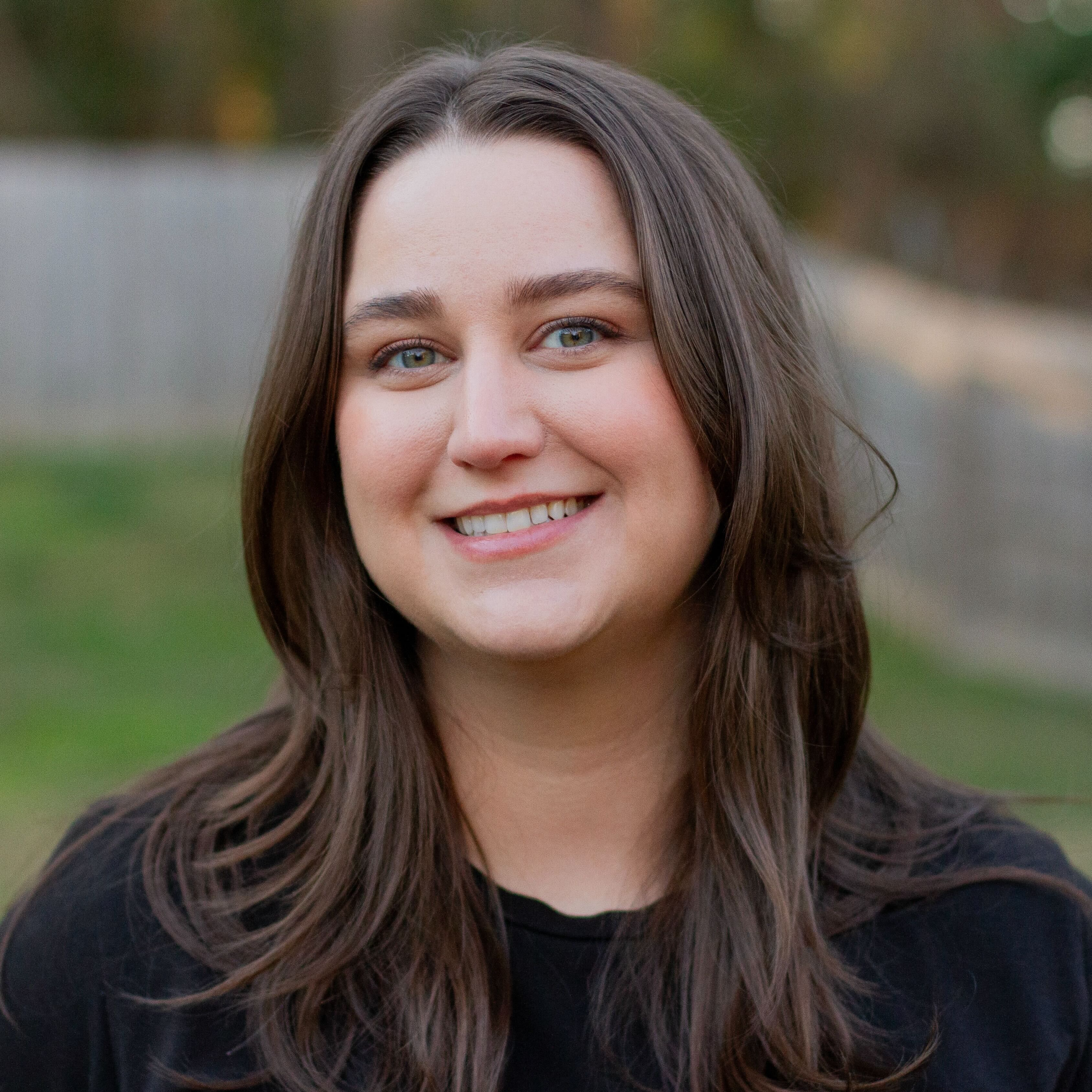
Stephanie Lamm is a data reporter for the Atlanta Journal-Constitution. She works with data to uncover stories that would otherwise remain hidden.


