Belarus leader hosts US envoy as he seeks to improve his country's ties with the West
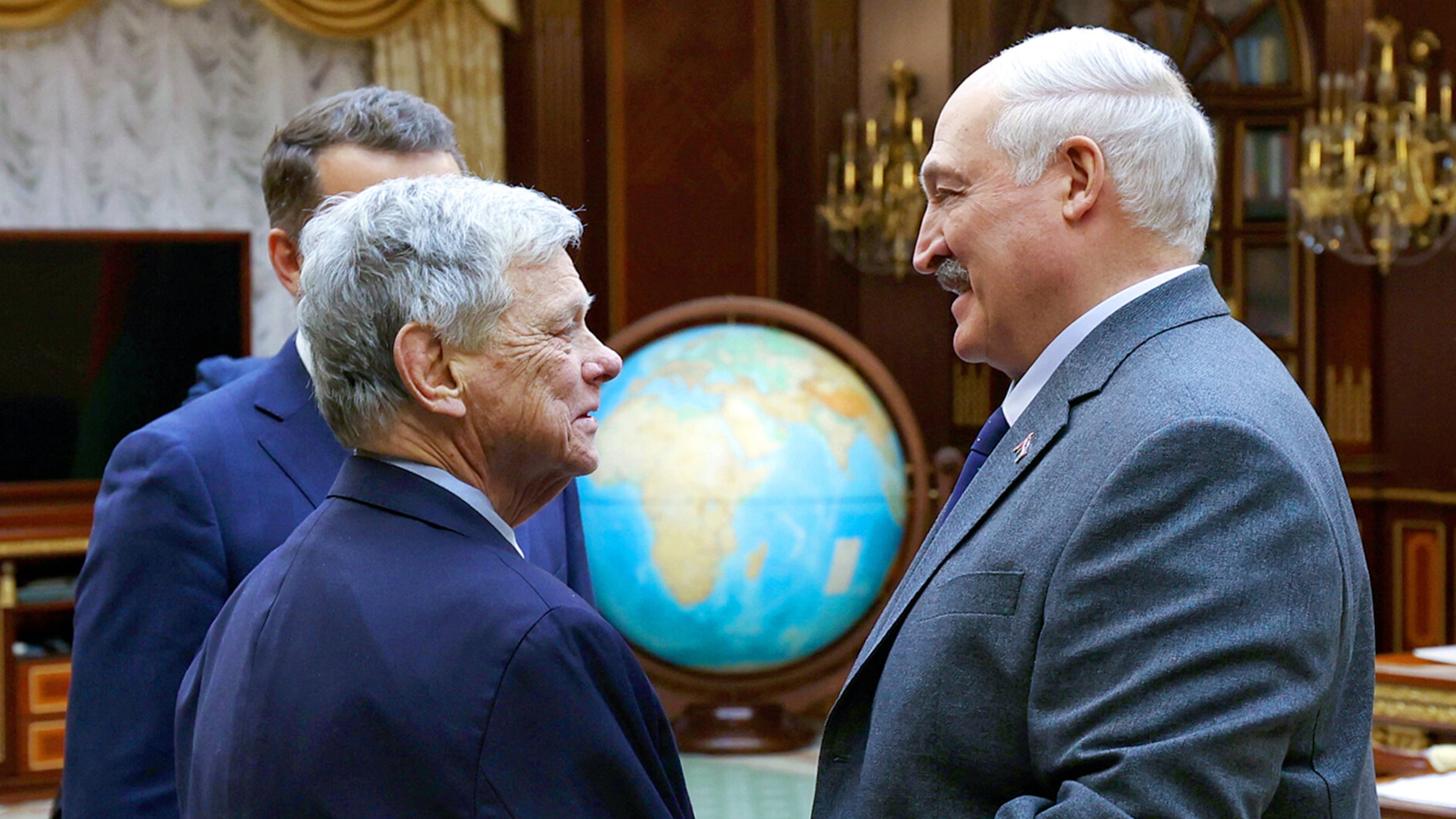
Authoritarian President Alexander Lukashenko on Friday hosted a U.S. envoy for talks in the Belarus capital of Minsk, the latest step in the isolated leader's effort to improve ties with the West.
Lukashenko met with President Donald Trump's special envoy for Belarus, John Coale, according to state news agency Belta and the presidential press service. The press service said the talks would continue Saturday.
The last time U.S. officials met with Lukashenko, Washington announced easing some of the sanctions against Belarus, and more than 50 political prisoners were released and brought to Lithuania. Overall, Belarus released more than 430 prisoners since July 2024 in what was widely seen as an effort at a rapprochement with the West.
“They say Trump loves flattery. But I’m not aiming for flattery. I want to say that I really like his actions lately,” Belta quoted Lukashenko as saying.
A close ally of Russia, Minsk has faced Western isolation and sanctions for years. Lukashenko has ruled the nation of 9.5 million with an iron fist for more than three decades, and the country has been sanctioned repeatedly by Western countries — both for its crackdown on human rights and for allowing Moscow to use its territory in the full-scale invasion of Ukraine in 2022.
Lukashenko’s rule was challenged after a 2020 presidential election that kept him in power, when tens of thousands of people poured into the streets to protest a vote widely seen as rigged. They were the largest demonstrations in Belarus’ history, after the country became independent following the 1991 collapse of the Soviet Union.
In an ensuing crackdown, tens of thousands of people were detained, with many beaten by police. Prominent opposition figures either fled the country or were imprisoned.
Five years after the mass demonstrations, Lukashenko won a seventh term in an election that the opposition called a farce.
More recently, however, Belarus has begun to free some political prisoners to try to win favor with the West. Since Donald Trump returned to the White House this year, Lukashenko has released dozens of prisoners, including key dissident figure Siarhei Tsikhanouski — the husband of exiled opposition leader Sviatlana Tsikhanouskaya. His release came after a visit to Belarus by U.S. envoy Keith Kellogg.
Trump spoke to Lukashenko by phone in August after one such release and even suggested a face-to-face meeting in what would be a big victory for the Belarusian leader, who has been dubbed “Europe's Last Dictator.”
A month later, Lukashenko freed more than 50 prisoners, and the U.S. lifted sanctions on the country’s national airline, Belavia, allowing it to repair and buy parts for its planes, including Boeing aircraft.
Those released were brought to Lithuania. But one — prominent opposition activist Mikola Statkevich — refused to leave Belarus. The 69-year-old, who described the government’s actions as a "forced deportation,” got off the bus and stayed for several hours in the no-man’s land between the countries before being taken away by Belarusian police and returned to prison.
Human rights advocates point out that Belarusian authorities continue their relentless crackdown on dissent despite the prisoners releases, with more people regularly arrested on politically motivated charges.
There are still about 1,200 political prisoners in Belarus, according to human rights group Viasna, including its founder, Nobel Peace Prize laureate Ales Bialiatski.
More Stories
Keep Reading