West Midtown restaurants band together to change the neighborhood’s narrative


After a wave of restaurant closures struck West Midtown in late 2024 and early 2025, theories on the state of the area’s restaurant scene proliferated.
Media outlets, including The Atlanta Journal-Constitution, turned out articles that suggested a worrying picture of the corridor and restaurants that seemed to be closing left and right.
Common complaints from Atlantans included parking that was too expensive, traffic woes and a real estate shift in the area.
Over a year later, those closures have slowed, and a variety of restaurants and entertainment venues have opened or are set to debut in the Upper Westside area. A group of restaurant and business owners, some with places that have been there for years, saw a need to band together and change the narrative that was plaguing West Midtown.
In the past year, the West Midtown Alliance was born as a small-business association, and one of its major initiatives was to hold the inaugural West Midtown Restaurant Week. The landscape of the area has shifted, too, as the Upper Westside Commercial Improvement District has led the charge on new transportation projects meant to improve the walkability of the district, and early next month, Howell Mill Road will come to life with the annual Westside Stride.
Now that the dust has settled from the deluge of negative reports surrounding West Midtown’s reputation, the future of its restaurant scene is looking hopeful.
How restaurants are changing the West Midtown narrative
Steven Satterfield has operated Miller Union on the westside since 2009. His restaurant is joined by other longtime landmarks like Bacchanalia, Star Provisions, Northside Tavern and Ormsby’s.
About a year and a half ago, when the discourse around West Midtown’s troubles was swirling, Satterfield reacheprecidd out to some business owners in the area and invited them to lunch at Miller Union.
“Hey, are you guys tired of the story that keeps circulating about all these places that are closed in West Midtown?” he said to his lunch guests. “We’re still open, but it’s not helping our business.”

Of course, numbers don’t lie, and there was a spike in restaurant closures in a relatively short period of time, including notable local eateries like Bastone, Superica and West Egg.
“But a lot of the original people that kind of settled in the area were still there and still open,” he said.
During those meetings, they talked about the public perception of West Midtown versus the reality they all witnessed on a daily basis.
Some of the closures were from businesses that didn’t seem to be set up to last, Satterfield said, like private equity-owned restaurant chains that were opening across the country, with West Midtown just another dot on their expansion map.
“We know that in Atlanta, most of the homegrown concepts that are good are going to do well because people like to support the independent operators here,” he said.
Satterfield and a group of restaurant owners devised the West Midtown Alliance, an association of businesses that would come together to highlight the positive side of West Midtown and the Upper Westside corridor.

The West Midtown Alliance decided one way to liven up the district was with a restaurant week where participating eateries would offer special deals and menu items to encourage the public to get out and dine. It would be the first of its kind for the area, joining restaurant weeks in other cities like Chamblee, Buckhead and Alpharetta.
The six neighborhoods that make up the Upper Westside (West Midtown is not an official neighborhood) have a healthy concentration of restaurants with James Beard Award nominations and Michelin recognition.
Avize was named to North America’s 50 Best Restaurants list; Bacchanalia and Mujo both have one Michelin star; Miller Union and Pink Lotus are on the Michelin Guide’s recommended list; and Satterfield is a James Beard Award winner.
The inaugural West Midtown Restaurant Week, organized with help from Livable Buckhead, took place in September and highlighted more than 30 culinary heavy-hitters in the area.
Satterfield said it was a successful week, one they hope to repeat next year, though the West Midtown Alliance is still gathering specific data on how it impacted the participating restaurants.
“If there’s an area where lots of restaurants are doing well, people will keep coming to that area, and if they can’t get into one, they’re going to go down the street to the other, and so there’s that kind of synergy there, too,” Satterfield said.
Leslie Battle and Michael Goop, the co-owners of Ormsby’s, are also part of the West Midtown Alliance. Their restaurant and game bar has been open since 2010, and in the 16 years they’ve been in West Midtown, they’ve seen it explode, a result they were hoping for when they first opened.

Up until COVID-19, they were busy enough to not need to worry about holding events to draw in more customers, but after the pandemic, Goop said they were “hanging on for dear life.”
Battle and Goop would hold meetings where they brainstormed on what might help bring more business to the bar and restaurant. One day, their public relations team suggested they include the community in these discussions, too.
Goop starred in a social media video that went viral. He brought the public into the conversation of how to bring the bar back to its glory days.
Since posting the video in early August, it’s received more than 2,000 comments on Instagram, including plenty of suggestions, some of which the Ormsby’s team implemented. Not all of them worked, but Goop and Battle have introduced weekly events like trivia and bluegrass jam sessions, both of which have been very successful.
“You got to stay in front of people because there are new places opening all the time,” Goop said.
Sticking together with fellow restaurateurs and retail businesses can benefit the whole area. Battle said they’re seeing more people out on the weekends again, and even though some of the restaurants that closed are still sitting vacant, she thinks it’s helped keep the area from becoming as oversaturated.
“It’s about bringing people together to this area again, you know, because if they’re going to go in one bar, they’ll probably go to five bars,” Battle said.
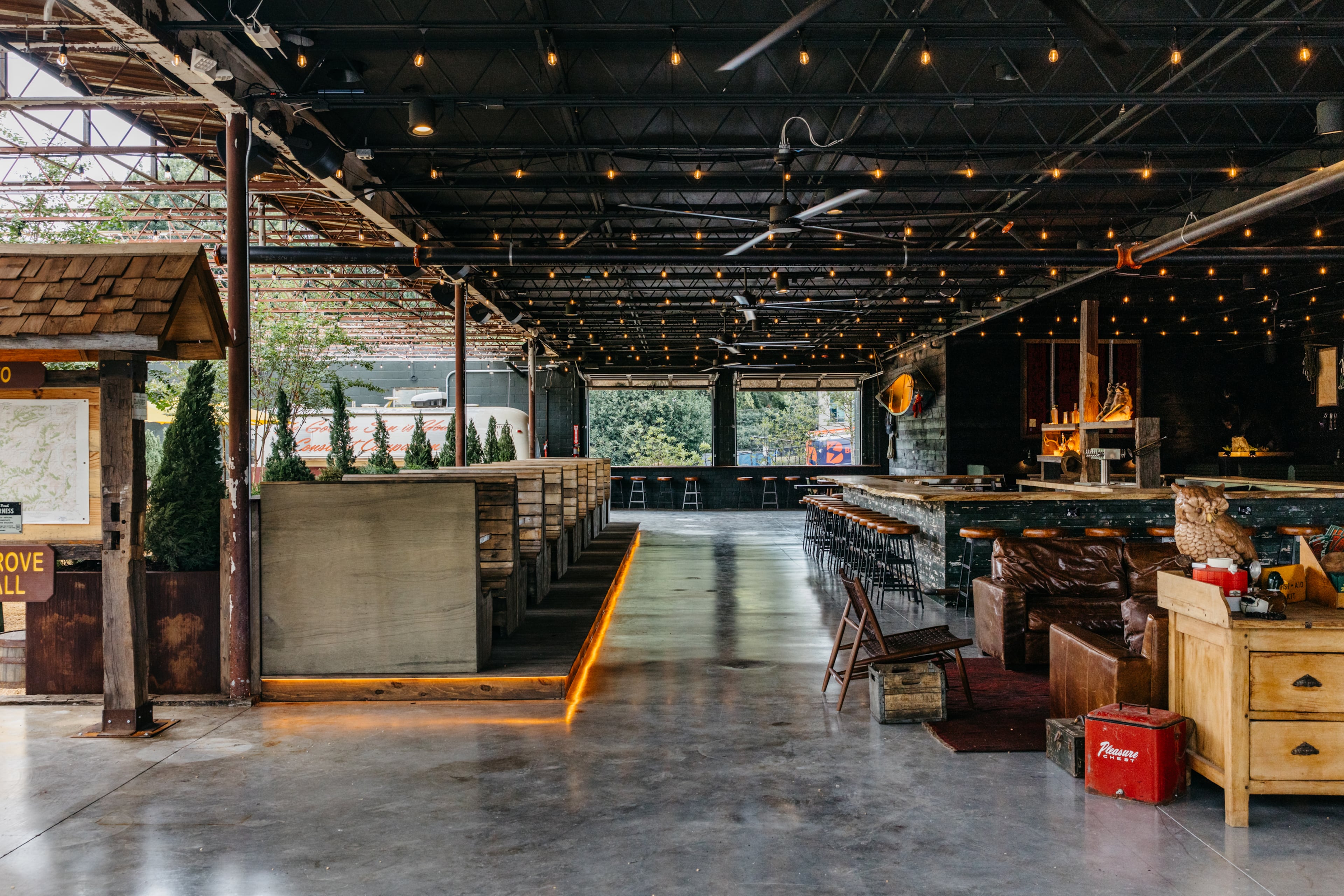
Restaurants are still opening in West Midtown
According to the AJC’s monthly restaurant opening and closing roundups, at least 10 restaurants have opened in the Upper Westside district since January, compared to about six closures.
Of those closures, one was Maple Street Biscuit Company, a brand formerly owned by Cracker Barrel that was bought out by Kentucky-based brunch chain Biscuit Belly, and another was Torchy’s Tacos, a fast-casual Tex-Mex chain.
The list of openings includes local businesses like the Chai Box Cafe, which opened off Howell Mill Road in the former Doughnut Dollies space in June.

Owner Monica Sunny said her team first looked at a location in Marietta, but it would have required them to build the space from scratch. The West Midtown building was a second-generation space that had already housed a restaurant, making it more manageable for first-time cafe owners.
“I think people are ready for just like a small, neighborhood community feel. So like smaller shops and mom and pop shops, not just these big corporate restaurants,” she said.
Her concept, a cafe focused on chai as well as coffee, also seemed to set them apart, and Sunny thinks they’ve earned more business because they’re bringing something new to the area.
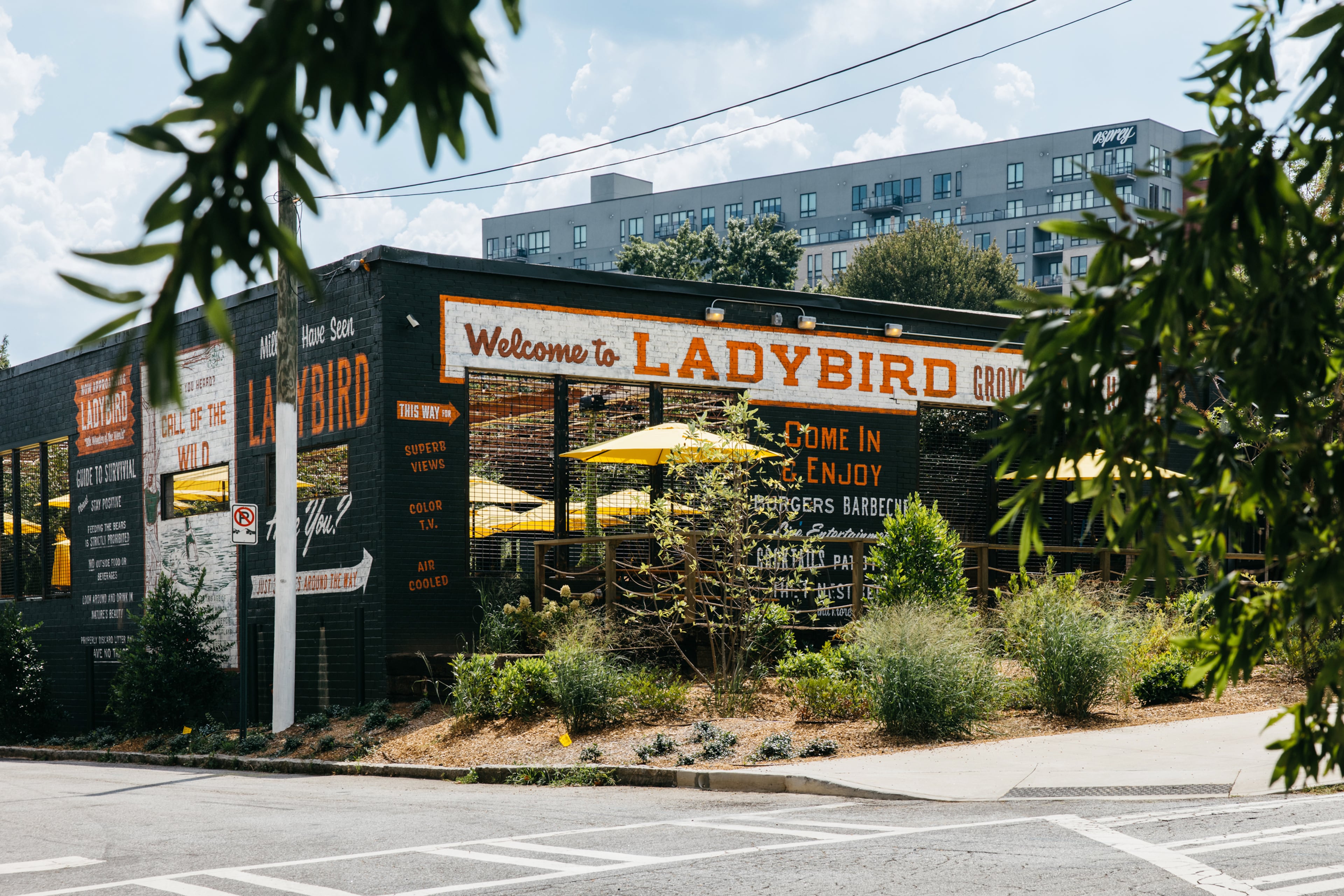
A second location of Ladybird Grove & Mess Hall also just opened in West Midtown, as well as a second location of Muchacho, both from the local Electric Hospitality group.
In February, Miami-based restaurant group Grassfed Culture Hospitality opened Italian restaurant Füm in the Stella at Star Metals building. And there are more homegrown concepts still coming to the Upper Westside, including Omma, a bar from the MidCity team that’s set to open in the Westside Paper development.
In previous interviews with the Füm and Omma owners, both expressed optimism around West Midtown’s future.
Minhwa Spirits, an award-winning Korean American distillery, also announced it will be relocating its tasting room from Doraville to the former Aziza space in the Westside Provisions District development on Howell Mill Road.
In a recent AJC interview, Minhwa Spirits owners James Kim and Ming Han Chung said they were attracted to the industrial feel of West Midtown, and as Georgia Tech graduates who once spent a lot of time in the area, they carry extra affection for it.
“Don’t be scared of the comment section,” Kim said during the interview, noting the availability of parking and the number of other restaurants and entertainment venues in the area. “I think we’re getting in at a pretty good time.”
On the tail of these new restaurant announcements, owners are sure to emphasize one thing to customers and media: Ample parking.
Is there parking in West Midtown?
Parking is still a popular topic that comes up around West Midtown.
When Goop posted the first video about restoring Ormsby’s to its glory days, he noted a confusing critique often levied against West Midtown — that it lacks parking, especially free parking. Goop specified in another video that Ormsby’s validates customer parking for up to three hours.
West Midtown has quite a few parking options, and the Upper Westside Community Improvement District (CID) added a comprehensive map with all the parking options in the Upper Westside and the daily rates people can expect on its website.
Adeline Collot, the Upper Westside CID program director, said the map is intended to help mitigate some of the confusion around where parking entrances are located as they can be difficult to find.

Soon after the initial collection of articles published about West Midtown’s restaurant troubles, the Interlock development announced on social media it was reducing its parking fees in response to the outcry against expensive parking prices.
Some Instagram comments under the post were still dissatisfied at having to pay for parking at all.
Paid parking is a complicated issue to solve, and it often takes trial and error for a development or city to figure out the right method, Andrea Worthy said, the economic development director for Smyrna.
Worthy has been working in the economic development field in metro Atlanta for around 30 years. She worked with Sandy Springs when they developed the City Springs downtown, and parking was a huge part of that conversation, too.
“Parking is an expensive piece of infrastructure. Every space has a construction cost that’s very high these days. It has a maintenance cost,” she said. “So that cost is either, from a development perspective, embedded in the rent that the tenant or the restaurant pays to the developer, or is charged directly to the people who actually use the parking, i.e. paid parking.”
There are a lot of factors that go into how a city or development organizes its parking. In a bustling, successful downtown district, it’s not always a good thing for the parking spots in front of stores to be occupied all the time as it gives the impression of a lack of parking availability.
So adding paid parking can encourage different behaviors in visitors, like leading people to park an extra block away, she said.
“If we want these walkable communities, then we have to get rid of this mentality of the free, paved big surface parking lot,” Worthy said.

On the flip side, building parking decks is considerably more expensive. The cost of building a structured parking deck, according to Worthy’s numbers for Atlanta, can be between $30,000 to $40,000 per individual parking space, while surface lots are about $7,000 per space.
While cities and developers can experiment with various ways to pass off the costs of parking — sometimes through taxpayer dollars, rent costs or some form of paid parking — the issue of Atlanta parking will probably never find a perfect resolution, Worthy said, in part because the city and metro area has “never fully embraced public transit.”
“As long as (driving is) the only way to get around, we’re only going to be touching the edges of (the problem),” she said. “(People) that live close to a downtown area may walk, but everybody else is having to drive to get there.”
Creating a more walkable and bikeable environment is a goal the Upper Westside Community Improvement District (CID) has for the West Midtown corridor.
The Upper Westside CID was formed in 2016 when developers saw the direction that the Westside was headed with so many projects in development. The community improvement district is funded by local property taxes that are used specifically for hyperlocal improvements.
One of its major goals has been to use those funds to make the Upper Westside more pedestrian friendly.
Because of the Upper Westside’s industrial past, many of the roads simply can’t be widened because of topography and physical constraints, Collot said.
As such, the Upper Westside has worked to make other improvements for residents, like adding two-way bike lanes and investing in sidewalks and trails. The Upper Westside CID also recently received a $16 million grant from the federal government to help build three miles of multiuse paths for biking and walking between Westside Park and Georgia Tech.
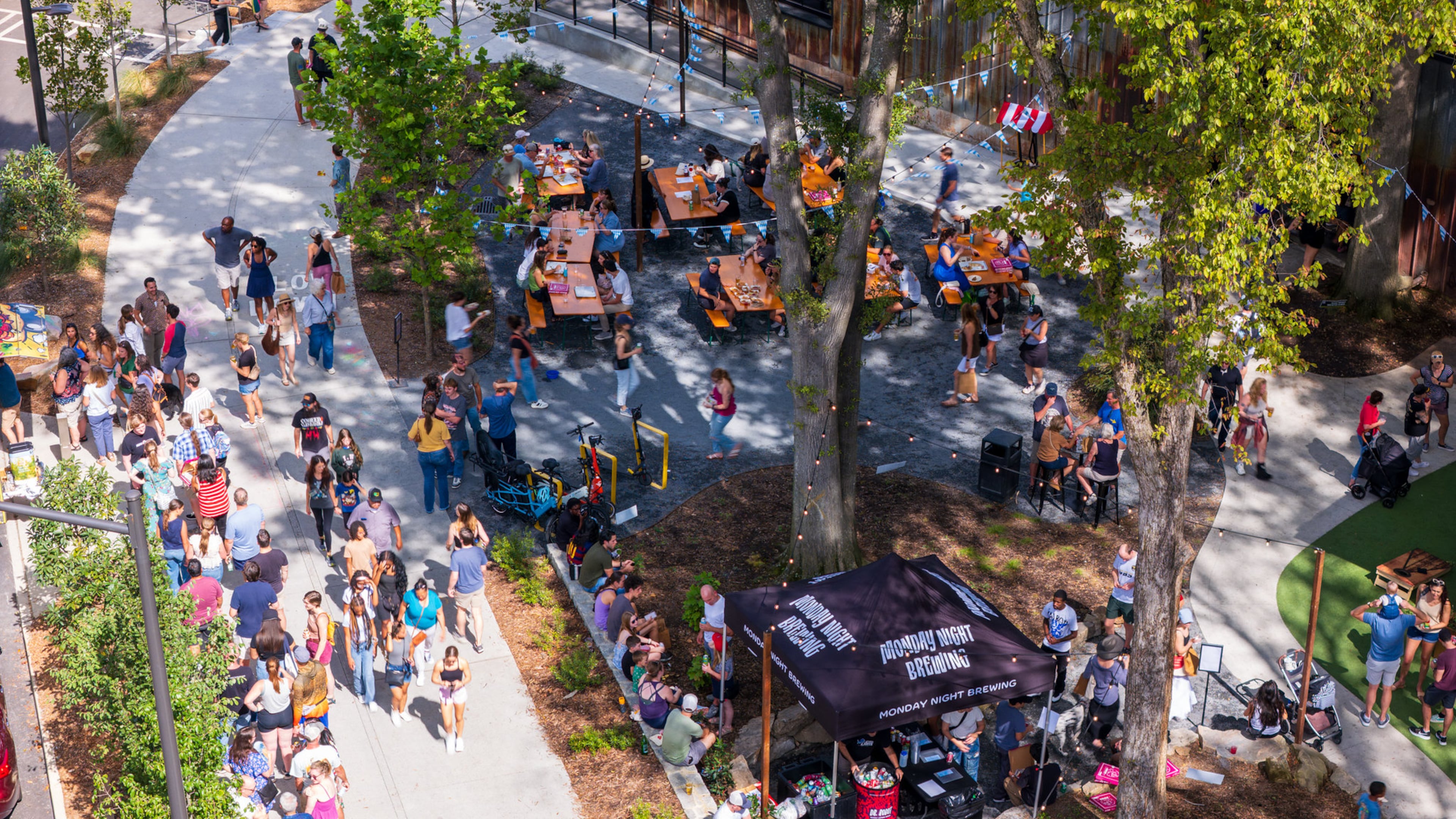
They have also completed projects like the Spur Trail and the Woodall Rail Trail, both of which are 0.7 miles long but connect to parts of the Atlanta Beltline.
“We can’t build our way out of vehicle congestion, but we can really diversify the choices that people have to move through a place, and we’ve seen some really incredible usage of the two trails that we were able to build,” she said.
These efforts will be especially visible during the Westside Stride on Nov. 8 when businesses and restaurants set up in the streets to showcase the vitality of West Midtown.
“The piece that we are trying to showcase is really how close things are to each other and how ever-changing the infrastructure is,” Collot said. “And this is going to be the first year where we can say with 100% certainty that we have now created many ways for people to get to the event without a car.”
Staff writer Henri Hollis contributed to this report.