A New Day, Even Now: Nowruz at Rumi’s Kitchen in Atlanta
Atlanta is a long way from Iran.
Far enough that most days, you can convince yourself the distance offers a kind of protection, that whatever is happening “over there” stays contained, separate from your life here.
Until it doesn’t.
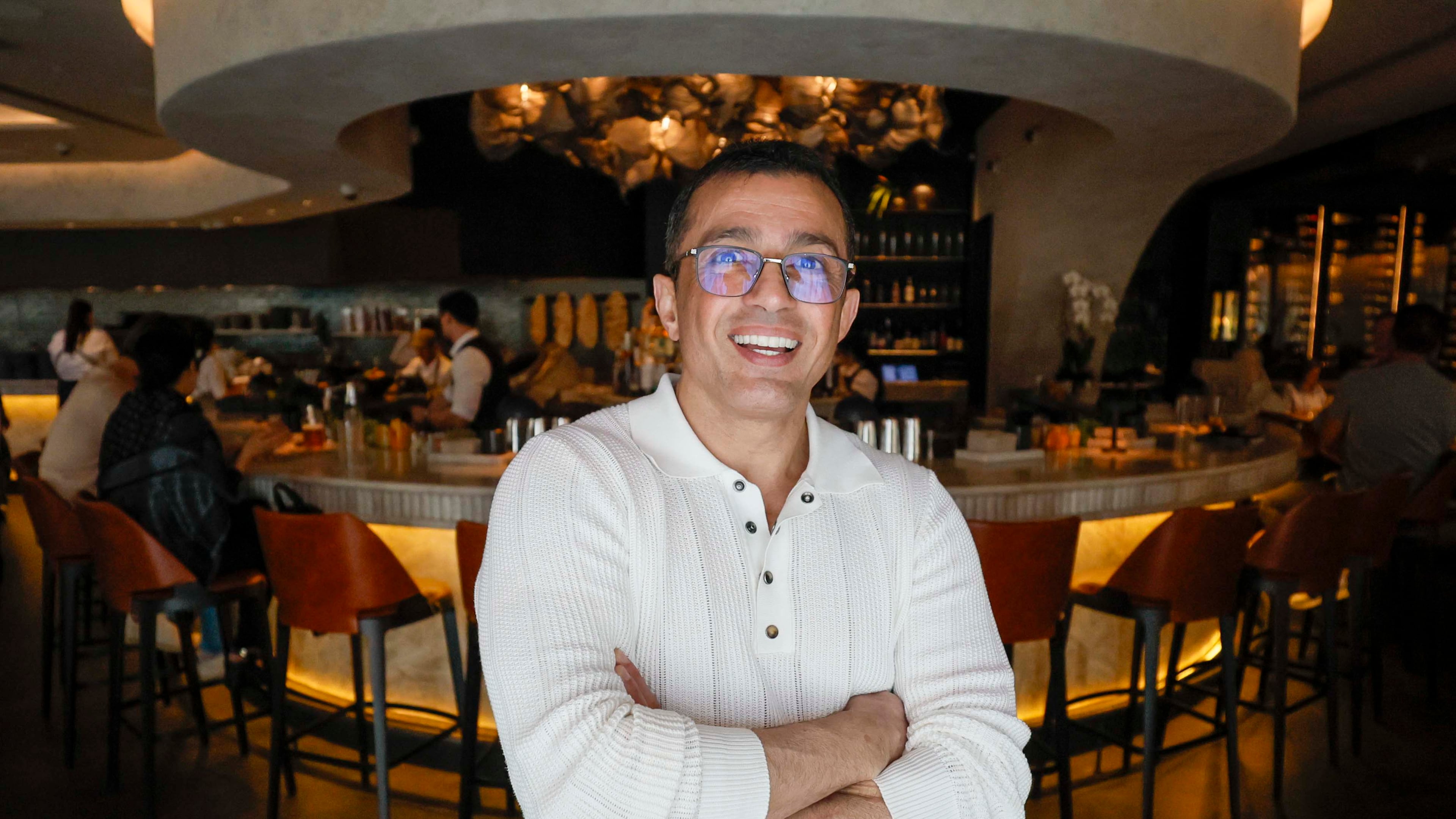
At Rumi’s Kitchen in Sandy Springs, one of Atlanta’s most beloved Iranian restaurants, the dining room is starting to fill. Today is part of the traditional thirteen-day celebration of Nowruz, the Persian New Year, the start of spring, when everything begins again.
Chef Ali Mesghali built this sprawling restaurant two decades ago. Now he moves through it quietly, watching the room come together with the attention of someone who understands how easily the structured dance of service can fall out of step.
When I ask Mesghali if the war in Iran makes Nowruz feel different this year, he doesn’t hesitate.
“Of course,” he says. “Any time there is bombs being dropped on your country, it’s not the same.”
He says it plainly, without softening it, but his voice tightens just enough that I hear the shift.
“I’m trying to say that without getting emotional.”

Mesghali was born in Iran, but he didn’t grow up there. He left young and built his life in the United States. He learned, like many bicultural people do, how to move between places that don’t always fit cleanly together.
But some things always find you, no matter how far you’ve gone, like the memory of a place you once called home and the reality of what’s happening there now.
He tells me he wasn’t sure he wanted his restaurant to celebrate the new year.
“I was very hesitant if we should celebrate Nowruz.” Mesghali says.
It is not a performative statement. Lines form on his forehead as if he is still sitting with his decision, weighing it.
It is a struggle many Iranians I have spoken with are dealing with. Is it appropriate to celebrate when people are hurting, when nothing has been resolved?
There isn’t a clean answer. But Mesghali holds onto the significance of the holiday.
“Nowruz is about new beginnings,” he says. “It gives hope to people.”
Hope, in this case, isn’t some abstract emotion. It is as much a necessity as food and drink.
“You’ve got to have hope in your life. In the darkest moment, you’ve got to see the light at the end of the tunnel. You’ve got to say, somehow we’re going to just rise above all of this and have a better way of life,” Mesghali continues.
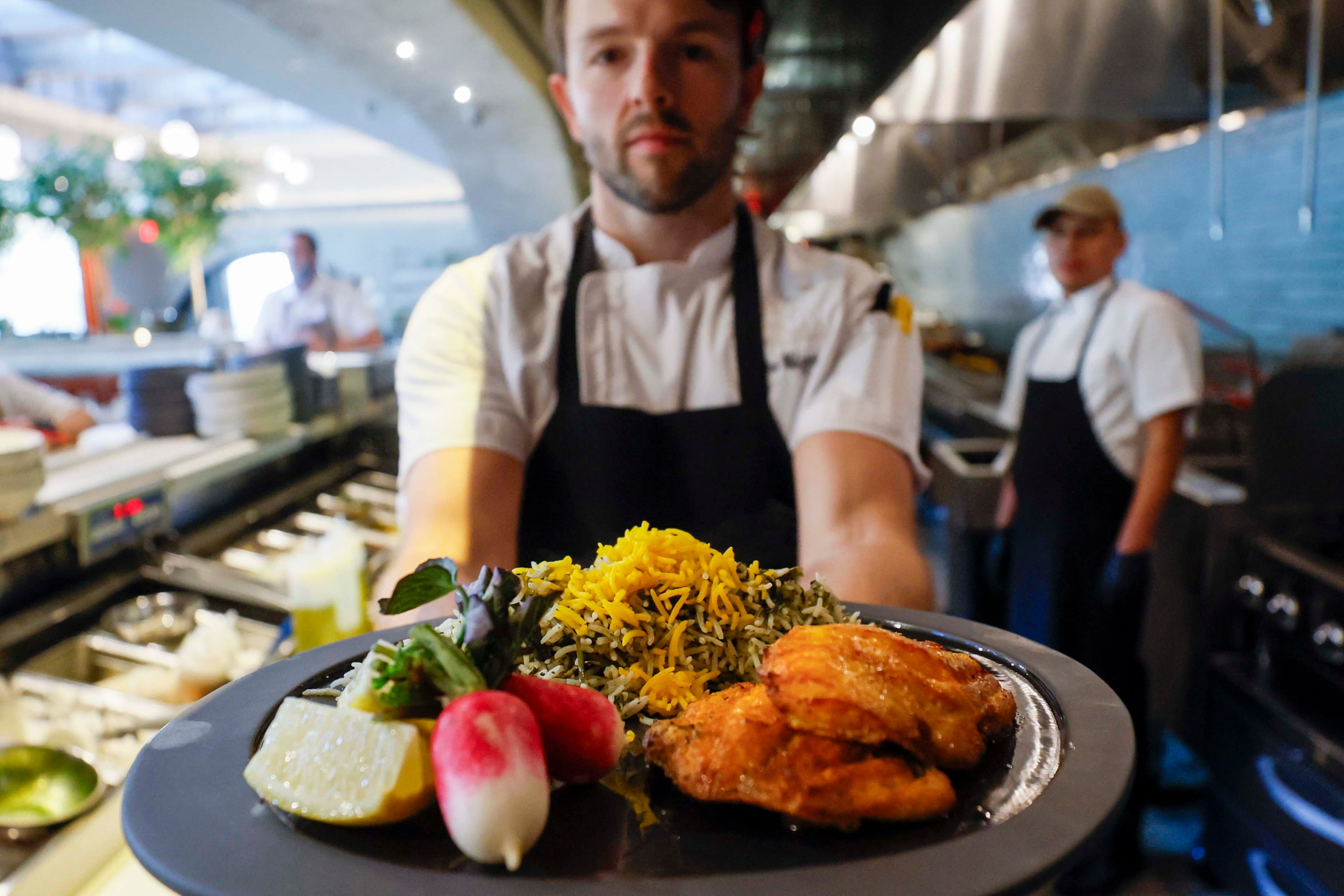
In the kitchen, sabzi polo mahi is plated, a traditional Nowruz dish built around herbs and fish. The herbs symbolize the rejuvenation of nature and the fish represents life, movement and prosperity. From a distance, it looks like any other service.
In the dining room there is a partition wall that’s about four feet tall and a foot thick with plants and a Haft-seen arranged on its surface. A Haft-seen is a traditional Nowruz display of seven symbolic items, each beginning with the same letter in Farsi, the Persian language spoken in Iran. Each item is tied to an essential aspect of the human experience, like growth, health, patience and renewal.
The display doesn’t call attention to itself. You could pass it without knowing what you’re looking at.
A small bird’s nest rests at the center. Dates are set carefully along the edge. I ask what the Haft-seen means to him.
“It signifies life,” Mesghali says. “It signifies joy. It signifies new beginning … how beautiful it is to be alive, how beautiful it is to breathe.”
Today it feels less like a display and more like a wish.
Mesghali has been in the United States for decades. Atlanta has been home for most of that time.
“You still have that love for your original mother,” he says. “But you’re grateful to the people who raised you.”
“My success is because of Iranian food… that has always stayed with me inside my heart.”

As the day moves on, the dining room fills. At first it’s a few tables, then more, until conversations layer over each other and the room settles into the familiar rhythm of a busy Sunday lunch. Plates land on tables. Glasses lift to smiling faces. People lean into each other.
Across the partition, the Haft-seen holds its place.
Mesghali watches it all happen, his face soft.
“To take them away,” he says, “for the hour, the two hours they’re in this restaurant… so they’re transported somewhere else.” His voice tightens again, and he does not finish his sentence.
Whatever feelings Mesghali‘s clients carried, they left behind when they entered his dining room. Not permanently, of course. But for a moment, long enough to feel a difference, a sense of relief.
Some Iranian families are not celebrating the new year. But waiting for the right moment can leave you waiting for a long time.
By the time the room is full, the partition no longer divides the space so much as anchors it. The Haft-seen sits where it was placed, steady, unremarked upon, doing its quiet work.
Mesghali steps back for a moment and looks at the room — not like something that is finished, but like a vessel.
“A new day gives me hope,” he says.
Then, after a brief pause —
“Hope is not something you wish for. It’s something you work for ... You just have to have hope that one day we will all live in peace.”
Spring doesn’t wait for things to make sense. The seasons come no matter what.
Here, in a packed dining room in Atlanta, people sit, eat, and celebrate.
Not because everything is OK. Because it isn’t.
Sometimes celebration isn’t a reflection of joy.
It’s how we survive the absence of it.
About the Author

Monti Carlo is the AJC's Senior Editor of Food & Dining and a Telly Award-winning TV host, cookbook author and special events chef. She covers culinary culture, spotlighting the people redefining Southern food today. Her cookbook, Spanglish, a love letter to bicultural Puerto Rican cooking, publishes May 19, 2026. Email her at monti.carlo@ajc.com


