The legacy of the Black grocers of Reconstruction
During the Reconstruction era in the decades after the Civil War, Atlanta’s Black residents found themselves free in a technical sense, yet bound by the customs and prejudices of the times.
Even before the widespread institution of Jim Crow laws, Black people faced seemingly insurmountable obstacles when it came to their attempts to rise above subsistence level.
But the weapons of oppression were occasionally blunted by the economic realities of daily life. Everybody has to eat, and nobody likes paying high grocery prices.
In the late 1800s, many of Atlanta’s most prominent Black businesspeople got their start in the grocery business. These would become some of Atlanta’s most important historical figures, like James Tate, the successful grocer who laid the foundation for Spelman College and the Atlanta University Center, or Floyd Crumbly, a grocer and former Buffalo Soldier who helped found South-View Cemetery.
Intolerance extended to Black success
Success could be a dangerous pursuit for aspiring Black entrepreneurs in the 19th century. Those who became too wealthy or well-known were quickly curtailed by the white establishment of the day, as illustrated by the story of Robert Webster, who found business success while still enslaved.
Webster was born into slavery but forged a relationship of mutual respect with his enslaver, Benjamin Yancey, according to the “Savory Stories” podcast from Akila McConnell, a local historian, author and owner of Unexpected Atlanta Tours. With Yancey’s backing, Webster opened a barbershop in Atlanta in the 1840s and quickly grew the business to two locations and seven employees. Webster, known for making excellent pickles and preserves, also began selling his canned goods on the side. He became so successful that white grocers petitioned the local government in 1864 to have Black residents barred from selling food in the city, McConnell said on the podcast. The resulting laws were largely ignored, McConnell added.
The chaos of the Civil War and Webster’s enthusiasm for the Unionist cause provided new opportunities. Webster sold goods to Union soldiers during the war and eventually bought a warehouse full of grocery stock, McConnell said.
Webster supported the Union throughout the war and even sheltered escaped Yankee soldiers in his own attic, McConnell said. But when the war ended, the Union Army confiscated Webster’s grocery warehouse, and he was never paid, leaving him financially reliant on Yancey to the end of his life.

Groceries provided an acceptable entry point
During Reconstruction, a new crop of Black entrepreneurs would follow Webster’s blueprint, finding a foothold in groceries before branching out into other lines of business.
Tate became well-known in both Black and white society for his business prowess and political clout. He was frequently mentioned in the Atlanta Constitution in the 1890s, where he was often listed as a grand juror or as a political delegate of the Fourth Ward, where he served among white men. Multiple articles were written about his wealth, including an 1890 piece entitled, “Thrifty negroes who are rich.”
Another, published in 1896, bore the headline “From bondage to fortune” and included background stories on multiple business owners who had been born into slavery and later found financial success in their freedom.
These newspaper articles differ in their tone from contemporaneous accounts written by Black authors.
Both Constitution pieces condescended to the Black business owners they covered, crediting much of their success to their enslavers.
“It is true that they had something more valuable than capital to start with, for in the very training school of their slavery they were cultured and refined to a degree far superior to that which would at first be imagined,” wrote the unnamed author of the 1890 “thrifty” article.
Even in later years, after the 1906 Atlanta Race Massacre and the establishment of harsh Jim Crow laws, the grocery business proved to be a durable way for Black businesspeople to build a reputation in both Black and white society. An edition of the Constitution from June 1913 described the positive reception for Black grocer Charles McHenry during a summer parade.
“A unique feature of the parade was Charles McHenry, a highly respected negro grocer of 304 Marietta Street, who was out with his wagons in full force,” the unidentified reporter wrote.
According to the article, McHenry was invited to the parade by white grocers who “paid tribute” to him and the longevity of his business, which was established nearly 40 years earlier.

The perspective of ‘The Black Side’
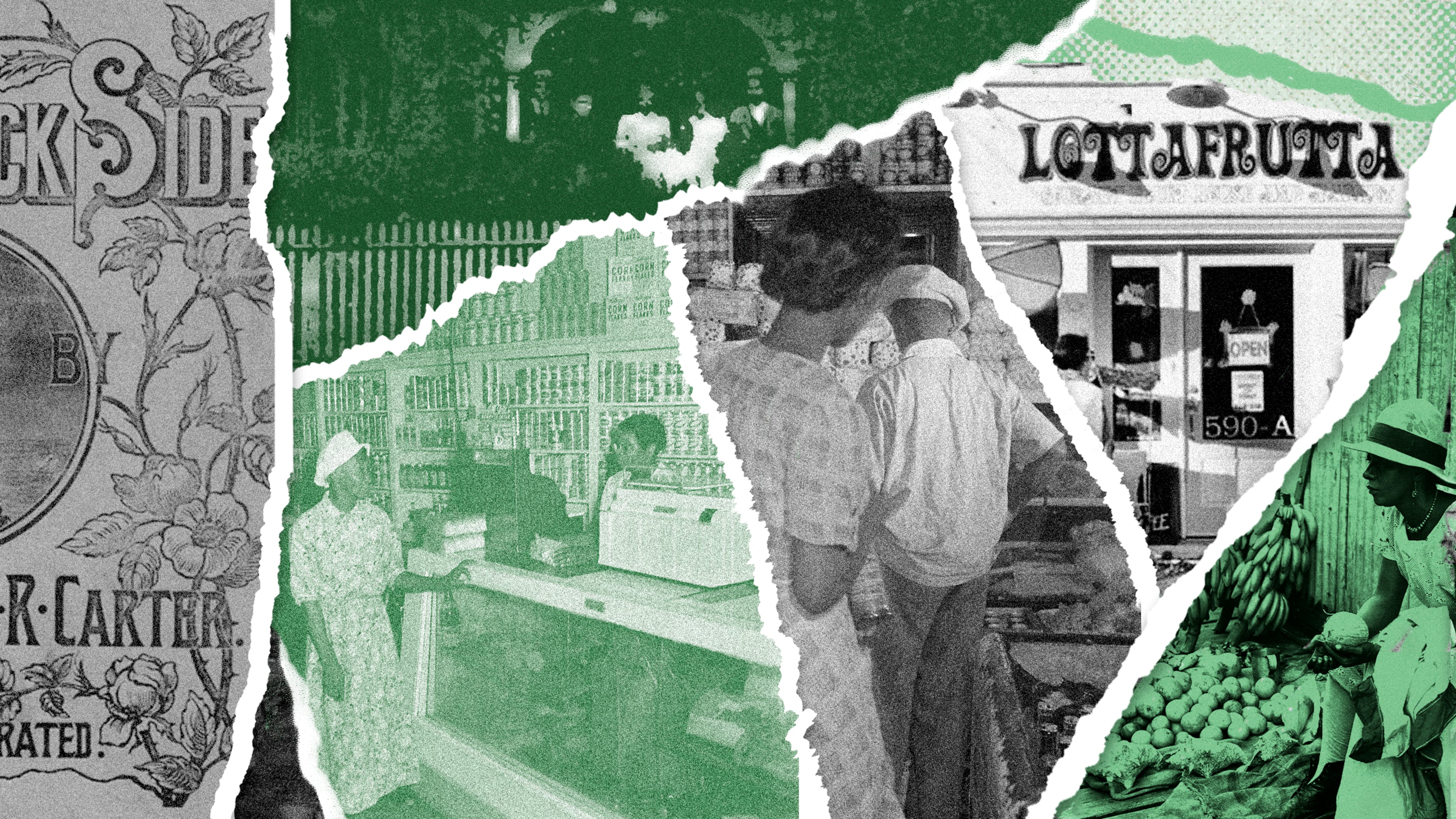
An 1894 book titled “The Black Side” by Rev. E.R. Carter of Friendship Baptist Church paints a different picture. Carter wrote the book to highlight Atlanta’s most successful Black men during his time, noting in his preface that they “had come to the front in life with everything to discourage them, no lucrative position to inspire them, nothing to encourage save (their) natural ability...”
Carter’s first sentence in chapter one mentions “unfriendly relations between most of the whites and Blacks” and a “continual effort to bar the Brother in Black from entering into any lucrative business.” His perspective provides a stark contrast to the newspaper’s view that Black people were “at home with white friends in the South.”

Carter held Crumbly, his contemporary who was a soldier and successful grocer, in high esteem, describing Crumbly’s property on Wheat Street as a “large fancy grocery” where he did business “on an extensive scale.” Above the store were Crumbly’s “handsomely arranged apartments,” Carter wrote.
According to the U.S. National Archives, Crumbly found success as a grocer after returning from his service in the U.S. Army’s legendary Buffalo Soldier regiments of the Western frontier. Crumbly also founded the Negro Historical Society of Atlanta, directed the Negro Department of the 1895 Cotton States Exposition and became a secretary of the Georgia Real Estate Loan & Trust Company. He served as a secretary for the South-View Cemetery Association, helping create the now-historic African American Victorian-style burial ground, as detailed in Georgia Tech’s “Building Memories” podcast.
Crumbly later volunteered to fight in the Spanish-American War and commanded more than 100 men in the Philippines, according to the National Archives. After he was discharged, he relocated to Los Angeles in 1903 and, despite suffering long-term health effects from malaria, volunteered to rejoin the military in his 60s as World War I loomed.

Grocers grow and branch out
“The Black Side” details additional successful entrepreneurs who found footing in the grocery business. Brothers John and Robert Schell were born into slavery in Barnesville in the 1850s but went on to start a small grocery together on Peters Street in 1887, according to Carter’s book.
From that humble shop, younger brother John Schnell built a thriving dry goods business and became something of a real estate mogul, Carter wrote. While still involved in the grocery business, Robert Schell became ordained as a minister and eventually became a pastor at Carter’s own Friendship Baptist, which became the home to Morehouse College and was the founding site for Spelman College.
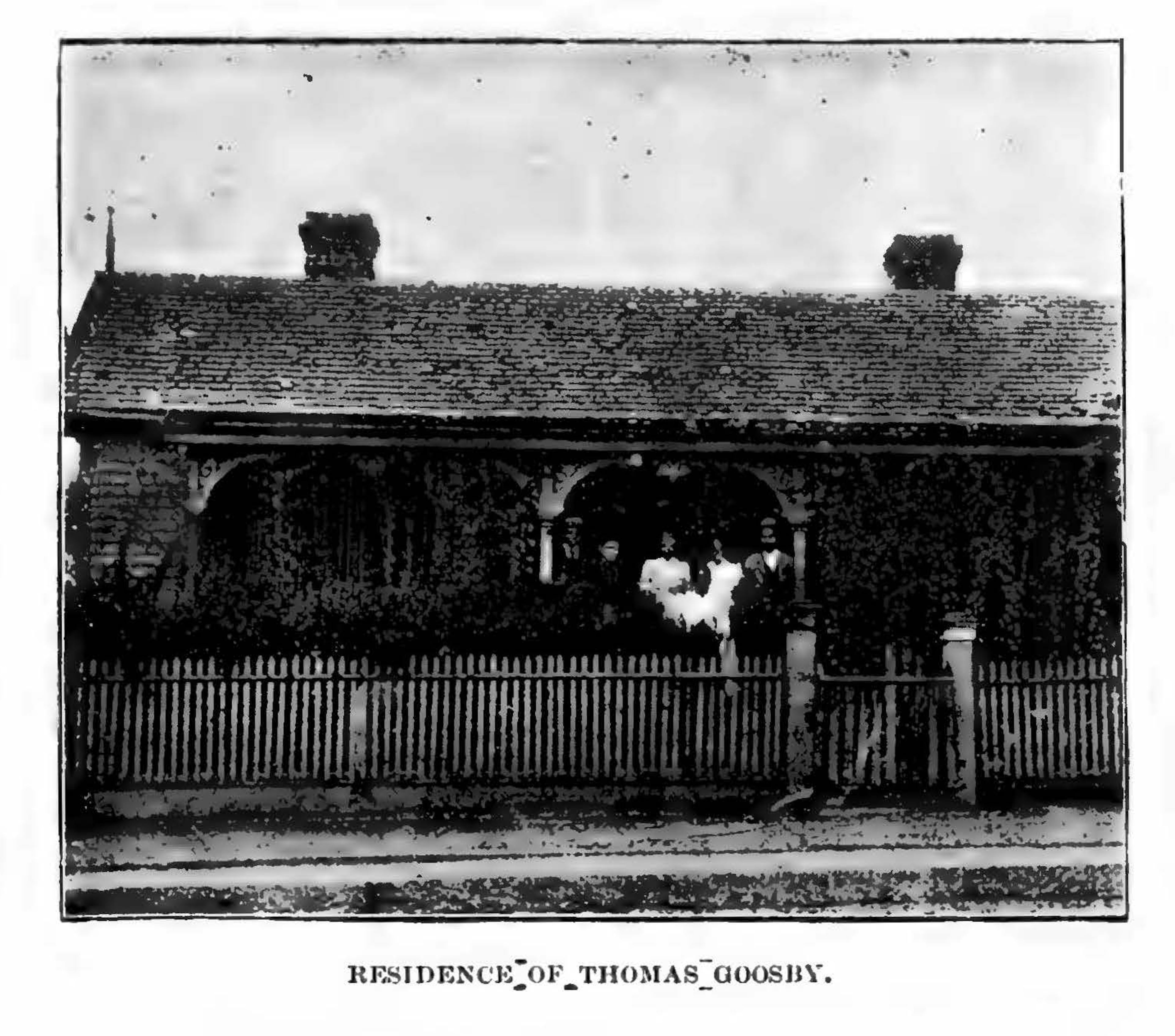
Thomas Goosby, already an accomplished carpenter and contractor, also opened a grocery store with his son in 1889, according to Carter’s book. Goosby was considered a master builder who worked on the Kimball House Hotel, Atlanta’s largest and most prestigious hotel at the time, and the state Capitol building. The National Register of Historic Places lists him as one of the builders who contributed to the Sweet Auburn neighborhood that would later become the Martin Luther King Jr. Historic District. In the early 1900s, Goosby also built the one-time grocery store that now houses beloved restaurant LottaFrutta, according to history podcast “Archive Atlanta.”
The stories of these Black, Reconstruction-era entrepreneurs often highlight humble beginnings. Tate famously came to Atlanta with $6 worth of grocery stock. Crumbly began his grocery business with $300 worth of goods bought on credit, according to Carter. John Schnell struck out on his own by purchasing a license to make patent soap until he earned enough to start his grocery business with his brother.
McConnell, the local historian, noted in her “Savory Stories” podcast that Black-owned grocery stores were often the only places where Atlanta’s Black citizens could buy food at fair prices. Those decent prices also attracted white customers, she said, making these grocery stores one of the few places where color lines blurred.
The businesspeople who found success selling the most basic goods were able to form the foundations for some of Atlanta’s most important institutions, from the Atlanta University Center to the Martin Luther King Jr. Historic District.
In “The Black Side,” Carter credited Crumbly with an observation that felt bold for the time. Crumbly was known to say Black men, “if given a white man’s chance and let alone, will accomplish what any other race has accomplished or can accomplish.”
About the Author
Henri Hollis is a reporter and restaurant critic for the Food & Dining team. Formerly a freelance writer and photographer with a focus on food and restaurants, he joined the AJC full-time in January 2021, first covering breaking news. He is a lifelong Atlantan and a graduate of Georgia Tech.