Is your favorite restaurant using AI?

Artificial intelligence and restaurants don’t seem to belong in the same sentence. If you picture AI in your favorite fast-casual spot, you might imagine something conspicuous and a little unsettling: a mechanical arm flipping burgers, a tablet replacing a server or a robot shaking up drinks behind the bar.
That vision exists. But it’s not what’s happening in most restaurants.
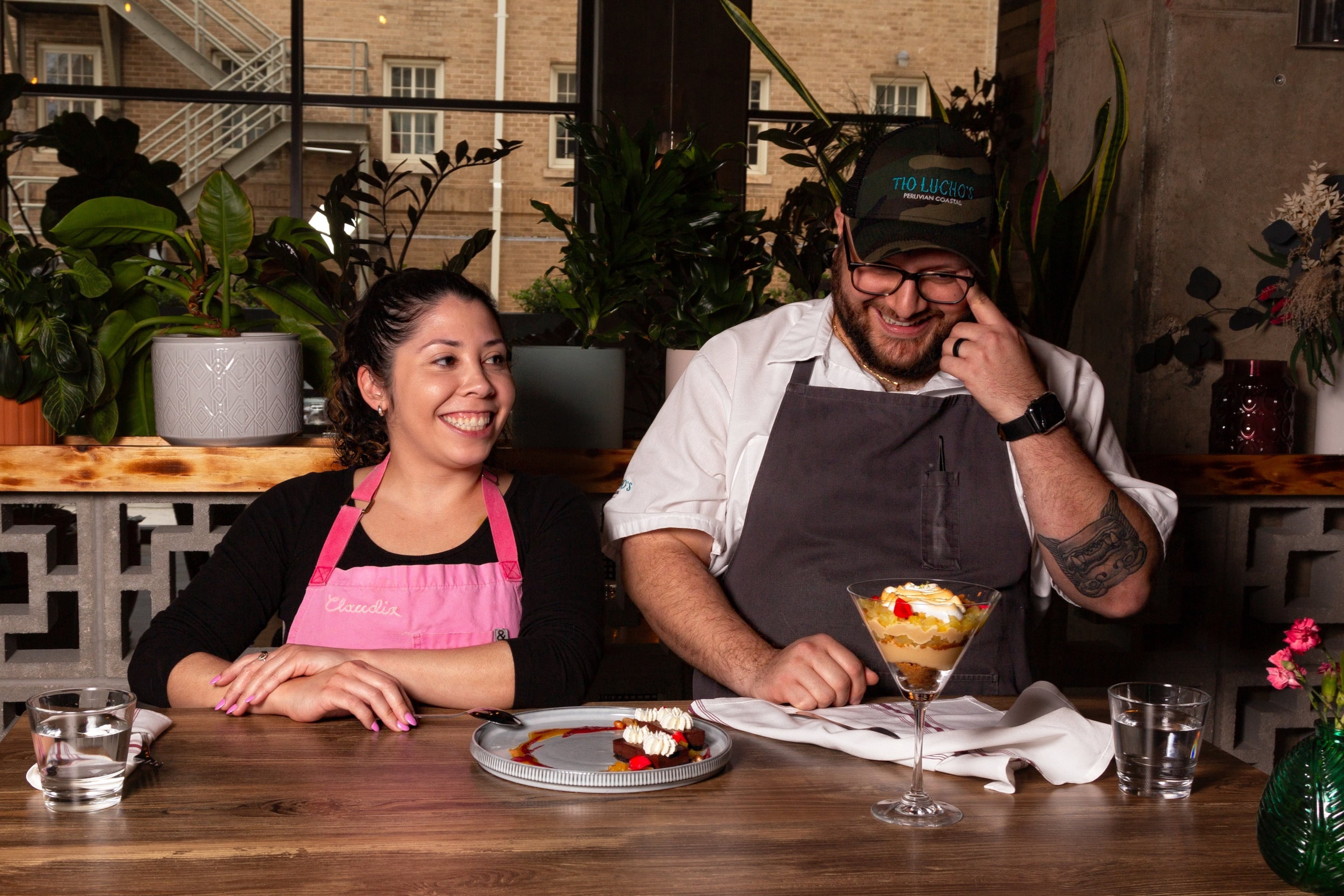
Across the country, AI has quietly become a part of restaurant teams. It does heavy lifting in administrative areas like inventory spreadsheets, reservation logs, and late-night prep lists made after the dining room empties and the chairs are stacked upside down on tables. It’s doing what Chef Arnaldo Castillo, the owner and executive chef of Tio Lucho’s in Poncey-Highland, calls “the back-end stuff.”
Castillo, a James Beard Award semifinalist for Best Chef Southeast in 2024, said, “We have Toast (a restaurant-specific software) as our point-of-service system, and Toast has an AI feature. So instead of manually searching through orders to count how many ceviches I sold on February 14th, clicking multiple tabs and writing down information to figure out my margins, I can now use AI to get the answers in a couple of seconds. It allows you to forecast a bit better.”
Restaurant forecasting is a survival skill AI can sharpen
Forecasting, the process of predicting future sales, customer traffic, and operational needs matters now more than ever. Restaurants are operating without a safety net; one weekend of misjudged traffic, one over-prepped dish or one ingredient price increase gone unnoticed can quietly undo a month of careful cost-cutting work.
Forecasting is where AI shines. It can analyze menus and identify dishes where components can be cross-utilized. It can highlight items that sell well but financially underperform, giving chefs an opportunity to adjust portion sizes, pricing or placement before margins erode.
For Castillo, that insight reshaped his menu in real time.
“We were having a problem with high-priced dishes not selling,” he said. “We made a tweak to our menu structure, suggested by AI, and those were all the dishes going out that night.”
Chefs use AI to catch up
According to the James Beard Foundation’s 2026 Independent Restaurant Industry Report, more than 80% of restaurant operators say they plan to increase their investment in AI tools in the coming year. For many, the motivation to use AI is exhaustion.
Chef Hector Santiago, the owner of El Super Pan, has been trying to create an operations manual for his restaurants since before the pandemic. Like many operators, the time he needed to do it never materialized.
“In the restaurant world, we’re all doing many, many things, and it doesn’t matter if you’re a GM, front of the house manager or an executive chef,” Santiago said. “As soon as one fire is put out, you go to the next one. We’re open 362 days a year. There is always something happening; it’s hard to find the time to do clerical work.”
For Santiago, AI represents something rare in hospitality: a chance to transform stacks of paperwork into something actionable
“We have all this information and we are trying to compile it into one manual on how we operate, front of the house and back of the house,” he said. “How can we take all this information that is in the cloud, that is semi-organized, and be able to put it in a place where it looks and feels more legit? Our goal this year is actually to feed all that to AI and create that manual.”

AI helps restaurants stop raising prices
Independent restaurants entered 2026 facing a hard truth: the old fixes don’t work anymore.
Raising menu prices once absorbed rising costs. But the Beard Foundation found that for the third year in a row, operators reported slowing price increases, a signal that restaurants believe diners have reached the limit of what they’re willing to pay. Diners notice when they’re paying more for the same plate and respond by dining out less or skipping higher-margin extras.
Meanwhile, food, rent and labor costs continue to climb. Nearly half of operators still report being understaffed.
AI offers another path to help lower the prices restaurateurs need to charge for a plate of food to cover the cost of making it. According to the Beard Foundation, AI is most often used to help curb costs by tracking inventory and supply chains, analyzing sales and pricing, forecasting staffing needs, handling accounting and even managing guest communications.
AI is now at the front door of your favorite restaurant
Alex Sambvani, the owner of Slang AI, a platform designed for the hospitality industry to automate restaurant phone calls, works with thousands of restaurants across the U.S., Canada and Australia. His platform handles reservation calls and guest inquiries, an area where many restaurants lose business.
“Restaurants miss up to 50% of their phone calls,” Sambvani said. “One of our clients said that before using Slang, their team answered only 30% of their phone calls. I won’t name them, but they are a very well-known restaurant group. We help them answer every call with an AI agent. It can book reservations end-to-end, and it plugs into the reservation system. It even answers questions about the restaurant.”
There’s understandable fear about putting AI in front of guests. Sambvani says that fear rarely lasts.
“People ask, ‘Is this going to hurt our brand? Will we be seen as having bad customer service?” he said. “But they are pleasantly surprised at how well the system works. They don’t get complaints about it. Guests lean into it.”
Sambvani sees Slang AI living alongside the staff, not competing with them. The technology helps so guests don’t slip through the cracks and restaurants don’t miss out on reservations.

AI and the future of restaurant jobs
Fears about AI replacing workers are widespread, but Sambvani says most operators aren’t adopting AI to reduce staff. They’re using it to relieve pressure on teams already stretched thin.
AI-assisted systems can pull data from prior reservations to give staff context about returning guests, allowing interactions to feel personal without adding labor. Sambvani said, “There’s nothing worse than having a server ask if you’ve been here before when you’ve been to the restaurant 50 times. We are leveraging AI to help guests feel more seen and heard.”
John Alburl, the Atlanta-based owner-operator of Imprints, a hospitality marketing firm, believes AI in the restaurant industry is unavoidable.
“It can be an incredibly useful tool if you know how to use it,” Alburl said. “If you use it to offset a lot of the grunt work that so many of us have had to do for so long, it can actually be really efficient for protecting your time. If you think about the time when people were still riding around in carriages with horses, the car coming onto the scene is basically what we have with AI.”
When restaurateurs use AI with the right intentions, they reduce the amount of time spent on the grinding admin work that comes with running a restaurant. AI can be a tool that allows chefs to focus on creative cooking, hospitality and the other aspects that attracted them to the business in the first place. Ironically, AI might be helping your favorite restaurant continue to feel human.
About the Author

Monti Carlo is the AJC's Senior Editor of Food & Dining and a Telly Award-winning TV host, cookbook author and special events chef. She covers culinary culture, spotlighting the people redefining Southern food today. Her cookbook, Spanglish, a love letter to bicultural Puerto Rican cooking, publishes May 19, 2026. Email her at monti.carlo@ajc.com