Morehouse medical students struggling to afford meals after financial aid delays
Leah Mohnkern had heard there were delays in financial aid disbursements at the Morehouse School of Medicine, but she didn’t realize how serious the problem was until a few weeks ago when she learned a classmate was struggling to afford meals.
“She’d basically been eating snacks as her primary source of energy for weeks,” said Mohnkern, a second-year medical student. “It was really hard to hear because obviously studying is really challenging … You can’t do it on an empty stomach.”
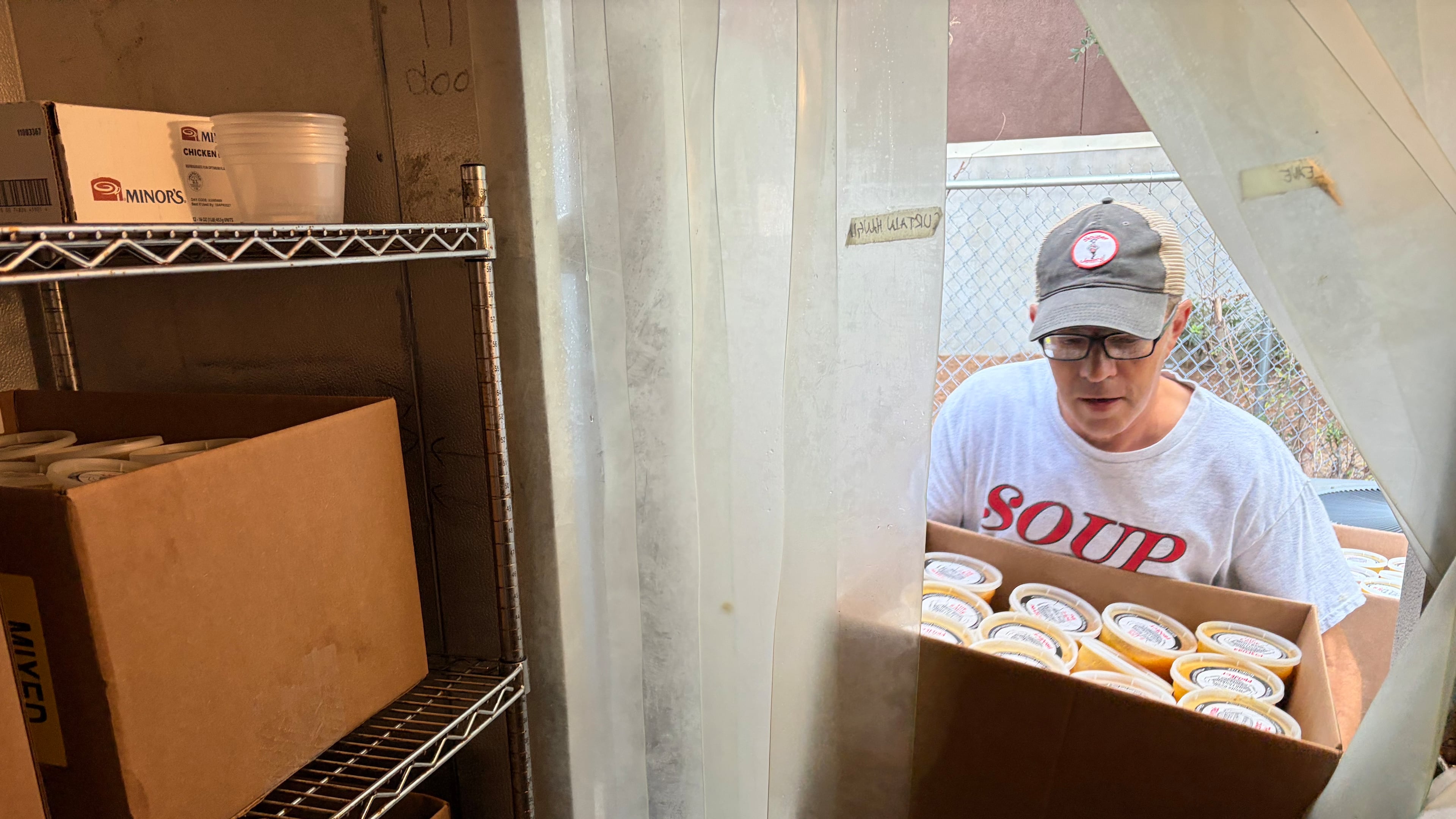
Yet this semester, many students at the historically Black medical school near downtown Atlanta have gone hungry, according to Mohnkern and Alisha Nkwonta. The duo, fundraising co-chairs on the Class of 2029 Council, distributed 100 quarts of soup to needy classmates last week, gifted to them by local restaurant Souper Jenny.
“I am reaching out because an unexpected financial aid delay has left many Morehouse students struggling to afford basic necessities, including food,” Mohnkern wrote in her request to the restaurant and its Zadie Project charity.

Asked for comment by The Atlanta Journal-Constitution, MSM did not explicitly say what’s caused the delays. It mentioned “technical system updates” and that it was “impacted by changes” to federal requirements.
Those federal requirements were changed last year when Congress passed the One Big Beautiful Bill Act. The legislation included an overhaul of the federal student loan system, such as the elimination of Grad PLUS loans, and caps on how much students can borrow.
“As a graduate institution, some of these changes — including the elimination of Graduate PLUS loans — have affected how students can access federal financial aid,” wrote the school in an Aug. 28 email to students. It said several students had their loan packages “flagged for additional review” and that MSM would be adding more staff to its financial aid office to speed up the process.
“These circumstances are unique compared with prior years,” reads the email.
In response to questions from the AJC, the school said of its roughly 800 students who sought financial aid, more than 600 have received funding in their accounts. Some students, however, “no longer qualify for (Graduate PLUS loans) because of changes in the federal requirements.”
Some have warned that the elimination of Grad PLUS loans could mean fewer students are able to afford medical school, resulting in fewer future physicians in Georgia. The state’s physician-to-patient ratio is 23% worse than the national average.
“Our students remain our highest priority, and we have been working urgently to process eligible financial aid as quickly as possible,” MSM said. It added that it has offered short-term emergency loans for students experiencing financial hardship.

‘The main culprit’
More than a year ago, experts warned that universities would need more time to implement the One Big Beautiful Bill Act’s changes to student loan policy.
To avoid a “large-scale disruption of our aid and lending systems,” more than 40 higher education associations urged the U.S. Department of Education and Congress to postpone implementation by at least one year: from July 1, 2026, to July 1, 2027.
“Institutional systems and their vendors require sufficient time to make the necessary changes and communicate them to students and borrowers,” the American Council on Education wrote on behalf of the associations in an August 2025 letter.
Their request was not met, leaving schools across the country to implement the changes in a short window.
Not surprisingly, experts say, some students across the country have encountered financial aid issues this semester. “As we understand it, a significant number of institutions of higher learning were also impacted by the changes and experienced delays in finalizing their financial aid packages,” MSM said.
Karen McCarthy, vice president of federal relations at the National Association of Student Financial Aid Administrators, explained that changes to the loan system are complex and time-consuming.
When Congress updates student loan law, the department goes through a regulatory process to sort out the specifics. Under a federal “master calendar,” if the new regulations are to take effect by July, the department must have them finalized by the preceding November. But because Congress did not pass the bill until July 2025, and because it takes time for the department to finalize such large changes, the final rules did not come out until this May.
“So everybody lost six months,” McCarthy said. “I would say that if we are pointing fingers, the main culprit here is that compressed timeline.”
It’s not unexpected for a university and its private vendor — responsible for the financial aid management systems schools use to disburse financial aid packages — to experience hiccups after such large changes, experts say. Vendors need to receive the final regulations from the department so they can update their software accordingly. If the department issues further clarifications, vendors must change their systems by developing “patches.”
“They develop the patches, they push those out to the institutions, who then need to install and test them and make sure it works in their system,” McCarthy said.
In an Aug. 6 email to students, MSM’s financial aid office said its primary challenge was “a technical issue involving the installation of required system patches.”
Although all schools have been working under a compressed timeline, Morehouse School of Medicine’s timeline is more compressed than most. While most universities didn’t begin class until late August, many MSM students began in early July.
A U.S. Department of Education spokesperson told The Hechinger Report earlier this month that the department worked within the deadlines set by the One Big Beautiful Bill Act, which required the changes to take effect on July 1, 2026. “Congress gave the Department less than a year to implement these changes,” said the spokesperson, Ellen Keast, adding the department released the final rules in May, which provided “time for schools to prepare.”
Difficult choices
A funding delay can hurt an institution’s reputation, according to Daniel Collier, an associate professor of higher education at the University of Memphis. But moreover, it’s “incredibly harmful to students.”
Some, he said, will make difficult choices regarding their basic needs, such as cutting meals. “This will likely put them at a disadvantage to start the semester,” he said.
That’s been the experience of MSM students, according to Mohnkern and Nkwonta, who said classmates have put off meals to make sure they have enough money to pay rent.

Last week, after a group of volunteers at Souper Jenny’s ladled gallons of white bean chicken sausage soup into individual containers — as they do every Tuesday for the Zadie Project, which distributes 1,000 quarts of soup to needy organizations across Atlanta every week — Mohnkern and Nkwonta set up a table to distribute it on campus.
All 100 quarts were gone within three hours.
“We initially planned for it to be just for our class, but it ended up being for the whole school,” Mohnkern said. “I’m not going to tell someone who’s hungry they can’t have soup.”