Business, not student interests, drives Georgia Board of Regents’ decisions
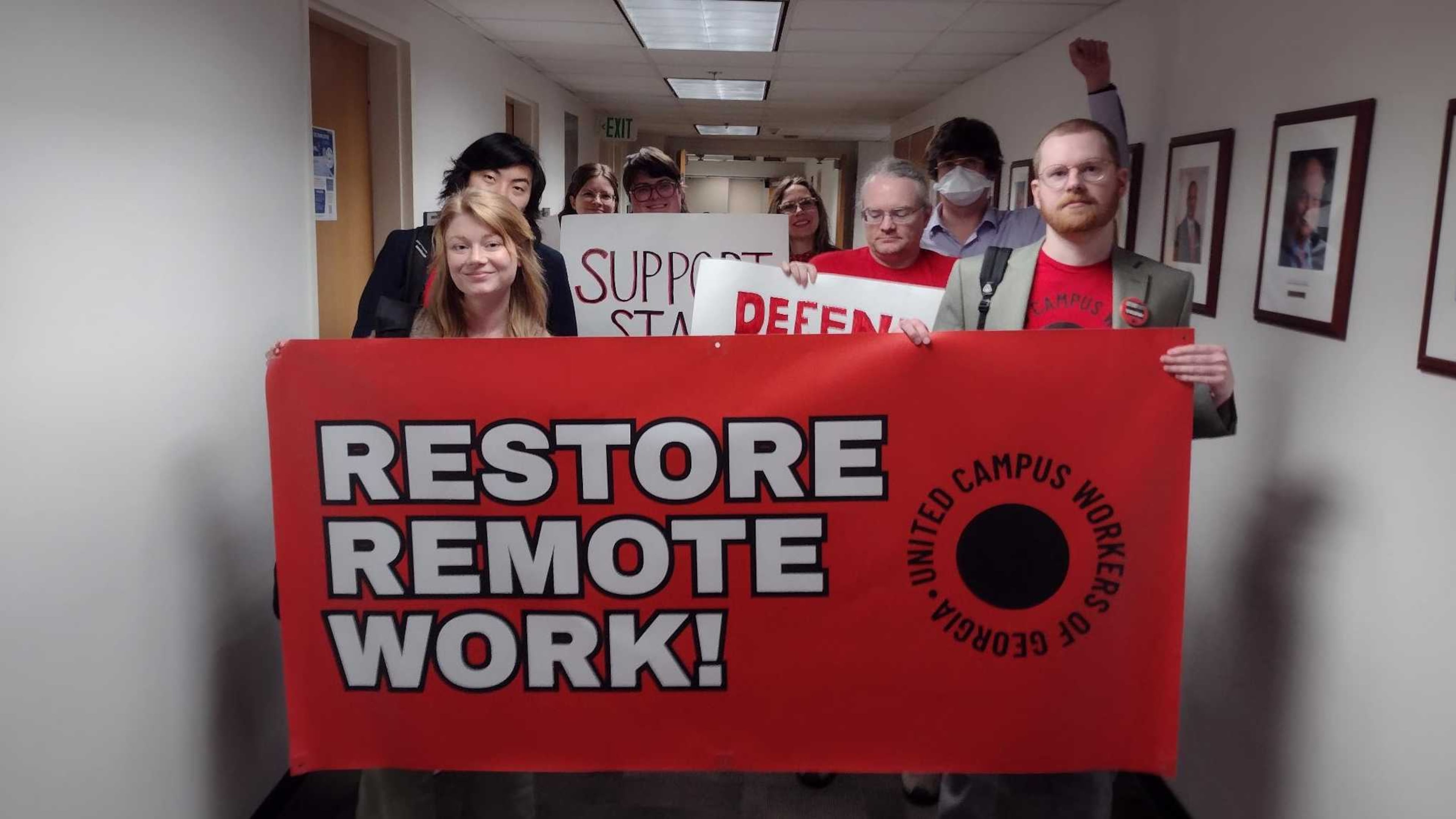
The Georgia Senate’s recent slashing of funds for online courses, the Board of Regents’ vote to raise tuition and fees for online students and the return-to-office mandate imposed on University System of Georgia staff reveal a troubling agenda: one that places urban real estate development ahead of student success and worker well-being.
Discussions on remote work and online learning at Board of Regents meetings have shared a common thread: the workers and students who rely on them are lazy, entitled or unwilling to work.
Sonny Perdue, chancellor of the University System of Georgia, has justified the return-to-office mandate as a “customer service” issue and implied workers are using remote work to avoid job duties. On the contrary, remote work enables staff to connect with students across distances and work more productively without the distractions of the office environment. Through the hard work of staff, many of whom were working remotely, the system recently achieved an all-time record number of students enrolled and degrees conferred.
The return-to-office mandate has not improved student service. Instead, it has dramatically increased staff turnover, leading to service interruptions for students — who face longer wait times for financial aid, advising and mental health services.
In a display of hypocrisy, the board continues to meet virtually while banning remote work for staff. Thirteen out of the 19 Regents attended the February meeting — which had a hybrid option — virtually. Regent James Syfan, incredibly, appeared to be driving a vehicle during the meeting — while Perdue criticized workers for using the flexibility of remote work to pick up their kids from school during the day.

The attacks on online learning escalated in April, when the board voted to raise tuition and fees after the Georgia Legislature cut $34 million in funding for online enrollment. Online students will see their tuition increased by 3%, while students at some institutions will see large fee increases. At Kennesaw State University, for example, online fees will increase from $340 to $594 per semester.
Amy McCoy, a nontraditional KSU student, fears the impacts of rising costs. “With gas prices up, the cost of commuting, parking, lost work time and family responsibilities, online classes are not a luxury for me,” she said. “They are the only way I can continue.”
For students already managing full-time jobs, childcare, chronic illnesses and disabilities, online learning is not a convenience; it is their only path for higher education. Raising tuition does not eliminate that need. It simply redirects those students to institutions outside of Georgia. The return-to-office mandate is pushing staff out of the workforce for the same reasons, as they are forced to choose between their job or their family and their health.
When policies that harm workers and students persist in the face of contradicting evidence, it’s worth asking what the real motivations are — and who benefits.
In addition to serving as institutions of learning and research, public universities also drive urban development. The USG is often straightforward about this. At its April meeting, held on the Columbus State University campus, the board screened a documentary trailer which credited the construction of CSU’s School of Music as a catalyst of downtown Columbus’ urban renewal.
The unspoken logic behind both the return-to-office mandate and attacks on online learning is clear: Populated campuses are valuable to the real estate interests surrounding them.
Consider who are making these decisions. Several of the Regents have deep ties to the commercial real estate industry. Regent Samuel Holmes, for example, is the vice chairman of the world’s largest commercial real estate services firm. Regent James Hull, founder of Hull Property Group, conceded during a board discussion on online learning: “I don’t know anything, I’m in the real estate business down in Augusta.”
The faculty, staff and student workers organizing as United Campus Workers of Georgia question whether a board full of corporate executives is qualified to govern our public colleges and universities. We believe that the workers who actually run our universities are far better positioned to steward those resources. If the Board of Regents continues to value buildings over the people in them, they will find themselves presiding over empty hallways.
David Zackrone Hyde is a member of United Campus Workers of Georgia and staff employee at Georgia State University. The opinions expressed in this piece are his own and do not represent his employer.
If you have any thoughts about this item, or if you’re interested in writing an op-ed for the AJC’s education page, drop us a note at education@ajc.com.