Why renovated Atlanta office buildings have a leg up on their competition
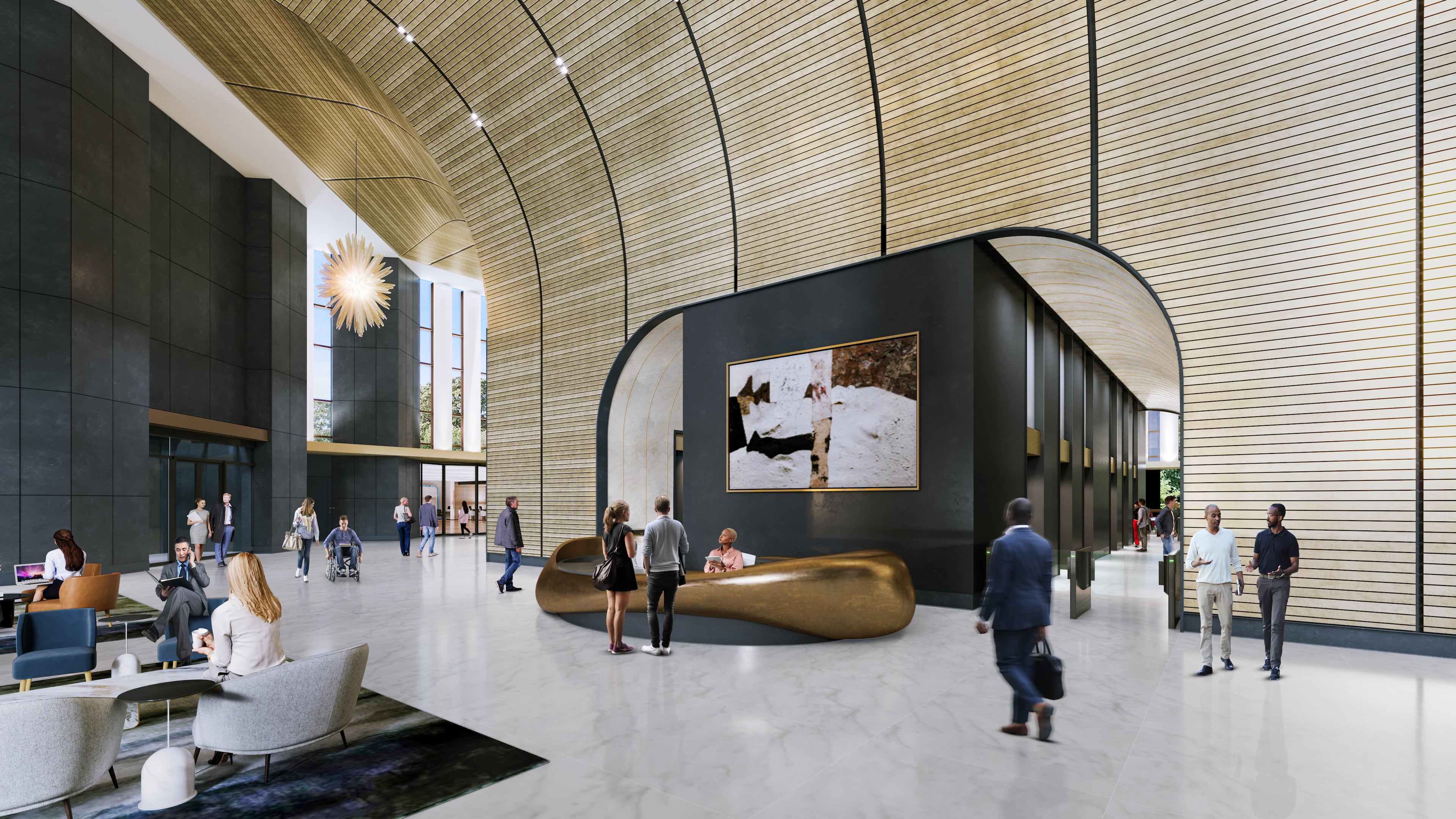

What can an office building do to stand out in a post-pandemic world?
In the years since COVID-19 upended the market, there’s been way more empty space in the Atlanta area than companies want to lease. The bulk of that available space seemingly blurs together — functional but a little blasé.
It’s left most prospective office tenants with leverage when looking for new digs, allowing them to be choosy. It also places pressure on landlords to pump money into renovating their buildings to keep up with those higher expectations, leaving ownership groups that can’t in a worsening situation.
“They have to have the bells and whistles,” said David Rubenstein, a vice chairman with Savills who oversees the real estate services firm’s Atlanta operations. “They have to have the amenities that employees are demanding in return for making the commute.”
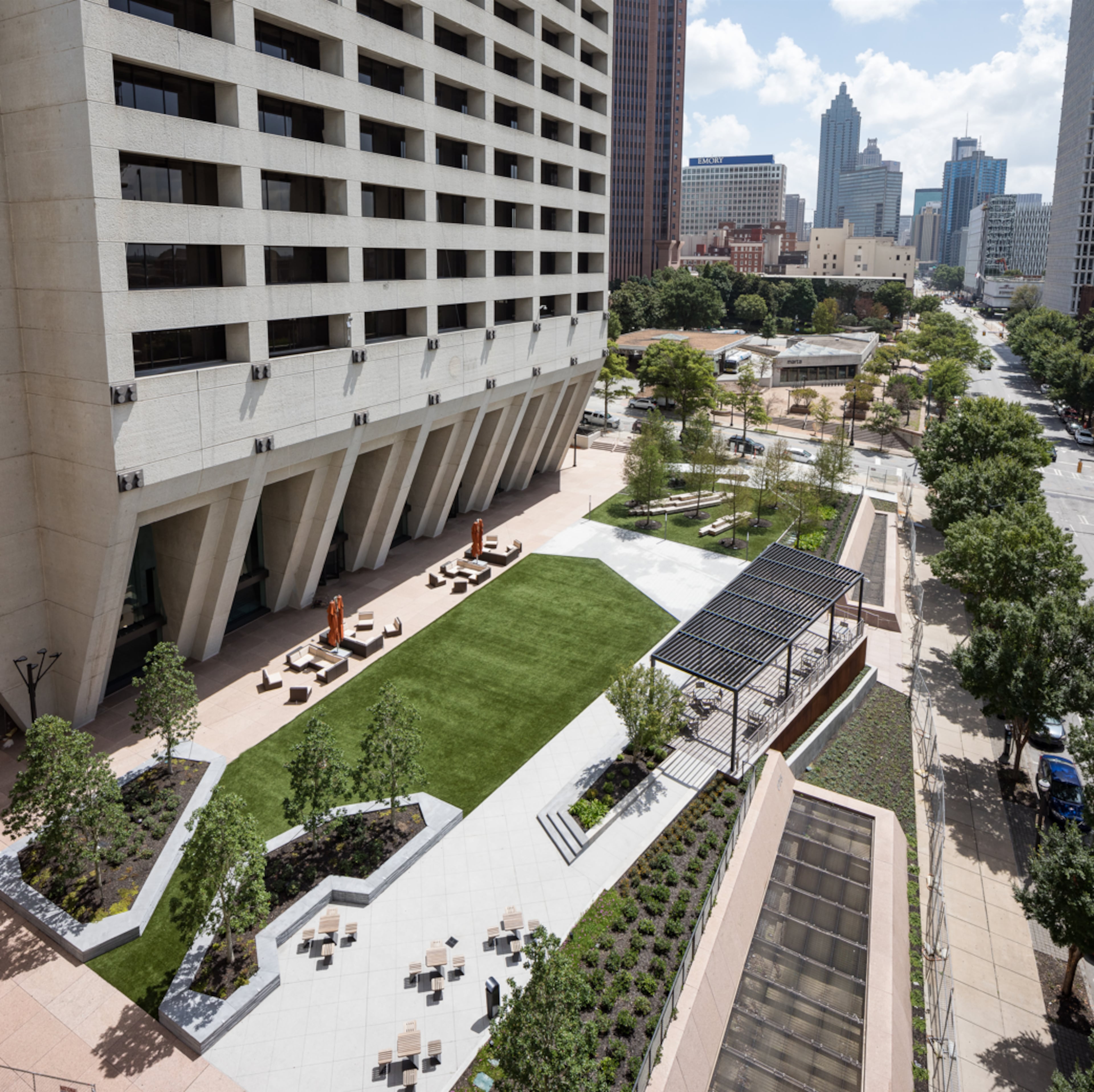
Some of Atlanta’s landmark towers, including Bank of America Plaza and Tower Square, are undergoing renovation campaigns to modernize. And those revamps have led to renewed interest and some leasing success.
More than 2.5 million square feet of office leases closed during the first quarter, according to Savills, the second-busiest quarter since 2021. That’s the equivalent of leasing Bank of America Plaza, the city’s tallest tower, about twice.
Still, despite the strong leasing activity, not everything is great in metro Atlanta’s office market. A recent report said the metro Atlanta region saw negative “absorption” of space of about 440,000 square feet, meaning more space was emptied than leased this past quarter.
Aside from a few blips, Atlanta’s office market has been stuck in the red, primarily because the worst-performing buildings are dragging the rest of the market down, according to data from real estate services firm CBRE.
Still, about a third of all office space in metro Atlanta is either vacant or available for sublease, providing a glut of options. Rubenstein said office tenants are scrutinizing their choices beyond just the building — it extends to the building’s owner.
“We’re trying to get our tenants to focus not just on buildings that have the look and feel they want, but also have the financial strength,” he said. “ … And not get down the road and realize the money is not there or the building is about to be foreclosed.”
It’s an extension of the “haves-and-have-nots” office market, where high-end buildings have outperformed their older peers or spaces in less desirable locations. It’s led to prime rents, the price per month to access top-quality workspace, growing at a significantly faster rate than cheaper options.
“You look at them on paper, and you’re like, ‘Man, that looks like pretty space,’” said Ryan Irvine, an Atlanta-based senior vice president at CBRE.
“But the occupier who wants to draw employees back into the office, who wants to create their own culture, they want to build out their own space,” he continued. “So that space hasn’t moved.”
Standing out
Law firm Drew Eckl & Farnham announced in early May it will relocate its headquarters to 1375 Peachtree, a mid-rise Midtown office building that recently went through a renovation. The firm is leaving its offices at Truist Plaza, consolidating its Atlanta operation into a 40,000-square-foot floor.
“Opportunities for a single-floor office of this scale in Midtown are truly unique,” Michael Goffin, CEO at FullG CRE Investments Inc., the building’s manager, said in a news release. “This lease is a testament to the building’s ability to meet the evolving needs of today’s tenants.”
Newmark represented the building manager and credited 1375 Peachtree’s appeal to an amenity refresh that makes it stand out among its price point in Atlanta’s most expensive office neighborhood.
In West Midtown, a 15-acre adaptive reuse development, Westside Paper, has tempted tenants with Beltline access and the character of working in a converted warehouse park. The project at 950 W. Marietta St. has signed 180,000 square feet of leases in the past 20 months and is now 75% occupied.
Westbridge, the project’s developer, said converting space into retail shops and focusing on creating a sense of place has helped the office space stand out.
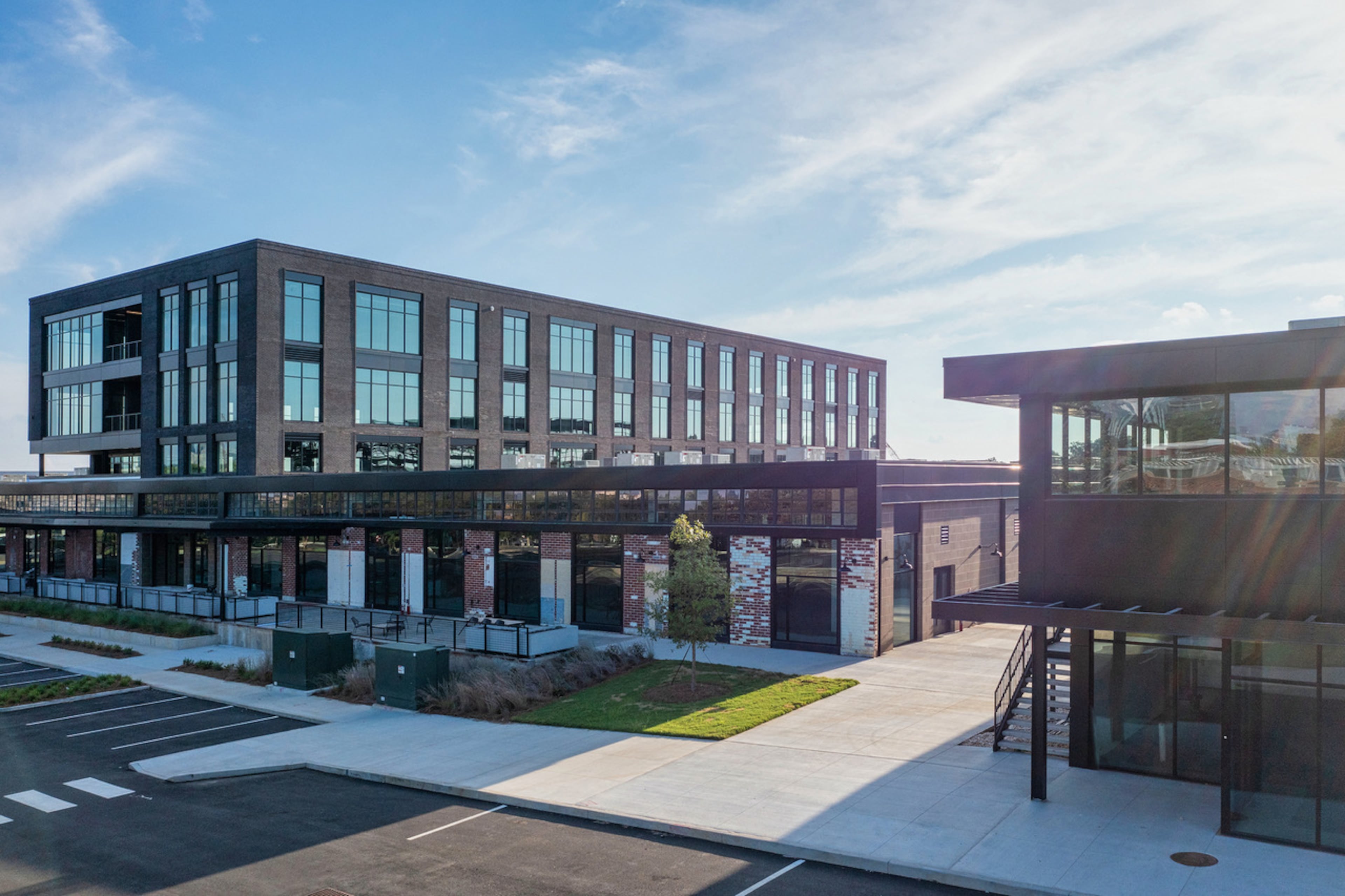
“Leasing 70,000 square feet (so far in 2026) in this environment sends a clear signal about where demand is flowing,” Chris Faussemagne with Westbridge said in a news release.
“The velocity we’re seeing reflects a broader rebound in Atlanta’s office market, particularly for differentiated, high-quality assets in West Midtown,” he continued.
Atlanta-based Cousins Properties, one of the city’s largest office landlords, saw one of its busiest leasing quarters in the company’s history to start 2026. It also saw its net rent per square foot increase 24% from the same time last year.
Richard Hickson, executive vice president of operations for Cousins, told investors that a lot of that activity was spurred by repositioning buildings to attract new tenants.
He specifically highlighted the Proscenium building at Peachtree and 14th streets in Midtown, which Cousins renovated after buying at a steep discount. In March, it snagged a 105,000 square feet lease from accounting firm KPMG.

“We generally saw a meaningful boost in demand, and importantly in lease economics, once the (renovation) projects approach completion and prospects could see the finished product,” he said on an April 30 call to discuss the first quarter.
‘Until time passed’
Other properties have struggled to adapt.
The debt backing an iconic 50-story tower at 191 Peachtree was placed in March on a distressed loan watchlist by Morningstar Credit because of its dwindling occupancy. The $80 million loan, which matures in November, is a burden when the building’s occupancy is at 58% — it was more than 90% leased a decade ago.
It joins a list of other well-known Atlanta buildings, ranging from Peachtree Center’s downtown towers to Piedmont Center’s campus in Buckhead, to face loan issues and potentially face the foreclosure block.
Another example, the owner of Atlanta Financial Center in Buckhead, recently listed one of its towers for sale in hopes of finding a buyer able to bring its space up to snuff. Henry Lorber, a distressed real estate expert with Henry Lorber and Associates, said Atlanta Financial Center is representative of many buildings stuck in purgatory.
“It was a good place to have an office,” Lorber said, having once worked in Atlanta Financial Center. “It was a great development until it wasn’t, until time passed.”

While struggling buildings in Atlanta’s urban core have mostly persevered in search of tenants or new owners capable of sweeping renovations, suburban office buildings have faced a different fate — demolition.
Over the past year, more than 4.2 million square feet of office space have been taken off the market, mostly through demolition or conversion into other uses like apartments, according to Savills. The Perimeter Center area around Dunwoody and Sandy Springs has led that charge, and more office buildings are poised for similar futures.
“We’re seeing the momentum pick up with conversions and opportunities that will take the inventory back to an appropriate level,” Irvine said.
Embassy Row in Sandy Springs is slated for demolition so the site can be used for nearly 1,200 homes. Ashford Center North, along Ashford Dunwoody Road, is also on the chopping block, slated to be turned into apartments, according to a report by Bisnow.
“These are buildings that back in the day were very viable office locations,” Rubenstein said.
“But because of the nature of what tenants are looking for or because the way the market has changed,” he said, “these buildings are more valuable as residential land than they are as a vertical office building.”