Atlanta’s data center rush hits new peak. But growth has started to slow.

The amount of data center space under construction in metro Atlanta hit a record high in 2025, but the rate of expansion waned, a sign that the sector’s explosive growth in recent years can’t exponentially increase forever.
Atlanta emerged as the darling of the data center industry after the artificial intelligence boom began three years ago, according to data from real estate services firm CBRE. After seeing construction essentially double each year from 2022 to 2024, the region rose from the sixth-largest American data center hub to the second-largest, trailing only Northern Virginia, the top U.S. and global market.
Data center construction is measured by the expected power consumption. In 2025, the Atlanta area had nearly 3,968 megawatts under construction, up 15% from 2024.
The last six months of 2024 set a record for a half-year period, but then construction declined during the first six months of 2025 before rebounding in the final six months of the year. Still, construction was down about 4% in the second half of 2025 compared to the same period a year earlier.
New data show construction of server farms across the country slowed slightly to end 2025. It’s the first time since 2020, which was hampered by the pandemic, when construction of these facilities that power AI and our digital lives decreased across the country.
While demand remains red-hot for more computer storage space to fuel the AI race, CBRE analysts said the sector faces a combination of delays prompted by community pushback, power constraints and other headwinds, such as inflation and tariffs.
As new data center proposals pop up across Georgia, many cities and counties have enacted temporary moratoriums on the facilities, as they face backlash from residents concerned about their land, water and power demands.
“There are physical constraints to building these data centers that are separate from demand,” said Mike Lash, a senior vice president with CBRE Data Center Solutions. “And you have to weather those appropriately.”
Lash said, however, to not mistake the slight decline for a reprieve or permanent slowdown.
The Atlanta market continues to have the most data center space in the country under construction despite seeing a slight dip from 2024 levels. In fact, more space is under construction in Atlanta than is currently operational, making Atlanta the only major market with that distinction, according to CBRE.
Lash credits the continued rush to the versatility of Atlanta’s digital infrastructure, which can support both massive data centers called hyperscalers and smaller facilities known as carrier hotels that act as connection hubs.
“There’s no shortage of demand,” Lash said, saying metro Atlanta demand not only comes from AI but also companies that need cloud computing services.

Before last year, 2024 was Atlanta’s top year with 3,450 megawatts of space under construction. That’s roughly equal to the electricity output of three of the nuclear reactors at Plant Vogtle outside Augusta.
Atlanta’s vacancy rate ended 2025 at 2%, which would be a record low for just about any other type of commercial real estate. The region’s office market, which remains beleaguered by post-pandemic workplace changes, is about 25% vacant, and metro Atlanta’s industrial market is a little less than 10%.
That low vacancy rate is also despite a massive amount of data center space finishing construction in recent months. Nearly 460 megawatts of inventory were delivered during the latter half of 2025 in the Atlanta area.
Some of the construction delays and other hiccups apparent in the broader data center market have begun to show up in filings from Georgia Power, the state’s largest electric utility.
Georgia Power is required to file quarterly updates with regulators at the Public Service Commission about the data centers and other “large load” customers it expects to serve in the coming years.
In its most recent forecast from February, the company lowered the electricity it expects to need for “committed” customers in late 2028 by 900 megawatts, compared to its estimates from last fall.
Looking ahead to the 2030s, the utility continues to report growth in its “pipeline” of potential customers, but many of those might not select Georgia Power as their electricity provider or even choose to build their data center in Georgia. It’s common practice for data center developers to scout locations in multiple states.
“Demand is outpacing supply, while power and supply chain shortages are reinforcing a power-first approach that prioritizes sites with the fastest path to power,” Pat Lynch, executive managing director of CBRE Data Center Solutions, said in a news release.
Despite softening electricity demand in the near term, Georgia Power is moving forward with a massive generation fleet and grid expansion that’s overwhelmingly to serve data centers. The biggest piece of its plans — the addition of 10,000 megawatts of new generation muscle in just five years — was approved in December by the Public Service Commission.
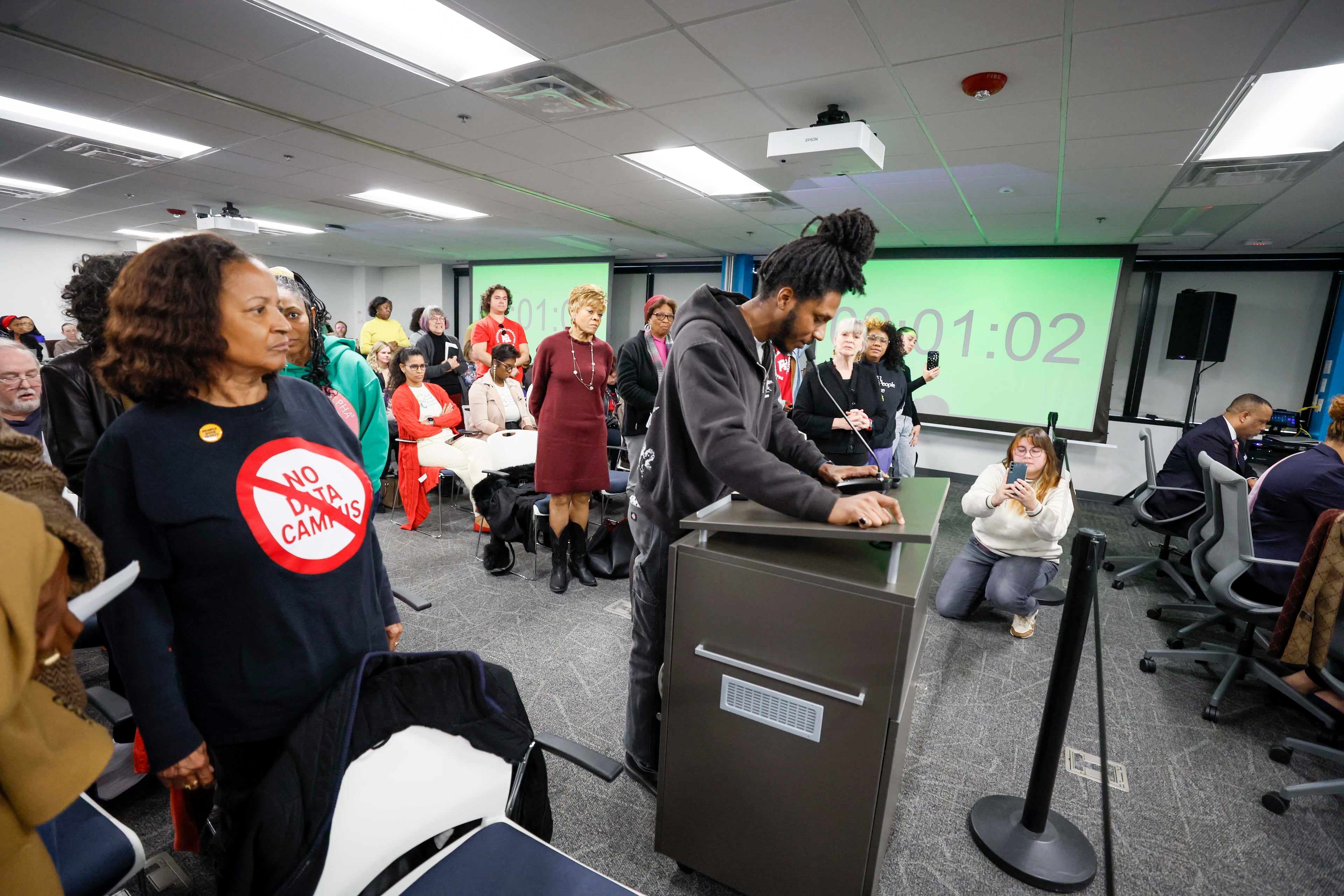
That expansion survived a recent challenge from environmental groups, who had asked regulators to reconsider the decision, arguing not all of the new power supplies the utility plans to add are needed.
“There was available excess capacity from the utilities where you saw a lot of that absorption hit in one cycle,” Lash said. “And now you have a gap because of just the physical constraints of getting additional infrastructure in place to be able to actually build these data centers.”
About the Authors

Zachary Hansen, a Georgia native, covers economic development and commercial real estate for the AJC. He's been with the newspaper since 2018 and enjoys diving into complex stories that affect people's lives.

Drew Kann is a reporter at The Atlanta Journal-Constitution covering climate change and environmental issues. His passion is for stories that capture how humans are responding to a changing environment. He is a proud graduate of the University of Georgia and Northwestern University, and prior to joining the AJC, he held various roles at CNN.