What data center companies are spending for Georgia land might shock you

Real estate is expected to appreciate in value, but it’s rare to see a property’s price quadruple in only three years.
But that’s exactly what happened in Alpharetta for an aging data center formerly used by BlackBerry. The 16-year-old facility at 4905 North Point Parkway, which last traded hands for about $63 million in 2022, sold in August for $253 million.
The buyer, GI Partners, calls itself “a private alternatives investment firm,” and its portfolio includes data centers and related infrastructure. The company did not respond to requests for comment, but its plans for the 39-acre property are clear, said Lynn McKee, the director of the commercial real estate program at Georgia State University’s Robinson College of Business. The outdated building will likely be replaced or upgraded with a new data center capable of storing servers for artificial intelligence.
Developers of would-be subdivisions, apartments or other projects would be unlikely to pay such a premium for a building they’d likely tear down.
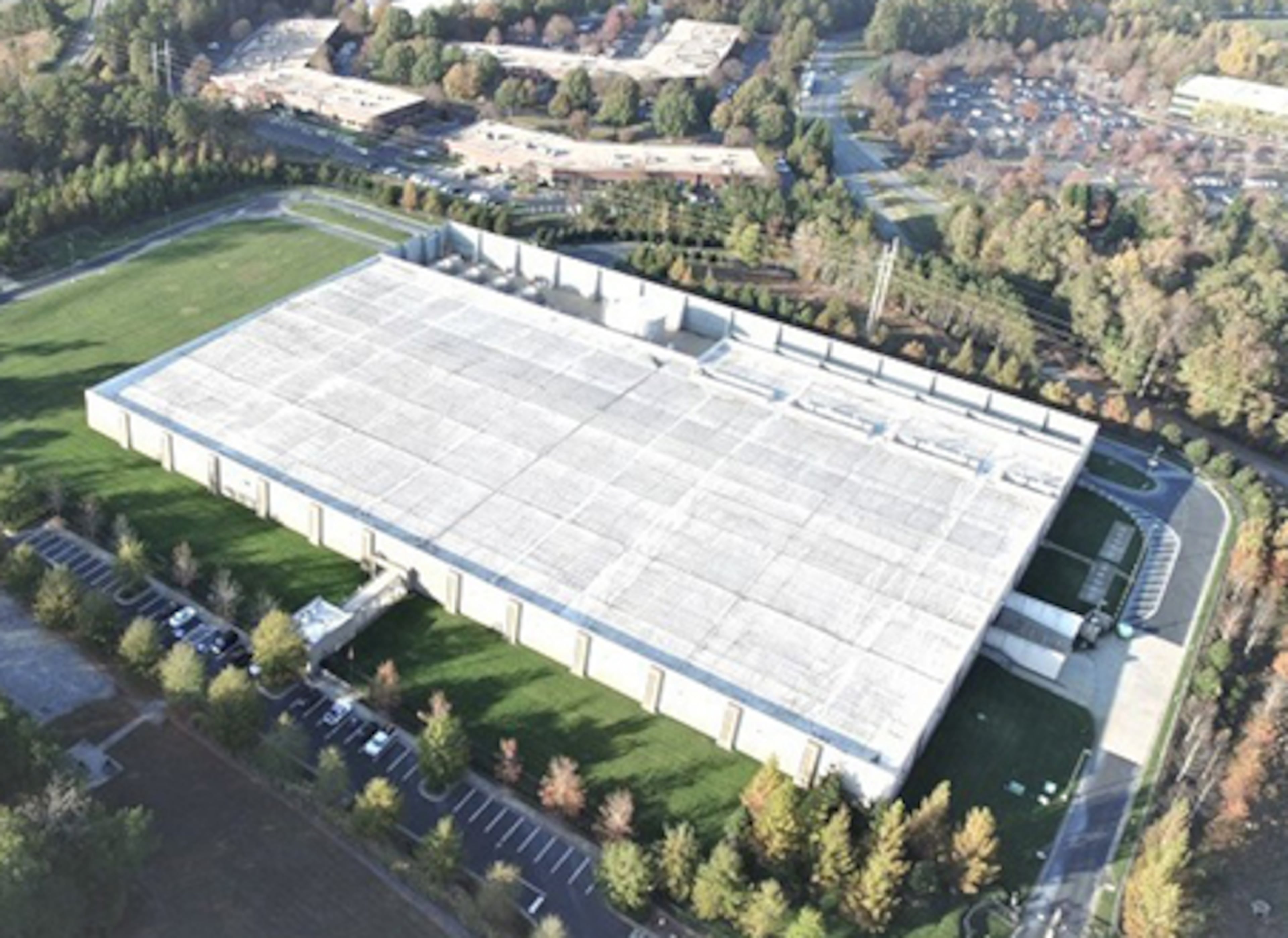
The attention-grabbing sale is a sign of how much money is backing the industry and the value of property already zoned or entitled for data centers, meaning they can avoid facing any local opposition. McKee said it is becoming almost impossible for others to outcompete data center developers for land they want.
“If it’s a good data center site, there is no way that an apartment developer or industrial developer is going to win that property,” he said. “The data center developer can pay so much more and make their numbers work.”
As metro Atlanta has emerged as the world’s second-largest data center market, the land rush isn’t just happening in cities and suburbs. A tech giant paid about $275,000 per acre for an industrial site in rural Lamar County that assessors had valued for a fraction of that price just two years earlier.
As data center campuses get larger to meet the demands of AI, Georgia has emerged as a prime target. Large pieces of Peach State land are plentiful, relatively cheap compared with the national average and fairly easy to plug into the existing power grid.
The data center industry and its lobbyists repeatedly say they want to be good neighbors, highlighting the massive amounts of investment and tax revenue they’re bringing to the table.
Dan Diorio, vice president of state policy for the national trade association Data Center Coalition, said in a statement that land purchases “are market driven,” saying the “growth provides millions in economic benefits to Georgians.”
Data Surge: An AJC series
Data center development is surging in Georgia with metro Atlanta becoming the fastest growing market for server farms in the U.S. and one of the top locations in the world. But the data center boom has raised many questions about land use, the resources the complexes consume and the risk of costs being spread to other Georgia residents and businesses. The Atlanta Journal-Constitution “Data Surge” takes an in-depth look into the power and water demands of data centers and the deliberations of policymakers about this rising industry.
Part 1: Why mall-sized data centers are popping up across Georgia
Part 2: Data centers become new flashpoint for local controversy in Georgia
Part 3: Data Center Alley has lessons to teach. Is metro Atlanta listening?
Part 4: As data centers flock to Georgia, state lawmakers haven’t pumped the brakes
Part 5: Data centers’ thirst for power and water places Georgia on edge
Part 6: Why Big Tech sees Georgia farmland as ripe for data centers
Part 7: What data center companies are spending for Georgia land might shock you
Part 8: Data centers promise tax gains for Georgia. But are they delivering?
Part 9: Georgia’s sales tax breaks for data centers tally more than $2.5 billion
Part 10: Metro Atlanta cities question how many data centers are too many
Data centers historically needed to be near urban centers to access fiber-optic networks. But moratoriums, bans and local opposition near Atlanta’s core have led to developers looking farther outside the city for suitable sites, especially those looking to build large campuses often called hyperscalers.
“Data over fiber-optic networks is traveling at the speed of light,” said Bill Thomson, a vice president at Dunwoody-based DC Blox. “These large hyperscalers want to be in your region, but they don’t need to be in your state.”
Even in downtown Atlanta, data center firms are willing to pay for land with potential for expansion. RadiusDC in November paid nearly $50 million to buy 55 Marietta St., a former office tower that’s been converted into something the industry calls a carrier hotel that connects other data centers. The company, which is backed by private equity firm Blue Owl Capital, plans to nearly triple its capacity through expansion.
Pat Wilson, the state’s top economic development official, said data centers can represent a foot in the door for tech giants. Google’s first corporate presence in Georgia was a data center in Douglas County, and the company now employs more than 1,000 Georgians.

But the state’s recruitment efforts center on projects that create hundreds, if not thousands, of jobs. Data centers tend to only employ a few dozen workers despite their mammoth size and take up lots of land that could go to bigger employers.
“Please don’t take our best industrial sites,” Wilson said of data centers. “Because we’ve been a victim of our own success. We’ve filled up a lot of our great sites.”
Buying potential
The month before GI Partners bought the former BlackBerry data center in Alpharetta, Amazon’s data center division agreed to pay an exorbitant price for undeveloped land off I-75.
Amazon Web Services in July paid roughly $270 million to buy a 985-acre development site in rural Lamar County, an hour south of Atlanta. The property, which was last sold in 2023 for less than $3.5 million, is in an industrial park and would have few hurdles for data center development.
Ryan Marshall, president and CEO of PulteGroup and the 2025 board chair of the Metro Atlanta Chamber, said other developers can’t pay that kind of money for raw land and have their projects make financial sense.
“We’ve seen land that otherwise would have gone toward housing where the residual land value got tripled and quadrupled because of what the data centers are willing to pay,” Marshall said in a recent meeting with The Atlanta Journal-Constitution’s editorial board.
Amazon, in early 2025, announced $11 billion of planned data center investment in Georgia, but it isn’t the only tech giant making gigantic real estate plays in the state. Microsoft also paid at least $171 million in 2024 to acquire more than 480 acres across Atlanta’s Southside for data centers.
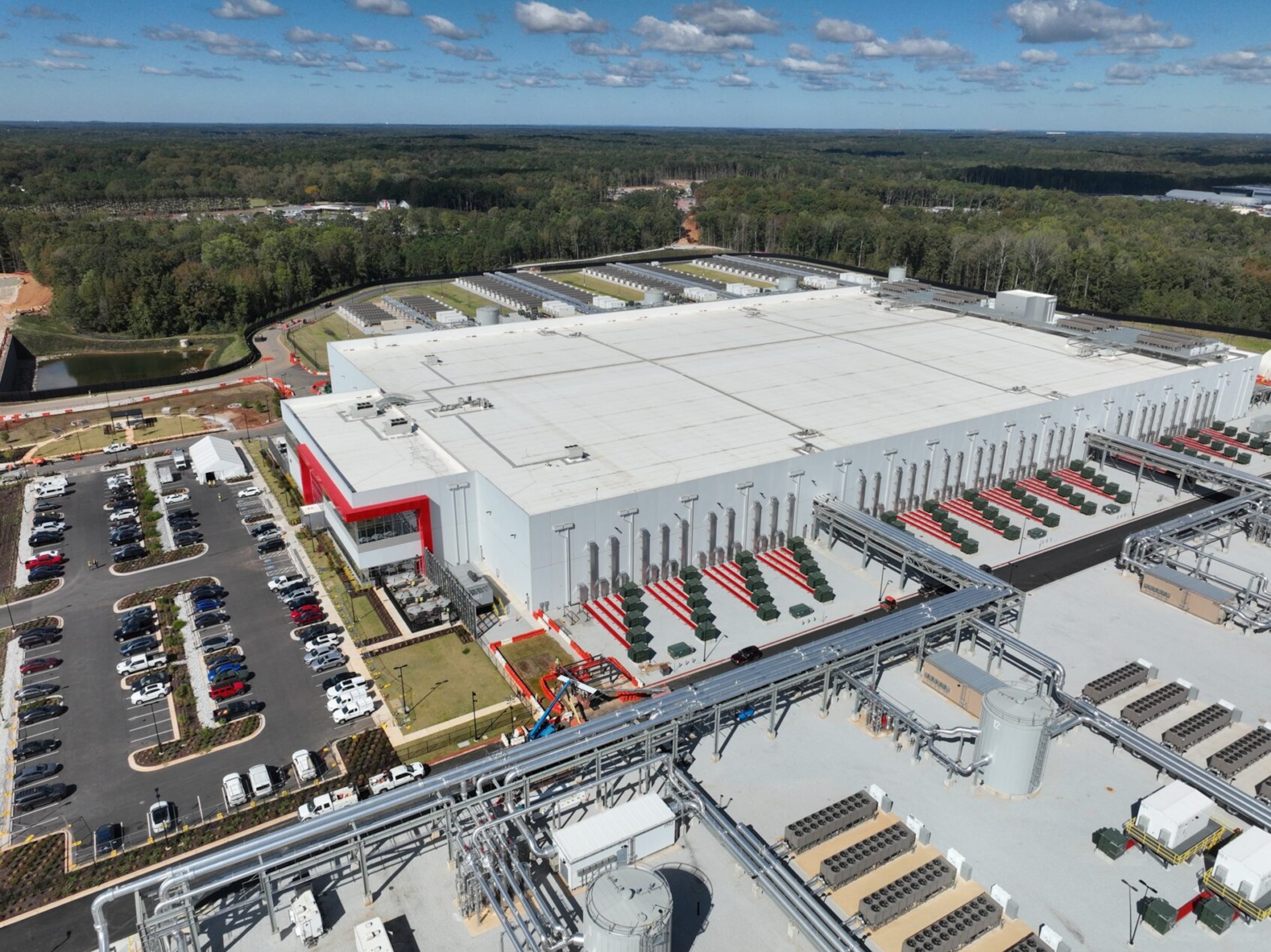
Jason Holland, senior vice president of the capital markets group at Avison Young, said industrial projects face a similar price barrier when competing with server farms.
Data centers are leasing faster than they can be built, and the imbalance between supply and demand continues to push land prices even higher. Those projects, however, aren’t very land-efficient because they require enormous footprints despite only employing a few people.
“The difficult thing with data centers is you build this 500,000 square foot box that has all this power, all these utilities, and it employs like six people,” he said. “That’s the big rub.”
Wilson said some rural communities could benefit from a data center because it would make an outsize impact on local tax rolls. The state offers sales tax exemptions codified in state law to help incentivize data center development. But the state’s economic development machine reserves much of its incentives firepower for projects that become major employment centers, such as headquarters, research centers and factories.
“The state has never really placed a focus on recruiting data centers, at least in the last 10 or so years, because they’re coming,” he said. “They’re going to where they need to be.”
‘Keep them out’
Opponents say data centers have become a bit like whack-a-mole across Georgia.
As soon as one county becomes inundated and issues a moratorium to pause the rush, projects start popping up the next county over.

At least 11 counties issued some form of a data center moratorium in 2025, according to Georgia Public Broadcasting. They’re usually to allow local leaders time to rewrite their zoning codes. Some places, like Atlanta, have banned data centers from being built in many parts of the city, including along the Beltline and near transit stations.
McKee, the Georgia State professor, said regulation is the only solution when the market has determined a development type is so much more valuable than others.
“You have to keep them out because they’re the ones coming in with the big bucks,” he said. “The data center developer is always going to outbid you.”
Sarah Maslowski, a real estate agent in Gainesville, said a $1.2 billion data center proposal called “Project Turbo” near Lake Lanier could be disruptive to Hall County’s other development.
Lakeshore Mall, the area’s largest traditional shopping center, is being redeveloped into a mixed-use project focused on apartments, ground-floor retail and green space. Maslowski said the county needs to focus on things that make it a more appealing place to live, which won’t happen with a data center.
“It could be a major turn-off for people moving in,” she said. “I feel like we’re on a really great path growing in the right way as a community, and this is just a huge setback.”
The developers behind Project Turbo, who are under contract to buy the land contingent upon a successful rezoning, in December withdrew their rezoning application for the 145-acre project site off O’Kelly Road amid opposition. But they’ve told Gainesville radio station AccessWDUN they plan to return.
Josh Levi, president of the Data Center Coalition, said there’s a near-bottomless well of demand for more digital storage space. But local zoning and permit decisions ultimately determine the fate of projects.
“Data centers build where they’re permitted to build at the end of the day,” he said.
About the Author

Zachary Hansen, a Georgia native, covers economic development and commercial real estate for the AJC. He's been with the newspaper since 2018 and enjoys diving into complex stories that affect people's lives.


