Meet Russ Youngblood, who has documented Atlanta’s gay community for decades
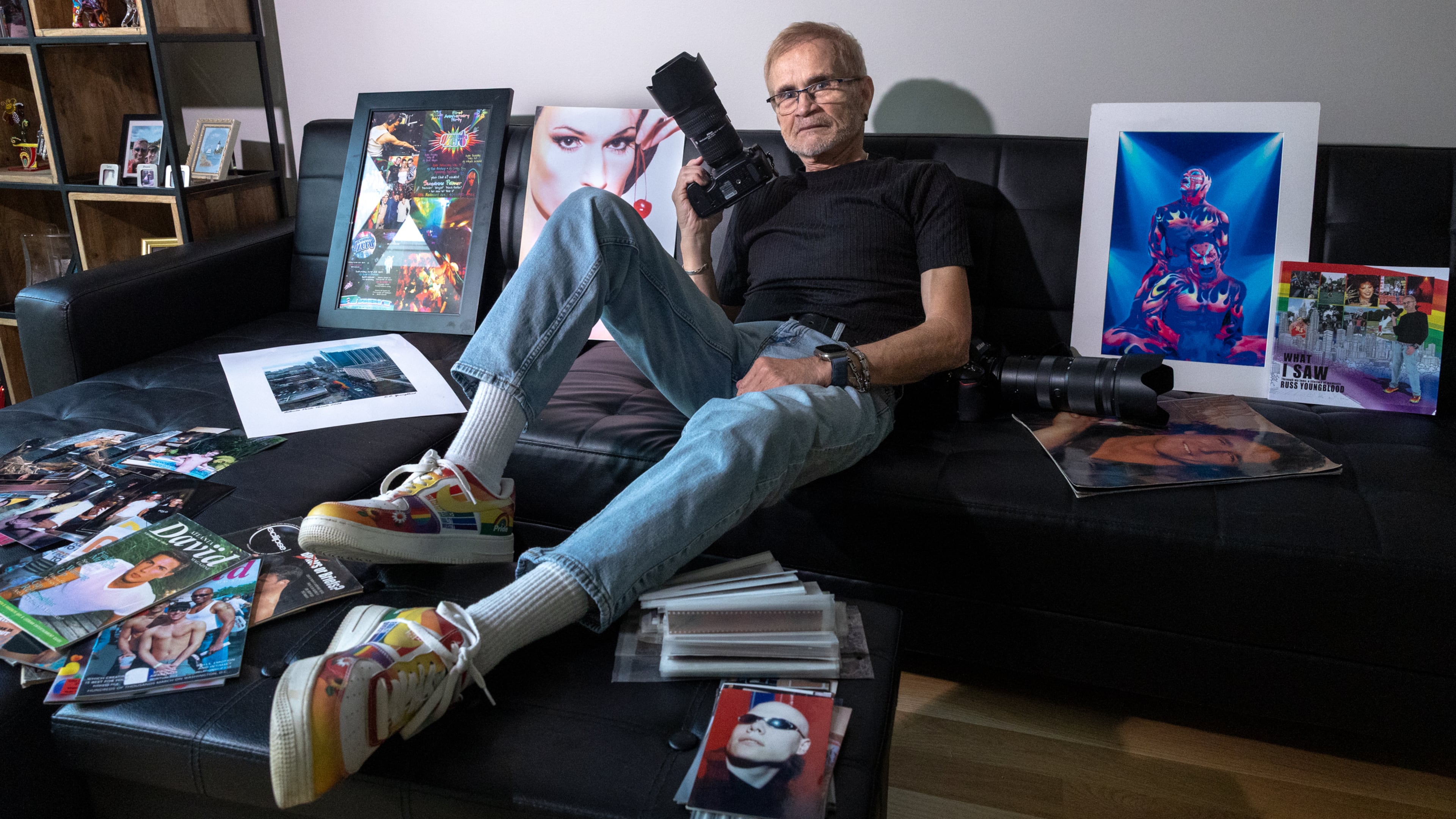

Where some people might have a couple of shoeboxes full of photos from years past, Russ Youngblood has boxes of photo prints, cases of CDs, stacks of magazines and collections of negatives, all filled with nearly 30 years of his pictures of Atlanta’s gay community.
The process of selecting photos from his collection for his recently published photography book, “What I Saw,” took months.
“If you’ve marched, sashayed or danced the night away, I wanted to have one of those in there,” said Youngblood, whose photography has appeared in both still-existing and defunct publications around Georgia, including David Atlanta Magazine, Georgia Voice, Southern Voice and Eclipse.
Youngblood has been a fixture of the Atlanta LGBTQ+ community for decades, ever since he first started photographing it in the 1990s. He has documented everything from the historic moments to the quiet ones, and his trove of images lives on even as the people and world change around it.
“That moment is there forever. And no matter if somebody’s memory fades or they lose their memory, that picture will always be there,” he said.
‘Everybody knows Russ’
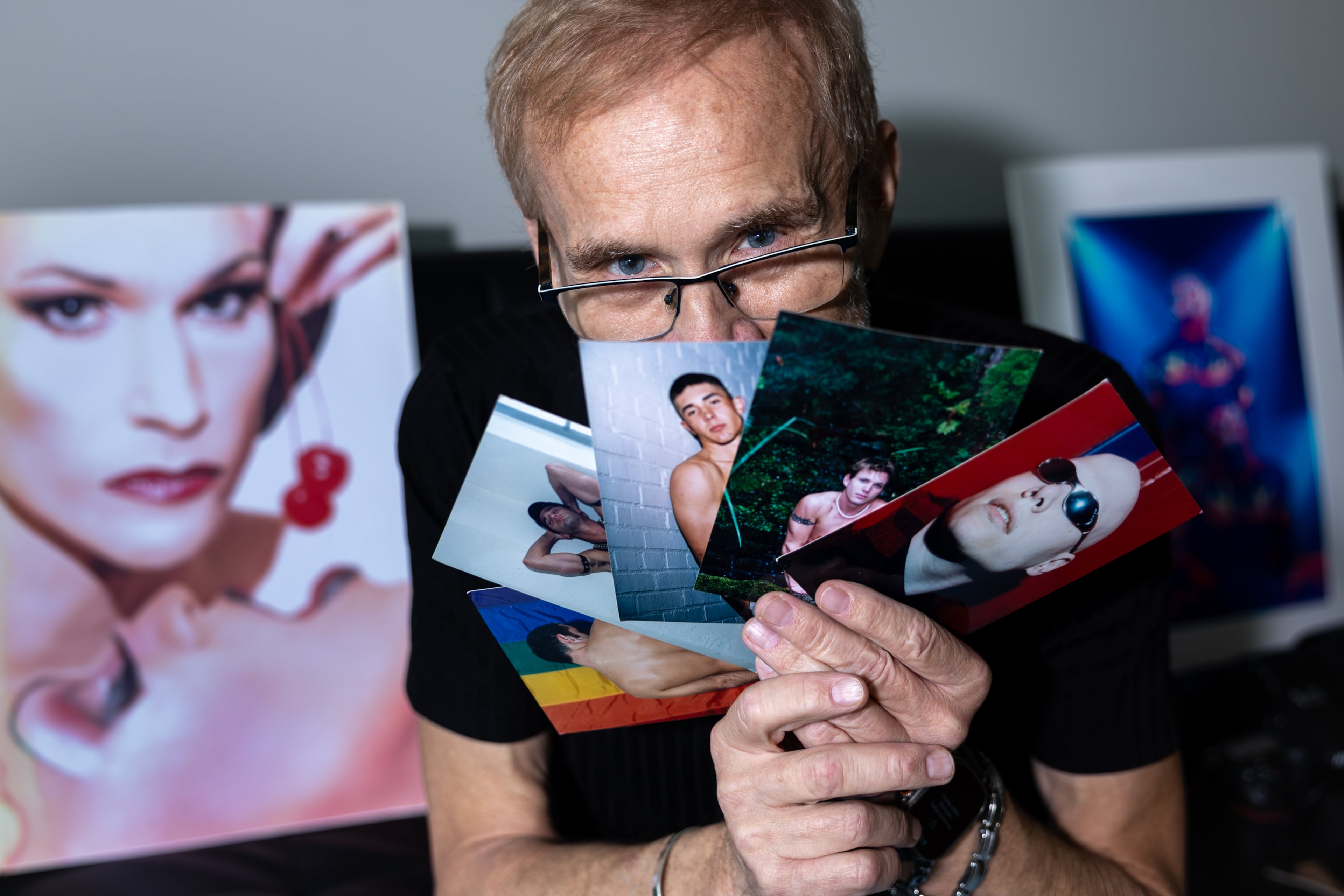
If you take a walk around town with Youngblood, he’ll likely be recognized by some acquaintance or another.
“When you go out with Russ, you can’t make it 20 feet, you know, because everyone’s ... talking to him and trying to get his attention,” Steve Ryan said, Russ’ longtime friend. “It’s hard to go anywhere with him because everybody knows Russ.”
Wanting to meet more people was the impetus for Youngblood taking a job as a photographer for David Magazine when he moved to Atlanta in 1999. Assignments had him visiting nightclubs, events and bars.
He has a way of working himself into a crowd to get the photos, Ryan said.

He’ll go out on the dance floor in the center of groups and gatherings to get that perfect picture, using the dramatic club lighting in just the right way, wrangling people together, directing their poses and so on.
“He’s so outgoing and so Southern and just so hospitable,” Ryan said. “He’s probably one of the best salesmen I’ve seen.”
Over the phone, Ryan playfully mimics Youngblood’s accent in a way that encapsulates the 67-year-old’s warm Southern drawl and hits heavily on his common endearments, like ‘baby’ and ‘sugar booger.’
Youngblood developed both his southern accent and photography interest while growing up in the North Georgia mountains. He started taking pictures at a young age for his parents, who owned local newspapers.
“It was just the idea of capturing that moment in time, forever,” he said.
Youngblood went to school at Young Harris College, and in 1997 he moved to St. Louis, where he continued taking photos and met Ryan.
He moved to Atlanta in 1999, eventually convincing Ryan to join him after the pair attended Atlanta Pride.

Documenting decades of Atlanta’s gay culture
In the ‘90s and early 2000s, Atlanta’s gay community was heavily centralized around Midtown. There were gay clubs and bars on nearly every corner, Youngblood said.
The first time he ever took pictures of Atlanta’s gay culture was in 1994, before he moved to St. Louis, when a friend brought him from North Georgia to visit Atlanta.

They went to Backstreet, a 24-hour nightclub that closed in 2004 after almost 30 years, and those were the first of many photos Youngblood would take of the LGBTQ+ community in the following decades.
“For me, people say, ‘Oh, you should just come and not have to work and enjoy yourself.’ And I always say, if I have my camera, I am enjoying myself,” he said.
During his time taking photos for David Magazine, he gained access to spaces that other media outlets didn’t have. Backstreet, for example, was very strict about letting people take photos, Youngblood said, and this was long before smartphones existed.
“I’m very fortunate to have a lot of pictures that other people don’t have,” Youngblood said.

He was sent to photograph various events around Atlanta, including Pride days at Six Flags and Braves games.
When he found subjects at these events, he always asked their permission before taking their photo. He is still meticulous about asking for permission.
“I always ask first, only because you know that most of the time, especially for the little magazine, it’s all just fun and fluff. And a lot of people who are still in the closet or still have either work or restrictions, I never wanted it to be an issue on a photo that I took for fun,” he said.

Youngblood understands why some might avoid the camera. Before he was ready to come out, he was worried the news would take his photo or he’d accidentally get caught in the back of a video at Atlanta Pride.
“I was terrified that somebody would take my picture, and that’s also why I’m so sensitive and respectful of somebody’s image,” he said.
Thirty years later, Youngblood rode as a grand marshal in the 2025 Atlanta Pride parade, where he and his chosen family dressed in matching camo pants and drove down Peachtree Street in his friend’s Jeep, shouting and waving at thousands of spectators.
“By the time it was over, I was hoarse, I couldn’t hardly talk because I was up and down Peachtree (yelling), ‘Happy Pride!’” he said.
A historical record
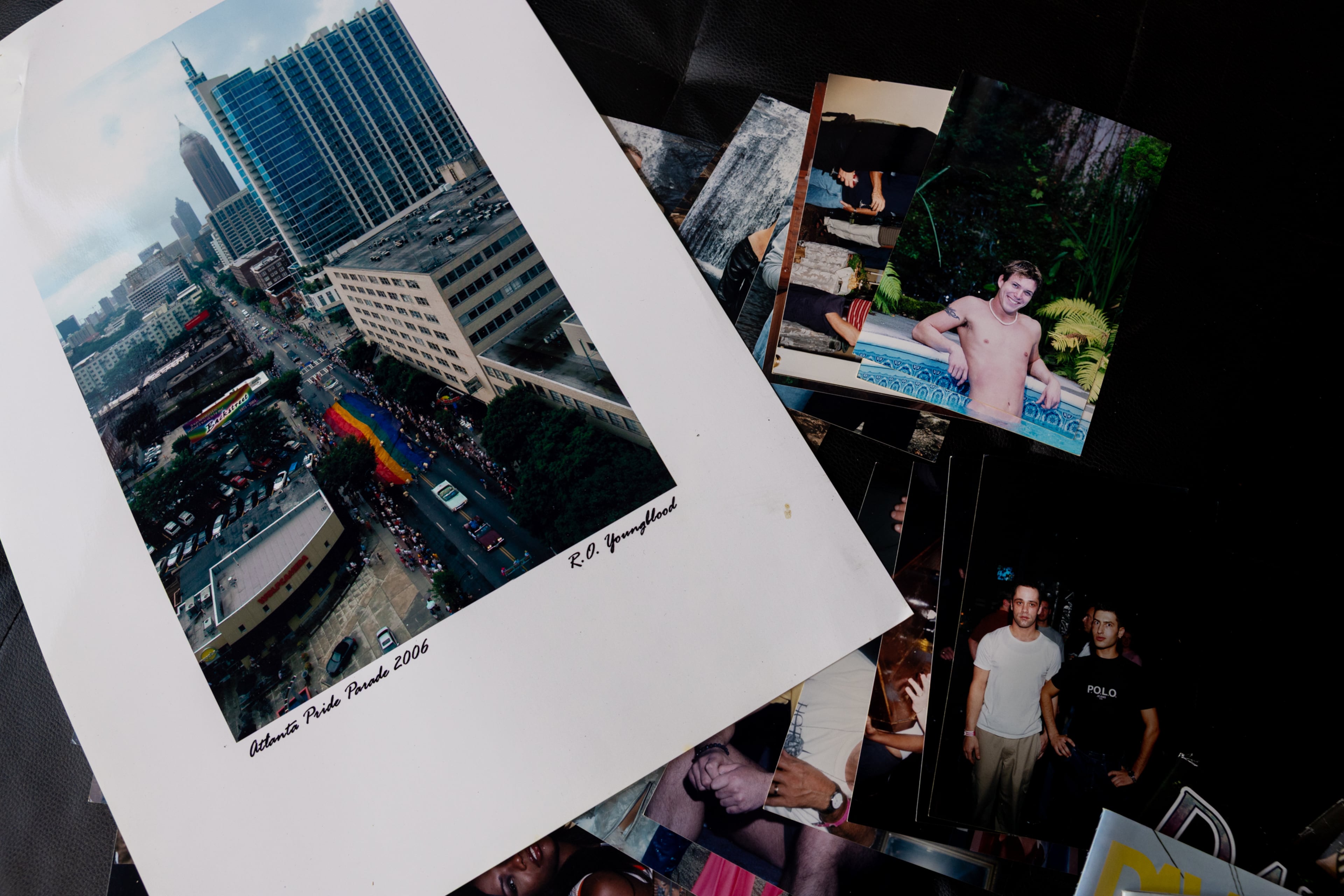
Youngblood described a photo he once took at Backstreet in the early 2000s. He was standing on the second floor and looking down at the dancers below. All of a sudden, the lights came on, shining on a sea of people standing around the room.
“I took that picture, and I always say, you know, it was here that I first realized it was OK to be me,” Youngblood said.
Growing up in Hiawassee, “you’re one of one, you feel that way,” he said. But when he came to Atlanta, he found that his people were everywhere.
Youngblood has seen the evolution of Atlanta’s LGBTQ+ nightlife firsthand. There are fewer bars now, he said, and as for what’s worn in the clubs: “It’s much more free. Instead of a coat check, you have a clothes check,” he said wryly.

But while the people may have changed and some bars have closed, nightlife is still very similar in many ways. Those shared experiences continue to exist, he said, and he still sees it as an important part of people’s social lives.
Beyond the social side of it, nightlife has been essential in fundraising and providing support within the LGBTQ+ community, Youngblood said.
“Taking pictures of nightlife actually becomes a documentation of Atlanta, of the bars that have been here, of people who have grown to become icons, people who are still here, people we have lost, and that’s really, really important. And it’s kind of like building this legacy and this history that has been hidden before,” said Mikkel Hyldebrandt, the current editor-in-chief at David Magazine, which is still printed and distributed around Atlanta.
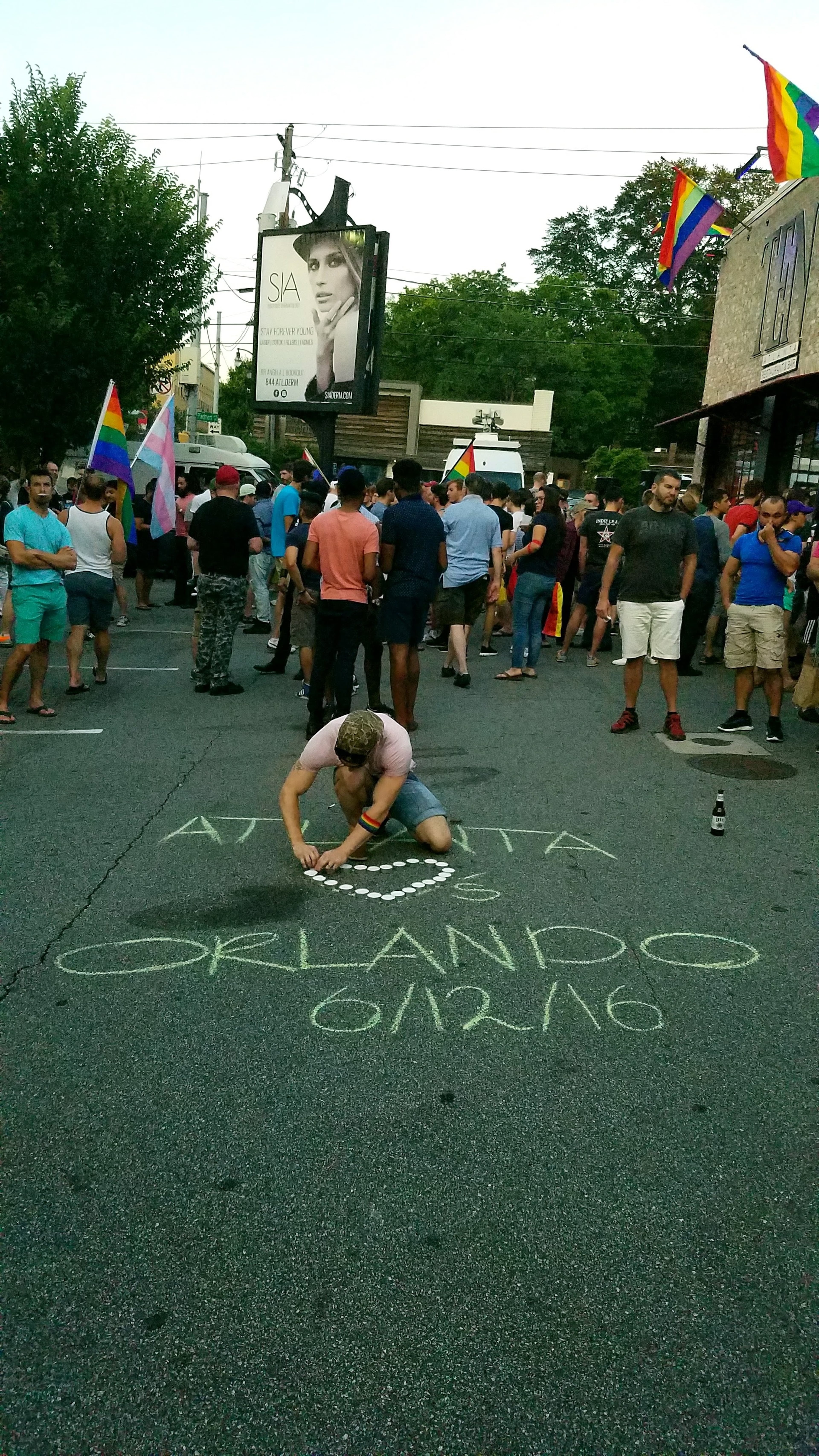
LGBTQ+ media has been vital in providing visibility to a culture that was essentially hidden from the mainstream for decades, Hyldebrandt said. It was and still is a place where “people could sort of see themselves out and about maybe in a way that they haven’t been able to before.”
Youngblood’s photography book was his own love letter to the community, a repository where LGBTQ+ Atlanta could see itself memorialized.
Ryan said the book sold out twice when Youngblood self-published it last year. People who purchased it likely found themselves drawn into decades of nostalgia and memory. They saw people who have long since passed away, and old friends or lovers they haven’t spoken to in decades.

“It’s in his blood. It’s in his DNA to be a documentarian,” Hyldebrandt said.
In recent years, the LGBTQ+ community has spread out well beyond Midtown — Youngblood said he even has friends up in Kennesaw now. While this speaks to a broader acceptance, “You do lose a little bit of community when you’re absorbed into the mainstream,” he said. “But isn’t that the goal?”
In the decades when the mainstream turned away from people they couldn’t understand, and when news coverage often was neither open-minded nor fair, Youngblood was there, taking photos of the marches and the protests.

He was there for painful moments, like the display of the AIDS Memorial Quilt, and he has captured joyous moments, like so many Atlanta Pride festivities.
Each moment Youngblood has photographed has been preserved, whether in his book or in the private collections people have entrusted to him.
“There is a record that we were here. That we lived, we loved, we danced, we cried — all of those things,” Youngblood said. “I’ve got a history that says, to me it says, we’re important enough to remember.”