Atlanta Pulitzer Prize winner delves into America’s working homeless problem
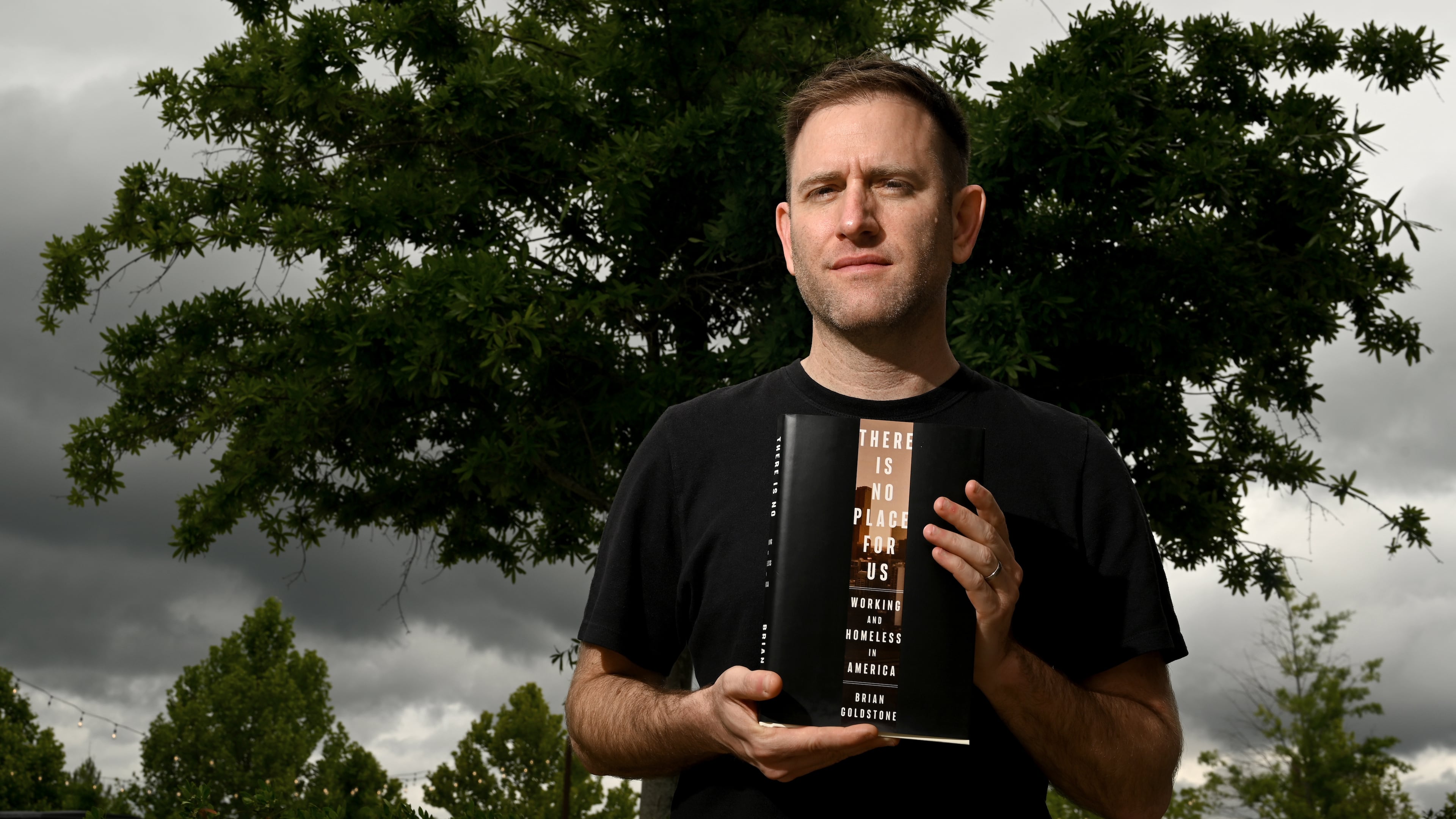
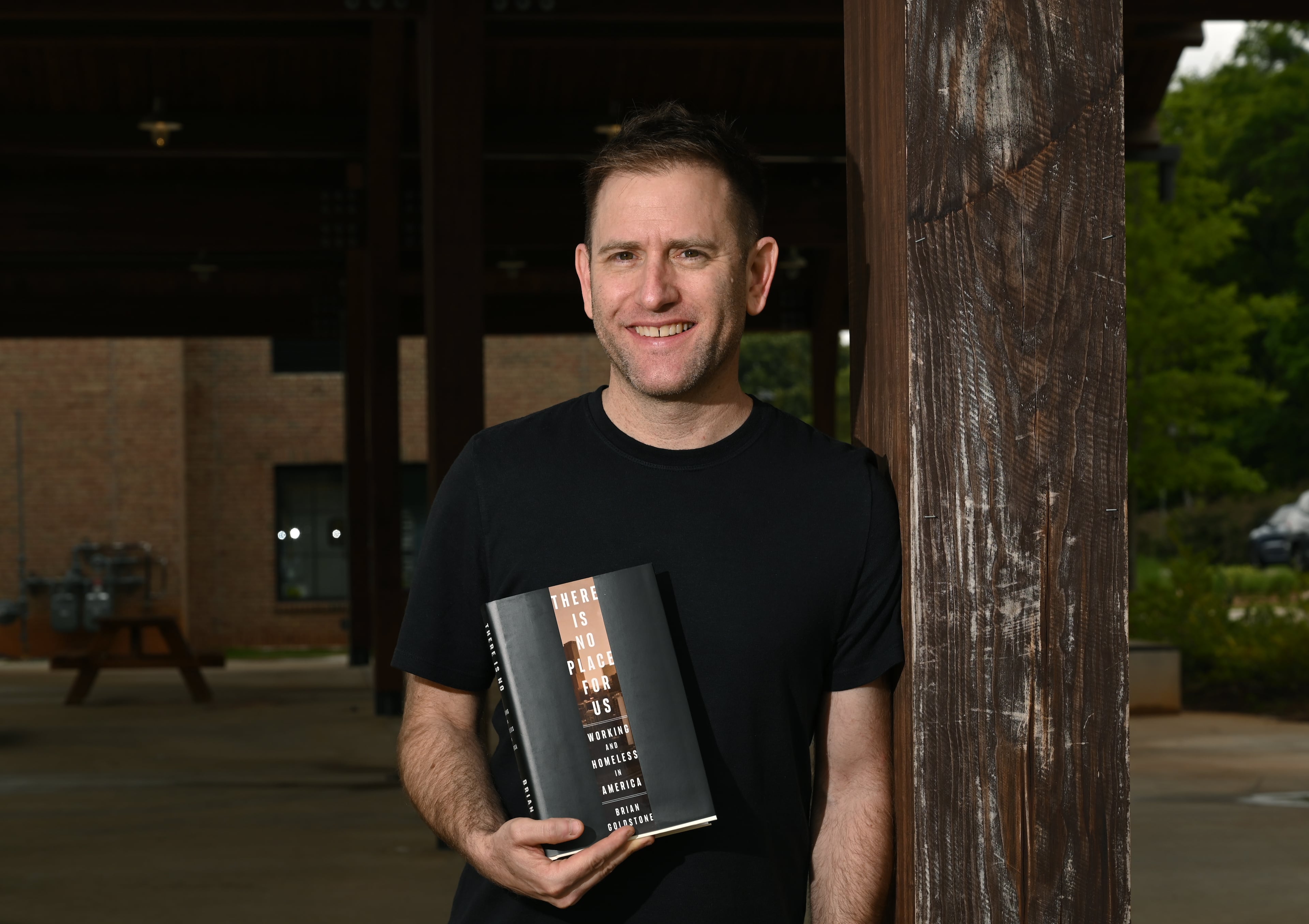
A harrowing glimpse of the invisible homeless in Atlanta, journalist and Decatur resident Brian Goldstone’s nonfiction book “There Is No Place for Us: Working and Homeless in America” on May 4 was named the general nonfiction winner of a 2026 Pulitzer Prize.
Following in the tradition of John Steinbeck’s “The Grapes of Wrath” and Upton Sinclair’s “The Jungle,” Goldstone’s vital and empathetic book also recalls other more recent portraits of America’s working poor including Barbara Ehrenreich’s 2001 book “Nickel and Dimed” or Chloé Zhao’s 2021 Oscar-winning film “Nomadland.”
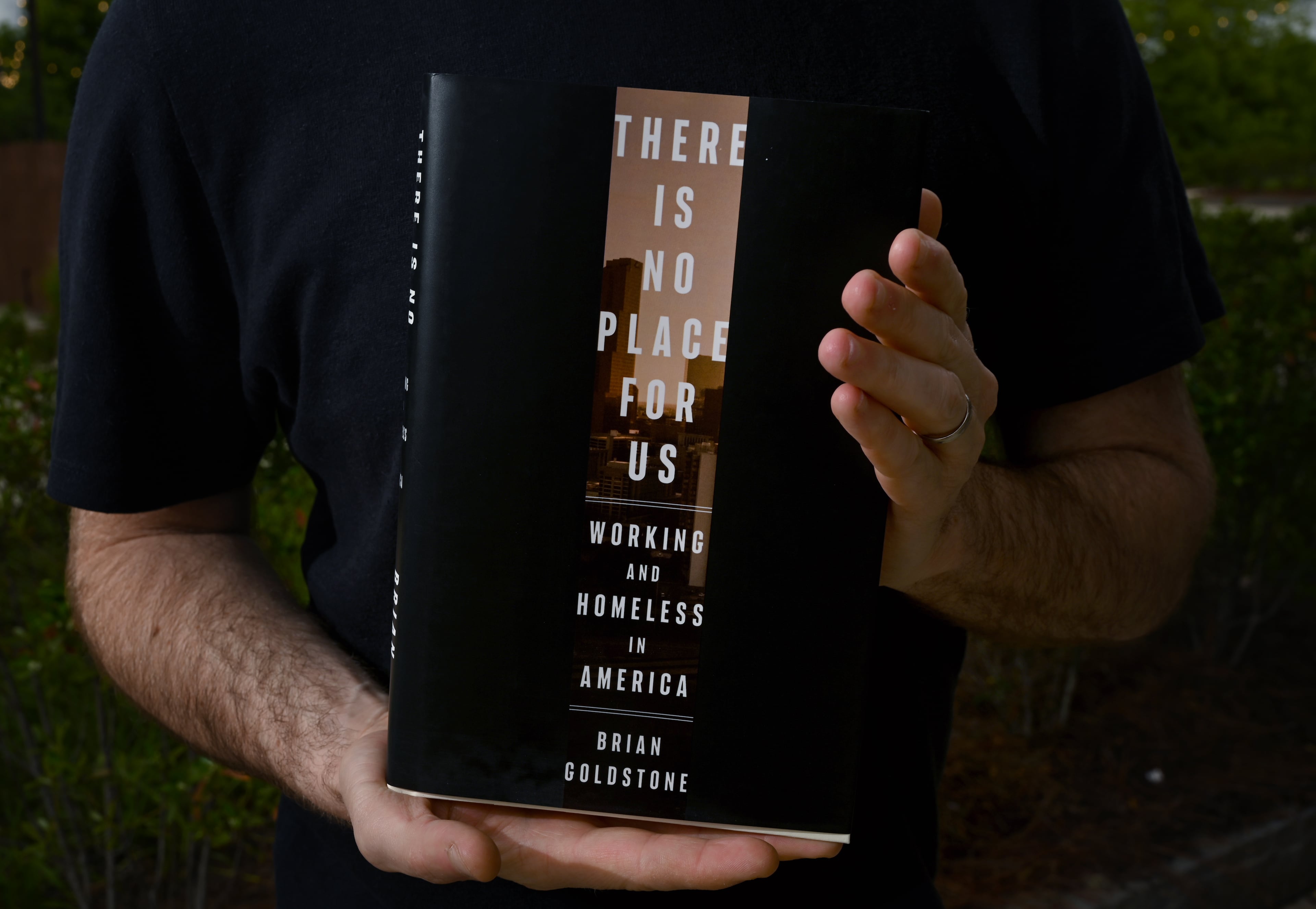
Goldstone’s book follows five Atlanta families whose minimum-wage jobs can’t keep up with rising rents and predatory rental practices. Many turn to expensive extended stay hotels where they live in precarious, unsafe, often unsanitary conditions.
His approach is journalism married to anthropology — Goldstone holds a Ph.D. in anthropology from Duke University and was a Mellon Research Fellow at Columbia University. Already named one of the 10 Best Books of 2025 by both The New York Times and The Atlantic as well as one of former President Barack Obama’s favorite books last year, “There Is No Place for Us” shows how the city too busy to hate has also lost touch with its social justice roots in chasing growth at any cost.
Q: Did you see any kind of manifestation of the things you talk about in your book where you live in Atlanta?
A: I think we’re all kind of dealing with that reality, the reality that a city like Atlanta — and so many of us are enjoying the fruits of this — is just growing and booming and undergoing this renaissance.
But the people who make our lives possible through their work? They’re not even able to have a place to live. And so I think we’re all kind of implicated in that, right?
Q: After reading your book, I feel like when I drive around Atlanta now. I’m so much more aware of this extended stay hotel phenomenon. Do you feel like researching the book made you see the Atlanta landscape differently?
A: These hotels, I came to realize, were not like normal hotels. They were serving as extremely profitable homeless shelters. They were serving as places of last resort, and they were also what one family in the book refers to as expensive prisons where you go because you’ve been forced out of the formal housing market through an eviction on your record or a low credit score, and you can’t even rent a place again. You’re now trapped in these hotels. And I had no idea that these places I was driving by all the time were functioning in that way.
But I should also say it has forced me to see Atlanta differently in the sense that, when friends are getting together at a local brewery, or when out of town friends want to go to the Beltline … you know that a low-income apartment complex very likely stood where this craft brewery stands, and just to see the human toll of all of this “success” and revitalization has definitely been sobering and shocking as a resident of the city.
Q: Where were you and what was your reaction when you found out that you had won the Pulitzer?
A: I would love to be able to say that I was in the trenches reporting. I was actually at Pottery Barn at Ponce City Market with my wife. We were looking for a new blanket for our bed, because we’re in the process of moving (Goldstone and his wife Elaine are headed to Durham, North Carolina, where her family lives).
And I remembered that at 3 o’clock they were going to be doing the live cast of the Pulitzer announcement. And so I sat down on one of the beds in the showroom and took out my phone, and then I called over to Elaine. … And she sat beside me and squeezed my hand. And I don’t remember anything after that, because I think I just kind of, I didn’t pass out, but reality stopped. Time stopped. It’s the closest thing to understanding what people mean by an out-of-body experience, because I really didn’t know where I was or what was going on.
Q: Has your publisher or your agent told you that anything will fundamentally change after having won the Pulitzer?
A: I think we’re all just so grateful that this could potentially put the book on people’s radar who it wouldn’t otherwise have been on.
I poured every ounce of my being into reporting this book. All my eggs were in this basket, career-wise, professionally. I didn’t have a day job. I didn’t have anything to fall back on. There were many points where I was absolutely convinced this book would never come out, because it just felt impossible to do the reporting. The realities I was encountering were so harrowing and horrific, and I just didn’t think I would be able to even document it.
Q: In your book, you’re almost like an embedded reporter, but the war is economic. Is there an analogy that occurred to you when you were doing this research and hearing these stories?
A: A book that was not just a source of inspiration, but kind of a North Star of what writing with conviction as a journalist can look like, is a book called “Rachel and Her Children” by Jonathan Kozol. It actually came out in the 1980s when mass homelessness was first erupting in the U.S., and he wrote a book about the largest shelter in New York City, what was called a welfare hotel … and that’s exactly the language he used to describe that hotel: that it was akin to a refugee camp.
And I think that that’s exactly the kind of language that we should be using. I don’t think that it’s too much to say that what these families and individuals are experiencing is the result of a very particular kind of violence. It’s an economic violence when you’re working and working and working not just one job, but multiple jobs, and it isn’t enough to just secure your most basic human needs.
Q: Are you still in touch with these families? Are you still getting feedback about the progress in their journey?
A: I’m still in very close contact with them. It has now been close to seven years, I think, since we’ve known each other. I’ve seen kids graduate from high school, babies have been born. There’s been a lot that has happened, but we remain in very, very close contact and I will never stop being grateful for the generosity that they continue to show me.
Q: Do you think your interest in their stories gave them some hope, or a sense that, finally, someone’s listening or seeing what they’re experiencing?
A: It’s funny, because when some of the other recognition accolades came in, like when I found out that the book was selected as one of the New York Times’ 10 best books of the year, I was just completely flabbergasted and I called them, and I know they were happy for me.
But when Barack Obama announced his list before Christmas of his favorite books of the year, and this book was on it, for the families, there were a lot of tears of joy that Barack Obama read their stories.
Q: What did you do to get out of that head space of being involved in these stories, day in and day out? How did you care for yourself?
A: I handled it in a very bad way, in a very poor and clumsy way. I didn’t take it seriously how it was affecting me, because I had this lovely home to return to at the end of every day, I have this lovely family to return to, my kids, and I just really minimized the toll that this was taking … it would just spill out in kind of ugly ways. I would be really short-tempered with my kids, or I would just be really moody.
And it was only much later in the process that my editor and my wife and friends were like, you have to see a therapist … shout out to Christy Burkett, my therapist.
Q: Do you think your next project will be adjacent to this subject area?
A: For many years, I have wanted to write about mental health; more directly America’s mental health care system, such as it is, and I’ve written different magazine stories over the years that kind of indirectly enter into that domain. But I would love to explore that more intentionally.
Q: Do you have any sense from the time you started this project until now, that Atlanta has in any way gotten better in terms of dealing with unaffordable housing?
A: Princeton’s Eviction Lab just came out with data showing that there are more evictions in Atlanta than in New York City. Despite having only a quarter of the renters that New York City has. We’re not talking per capita, we’re talking the volume of evictions is higher than New York City. And that should be a scandal.
And I think this fundamental question of: “What kind of city are we going to be? Who is the city for?” Like, if this city isn’t for the men and women whose bodies, whose labor is making our city run, then who is the city for?
How long will we allow the profits that our most successful corporations are making — how long will we allow those profits to be predicated on the deprivation of their own workers? This is not about charity anymore. This is about justice and injustice, and I don’t think we’re anywhere close as a city, as a region, and certainly as a country, to naming those realities, much less adequately tackling them.
Q: Is there anything you feel like people are missing or that you have just been anxious for them to understand about your book?
A: I think I’ve just been at pains to remind myself and emphasize to anyone who will listen that all of this suffering that is documented in the book … it’s so important to remember how utterly preventable all of the suffering is. It really isn’t rocket science, that the reason homelessness exists is because people don’t have homes they can afford. And the way you end homelessness is by people having homes.
And I want (readers) to be angry, not just sad, not just empathetic. I want them to be angry that we have allowed our city to become a place of such astounding inequity and that we have inflicted such trauma on our children and on our home health aides and on our supermarket cashiers, on and on and on.