7 Atlanta women who helped put the city on the national art map

Women’s History Month is the perfect occasion to recognize some of the well-known but also less-often celebrated champions of Atlanta’s visual arts.
Patrons, collectors, artists and benefactors who gave their time, talent and opened their pocketbooks to put Atlanta’s art scene on the national radar, these women played a fundamental part in raising Atlanta’s stature and often helped inspire new generations of collectors and creatives in their wake.

Lucinda Bunnen
A photographer and a champion of photography in Atlanta, Lucinda Bunnen was instrumental in launching the High Museum of Art’s photography collection in the early 1970s and donated more than 700 photographs and works on paper to the High, helping to make its photography holdings of 9,000-plus prints its largest collecting area.
“We wouldn’t have an arts community without Lucinda,” Atlanta-based curator Karen Comer Lowe said of Bunnen’s enduring legacy in the city, citing the vital role she played as a founder, in 1973, of Atlanta Contemporary (then Nexus) and her support for the arts through the Lubo Fund.
“At one time Lucinda Bunnen was the person funding almost all of the arts in Atlanta,” Comer Lowe said.
Anne Cox Chambers
Sadly there aren’t as many buildings named for women as there are for men. But at the High Museum, one arts benefactor has been acknowledged for her significant contributions to the arts and lasting imprint on the city.
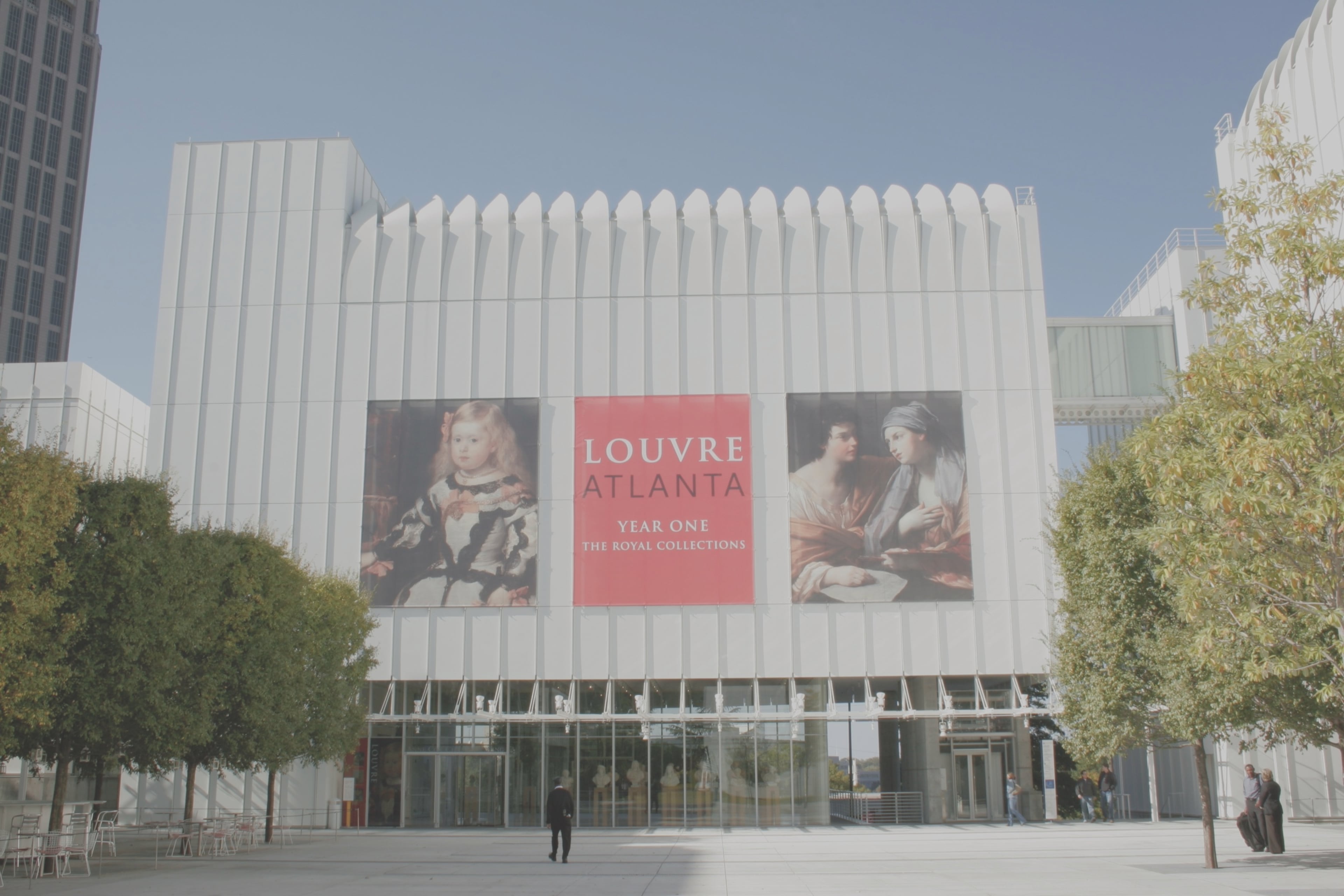
The High Museum’s Anne Cox Chambers Wing is named in honor of the former Cox Media owner’s generous donations to the Renzo Piano expansion of the museum’s footprint. The expansion, covered in media outlets far and wide, pave the way for increasing national coverage of the museum.
Chambers also provided significant support for the High’s Louvre Atlanta project and for the original Richard Meier-designed museum building.
Shirley Franklin
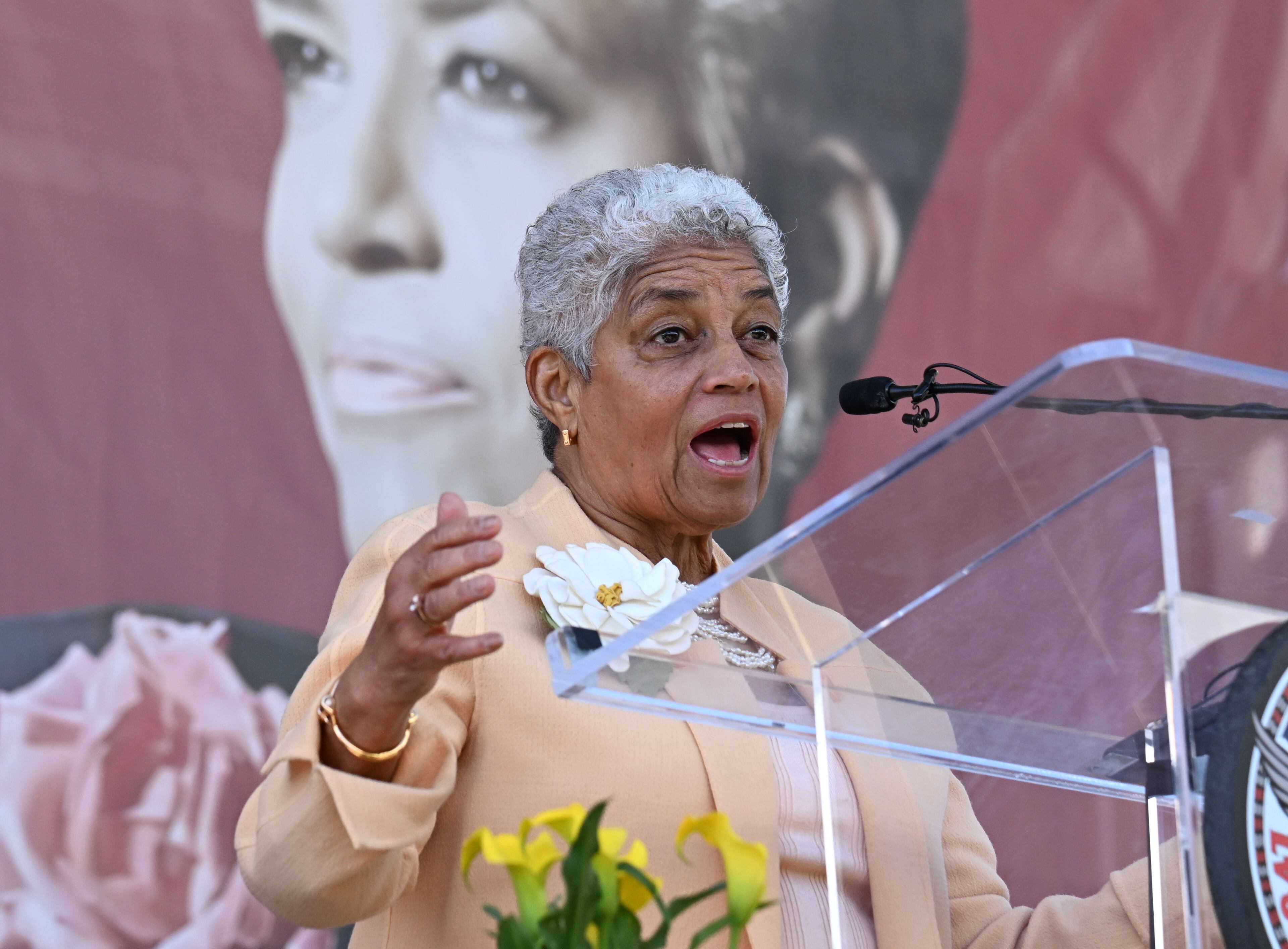
Appointed as Maynard Jackson’s commissioner of Cultural Affairs, this former Atlanta mayor still pops up on Atlanta’s art scene, recently taking in a show at East Point’s Black Art in America. Shirley Franklin was also an early backer of Pearl Cleage and Zaron Burnett Jr.’s foundational underground art cabaret, Club Zebra, at the Atlanta Civic Center.
As Cultural Affairs commissioner, Franklin helped launch Hartsfield-Jackson Atlanta International Airport’s public art program.
“She helped secure essential support so artists could sustain themselves as living professionals, including through grants and city budgeting,” Atlanta filmmaker Matthew Adeboye said of Franklin’s legacy. “Franklin also provided physical homes for creativity by negotiating with Atlanta Public Schools to repurpose closed buildings as dedicated arts spaces.
“This created stable venues for organizations like the Neighborhood Arts Center, Club Zebra and ArtsXchange, allowing visual artists to work, exhibit and teach without constant instability. She truly understood that if you uplift the arts, you uplift an entire community and city.”
During her tenure as mayor, Franklin continued her support of the arts, ensuring that the visual arts were integrated into development projects, and in 2025 she was named an Atlanta Arts World Changer by the ArtsXchange.

Fay Gold
For almost 30 years, Fay Gold operated Atlanta’s most important blue-chip art gallery, bringing titans such as Robert Rauschenberg, Joan Mitchell, Jasper Johns and Louise Nevelson here. She also welcomed cutting-edge contemporary artists, including Andres Serrano, Doug and Mike Starn and Cindy Sherman, to Atlanta, turning national attention to the city’s contemporary art scene.
“She was both amplifying and elevating the artists who were here in Atlanta by positioning them next to … or in the same gallery as blue-chip artists,” former Fay Gold Gallery director Veronica Kessenich said.
Gold, Kessenich said, encouraged Atlanta collectors to buy contemporary art and often identified art stars in the making long before they gained prominence in the global art world. “She was very much so interested in, and is still interested in, identifying talented artists and giving them the opportunity and the freedom to experiment and take risks,” Kessenich said.
Gold also brought Atlanta to the world through her participation in art fairs in New York and Miami long before Atlanta’s galleries were participating in national fairs, Kessenich said.

Harriet “Hattie” Harwell High
Without Harriet “Hattie” Harwell High’s contribution, Atlanta’s High Museum might not lay claim to its position as the most prominent art institution in the Southeast.
In 1926 High gifted her Tudor mansion on Peachtree and 15th Street to the Atlanta Art Association to create the art museum and art school that she asked be named after her husband, Joseph Madison High, who died in 1906. She served on the board of the High and continued to financially support the museum until her death in 1932.

Camille Russell Love
For more than 25 years and alongside five Atlanta mayors, Camille Russell Love, 75, served as the city of Atlanta Mayor’s Office of Cultural Affairs director, inaugurating arts institutions including the Chastain Arts Center and Gallery, the city’s public art program, Gallery 72 and the annual Elevate arts festival.
In 2005, Love created the Cultural Experience Program, which ensured every Atlanta public school student from kindergarten to 12th grade would have a free annual field trip to a cultural venue.
In her last year at the Cultural Affairs office, Love was credited with the online art market Artsy recognizing Atlanta as the No. 2 Emerging Art Capital to watch in 2024.
Mildred Thompson
Abstract painter and sculptor Mildred Thompson, who died in Atlanta in 2003, created work that spanned four decades and made her a pioneer in a genre where women of color were underrepresented, opening up the definition of Black women artists beyond Atlanta.
Thompson also served as an editor at the Atlanta-based magazine Art Papers and taught at the now-defunct Atlanta College of Art, where her students included Radcliffe Bailey, William Downs, Carl Joe Williams and future MacArthur Fellowship winner Kara Walker.
Curator and executor of Thompson’s estate, Melissa Messina, hosts artists and curators from around the world at Thompson’s Grant Park home as part of the Mildred Thompson Legacy Project. Thompson lived for a significant portion of her career abroad, Messina said, and so “she also understood herself not only as an artist from the South but also as a global citizen of the world.”
Messina also noted that Thompson hosted international artists and scholars in her Atlanta home, including Adrian Piper, Joe Overstreet and Howardena Pindell, in that way bringing even more national attention to the city’s creative scene.