What parents need to know about Trump’s proposed changes to childhood vaccines
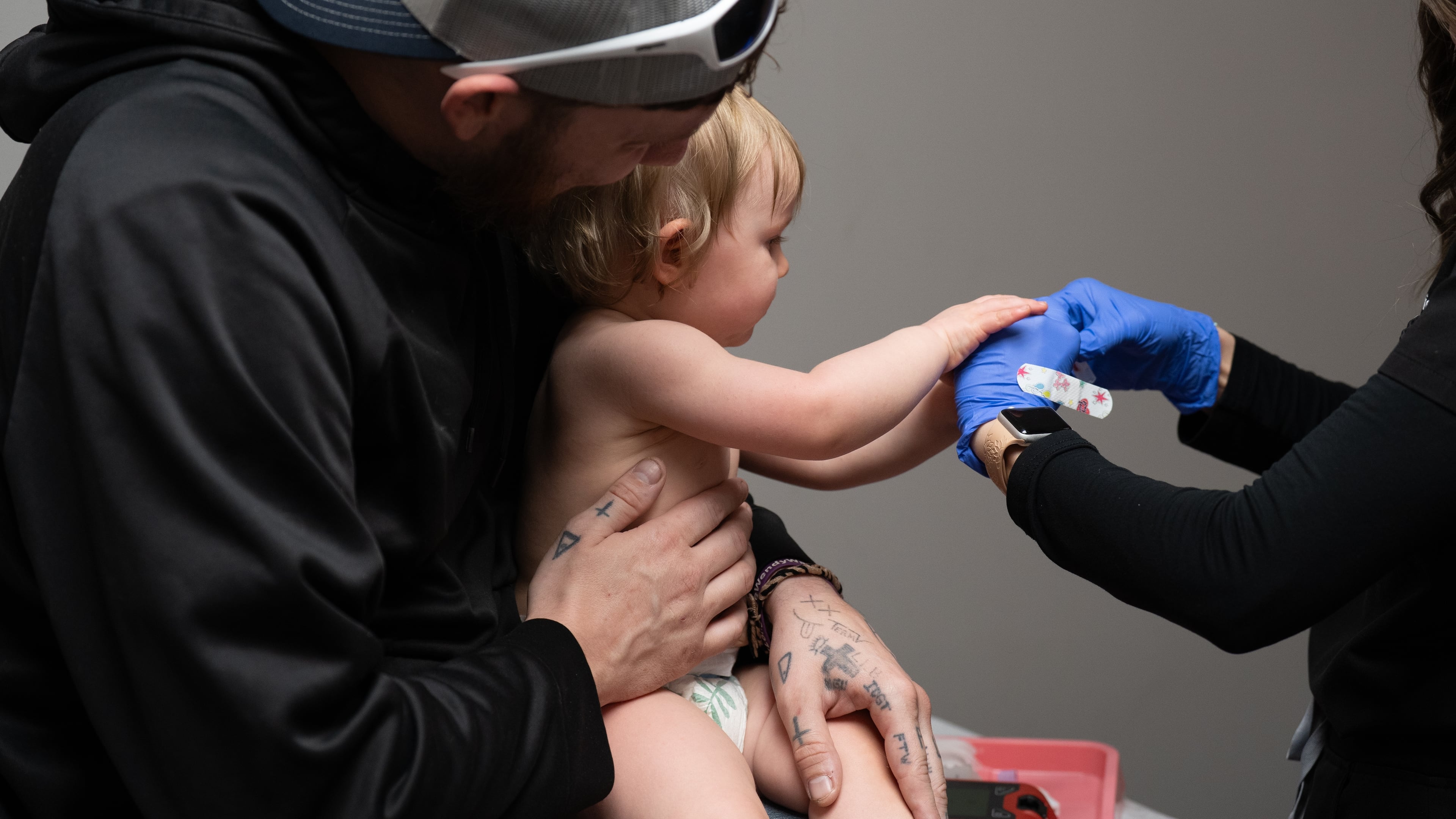
Medical experts in metro Atlanta are sounding the alarm about the feasibility — and potential dangers — of President Donald Trump’s call to scale back some vaccines and change the way others are recommended for children.
“My initial reaction to this new executive order was that it is not rooted in strong science or strong public health policy,” said Robert Bednarczyk, associate professor of epidemiology and global health at Emory University’s Rollins School of Public Health.
Georgia parents broadly support the current schedule, a new study found, which recommends vaccines against 17 diseases, including polio and chickenpox. Trump wants a schedule targeting just 11 diseases.
“While it is important to make informed decisions and collaborative decisions, it’s also my duty to trust the medical professionals and the care team I have entrusted my children to,” said Jhadelys Stewart, a working mom from Smyrna with two boys, ages 3 months and 3 years. “And if they are consistently telling me that there is no reason to change the vaccine schedule, I’ll have to trust there is no reason to change it.”
What Trump wants to change
Monday’s executive order builds on the Trump administration’s push to reshape the childhood vaccine schedule under Health and Human Services Secretary Robert F. Kennedy Jr., a well-known vaccine skeptic.
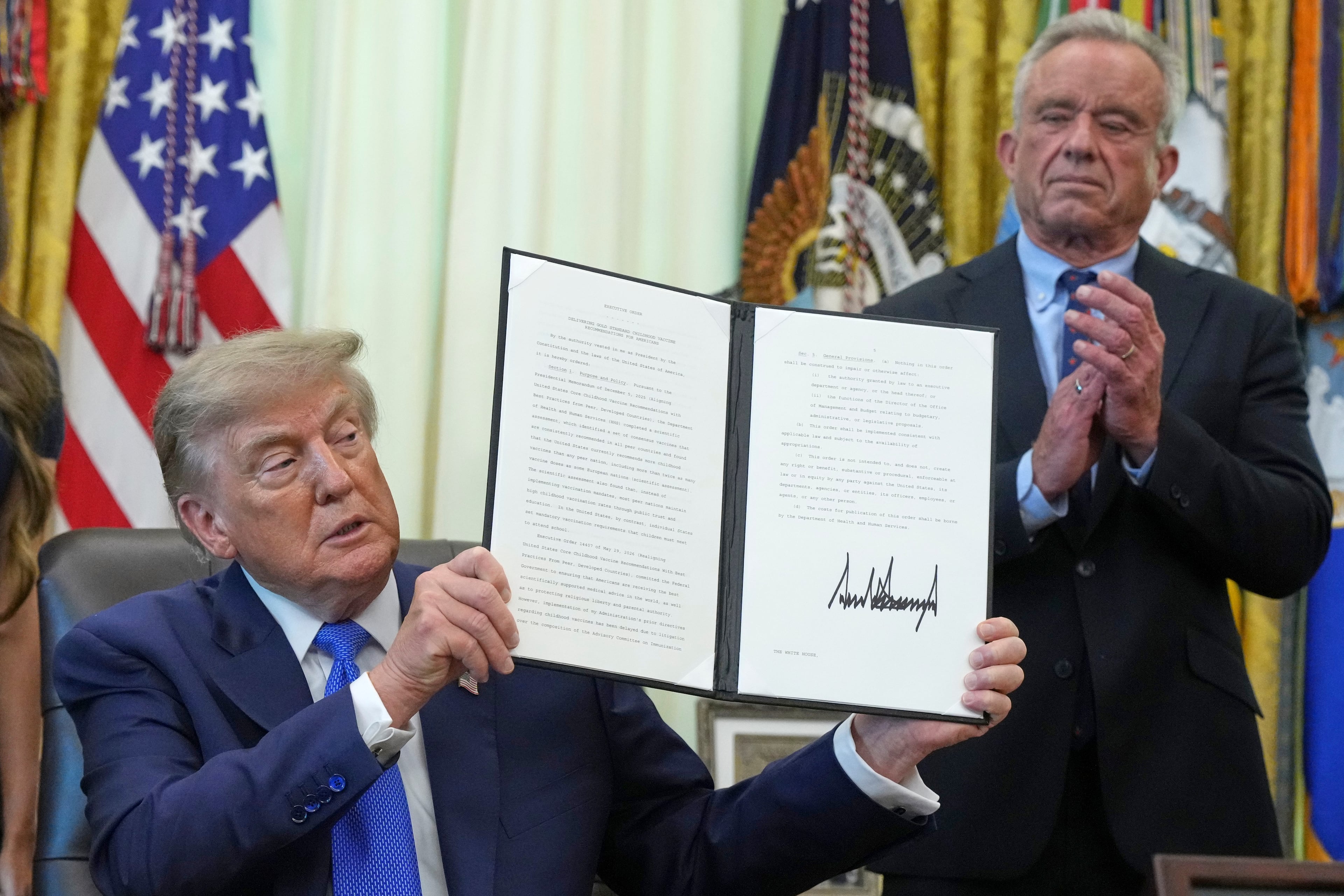
One controversial provision of the order calls for splitting a single vaccination for measles, mumps and rubella into three separate shots to be given at three separate doctor’s visits.
Legal challenges are anticipated, and the actual impact of the executive order is unclear.
Changes to vaccine policy are made based on recommendations of an expert panel, the Advisory Committee on Immunization Practices, and then reviewed and adopted by the Centers for Disease Control and Prevention. Only states, not the federal government, decide what shots are required for children attending school or daycare.
The last time the Trump administration said it wanted fewer vaccines, the Georgia Department of Public Health stood firm that it was adhering to CDC recommendations.
Georgia doctors share concerns
Local medical experts cautioned that provisions of the president’s executive order could take years to put in place and have potentially harmful consequences for children.
Bednarczyk said the U.S. does not have individual vaccines for measles, mumps and rubella available or licensed for use.
“To move forward on this would require years of studies and clinical trials to get these new vaccines licensed in the U.S., when we already have a very well-studied MMR vaccine available for use today,” he said.
Dr. Larry J. Anderson, professor emeritus of pediatric infectious disease at Emory University, said he couldn’t understand why Trump issued the executive order.
“They tried something similar a year, year and a half ago, and the courts said: ‘No. They couldn’t do it,’” Anderson said. “To me, it comes across as someone’s whim as opposed to: ‘Let’s look at what data is available’.”
Recommendations for vaccines are closely scrutinized by experts, and the benefits must be shown to greatly outweigh any potential adverse reactions, Anderson explained.
“We’re already seeing that with the measles outbreak throughout the country,” he said. “It’s not benign if it costs lives.”
What the proposed schedule would look like
Under Trump’s order, all children would be recommended to receive vaccines against measles, mumps, rubella, diphtheria, tetanus, pertussis, polio, Haemophilus influenzae type B, pneumococcal disease, human papillomavirus, and varicella, or chickenpox.
Vaccines and immunizations for some other diseases would be recommended for high-risk groups or through shared decision-making between parents and doctors. Those include respiratory syncytial virus, or RSV; hepatitis A; hepatitis B; meningococcal disease; dengue; rotavirus; influenza; and COVID-19.
On Wednesday, the Emory Center for Child Health Policy released the results of a survey showing that almost nine in 10 Georgians believe routine vaccines are safe, and about half say they are very safe.
In the survey of about 1,000 parents, 70% said they support administering the hepatitis B vaccine at birth, which is one of the vaccines Trump wants off the list.
Stephen Patrick, MD, chair of health policy and management at Emory University’s Rollins School of Public Health and a practicing neonatologist, said he is particularly distressed that Trump’s order suggests some of the vaccines he wants off the list might be reserved for “high-risk” children.
“Infectious diseases don’t check whether a child has been placed in a high-risk category,” Patrick said. “Healthy children get influenza, hepatitis A, rotavirus and meningococcal disease, too.”
He said he sees the president’s new executive order leading to confusion.
“Parents may hear one recommendation from the federal government, another from their pediatrician and medical professional organizations, and potentially something different from their state,” he said.
“What incentive would manufacturers have to develop three separate products when there is no evidence presented that giving them separately is safer?” Patrick asked. “And would parents want three injections, potentially spread across additional visits, instead of one?”