RECIPE: New ways with a Jewish cooking staple
My curiosity about rendered chicken fat, known as schmaltz, does not come from warm memories of my grandmother’s kitchen at Passover. She was a disinterested cook who would only serve matzo ball soup if the Schwan’s man delivered it. Instead, as I pondered the fat atop my homemade chicken broth, I wondered: Could making schmaltz be the next step in reducing my family’s food waste?
Unlike chicken broth, which uses all the bird scraps except for the feathers, schmaltz is made from only raw chicken skin. The skin from six thighs will yield about 4 ounces liquid gold – more than enough to make homemade matzo balls. Alternatively, you can freeze the skins from any raw chicken pieces as you go, and when the bag is full, that’s your cue to make schmaltz.
Cut the thawed chicken skin into 1-inch pieces. Place the pieces in a heavy pot with a splash of water, and cook over a low flame about 45 minutes, scraping the bottom of the pot frequently. The rendered clear, pale yellow fat is schmaltz. I raised the heat to medium and added half a diced onion; technically, this step is optional, but highly recommended for deeper flavor.
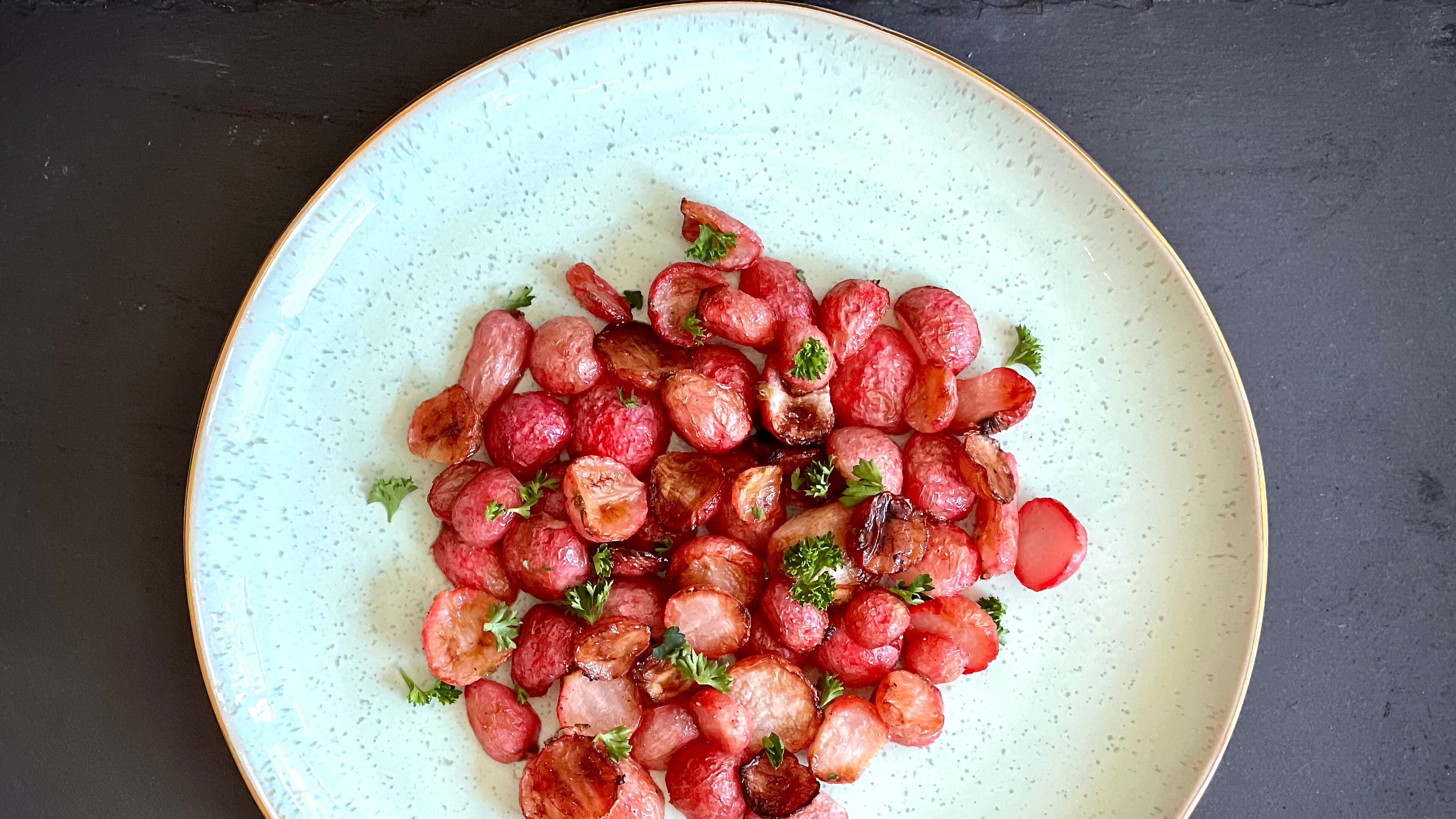
When the skins and onions turn brown and crispy, strain them out. Kiss them with salt to make gribenes, a surprisingly good snack. Pour the schmaltz in a jar and keep it in the refrigerator. It melts into an oil with a reasonably high smoke point and can be used as a fat substitute in savory recipes. I particularly appreciate the flavor boost it adds to roasted vegetables, like carrots, potatoes or the radishes in the recipe below.
Since schmaltz is rendered over low heat, I wondered if I could cook the skins in a slow cooker. Well, yes and no. After 4 hours, the skins were still soft (so no gribenes). They did release the expected amount of schmaltz, but it was diluted with watery collagen. After refrigeration, the collagen separated from the schmaltz, and was easily discarded. It’s not the traditional cooking method, but if your alternative is throwing away the chicken skins, a slow cooker provides a less wasteful option.
- 1 1/2 tablespoons schmaltz (see preparation instructions in story)
- 1 pound radishes, trimmed and halved
- ¼ teaspoon salt
- ⅛ teaspoon freshly ground black pepper
- 1 teaspoon fresh lemon juice
- 1 tablespoon chopped parsley
- Heat the oven to 400 degrees. Place schmaltz on a baking sheet, and place it in the oven for a few seconds, until it melts. Pull baking sheet out of the oven and roll radishes in schmaltz to coat, then position radishes cut-side down in a single layer.
- Sprinkle radishes with salt and pepper, and return baking sheet to the oven. Roast until edges are golden brown, and radishes are tender, about 20 minutes.
- Sprinkle the radishes with lemon juice. Taste and adjust seasonings. Transfer to a serving dish, garnish with chopped parsley and serve hot. Serves 4.
Nutritional information
Per serving: Per serving: 65 calories (percent of calories from fat, 69), 1 gram protein, 4 grams carbohydrates, 2 grams fiber, 5 grams total fat (1 gram saturated), 4 milligrams cholesterol, 189 milligrams sodium.Read more stories like this by liking Atlanta Restaurant Scene on Facebook, following @ATLDiningNews on Twitter and @ajcdining on Instagram.

