RECIPES: A whole-some approach to fall vegetables
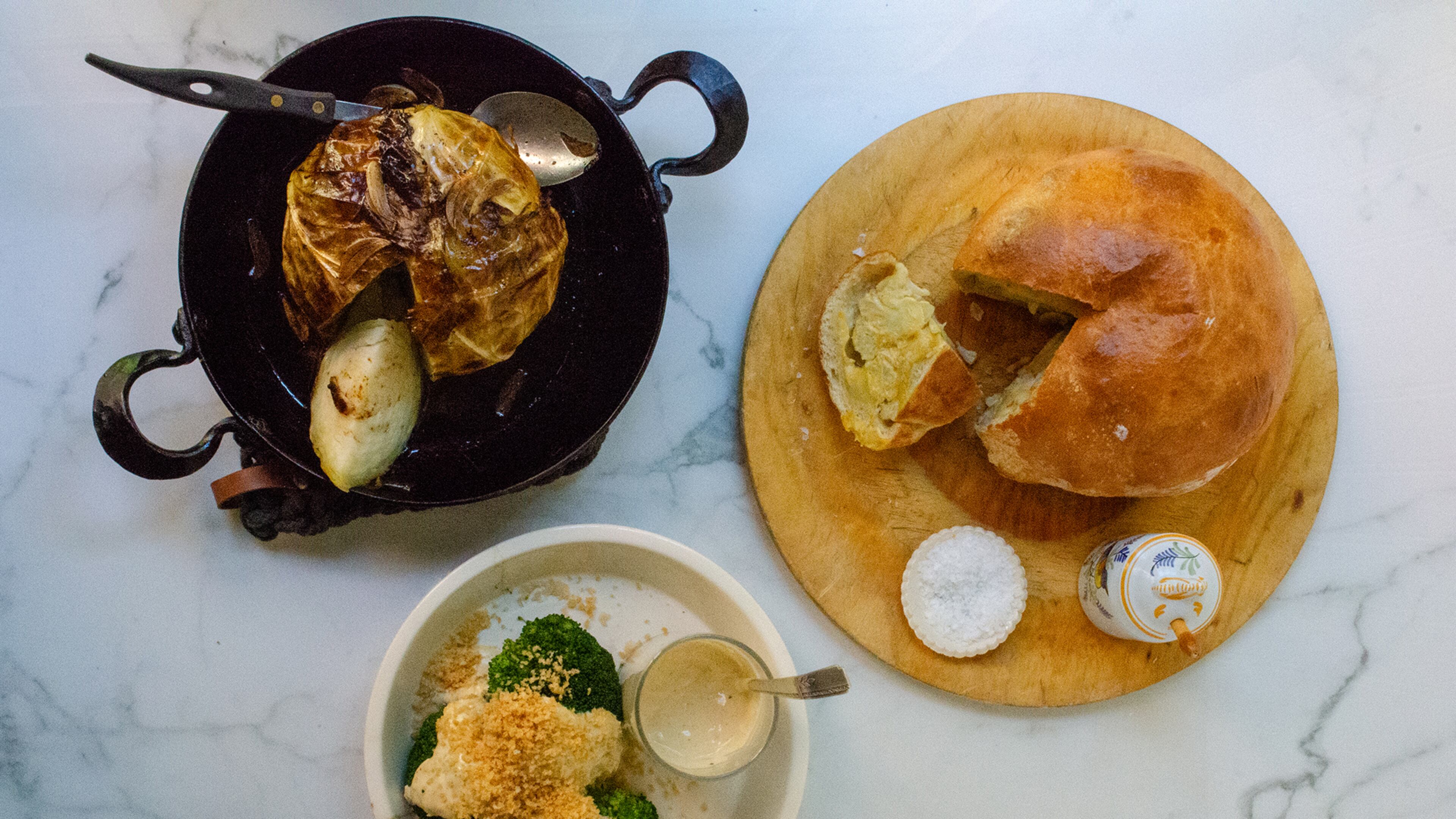
We’re used to whole roast meat. The sight of a 5-pound pork loin or a golden turkey on a cutting board dripping with juices is not out of the ordinary. But the image of a cooked whole head of cabbage is a little more unexpected.
Cooking and serving vegetables like cabbage, cauliflower and broccoli whole allows us to see, taste and experience them in a completely different light. With a nod to culinary theatrics, these vegetables can be carved at the table, creating a mood of anticipation. And, cooking them whole creates a very different flavor and texture than when chopped into smaller pieces.
As a French-trained Southern chef, I am often of the opinion that just because you can do something doesn’t mean you should. The ultimate culinary question is, “Does the end result taste good?” And the second one is, “Is the effort worth the result?” A cheekier way to look at both of these questions together is to ask yourself, “Is the juice worth the squeeze?”
The cool part about cooking these vegetables whole is that there’s not a whole lot of effort involved. There’s very little chopping and no skillets to babysit on the stovetop. Roasting, by definition, is hands off: put it in the oven and let it cook. The other whole cooking method utilizes the microwave, which is an excellent tool for rapid steaming. Microwaves cause water molecules in the food to vibrate, producing heat that cooks it. Foods that are high in water content, like fresh vegetables, can be cooked more quickly than other foods. The microwave will cook a whole head of cauliflower or broccoli in under eight minutes!
This trio of whole vegetable recipes draws from the brassica family, an amazingly diverse group of vegetables that’s well known for containing cancer-fighting antioxidant nutrients that help boost the immune system. Commonly known as the mustard family, brassicas include cabbage, broccoli, cauliflower, Brussels sprouts, collards, kales and kohlrabi. They are all big and bold in flavor. Many of these vegetables form a dense head, and respond well to whole vegetable cooking. For those of you with terrible memories of mushy Brussels sprouts, stinky broccoli and waterlogged cauliflower, these recipes will transform how you look at this family of good and good-for-you vegetables.
My intrigue started with whole slow roast cauliflower, a trend that raced through professional kitchens in the last decade with great results. Being a curious cook, I wondered about similarly cooking a whole cabbage. It was a fairly quick courtship, in spite of the relatively long roast time. I fell in love with the technique and the resulting flavor.
Slow roasting transforms cabbage into a very complex flavor profile. It’s sweet, yet still mildly bitter, toothsome, yet buttery soft. And then, well, it’s an eye-popping whole head of cabbage, roasted until it’s burnished golden brown. I love that I can literally toss a whole head of cabbage in the oven with a modicum of effort and produce something so flavorful and rewarding.
The other two recipes are quicker, but no less unusual, and deliver big on both flavor and drama. For the cauliflower en croute, a French term that means “in a crust,” it’s like baking a present wrapped up, ready to open and eat. A crown of broccoli is vibrant, green and screams fresh! Salads don’t have to be lettuce-based. This broccoli Caesar is a fantastic salad, fun first course or super side dish for roast or grilled chicken. After years of roasting broccoli quickly at a high heat until charred and crispy, it’s refreshing to taste the more tender side of this superfood.
Cooking vegetables whole won’t work for all vegetables. The more watery ones such as zucchini and summer squash can fall apart and turn to mush. Others, like large whole winter squash, are so dense the outside would be overcooked by the time the inside is tender. The hearty brassica family seems to have an advantage. As we head into the cooler weather and these vegetables are in season, give these recipes a try.
RECIPES
The end of summer doesn’t mean the end of fresh vegetables. Cook these fall favorites whole for big, bold flavors with minimal effort.
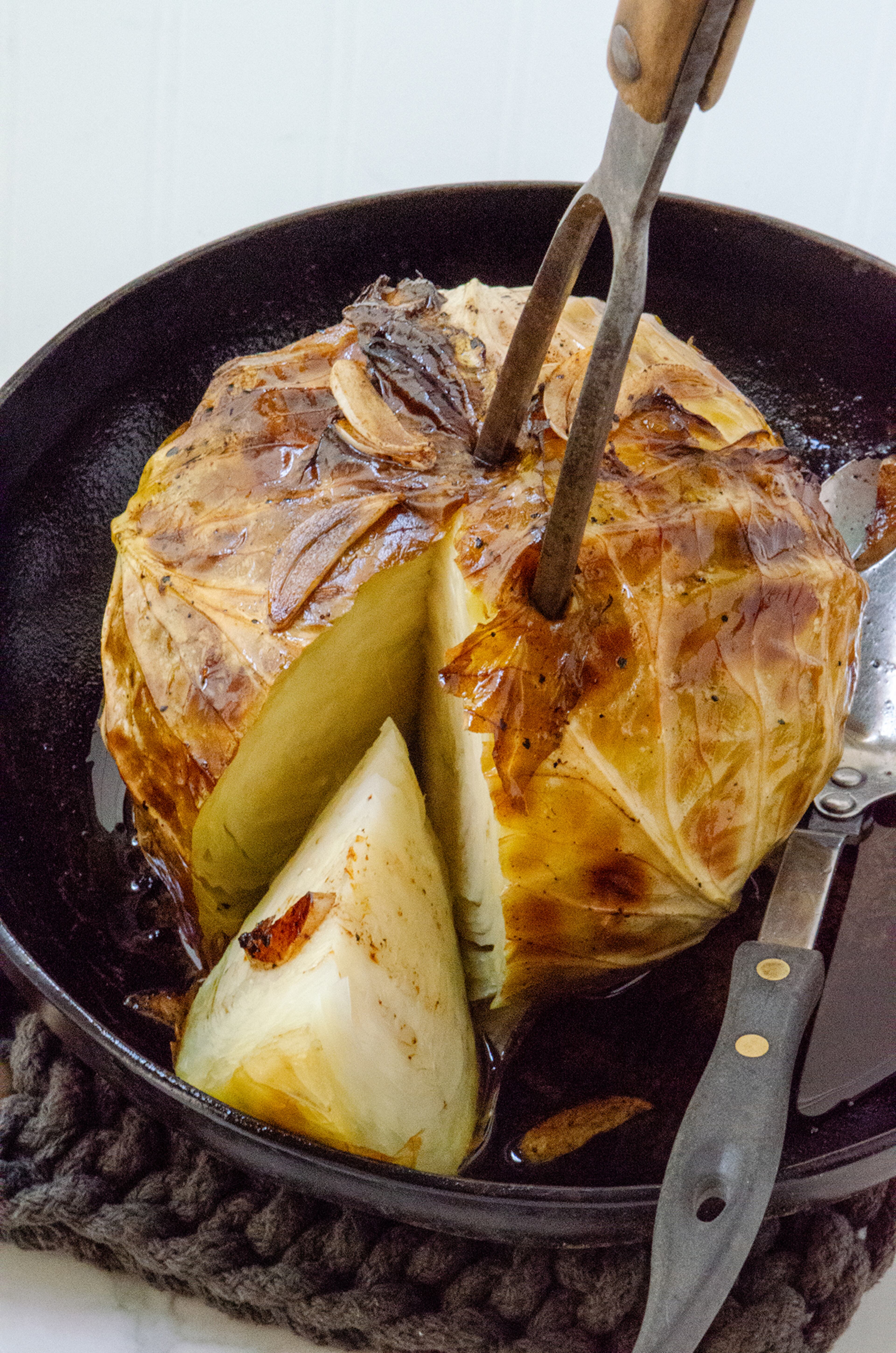
Slow Roast Cabbage
Slow roast cabbage is an incredible fix-it-and-forget-about-it kind of recipe. It’s mind-boggling that one simple, humble cabbage is transformed into a very multifaceted, flavorful and downright stunning dish. Cabbage is an inexpensive vegetable, and if stored properly, will keep uncooked for four to six weeks in the refrigerator. Try this as a meatless main dish with a wedge of buttery cornbread on the side or as a side dish for baked chicken.
- 1 small green cabbage, about 1 1/2 pounds
- 2 tablespoons pure olive oil
- 4 cloves garlic, sliced
- 1/2 teaspoon salt
- 1/4 teaspoon fresh ground pepper
- Heat the oven to 300 degrees. Place the cabbage in an ovenproof dish and drizzle with olive oil to coat. Scatter the garlic slices on top and around the cabbage. Season with salt and pepper. Transfer to the oven and cook uncovered until the cabbage is tender to the point of a knife, 1 1/2 to 2 hours. Using a chef’s knife, slice into wedges and serve immediately.
Nutritional information
Per serving: Per serving: 121 calories (percent of calories from fat, 48), 3 grams protein, 14 grams carbohydrates, 7 grams total sugars, 6 grams fiber, 7 grams total fat (1 gram saturated), no cholesterol, 337 milligrams sodium.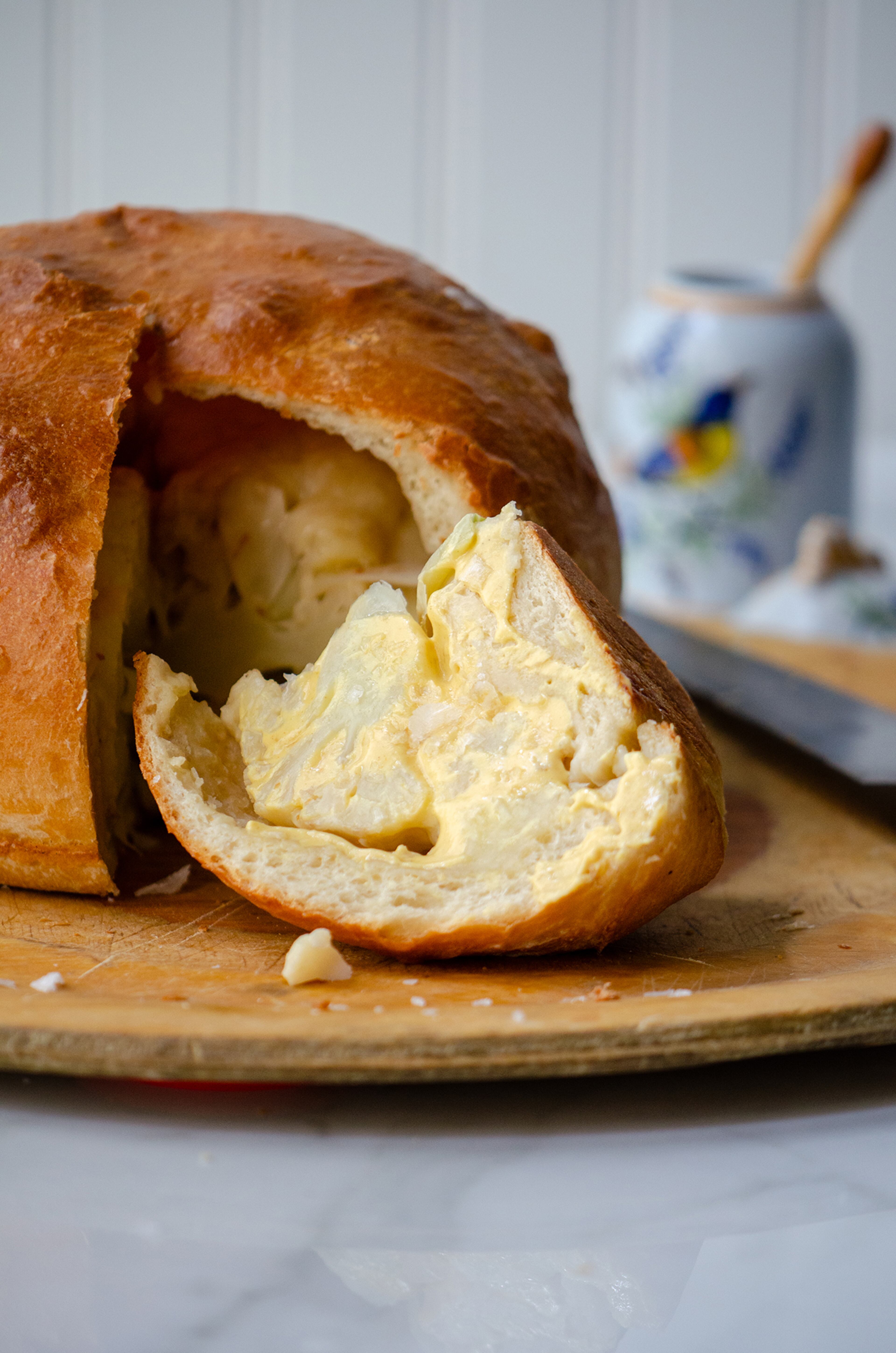
Cauliflower en Croute
This recipe was inspired by the famed multi-Michelin-starred chef Alain Ducasse. His luxe version is studded with truffles and baked in brioche. I knew I could simplify it for home cooks. A perfume of garlic hits the air when you slice into it. This Cauliflower en Croute would be a great side dish for grilled sausages or garlicky roast pork.
- 1 head cauliflower, outer leaves removed
- 1/2 teaspoon coarse kosher salt
- 1/4 teaspoon fresh ground pepper
- 3 cloves garlic, thinly sliced
- 1 pound pizza dough
- 5 ounces grated Swiss cheese
- 1 large egg
- Dijon mustard, for serving
- Heat the oven to 400 degrees. Line a rimmed baking sheet with a nonstick silicone baking mat or parchment paper. Using a small paring knife, carefully core and discard the center of the stem of the cauliflower, leaving the outer stem intact. The stem should be hollow for 1-2 inches from the base.
- Place the cauliflower in a microwave-safe dish. Season with salt and pepper. Add 2 tablespoons of water. Cover with a tight-fitting lid or plastic wrap. Cook on high until just tender, 6 minutes. Remove to a colander and rinse in cold running water to stop the cooking. Set aside to drain and continue to cool.
- Using a paring knife, make slits all over the head of the cauliflower. Insert the garlic slivers in the slits. Set aside.
- Using a rolling pin or your fingers, flatten the pizza dough into a 12-inch circle. Add the cheese in an even layer in the center, leaving a 3-inch diameter around the edge of the dough. Invert the drained cauliflower so the stem end is facing upward. Pull the edges of the dough up and around the sides. Pinch to seal. Place on the prepared pan seam side down.
- In a small bowl, whisk together the egg and 1 tablespoon of water. Brush the ball of dough all over to coat with the egg wash. Discard the remaining egg wash. Transfer cauliflower to the oven and bake, rotating once, until the dough is golden brown, about 25 minutes. Remove to a rack to cool slightly. Cut into wedges with a serrated knife. Serve warm with mustard on the side.
Nutritional information
Per serving: Per serving: 480 calories (percent of calories from fat, 29), 23 grams protein, 60 grams carbohydrates, 4 grams total sugars, 4 grams fiber, 15 grams total fat (7 grams saturated), 48 milligrams cholesterol, 1,012 milligrams sodium.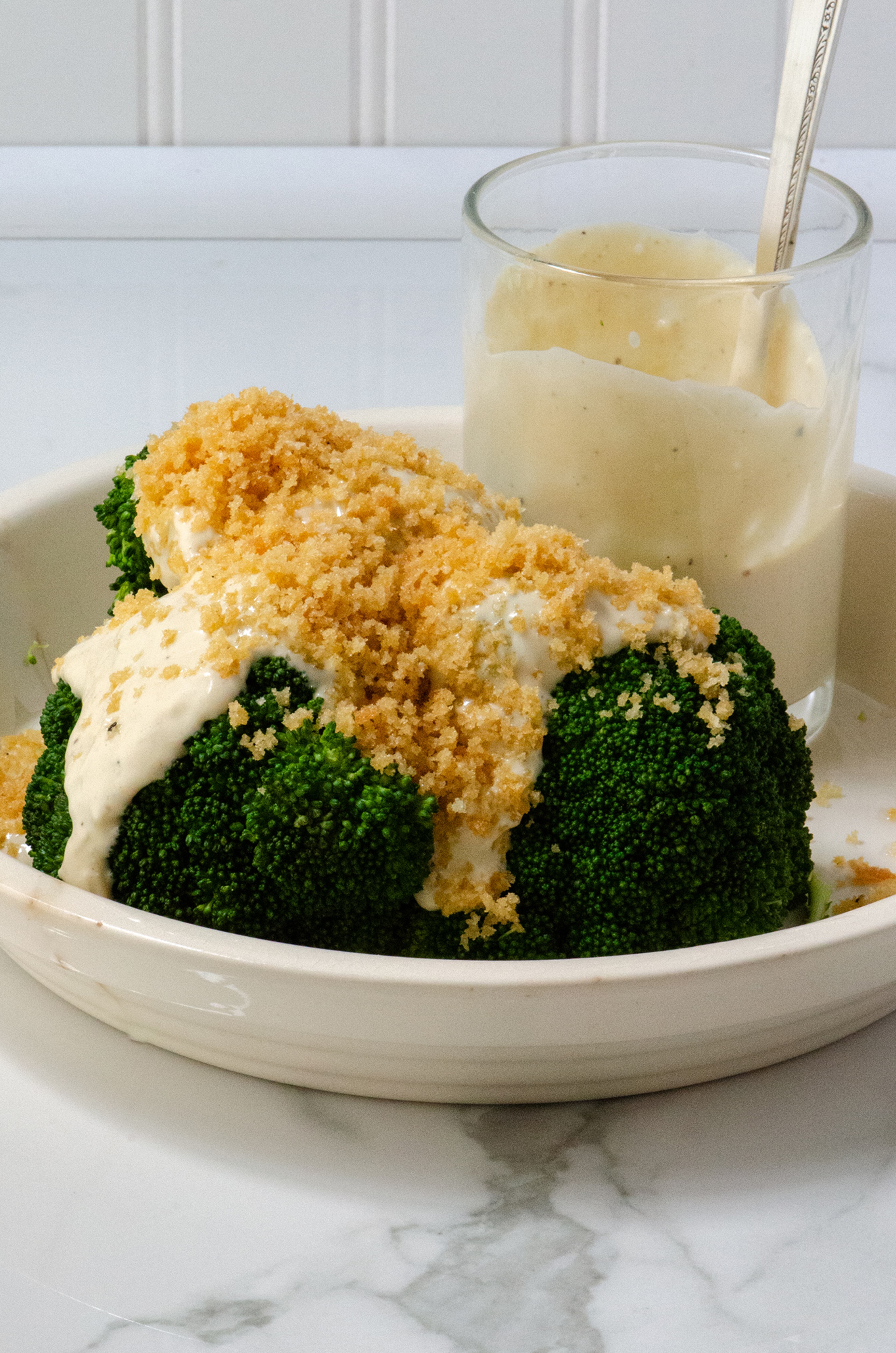
Broccoli Caesar
Caesar salad is typically a green salad of chopped romaine with a flavorful and rich emulsified dressing made of egg, olive oil, pounded anchovies, lemon juice and Parmesan cheese. I’ve simplified things by adding the aromatic elements to store-bought mayonnaise. The dressing can be made ahead and the broccoli is simple and quick, making this dish both a showstopper and timesaver.
1 pound broccoli crown or crowns
- 1 pound broccoli crown or crowns
- 1 cup reduced-fat mayonnaise
- 1/2 cup freshly grated Parmigiano-Reggiano
- 2 small garlic cloves, very finely chopped
- 1 teaspoon anchovy paste
- Juice of 1/2 lemon
- 1 teaspoon Dijon mustard
- 1 teaspoon Worcestershire sauce
- 1/4 teaspoon salt
- 1/4 teaspoon freshly ground black pepper
- 1/4 cup panko
- 1 tablespoon pure olive oil
- Place the broccoli in a microwave-safe dish. Add 2 tablespoons of water. Cover with a tight-fitting lid or plastic wrap. Cook on high until tender, 2 to 4 minutes. Remove to a colander and rinse in cold running water to stop the cooking. Set aside to drain and continue to cool.
- Prepare the dressing: In a small bowl, combine the mayonnaise, Parmigiano-Reggiano, garlic, anchovy paste, lemon juice, Dijon mustard and Worcestershire sauce. Season with salt and pepper. Stir to combine. Set aside.
- Heat a small skillet over medium high heat. Add the panko and oil; stir to combine. Toast, stirring constantly, until the breadcrumbs are golden, about 2 minutes.
- Transfer the broccoli to a serving dish. Spoon 1 cup dressing over the broccoli and top with toasted breadcrumbs. Serve immediately with remaining dressing on the side. Dressing will keep up to 3 days in a sealed container in the refrigerator.
Nutritional information
Per serving: Per serving, including 6 tablespoons dressing: 361 calories (percent of calories from fat, 76), 8 grams protein, 15 grams carbohydrates, 3 grams total sugars, 3 grams fiber, 31 grams total fat (5 grams saturated), 29 milligrams cholesterol, 988 milligrams sodium.Sign up for the AJC Food and Dining Newsletter
Read more stories like this by liking Atlanta Restaurant Scene on Facebook, following @ATLDiningNews on Twitter and @ajcdining on Instagram.