With no SEC teams left in CFP, what has contributed to Big Ten power surge?
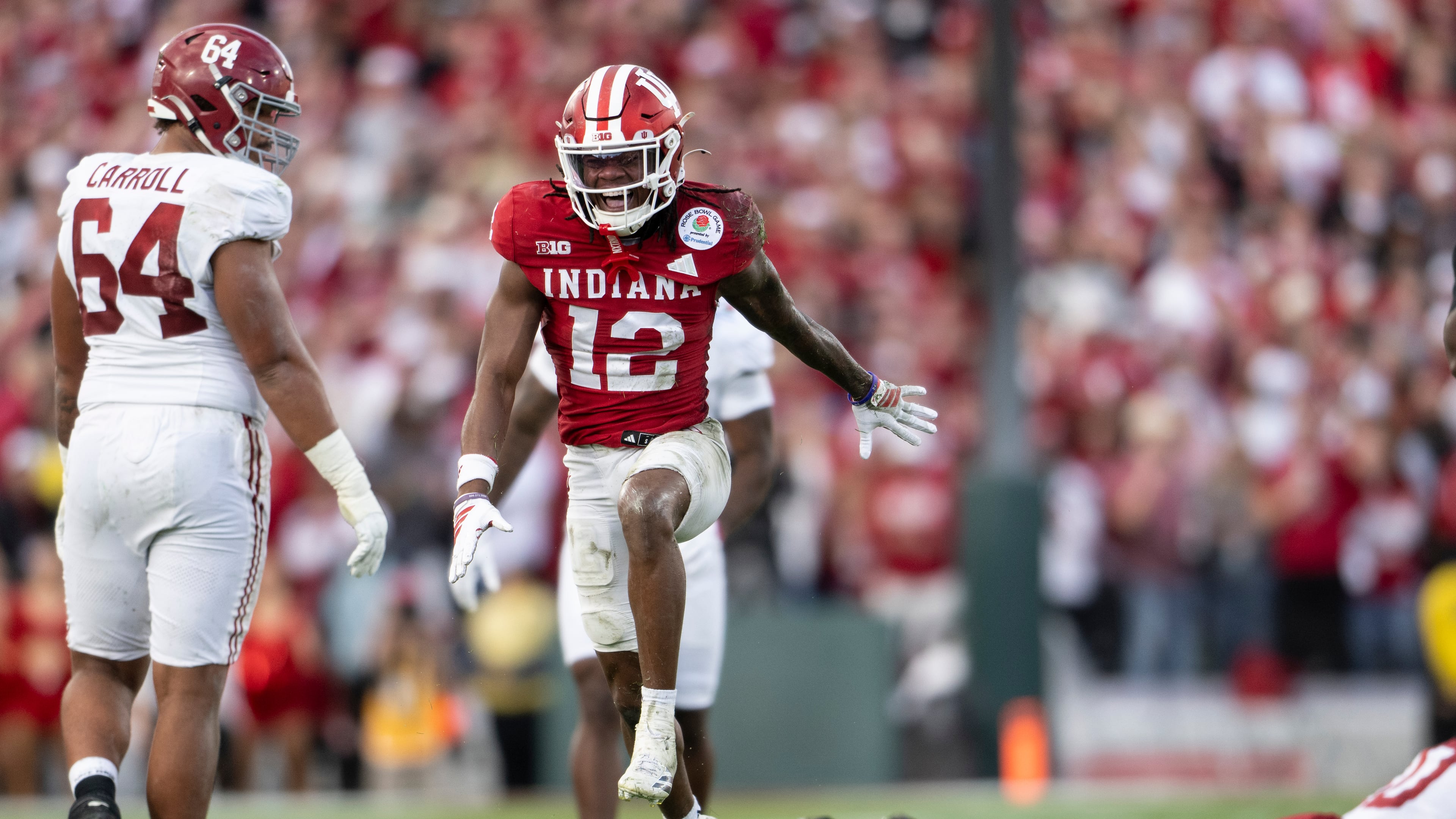
Curt Cignetti and Dan Lanning sat center stage in the College Football Hall of Fame on Thursday, their programs the odds-on favorites to win the College Football Playoff.
The Big Ten’s Indiana Hoosiers and Oregon Ducks will play at 7:30 p.m. Friday in the Chick-fil-A Peach Bowl CFP semifinal with a trip on the line to face Miami in the national title game.
Miami beat Ole Miss, 31-27, in a thrilling CFP Fiesta Bowl semifinal on Thursday at State Farm Stadium in Glendale, Arizona, and will play for the national title in their home stadium.
The Rebels’ loss means the SEC won’t have a team in the CFP championship game for a third consecutive year — despite the league having five teams make the 12-team field.
The SEC had at least one team playing in the CFP championship game eight of the first nine years of the playoffs, producing six title winners, including Georgia most recently following the 2021 and 2022 seasons.
Lanning, a former Georgia defensive coordinator who left arguably the most talented program in college football history — 2021 UGA produced an NFL-record 15 draft picks — was asked how the Big Ten has managed to pass up the SEC in this recent three-year span.
“Certainly part is the result of what the portal has created. It’s tough to keep great players in one place,” said Lanning, whose Oregon well-heeled program is famously funded by contributions from billionaire Nike co-founder and Oregon graduate Phil Knight.
“I think you’ve seen some transition where great players that aren’t getting an opportunity look for an opportunity to go play. That has certainly taken place in our program and ultimately the portal. And NIL has probably created a little bit more parity in the sport.”
Lanning also noted a strong coaching presence in the Big Ten — though with recent changes at powerhouse programs Penn State and Michigan, that theory holds less weight.
There are no questions about Cignetti, however, as the second-year Hoosiers coach has made good use of his vast coaching experience to build an unlikely powerhouse at a school much better known for its basketball prowess.
The 64-year-old Cignetti spent much of his career as a journeyman assistant with notable stops under College Football Hall of Famers Johnny Majors while at Pitt (1993-99) and Nick Saban at Alabama (2007-11), and is putting lessons learned to good use.
Indiana, like Oregon funded in part by a billionaire businessman and Dallas Mavericks minority owner Mark Cuban, has made good use of the portal as well as Cignetti’s no-nonsense approach.
Indeed, nearly two-thirds of the Hoosiers starting lineups (65.4%) have been made by players who transferred into the Indiana program after starting their careers elsewhere — including 13 who followed Cignetti to Indiana from his previous head coaching job at James Madison.
Cignetti explained Thursday his coaching formula for success.
“You have the right people upstairs that you hire as coaches, and you gotta have the right people in the locker room,” Cignetti said, when asked how he has changed the Indiana football culture. “And obviously we put a premium on certain things in the recruiting process. And fortunately I’ve had great continuity on my coaching staff. We’re all on the same page, and I think that’s critical, getting everybody to think alike and developing those intangibles as you enter the season.
“But we’re process driven, standards, expectations, accountability. I’m pretty direct in my messaging with the team. I try to make every word count.”
It’s clear the Big Ten, which has the richest college football television contract — a deal worth a reported $7 billion over seven years (2023-30), per ESPN — is making the most of its resources, having won the past two CFP titles (Michigan 2024, Ohio State 2025), while the SEC is slipping.
Indeed, recent mock drafts suggest the SEC is slipping in its talent as well as on-field results.
The SEC has had more players drafted than any conference in each of the past 19 years, but recent mock drafts suggest there might not be an SEC player within the top 10 picks this season.
Former Florida quarterback turned analyst Jesse Palmer suggests the SEC remains the best conference, with a caveat.
“I still think the SEC is the best conference in college football, top to bottom,” Palmer said Thursday on “The Dan Patrick Show.” “But not necessarily national championship every single year like we were used to for all those years.”
The Big Ten hasn’t won this year’s championship yet — the winner of the Peach Bowl still has to go through a Miami team that features former SEC quarterback Carson Beck to win what would be its third consecutive title.
But at the very least, the Big Ten has proved its premium teams are superior to the best the SEC had to offer of late, with Indiana smashing Alabama 38-3 in the CFP Rose Bowl quarterfinal this year, and Ohio State beating Tennessee (42-17) and Texas (28-14) en route to winning last year’s championship.
About the Author

Mike is in his 10th season covering SEC and Georgia athletics for AJC-DawgNation and has 25 years of CFB experience. Mike is a Heisman Trophy voter and former Football Writers President who was named the National FWAA Beat Writer of the Year in January, 2018.


