The unlikely upsets that turned Georgia’s House blue


A seven-term Republican in southeast Georgia lost to a 24-year-old Democrat whose previous run for office ended in a last-place finish in a Las Vegas City Council race.
A respected GOP incumbent who outraised his opponent by nearly 29-to-1 was ousted in a deep-red Hall County contest that was hardly on the Democratic radar.

And a rising Republican star who made history as the first Korean American woman elected to the Georgia House was defeated — by just 35 votes — by a sports agent better known for his NBA hot takes than his politics.
These weren’t the races Democrats were counting on to win control of the Georgia House. But together with a string of hard-fought victories in battleground districts, they helped deliver one of the biggest political upheavals in modern Georgia history.
Democrats flipped the House for the first time since the 2004 election, ending more than two decades of Republican rule. And the wave crested well beyond the suburban Atlanta districts that had long been the party’s top targets.
Local election boards certified the results Monday. But the drama isn’t over.
A possible recount and a December runoff in the late President Jimmy Carter’s southwest Georgia territory could determine how narrow the Democrats’ new majority will be. A missing memory card already wiped out one Democratic pickup, turning a narrow GOP defeat into a slim victory.
Depending on how those contests shake out, Democrats could enter the 180-member chamber with as few as 91 seats, the bare minimum needed to control the mechanisms of power and pass legislation without Republican support.
“Leadership from both parties better go and check the rolls every morning and hope someone didn’t come down with a cold overnight,” said Charles Bullock, the University of Georgia professor who is the dean of the state’s political scientists.
“You’d rather be the Democrats right now than Republicans” he added, “but neither party can afford to have many members out with dentist appointments.”
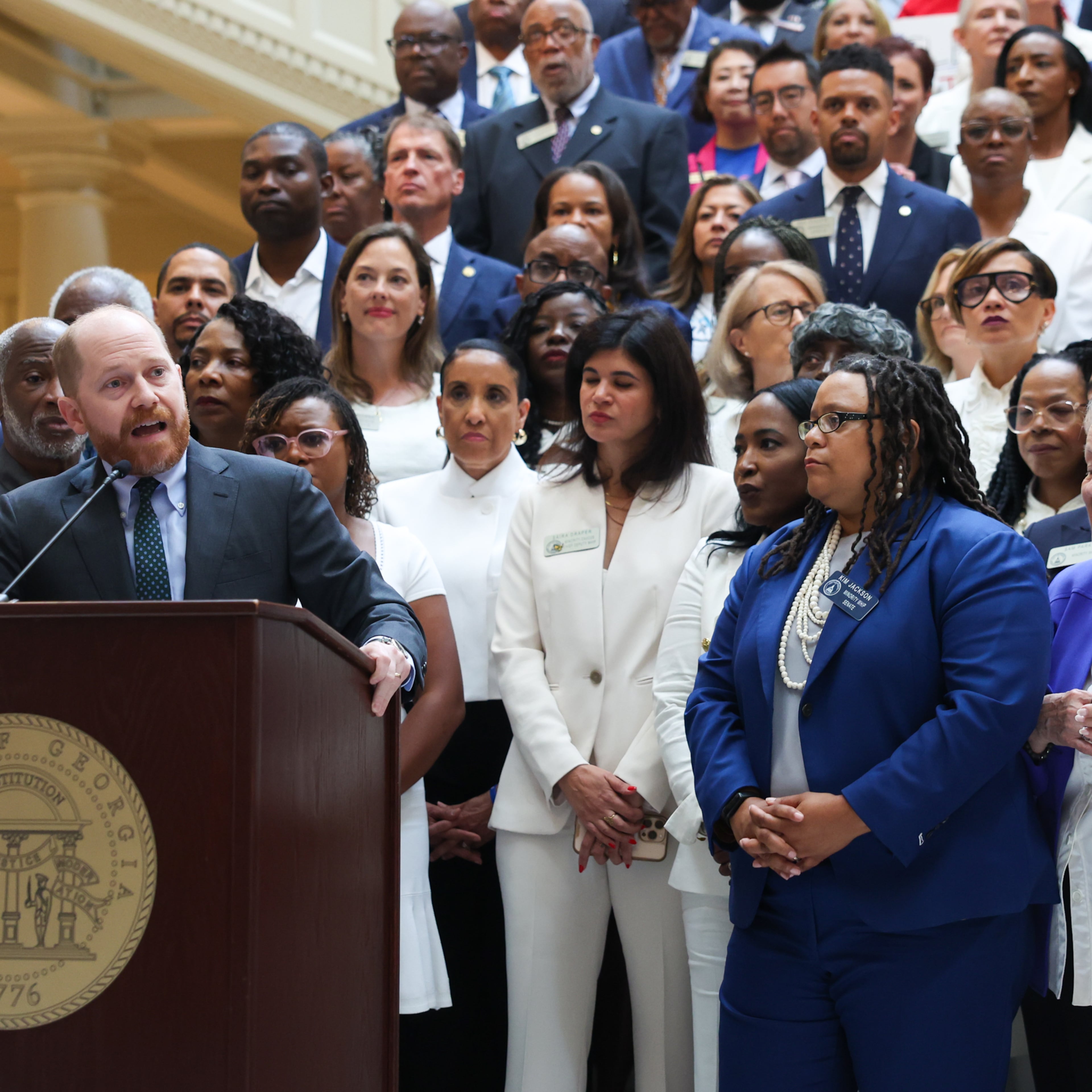

House Speaker Jon Burns and his Republican allies are still awaiting potential recounts. They are confident Republican state Rep. Mike Cheokas will hold his Americus-based seat in a Dec. 1 runoff.
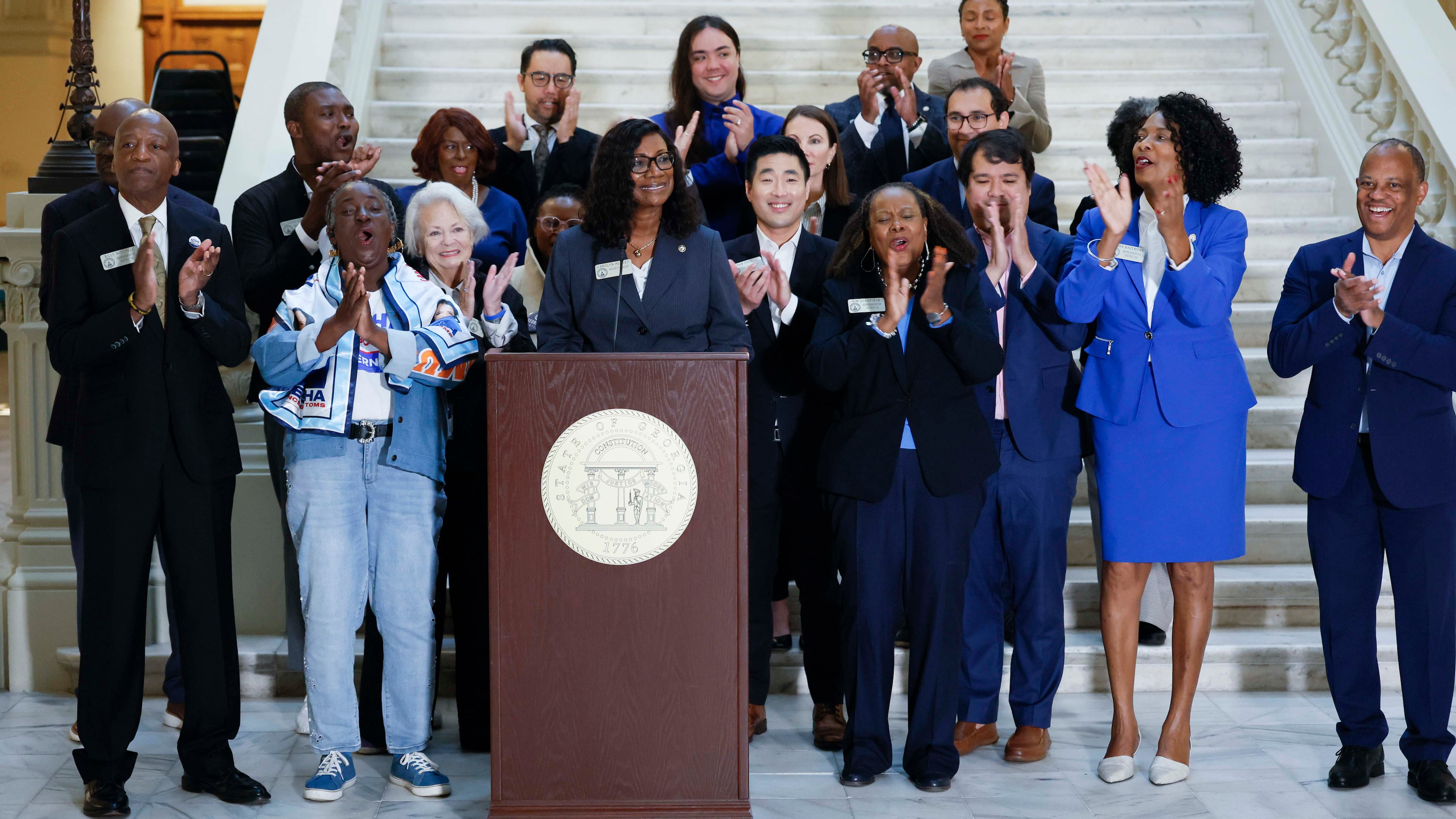
Democrats, meanwhile, are preparing for their first turn in power in a generation, with Minority Leader Carolyn Hugley of Columbus in line to become both the chamber’s first Black speaker and first woman to lead the House.
“The people of Georgia have spoken,” Hugley said.
Hugley knows of the balancing act ahead. In an interview, she said the narrow margins will force both parties to find common ground, particularly with a 29-27 GOP edge in the Georgia Senate.
“I think that both houses are going to have to work more closely than ever before because the margins are closer than they’ve ever been,” she said. “And the result of that is going to be a better product for the citizens of Georgia.”
‘Proven wrong’
Democrats ousted 13 Republican incumbents, with one race pending a potential recount. Their path to power ran through familiar battlegrounds in metro Atlanta, where Republican state Reps. Scott Hilton, Matt Reeves and Deborah Silcox lost hard-fought races in competitive suburban districts.
Democrats also picked up seats in parts of Paulding, Henry and Houston counties, underscoring the breadth of their gains.
Republicans scored victories of their own to limit the damage. They reclaimed the Athens-area seat Democrat Eric Gisler captured in a stunning special election last year and flipped a rural east Georgia district held by retiring Democratic state Rep. Mack Jackson.
But the biggest surprises came in places where Republicans had entered Election Day most confident in their chances.


In Hall County, GOP state Rep. Matt Dubnik wasn’t even considered a top-tier Democratic target. His campaign raised roughly $545,000, compared with just $19,000 for Democratic challenger Scott Soracco, a retired Army officer and former federal emergency management official. Soracco won anyway, stunning Republicans in one of the state’s most reliably conservative counties.
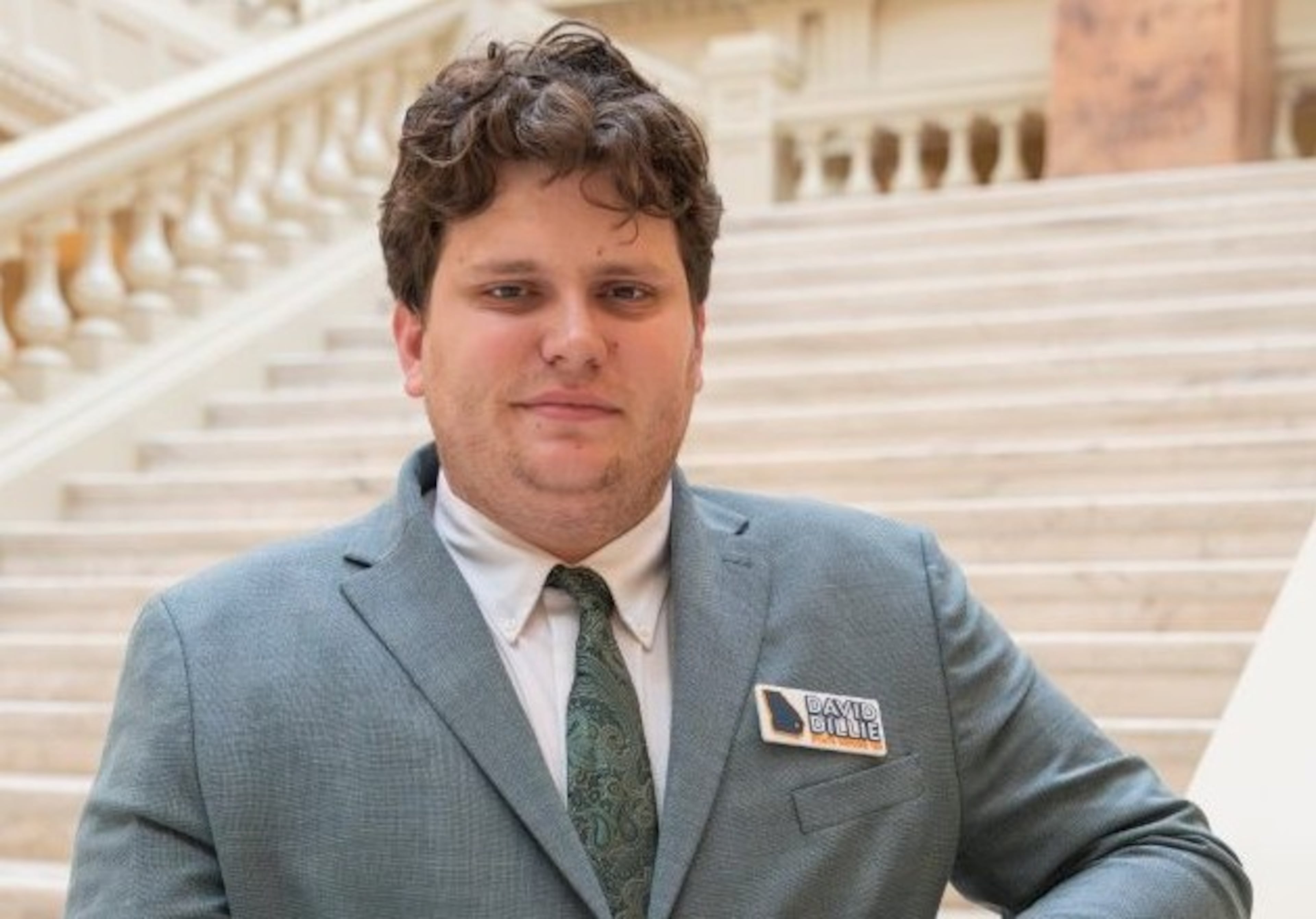
In coastal Georgia, Democrat David Dillie harnessed anger over a massive proposed OpenAI data center to defeat state Rep. Bill Hitchens, a seven-term Republican and former Georgia public safety commissioner.
Dillie, an aircraft mechanic who finished last in a seven-person race for the Las Vegas City Council in 2022, overcame a challenge to his eligibility stemming from a disputed Nevada primary ballot. A judge ruled in his favor days before the election.
And in Paulding County, educator Cynthia Starke-Jones defeated Republican state Rep. Joseph Gullett, another incumbent swept out in a district well beyond Atlanta’s inner suburbs.
Bob Herndon of Fighting Fifty PAC, which aims to flip Republican-held legislative districts, helped recruit and boost dozens of seemingly long-shot candidates with his co-director, Pam Woodley.
He remembers talking to Starke-Jones shortly before the election to urge her not to get discouraged if the race is close but she still loses.
“That’s because we never had a victory before,” Herndon said. “I’ve never been so glad to be proven wrong in my life.”
‘Treacherous’
Now the spotlight sharpens on the unsettled contests.
Republican state Rep. Soo Hong, a prominent Korean American legislator, lost to Democrat Chris Luchey, a sports agent and former NBA scout, by just 35 votes in a district that spans parts of Gwinnett and Hall counties.
The race is close enough for a recount, which could occur next week if Hong requests it. She did not respond to requests for comment Monday.


In southwest Georgia, a missing memory card discovered in Seminole County transformed Republican state Rep. Gerald Greene’s 58-vote deficit into a 253-vote victory over Democrat Harry James. The original tally after the memory card votes were added had Greene ahead by 262 votes, but the certified tally updated the number to 253.
The reversal could rescue Greene, the only Republican in the General Assembly representing a majority-Black district, and shrink the Democrats’ majority before they take office.
Cheokas faces Democrat Ethan Wolfe in a Dec. 1 runoff after an independent candidate drew enough support to prevent both from winning outright. Neither candidate responded to requests for comment Monday.
The southwest Georgia district will now be a staging ground for a bigger battle over the direction of the state, with both parties pouring in money and resources to boost their chances.
“Governing with a nine-seat majority can be tricky at times. But governing with a one- or two-seat majority will be treacherous. The margins matter,” said Stephen Lawson, a longtime GOP strategist. “Every seat you get makes it just a little easier to govern.”