How a voting dispute boosted a House winner
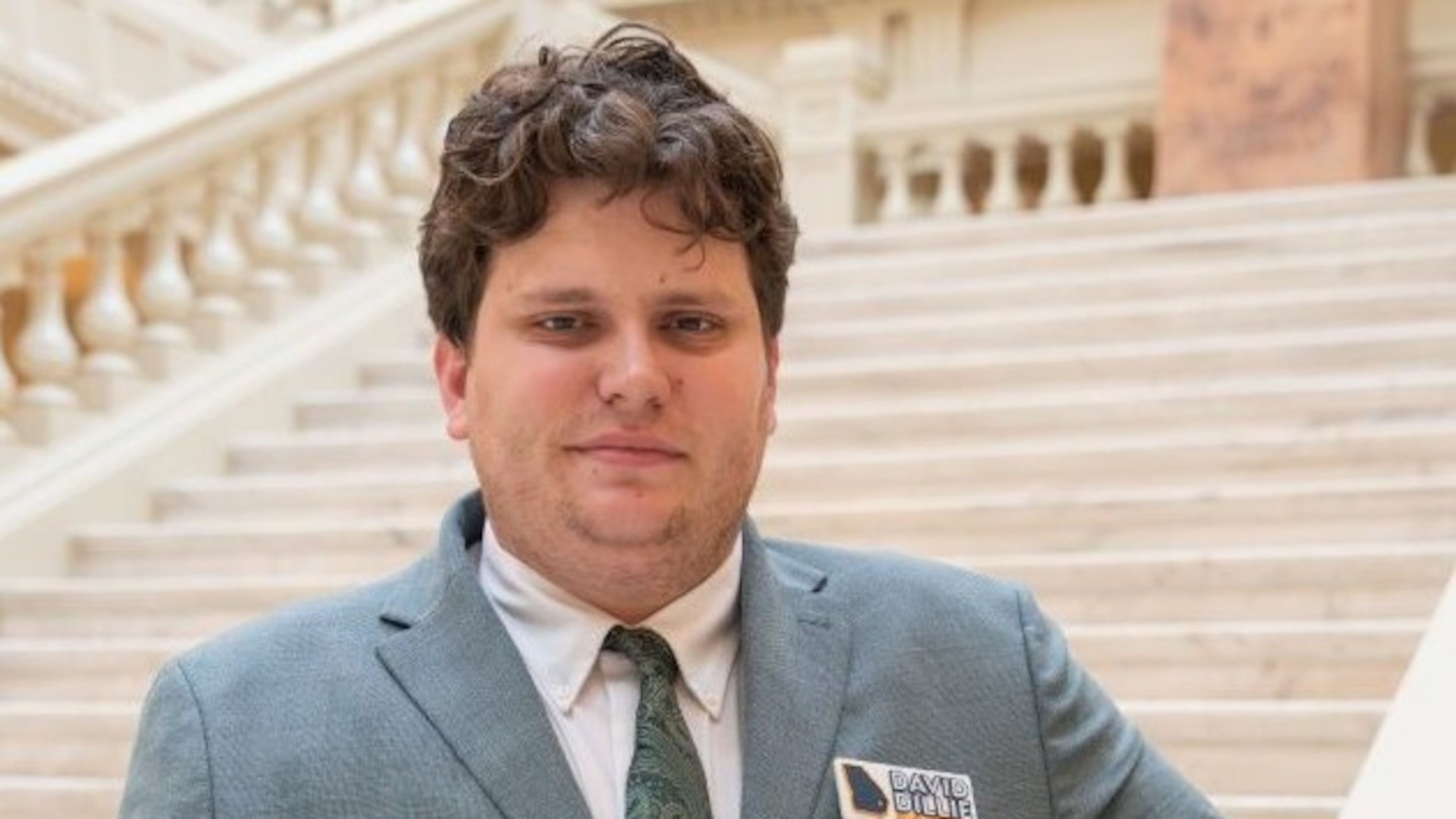

Georgia Rep.-elect David Dillie’s campaign signs are eye-catchers.
There’s one that looks like a pickle jar — Dillie pickles. There’s another of a Dairy Queen ice cream treat that reads “Dillie sets the bar.”
And then there’s the crowd favorite, a sign emblazoned with a can of beer and his surname repeated twice: Dillie Dillie, a nod to a decade-old Bud Light advertising campaign.
Asked Wednesday what helped him, a little-known 24-year-old aircraft mechanic and college student, break through in a House race against a highly respected, seven-term Republican incumbent in the midterms, the Democrat pointed to a different form of campaign material.
Direct mail attack ads put out by GOP groups focused on accusations that he’d voted in two primaries, Georgia and Nevada, earlier this year raised his profile. If not for the voting record saga that nearly led to his disqualification four days before the midterms, he would have struggled with name recognition.
The campaign signs weren’t enough on their own, he said.
“I was a nobody,” he said. “And all they kept doing was attacking me and putting my name all over the place.”
A state administrative court judge heard a candidate challenge against Dillie brought by the Georgia Secretary of State’s office last week. Judge Kimberly Schroer ruled in Dillie’s favor after his godfather convinced the judge he had mistakenly filed an absentee ballot in Dillie’s name.
Dillie previously lived with his godfather in Las Vegas and an absentee ballot addressed to him was mailed to that home. The godfather, Hunter Cain, testified another person living at his residence had forged Dille’s name on the ballot and mixed it in with others that Cain submitted via a ballot drop box.
Cain testified that he didn’t notice Dillie’s ballot in the stack.
The judge’s reprieve kept Dillie on the ballot and resulted in news coverage that further bolstered his candidacy.
“I’m just a common man who wanted to make a difference in his community, and now we have an opportunity to do just that,” said Dillie, who had previously run for elected office in Las Vegas, finishing last in a seven-candidate race for City Council. “We have a lot of work ahead of us and only two years to prove what we can accomplish.”
The attention paid to his voting record also gave him an opportunity to tout his opposition to an OpenAI data center planned for his district,
The 4 million-square-foot facility is to be one of the nation’s largest electricity users. The deal to bring it to an industrial park on the outskirts of Rincon, a Savannah suburb, was struck in secret and has sparked more than three months of protests.
A site plan for the data center was approved by the Effingham County Commission on election night, keeping the project top-of-mind with its opponents as they went to the polls.
Data centers will be legislative focus for Dillie once he takes office in January, and he’ll have plenty of allies in Gov.-elect Keisha Lance Bottoms and the new Democratic state House majority. During her campaign, Bottoms proposed a data center moratorium.
Other hallmarks of the Democratic agenda, such as environmental protection and increasing the minimum wage, will also be priority for Dillie under the Gold Dome.
Dillie was one of a dozen Democrats to flip Republican-held posts in the Georgia House in the midterms. The net gain of 10 seats gave the party majority control for the first time since 2004. The Democrats also narrowed the Republican majority in the state Senate.
Lt. Gov.-elect Josh McLaurin, another Democrat who will serve as Georgia Senate president, said his party will lead as a bipartisan coalition.
“I say bipartisan because it wasn’t just Democrats who elected this coalition last night,” McLaurin said Wednesday. “It was Republicans, independents. I’ve heard stories of three-time Trump voters who voted a straight Democratic ballot because they have said it’s time to make a change in this, to turn the page.”
Dillie’s win wasn’t the only Democratic upset among Savannah-area state legislators Tuesday. Rep. Ron Stephens, a Republican who has served in the Georgia House since 1997, lost to Democrat Stephanie Burgess by more than 1,000 votes.
Staff writer David Wickert contributed to this report.