Georgia House candidate accused of double voting can stay on ballot
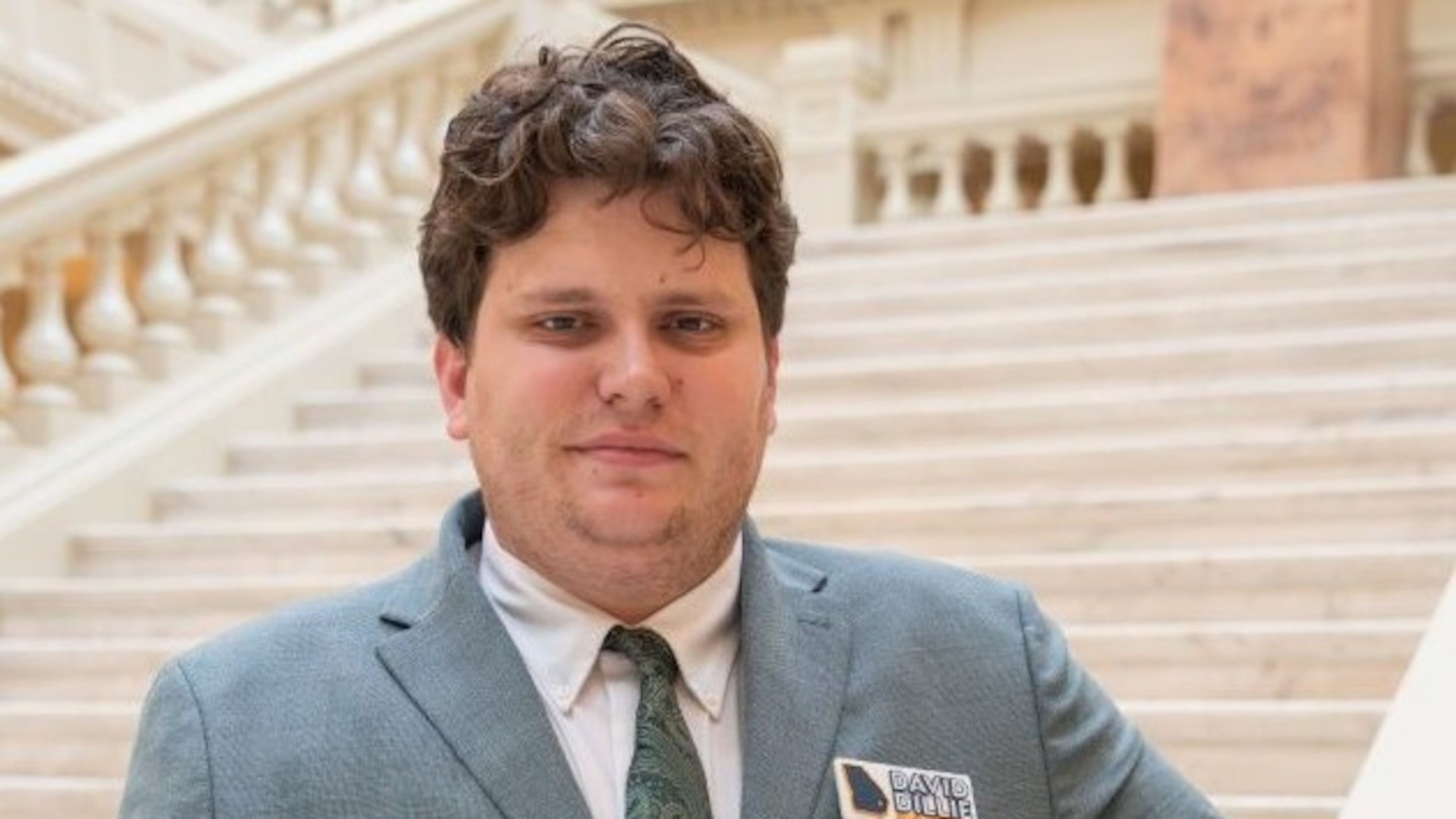

For Georgia House hopeful David Dillie, what happened in Vegas didn’t stay in Vegas.
Even so, the midterm election bid by the Savannah-area Democrat accused of voting in both the Georgia and Nevada primaries earlier this year lives on.
A state administrative law court judge ruled the 24-year-old aircraft mechanic and college student “had no identifiable intent or motive to vote in Nevada’s primary election and did not, in fact, do so.” He remains eligible for the midterm, the judge said.
“Since the very beginning, I have maintained my innocence,” Dillie said, “and I cannot wait to see what Nov. 3 brings.”
Before she ruled, Judge Kimberly Schroer scrutinized signatures, schedules and unusual claims about a mistaken submission of an absentee ballot in Dillie’s name.
The decision stymies Secretary of State Brad Raffensperger’s efforts to disqualify Dillie. A Raffensperger spokesperson said he would follow the judge’s ruling.
A disqualification would have made state Rep. Bill Hitchens, a seven-term Republican, the election’s presumptive winner in District 161. The district encompasses several Savannah suburbs in Chatham and Effingham counties.

Schroer’s ruling ends a month of uncertainty around Dillie’s candidacy. Voting records uncovered in September showed he voted in both the May 19 Georgia primary and the June 9 Nevada primary.
Dillie denied voting in Nevada, where he lived with his godfather before moving to Georgia in 2024. Nevada officials mail ballots to all registered voters.
The Georgia Secretary of State’s office launched a probe of Dillie’s voting record and found he was in Nevada the week of the primary, visited his former residence and had stayed at a hotel near the drop box where his absentee ballot was submitted. Investigators also determined the signature on the primary ballot matched the one Dillie used to sign earlier voting records in both Georgia and Nevada.
During a hearing Thursday, Dillie challenged the validity of the primary ballot signature and said the timing of his trip to Nevada during election week was a coincidence — he was in town to participate in the Future Business Leaders of America Collegiate National Leadership Conference. A student at Savannah Technical College, he had qualified to compete in two of the conference’s contests.
While there, he met up with his godfather, Hunter Cain, to gamble and party at the city’s casinos. He said the two “didn’t do so good” at the gaming tables and detoured to Cain’s house — Dillie’s former residence — to retrieve cash for more gambling.
Dillie testified he was “pretty intoxicated” by the time they reached the home and that he vomited in the bathroom, insinuating he was in no condition to prepare the ballot. He said he did not see his absentee ballot while at the residence, fill it out or sign it.
Cain, in his testimony, took responsibility for Dillie’s absentee ballot being cast. A schoolteacher and longtime foster parent to troubled teenage boys, he testified he used Dillie’s ballot and others mailed to former foster children who lived with him as teaching materials for about 15 boys at or near voting age currently in his home.
The boys practiced voting by filling out those ballots with no intention of submitting them.
Yet ballots mailed to Dillie and at least four others who lived with Cain and now reside in other states were signed, submitted and accepted in the Nevada election. Cain said he did not know who in his home forged the signatures but said he possessed personal documents bearing Dillie’s autograph, making it plausible that someone had mimicked the signature and mixed Dillie’s ballot in with other legitimate ballots Cain deposited en masse in a drop box during election week.
Cain submitted a photocopy of Dillie’s Nevada driver’s license from his files to the judge as evidence.
Cain and the prosecutor in the case, a lawyer with the Georgia Attorney General’s Office, engaged in testy exchanges over his explanation. She noted that on the day Dillie’s vote was recorded as received it was the only ballot bearing Cain’s address collected from that drop box. Cain responded that others in his home receive mail at other addresses, including absentee ballots, and those documents ultimately end up on the counter in his residence.
Adding to the intrigue, Cain himself was a candidate for office in Nevada’s June primary. He ran unsuccessfully for the Nevada Board of Regents, the elected body that governs that state’s college and universities.
Friday’s court ruling may not mark the end of the voting record saga. Dillie could also face criminal charges related to double voting. A spokesperson with the Georgia Attorney General’s Office declined to comment when asked about the potential for prosecution, citing the candidacy challenge.
— Staff writer Caleb Groves contributed to this report.