Georgia Republicans who stuck with Trump paid a steep price

The era of Republican dominance in Georgia has ended. Keisha Lance Bottoms beat Rick Jackson by nearly 9 points. Jon Ossoff beat Mike Collins by 18. Democrats took the state House of Representatives for the first time in 22 years, though only by about 2,000 votes statewide. Election night was a bad night for the GOP in Georgia.
It could have been far worse, and the reasons it was not tell Georgia Republicans everything they need to know about their future.
Voters were not embracing the Democrats so much as rejecting President Donald Trump. His approval in the CBS exit poll stood at 38%, lower than 43rd President George W. Bush’s in 2006.

According to the AP’s VoteCast survey, about 4 in 10 voters said they cast their ballot to oppose him, while fewer than 2 in 10 cast it to support him. Roughly half of voters called the cost of living crucial to their vote, and roughly half said the same of government corruption. About 6 in 10 said the president puts his own interests ahead of the country’s. Most tellingly, about 7 in 10 voters said Congress is not doing enough to check the president — a number that includes the vast majority of independents and roughly 4 in 10 Republicans.
That is not a Democratic mandate. It is a referendum on one man, and Georgia’s Republican candidates were on the ballot with him whether they liked it or not.
Allegiance to Trump backfired

The statewide candidates who tied themselves most closely to the president paid the price. Rick Jackson, the GOP nominee for governor, pledged his support to President Trump, and Senate GOP nominee, U.S. Rep. Mike Collins, ran as a loyal ally of the White House. Both lost by margins that would have been unthinkable four years ago, when Gov. Brian Kemp won reelection by more than 7 points while openly at odds with the president.
Trump also did for Georgia Democrats what Stacey Abrams never could. Trump got Black voters to the polls. They turned out in solidarity with Black voters across the South who were outraged at the Republican mid-decade redistricting push — an effort to put white Republicans into Congress at the expense of Black Democrats. Black turnout during early voting was 32.9% of the total early vote cast.
Down the ballot, the story is different. Every Republican member of Congress in Georgia won reelection. That did not happen by accident. It happened because Georgia’s elected Republicans declined to do what the White House demanded elsewhere and redraw the congressional map to squeeze out a few more seats.
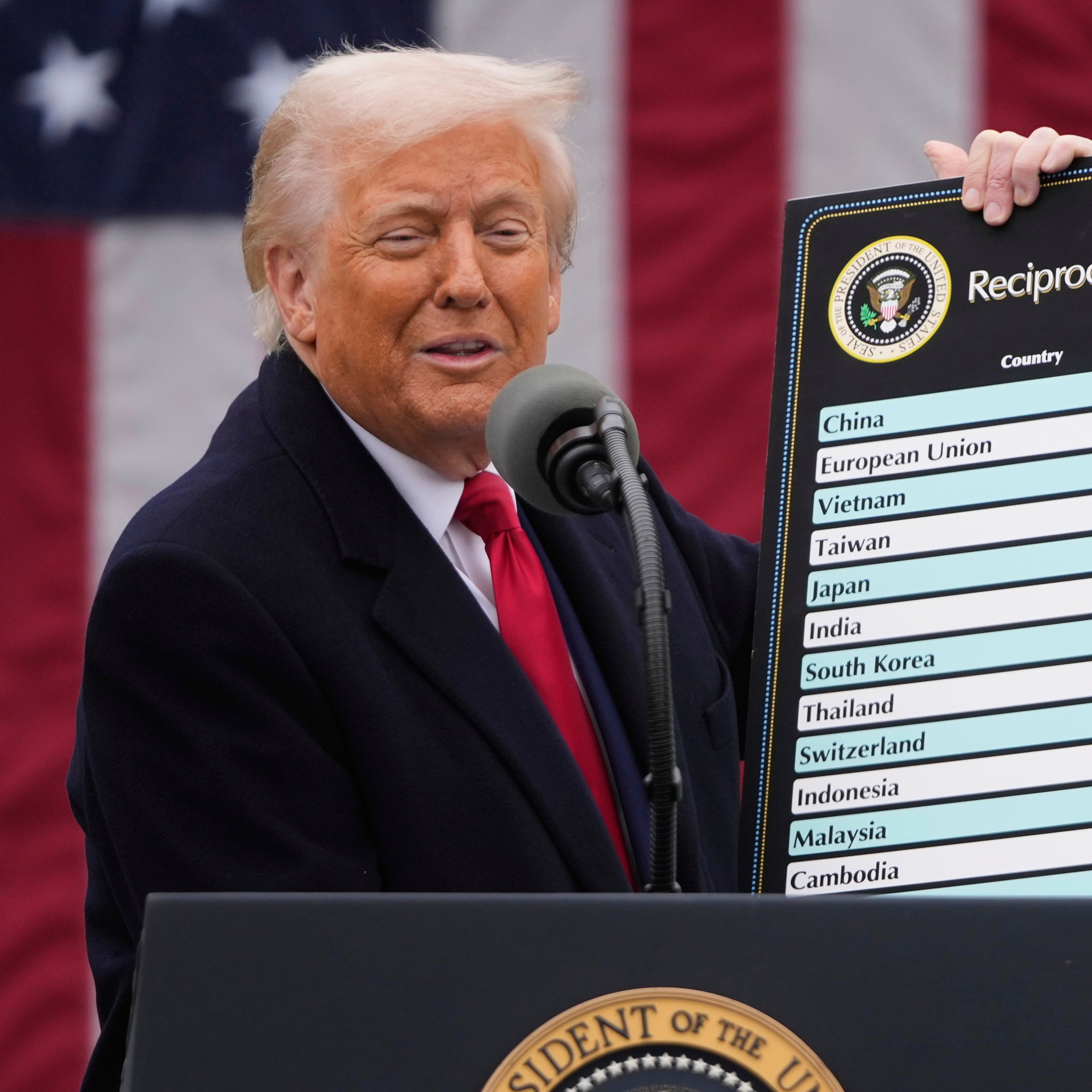
Trump had pressured Indiana Republicans to redraw their map so the GOP could win all nine of the state’s congressional seats. Twenty-one Republican state senators refused, and the president spent the spring purging most of the ones who stood in his way.
On Tuesday, even under the old map, Indiana Democrats picked up a seat when Victoria Spartz lost a district she had won by more than 18 points two years ago.
As Punchbowl News’s Jake Sherman noted, had Indiana adopted the map the president wanted, every Indiana Republican in Congress but one would have lost on Nov. 3. Greedy maps work in good years and collapse in bad ones, and this was a bad one. Georgia’s Republican leaders understood that.

Ga. GOP proves it’s adrift
The Republican Party of Georgia, unfortunately, understands very little.
On the Democratic side, Sen. Jon Ossoff effectively took control of his party and installed Charlie Bailey as its chairman. It was a genius move. Democrats in Georgia got a disciplined operation built to win general elections, and on Nov. 3, it did.
The Republican Party of Georgia went the other way. It has been taken over, increasingly, by flat-earth conspiracy theorists who would rather relitigate the past than win the future. Its chairman, Josh McKoon, spent the Sunday before the election relitigating 2020. Responding to an AJC column about Roy Barnes’s loss in 2002, McKoon posted a list of grievances — emergency election procedures, drop boxes, mobile voting in Fulton County, and weakened signature checks on absentee ballots — all of them about 2020.
Six years later, the state party remains unable to move past conspiracy theories about an election Trump lost, and those grievances have long masked a deeper failure. The party has no plan for a growing, changing state, and it has shown no interest in finding one.
Georgia has been spared disaster because its elected Republicans have mostly been far more responsible than the party apparatus behind them. Kemp, Secretary of State Brad Raffensperger, and the legislators who refused to gerrymander the state into a trap governed like adults. They could not, however, hold back a wave of anti-Trump sentiment on their own.
I have been telling Georgia Republicans for years that the more closely they align themselves with Trump, the better they may do in a primary and the worse they will do in a general election. Nov. 3 proved it again. Primaries reward loyalty to the President. General elections in Georgia punish it.

If Republicans want to win statewide in Georgia again, their candidates need to be their own people, with their own reputations and their own records of success. They cannot keep tying themselves to a brand of politics that repels not only Democrats, but also independents and the urban, suburban and exurban Republicans who want a party that is pro-business, competent and sane.
Those voters have not gone anywhere. They are waiting for a Republican Party worth voting for. The elected officials who kept the congressional map intact have shown they can be that party. The question is whether the Republican Party of Georgia will let them.
Now, I wish the best to the governor-elect, who got there on her own. Keisha Lance Bottoms beat the Atlanta Democratic establishment to become mayor. She beat the Georgia GOP and Trump this year. She did not stand on Stacey Abrams’ shoulders. Abrams was seemingly in the witness protection program during the campaign, or out on a starship.
Gov.-elect Bottoms just made history here on earth.
Erick Erickson is host of the nationally syndicated “Erick Erickson Show,” heard weekdays from noon to 3 p.m. on WSB radio. He is also a contributor to the AJC.
Send letters to the editor of 250 words or fewer with your name, city or town and contact information to letters@ajc.com.
The opinions expressed are those of the writer and do not necessarily reflect the views of The Atlanta Journal-Constitution.