No new Georgia political maps for 2026. But the fight for 2028 is coming.
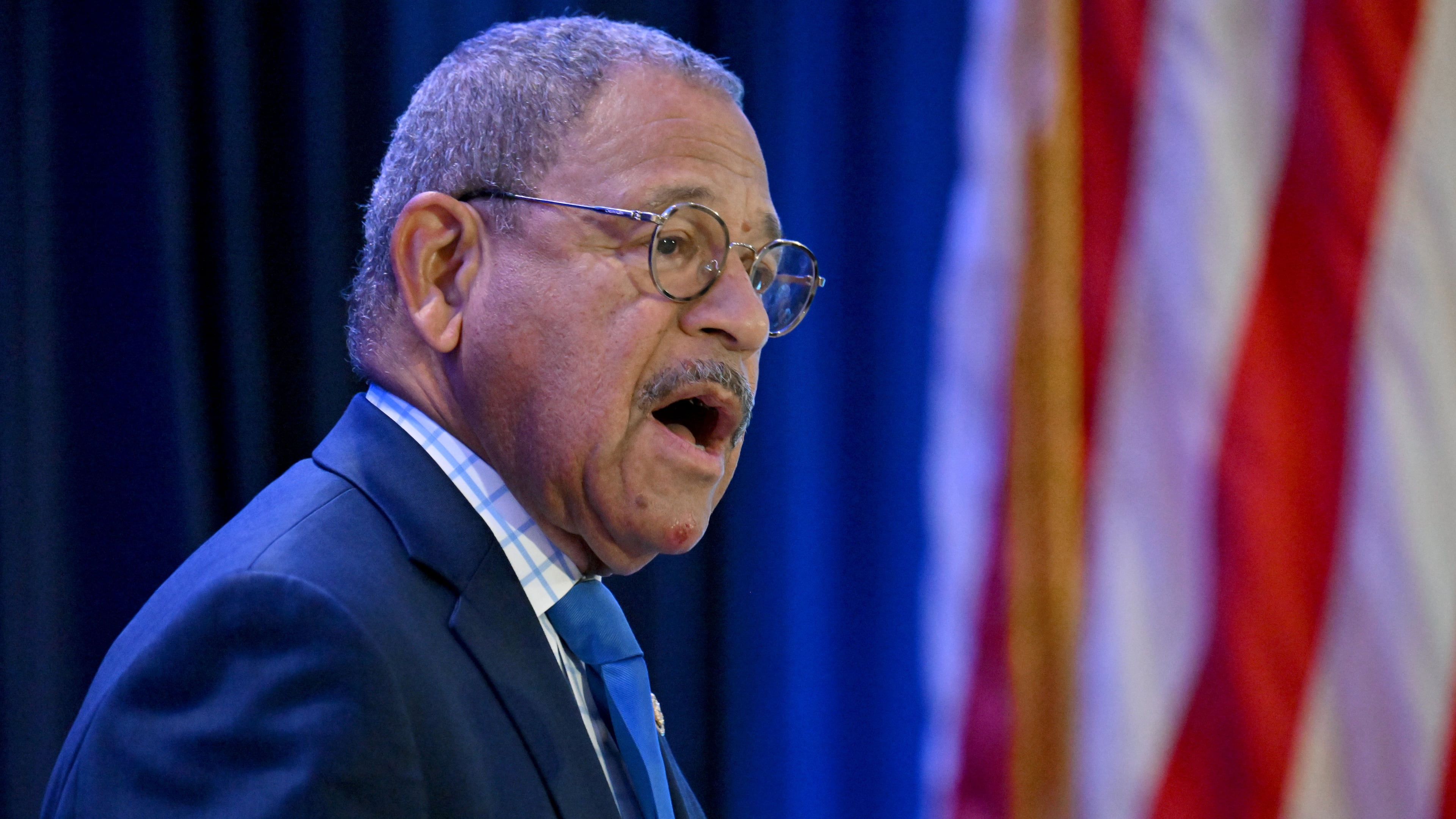
Gov. Brian Kemp shut the door on redrawing Georgia’s congressional districts for this year’s elections. But he may have opened a more consequential one for the next election cycle.
The U.S. Supreme Court’s ruling last week that weakened a pillar of the Voting Rights Act cleared the way for a sweeping overhaul of Georgia’s political lines before 2028, raising the prospect of a new fight this year to reshape the state’s congressional delegation and legislative contests.
One of the most obvious targets is U.S. Rep. Sanford Bishop, the veteran Democrat who has long represented a southwest Georgia district that remains one of the party’s last footholds outside metro Atlanta.
For Republicans, Bishop’s district is a rare prize they’ve long failed to wrest away: a mostly rural, Democratic-held seat that could help the GOP expand its 9-5 advantage in the state’s congressional delegation and pad a fragile Republican majority in the U.S. House.
For Democrats and voting rights advocates, the threat of an overhaul jeopardizes one of the few remaining rural Southern districts where Black voters are the dominant political force.
That collision could make southwest Georgia the focus of the next redistricting war. And Bishop, now in his 17th term, is well aware of the stakes.
“We don’t know what can happen when the General Assembly in its wisdom decides to move, but we have to deal with whatever the results of that are,” Bishop told reporters at the state Capitol on Friday.
“Right now that is yet to be seen, but it is my hope and my prayer that those in this statehouse have the best interests of our democracy at heart.”
A national fight
Lawmakers are preparing to revisit Georgia’s political maps for the third time since 2021 after the Supreme Court’s 6-3 ruling last week struck down a Louisiana congressional map, turbocharging an already chaotic redistricting battle across the nation.
Louisiana Gov. Jeff Landry swiftly suspended the state’s May 16 congressional primary after the ruling and called for lawmakers to draft a new map that could take aim at both of that state’s Democratic-held seats.
Alabama Gov. Kay Ivey on Friday ordered a special legislative session to overhaul the state’s congressional boundaries ahead of the November election, aiming to flip at least one of the state’s two Democratic-controlled districts.
And President Donald Trump is pressuring other states to overhaul their boundaries. After a call from Trump, Tennessee Gov. Bill Lee announced a special session to eliminate the state’s only Democratic-held seat in Memphis.
Trump’s Georgia allies have also urged Kemp to act immediately to take advantage of the Louisiana v. Callais ruling before this year’s elections.
“This is about fairness and power,” said U.S. Rep. Buddy Carter, a Republican Senate candidate who is competing against a Kemp-backed rival. “Other states are stepping up and fighting alongside President Trump. Georgia is standing down. We cannot let that happen.”
C.J. Pearson, a former state House contender and pro-Trump social media influencer, echoed that message in a post to his followers.
“There is no justifiable reason for every other state in the South to be making moves to redraw their maps while we sit on our hands,” Pearson said.
Legal experts, however, say a midstream redraw would be all but impossible to carry out without triggering electoral chaos and immediate court challenges.
Kemp told The Atlanta Journal-Constitution on Friday it’s too late to impose new boundaries for the 2026 elections. Candidates qualified for office in February, early voting is already underway and the primary is in less than three weeks.
But the two-term governor also said it’s “clear that Callais requires Georgia to adopt new electoral maps before the 2028 election cycle,” making it more likely he’ll call a special session before he leaves office in January.
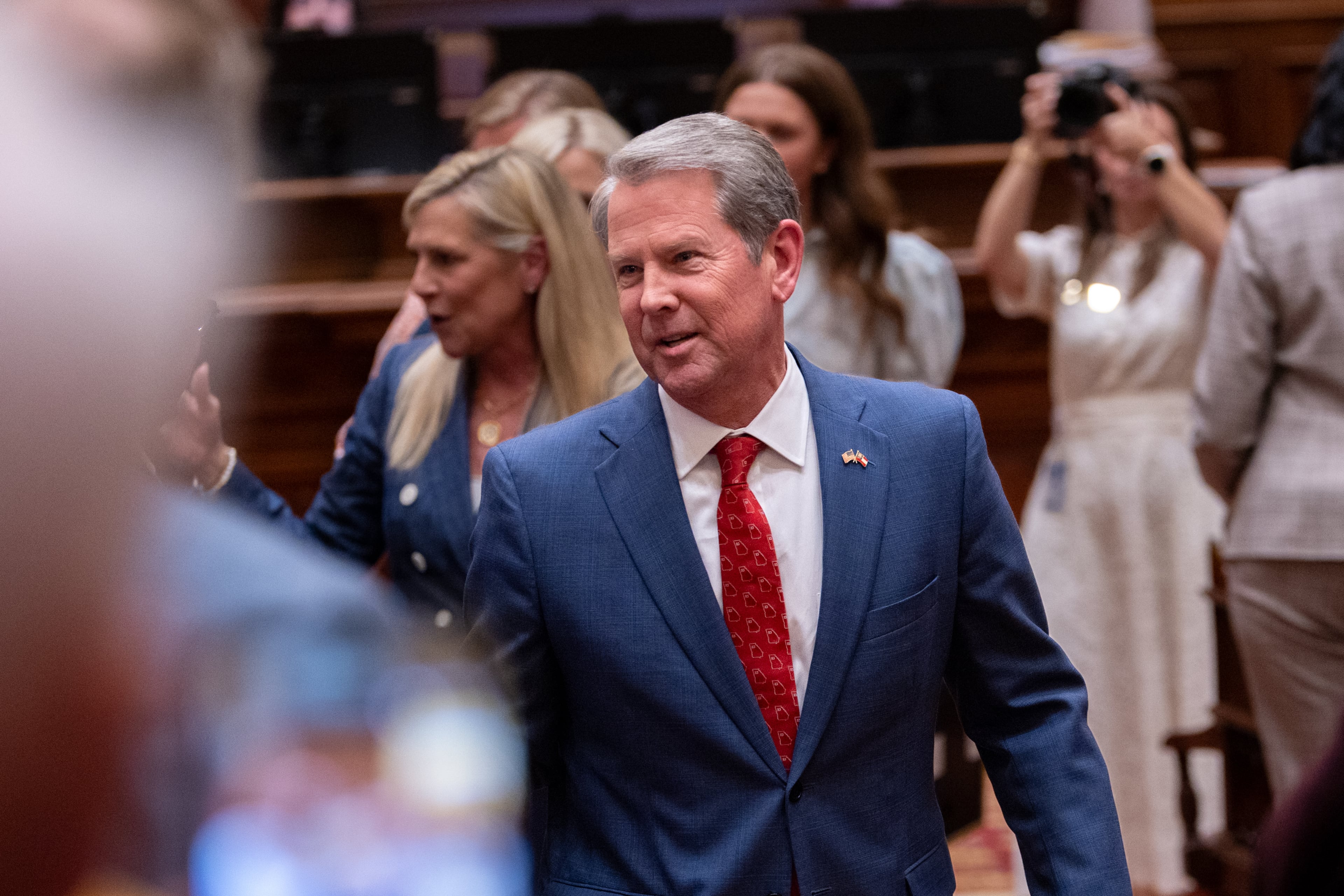
The timing matters. If Republicans move before Kemp’s term ends, they could lock in a new congressional map while a GOP governor can still sign it. Waiting longer could risk a Democratic successor’s veto if the seat flips in November.
Democrats say that is exactly why Republicans are eager to move quickly.
“As Republicans and Trump sink to historically low approvals, they’re making a desperate power grab,” said Maria Andrade, a Democratic strategist. “Democratic officials must take this for what it is: an existential threat to our democracy. This is an all-hands-on-deck moment, and the future of our country is at stake.”
A risky play?
Republicans could face their own risks if they push too far.
Kareem Crayton of the Brennan Center for Justice, a voting advocacy organization, said Georgia Republicans could put themselves in “great peril” if they seek to reshape too many districts, especially those cutting into the increasingly competitive suburbs and exurbs surrounding Atlanta.
“In a purple state you can’t be sure that the things you think are red are going to stay red,” Crayton said in an interview, noting that an aggressive redraw could make solidly conservative districts more vulnerable during wave elections.
They need not look far for examples. Democrat Lucy McBath in 2018 flipped a once-safe GOP district hugging Atlanta’s wealthy northern suburbs that became a surprise battleground during Trump’s first term.
Ken Lawler, chair of Fair Districts GA, said Georgia’s political maps are already “designed to eliminate competition,” leaving no swing U.S. House seats and only a handful of the state’s 236 legislative districts that are competitive in November.
The Supreme Court decision could supercharge those dynamics, he said, giving the Republican-controlled Legislature more leeway to reconfigure the few remaining closely divided statehouse districts.
“The door’s going to be wide-open to look wherever you can to find an advantage,” Lawler said.

That brings the fight back to Bishop, 79, the longest-serving member of the state’s congressional delegation and one of the party’s most durable leaders.
First elected in 1992, Bishop has carved out a powerful perch on the House Appropriations Committee. That gives him outsized sway over how federal dollars are spent in two areas critical to his district: agriculture and military bases.
That seniority, paired with his reputation as a political moderate adept at helping his constituents navigate the government bureaucracy, have helped him survive Republican waves, shifting district lines and repeated attempts to add more GOP-leaning territory to a district that is now roughly 50% Black and 39% white.
Republicans got closest in 2022, after a round of redistricting, but Bishop ultimately trounced his GOP challenger by 10 percentage points.
Last week, Bishop said the Supreme Court’s ruling dealt “democracy a bad hand.” The best option he has now, he said, is to urge voters to turn out.
“We’ve got to vote like we’ve never voted before to try to turn this ship around,” he said. “The ship of state is in trouble. This Supreme Court decision has made it more difficult for our democracy to thrive, and we’ve got to do everything that we can to bring it back on course.”