Could Georgia’s 2026 statewide races be runoff free?

Today’s newsletter highlights:
- Justice Department official threatens to sue Georgia over voter data.
- Lawmakers will vote on whether to extend health insurance subsidies.
- Buddy Carter wants to honor victims of chemical plant explosion.
Runoff rule
For years, nail-biting runoffs have been the norm in Georgia statewide elections. But that may change in 2026.
The Libertarian Party of Georgia is struggling to qualify candidates for the midterms because of a state law passed in 1943 that was originally aimed at keeping Communists off the ballot.
The law says third-party statewide candidates have to win at least 1% of the vote in the previous election or collect signatures of 1% of active voters to automatically qualify. In last year’s presidential race, Libertarian presidential nominee Chase Oliver managed only about 0.4% of the vote in Georgia.
That means the party needs to gather 72,679 signatures by July to qualify candidates for the midterms. Oliver, also a leader of the Libertarian Party of Georgia, says they’re still short.

If they don’t make it, that could change next year’s midterm election when U.S. Sen. Jon Ossoff is up for reelection and every statewide constitutional office is up for grabs.
Because statewide contenders must clear 50% to win, Libertarians who draw even 2% or so of the vote have repeatedly forced marquee races into overtime — shifting the balance in Washington and under the Gold Dome.
- Libertarian Jim Hudson’s roughly 3% showing in the 1992 U.S. Senate race kept Democratic incumbent Wyche Fowler below a majority, pushing him into a runoff he lost to Republican Paul Coverdell.
- In 2020, Libertarian Shane Hazel’s vote share held Republican David Perdue just shy of 50%, sending the race to a January 2021 runoff that Ossoff won to help flip control of the U.S. Senate.
- In 2022, Oliver got enough votes to nudge the contest between U.S. Sen. Raphael Warnock and GOP challenger Herschel Walker into a runoff that the Democrat carried.
Oliver said Libertarians are still holding out hope they’ll finagle a spot on the ballot.
“The best solution is to implement ballot access reform and ranked choice voting,” he said, “so we have more than two choices and runoffs are instant and not costly.”
Things to know

Good morning! We’re 32 days away from the start of Georgia’s legislative session. The primary for U.S. Senate, governor and lots of other races is in 159 days. Here are three other things to know for today:
- The AJC’s Michelle Baruchman and Phoebe Quinton break down how Democrat Eric Gisler won a special election for an Athens area state House seat that had been reliably Republican.
- Today’s U.S. Senate vote on whether to extend health insurance subsidies has become a major fault line in Georgia’s 2026 midterm campaign, Greg Bluestein and Tia Mitchell report.
- A proposal that would have opened the door to getting rid of Georgia’s touchscreen voting machines failed to pass the State Election Board because of a tie vote, the AJC’s Caleb Groves reports.
Data standoff
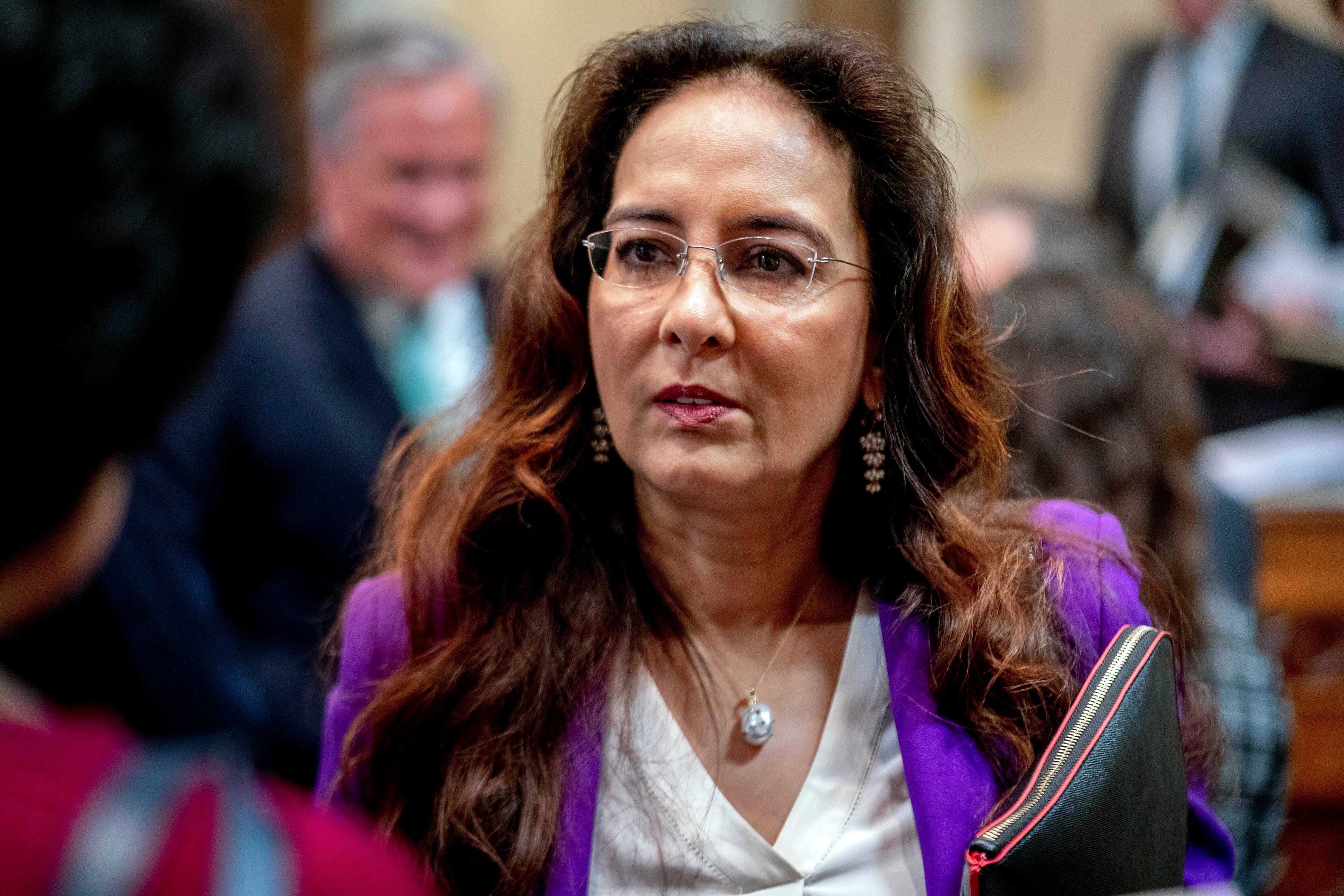
Harmeet Dhillon, the U.S. Justice Department’s top civil rights lawyer, vowed to sue Georgia after she said state officials told her “to go pound sand” when she requested their voter data.
In multiple interviews this week, Dhillon accused Secretary of State Brad Raffensperger of “stiff-arming me,” saying that “he does not want me to get that information.”
Dhillon says she wants the data from every state to gauge whether they are complying with the National Voter Registration Act, which requires states to maintain their voter lists. In a letter to Dhillon this week, Raffensperger’s office says it has provided the data but redacted voters’ personal information as required by state law. That includes Social Security numbers, driver’s license numbers and full dates of birth.
“Nevertheless, the records that we are submitting are more than sufficient to demonstrate Georgia’s compliance with the NVRA,” wrote Charlene McGowan, general counsel for the secretary of state’s office.
Raffensperger says Georgia has “the cleanest voter rolls in the country” because the state verifies voters’ citizenship through the federal SAVE database.
“We were more than willing to share our nation-leading list maintenance practices and public voter roll data with the DOJ on December 8 at their request,” he said.
Senate vote
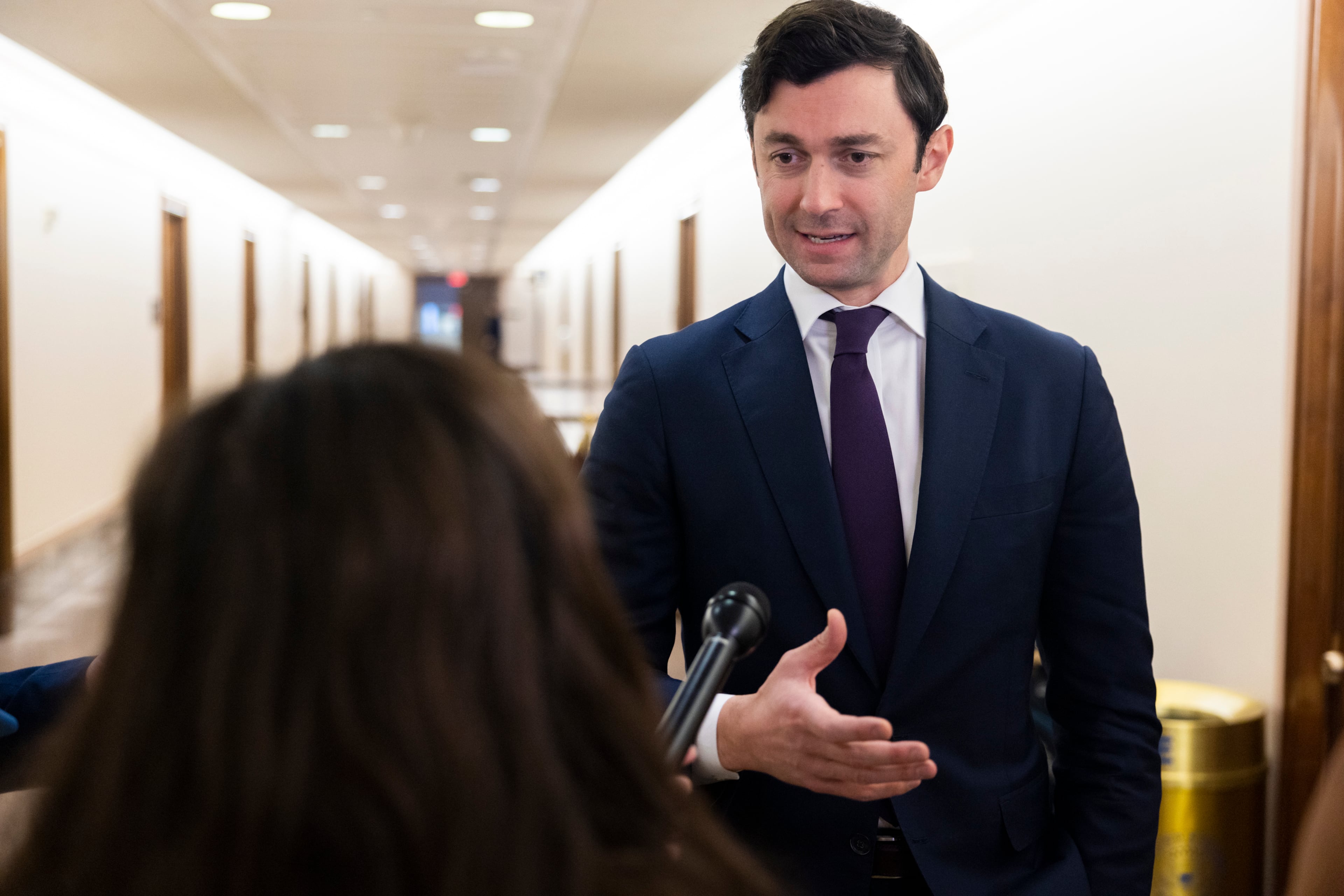
A string of off-year election victories have Democrats dreaming about 2026. But U.S. Sen. Jon Ossoff wasn’t in the mood to talk about that ahead of today’s Senate vote on whether to extend health insurance subsidies for millions of Americans.
We asked Ossoff on Wednesday whether he thought Democrats were winning the messaging war, seeking to gauge his reaction to the party flipping a previously safe Republican seat in the state House of Representatives.
“With all due respect, this isn’t about politics. This is life or death for my constituents,” he said. “Part of the problem is that members of Congress, folks in Washington, are so blinded by politics that they can’t see the human beings who are impacted by the choices we make.”
The bill before the U.S. Senate today would extend those subsidies for another three years. But it doesn’t look like there are enough votes in the Republican-controlled chamber for it to pass.
Messaging battle
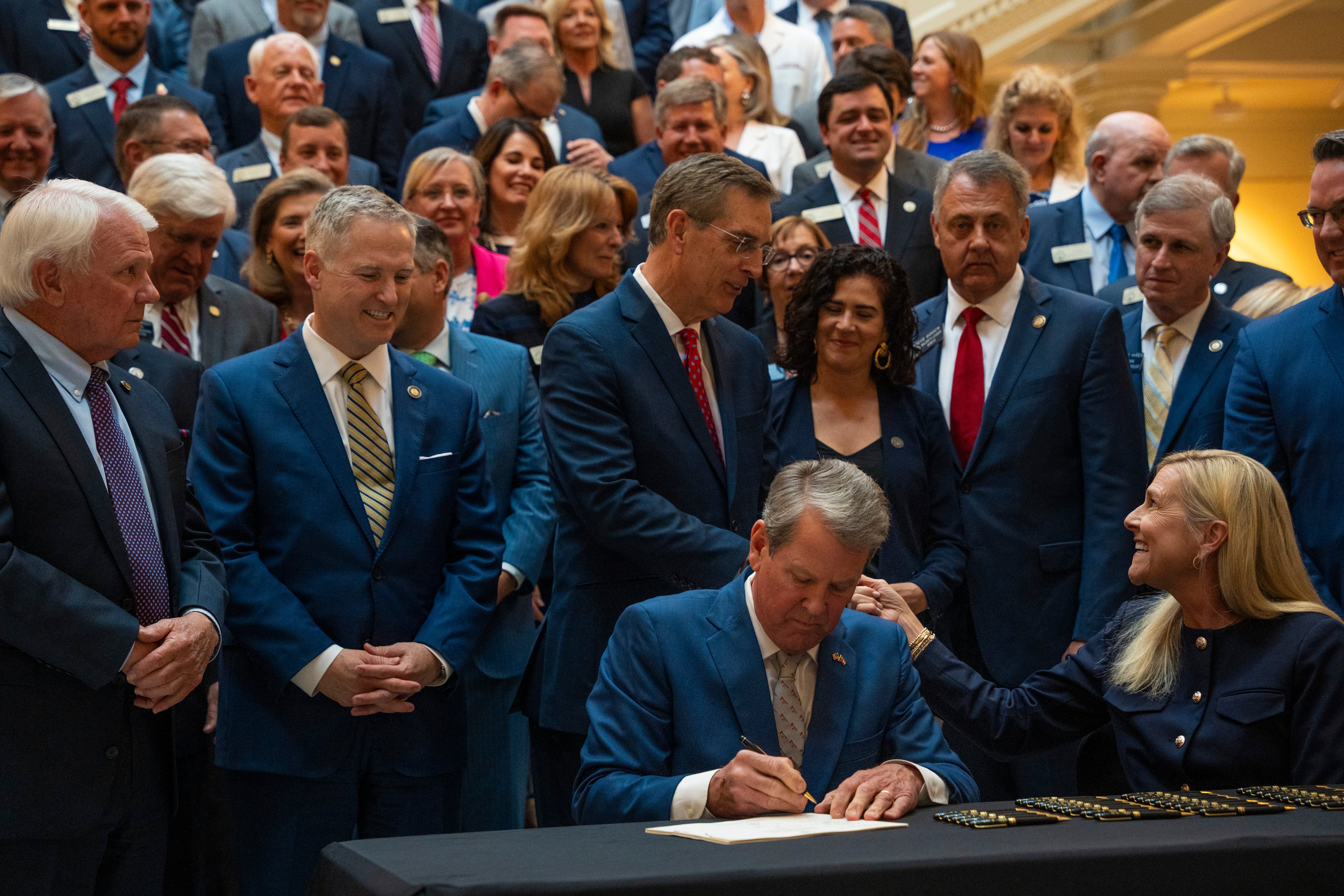
It’s been more than seven months since Gov. Brian Kemp signed a law aimed at limiting large jury awards in civil cases. But the battle to frame the narrative is still raging.
Climate Cabinet Education is out with a new report this morning reviewing how state Legislatures have responded to climate-driven disruptions in the insurance market. They grouped Georgia’s Senate Bill 68 among other efforts in Florida and Louisiana as the “red herring of blaming lawsuit abuse.”
“There is little evidence that making it more difficult to sue insurers does anything to make insurance markets healthier, more affordable, or more competitive,” the group wrote in its review.
Meanwhile, conservatives were celebrating Georgia’s removal from the American Tort Reform Association’s annual list of “judicial hellholes.” The association noted Georgia spent several years at or near the top of their list, but fell off this year “after the Governor and legislature delivered a landmark legal reform package.”
The group still added Georgia to its watch list, however, because it is wary of judges in Cobb, Fulton and Gwinnett counties.
Unsung heroes

U.S. Rep. Buddy Carter is introducing legislation to award the Congressional Gold Medal to the Thiokol Memorial Museum in honor of the 30 workers killed in a series of explosions at a chemical plant in Woodbine more than 50 years ago.
The first blast, on Feb. 3, 1971, tore through the Camden County plant that produced trip flares for the Vietnam War, killing 29 workers and injuring 50 others — many of them Black women. A second explosion in 1973 killed another worker, a Vietnam veteran, in a mortar-shell incident at the same plant.
“These 30 men and women were unsung heroes of the Vietnam War, dying in service to their country,” Carter, a Republican candidate for U.S. Senate, said as he introduced the bill.
The proposal would give one of Congress’ highest civilian honors to the museum that now preserves the history of the disaster and the stories of the workers who died. Other cosponsors include U.S. Reps. Sanford Bishop, D-Columbus; Lucy McBath, D-Marietta, and Rich McCormick, R-Suwanee.
Listen up
Today on the “Politically Georgia” podcast we preview today’s U.S. Senate vote on health insurance subsidies and the political risks as Congress races toward year-end deadlines. Then we’ll talk about the early maneuvering to replace U.S. Rep. Marjorie Taylor Greene, R-Rome, who plans step down next month.
You can listen and subscribe to Politically Georgia for free an Apple Podcasts, Spotify or wherever you get your podcasts.
Have a question or comment for the show? Email us at politicallygeorgia@ajc.com or give us a call at 770-810-5297 and you could be featured on a future episode.
Keep it going
Congress is on track to pass the National Defense Authorization Act before the holiday break, continuing its 65-year streak of approving the annual defense policy package.
The bill passed the U.S. House 312-112 on Wednesday, reflecting support from the vast majority of Republicans and a little more than half of Democrats.
U.S. Reps. Marjorie Taylor Greene, R-Rome, was the only Georgia Republican to oppose the measure, joining other hard-liners in criticizing foreign aid in the $900 billion package that also includes raises for service members, funding for construction projects and new equipment at bases, and a provision pressuring the Department of Defense to release video of strikes of alleged drug smuggling boats.
Reps. Lucy McBath, D-Marietta, and Sanford Bishop, D-Albany, were among the Democrats who voted with Republicans in favor of the bill. Bishop said he supported the package as a product of bipartisan negotiations.
“This year’s defense bill provides our service members with the tools, resources, and respect they deserve, including a well-earned 3.8% pay increase,” he said.
Today in Washington
- President Donald Trump will sign legislation and speak at a ball for members of Congress.
- The House will vote on a series of bills tied to business and environmental regulations.
- The Senate will vote on competing proposals from Democrats and Republicans to address the expiring Affordable Care Act subsidies.
Water vote

The U.S. House of Representatives will vote this afternoon on U.S. Rep. Mike Collins’ bill to overhaul the Clean Water Act.
Collins, a Republican from Jackson who is running for the U.S. Senate next year, became chair of the Water Resources and Environment Subcommittee in January. He said the bill — known as the PERMIT Act — is part of his goal to make the government more efficient.
The bill has the backing of the Georgia Ports Authority, the Jackson Electric Membership Corporation, the Municipal Electric Authority of Georgia and Oglethorpe Power.
Georgia Farm Bureau President Tom McCall said the bill would end “unnecessary permits” on ditches and prior converted farmland while saving farmers “millions in compliance costs.”
The environmental group Clean Water Action has criticized the bill as the “Permission to Pollute” act, saying it threatens protections for waterways.
Shoutouts
Want a birthday shoutout in the Politically Georgia newsletter? There’s a form for that. Click here to submit the shoutouts. It’s not just birthdays. We’re also interested in new jobs, engagements, birth announcements, etc.
Before you go
Georgia Power has struck a deal with the Public Service Commission staff on a plan to generate nearly 10,000 megawatts of new power over the next five years, primarily for data centers. The plan still must be approved by the full commission.
That’ll do it for us today. As always, you can send your best scoops, gossip and insider info to greg.bluestein@ajc.com, tia.mitchell@ajc.com, patricia.murphy@ajc.com and adam.beam@ajc.com.
About the Authors

Greg Bluestein is the Atlanta Journal Constitution's chief political reporter. He is also an author, TV analyst and co-host of the Politically Georgia podcast.

Tia Mitchell is the AJC’s Washington Bureau Chief and a co-host of the "Politically Georgia" podcast. She writes about Georgia’s congressional delegation, campaigns, elections and the impact that decisions made in D.C. have on residents of the Peach State.

Patricia Murphy is the AJC's senior political columnist. She was previously a nationally syndicated columnist for CQ Roll Call, national political reporter for the Daily Beast and Politics Daily, and wrote for The Washington Post and Garden & Gun. She graduated from Vanderbilt and holds a master’s degree in journalism from Columbia University.

More Stories
The Latest


