Deaths at record level in Georgia state prisons as crisis deepens.
The Georgia Department of Corrections is on track to see its deadliest year ever, with 156 deaths, including at least 24 homicides, during the first six months of 2024.
Mortality data obtained by The Atlanta Journal-Constitution shows deaths inside state correctional facilities from all causes have been rising during the first half of each year since 2020. The number of such deaths in the first half of this year even exceeds the number of prisoner deaths during the height of the COVID-19 pandemic. In all of 2020, the prison system reported 272 deaths, the most on record dating back to 2001; in the first six months of that year, 116 prisoners died.
And the 24 homicides the AJC could verify so far this year put the prison system on track to top last year’s record toll. In the first half of last year, there were 18 homicides, with the year’s total at 38.
The number of homicides may be significantly higher. In a written statement, Department of Corrections spokesperson Joan Heath told the AJC that the prison system had investigated 33 prisoners’ deaths as homicides between Jan. 1 and Aug. 7 of this year. She did not respond to requests to reveal how many of these investigated deaths were in the first six months, and whether the investigations determined that the deaths were homicides.
The increasing death count raises questions about whether prison system failures are driving the totals.
An investigation by the AJC last year exposed widespread corruption in the prison system, including how hundreds of GDC employees had smuggled in drugs and other forms of contraband. The stories also detailed extreme understaffing, extensive illicit drug use by inmates, record numbers of homicides and suicides and large criminal enterprises run by prisoners that killed and victimized people on the outside.
Heath said a rising number of people in prison, along with longer sentences, likely contribute to the number of deaths.
“With 23,691 offenders facing 20-plus years, life or life without parole, many of the deaths are attributed to natural causes based on the number of years they remain incarcerated and begin to age,” she said in an email to the AJC.
It’s unclear how most of the prisoners died this year, whether from natural causes, suicides, drug overdoses or other accidents. After February, the GDC decided to no longer include the suspected manner of death in its monthly mortality reports, as it had done in previous years.
To determine which prisoners were homicide victims, the AJC reviewed incident reports and data, death certificates and arrest warrants and interviewed family members and local coroners. This year’s total includes one person who was not a prisoner, Aureon Shavea Grace, a food service employee at Smith State Prison who was shot to death in June by an inmate who then turned the gun on himself.
Six of the 24 homicides occurred in May, and that month saw several particularly disturbing killings.
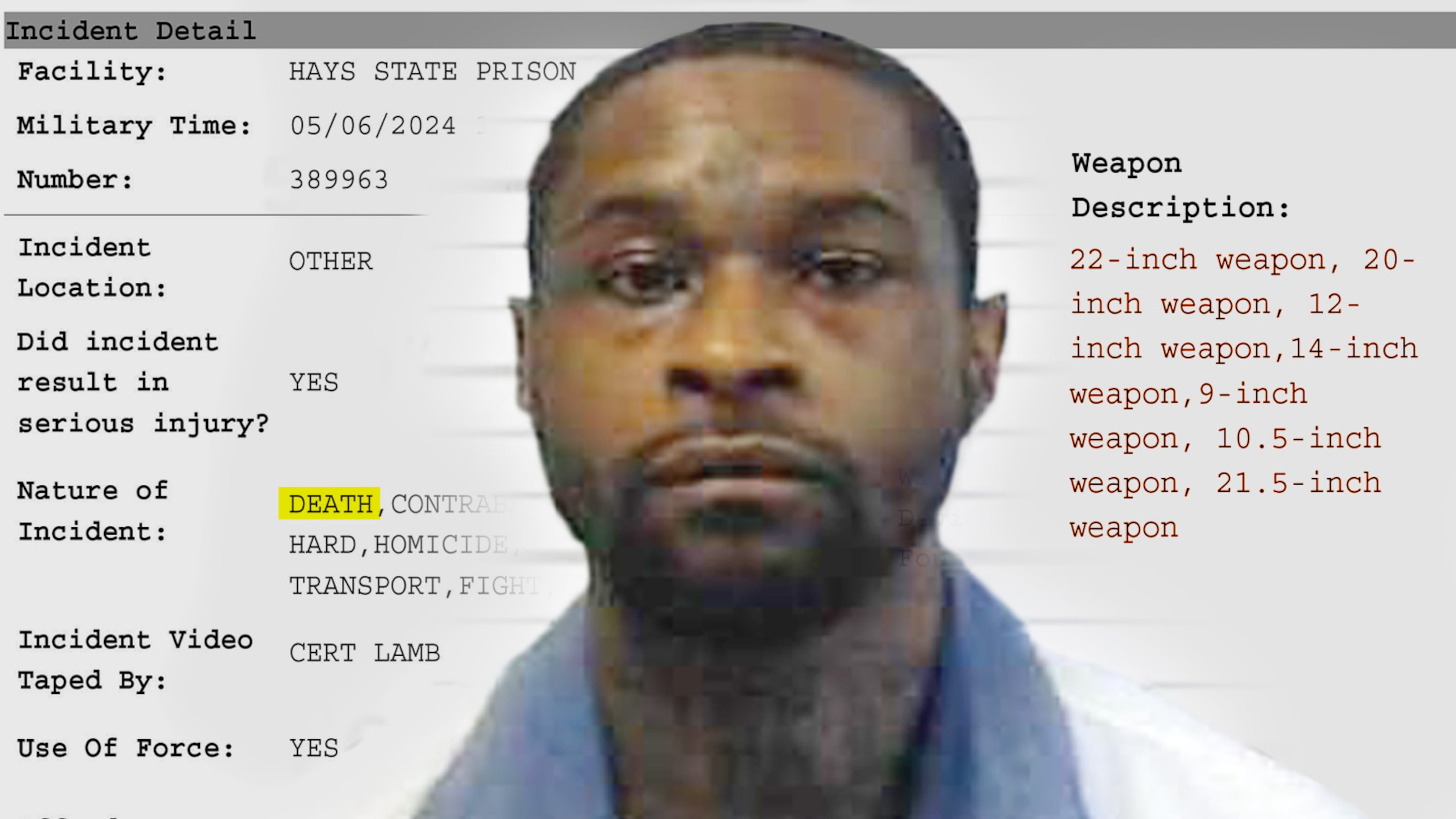
One was the beating death of 32-year-old Shane Griffith at Valdosta State Prison, for which 11 inmates have been charged with murder. Another was the stabbing death of 31-year-old Freddie Talley at Hays State Prison, which led officers to recover seven weapons ranging in length from 9 to 22 inches, according to the incident report. Three inmates received disciplinary reports, but they have yet to be charged with crimes.
Also in May, a Georgia correctional officer was charged with felony murder in the death of a prisoner, Roderick Hayes. The officer, Lloyd Hopkins, was accused of helping three prisoners assault another with a “machete like weapon” in an attempt to retrieve a contraband cellphone. The inmate who was targeted in the attack, Robert Robish, defended himself and stabbed Hayes.
The GDC’s decision to stop including manner of death in its monthly reports came as the number of homicides was rising and the prison system was attracting widespread scrutiny.
The U.S. Department of Justice has been investigating violence in the Georgia prison system since 2021. In June, just days after Grace’s shooting, Gov. Brian Kemp announced the state had engaged consultants to conduct an in-depth, yearlong assessment of the GDC. Earlier in the year, the state Senate formed a committee to study the prison system, and a federal judge issued a blistering contempt order in a long-running case over conditions at the state’s Special Management Unit, Georgia’s supermax prison.
Editor’s note: This story has been updated to clarify that the prison system is seeing record deaths compared with six-month death totals in prior years.
Recent AJC coverage of Georgia prisons
South Georgia prison becomes deadlier amid corruption, extreme staffing shortage
Deaths at record level in Georgia state prisons as crisis deepens
For some Georgia correctional officers, inmates are their weapons
Georgia officials won’t release information on how prisoners are dying
Georgia prison medical provider cites millions in extra costs due to violence
How we got the story
The Atlanta Journal-Constitution for years has tracked homicides in state prisons by relying on the Georgia Department of Corrections’ monthly reports listing by date the names of prisoners at each GDC facility who died and the suspected manner of death. To confirm that information, the AJC would check those reports against official death certificate findings once they became available. That’s how the AJC was able to determine that state prisons last year saw a record-shattering 38 homicides.
Then, earlier this year, the GDC stopped providing its assessment of how prisoners were dying. Because death certificate findings are usually not available for months, that meant the public would be cut off from important insights into Georgia prisons.
So, with the GDC’s decision to withhold the information, the AJC looked for other public records that might reveal the homicides and shed light on the circumstances. Georgia prisons are required to fill out forms to report all major incidents, so reporters requested those reports for deaths. The GDC heavily redacted the reports, but they often provided some clues, such as weapons used or the number of inmates involved in a death. The reporters also requested the GDC’s incident report database. While the database doesn’t include prisoner names, it can show that some deaths were marked as murders, and the AJC matched those entries with names from the mortality reports.
In some cases, reporters also sought other records, such as arrest warrants for those charged in prisoner deaths. Reporters also contacted family members of the deceased, coroners and prosecutors.