Is gerrymandering making Georgia’s U.S. House races boring?



SAVANNAH ― An open U.S. House seat had coastal Georgia voters bracing for a brutal campaign season filled with mud-slinging between Democrat Amanda Hollowell and Republican Jim Kingston ahead of the Nov. 3 midterms.
Instead, the race to succeed Rep. Buddy Carter has been, in the words of front-runner Kingston, “a bore” compared with high-stakes races elsewhere around the state and the country.
No biting TV ads. No dueling billboards. No town halls, candidate forums or duke-it-out debates.
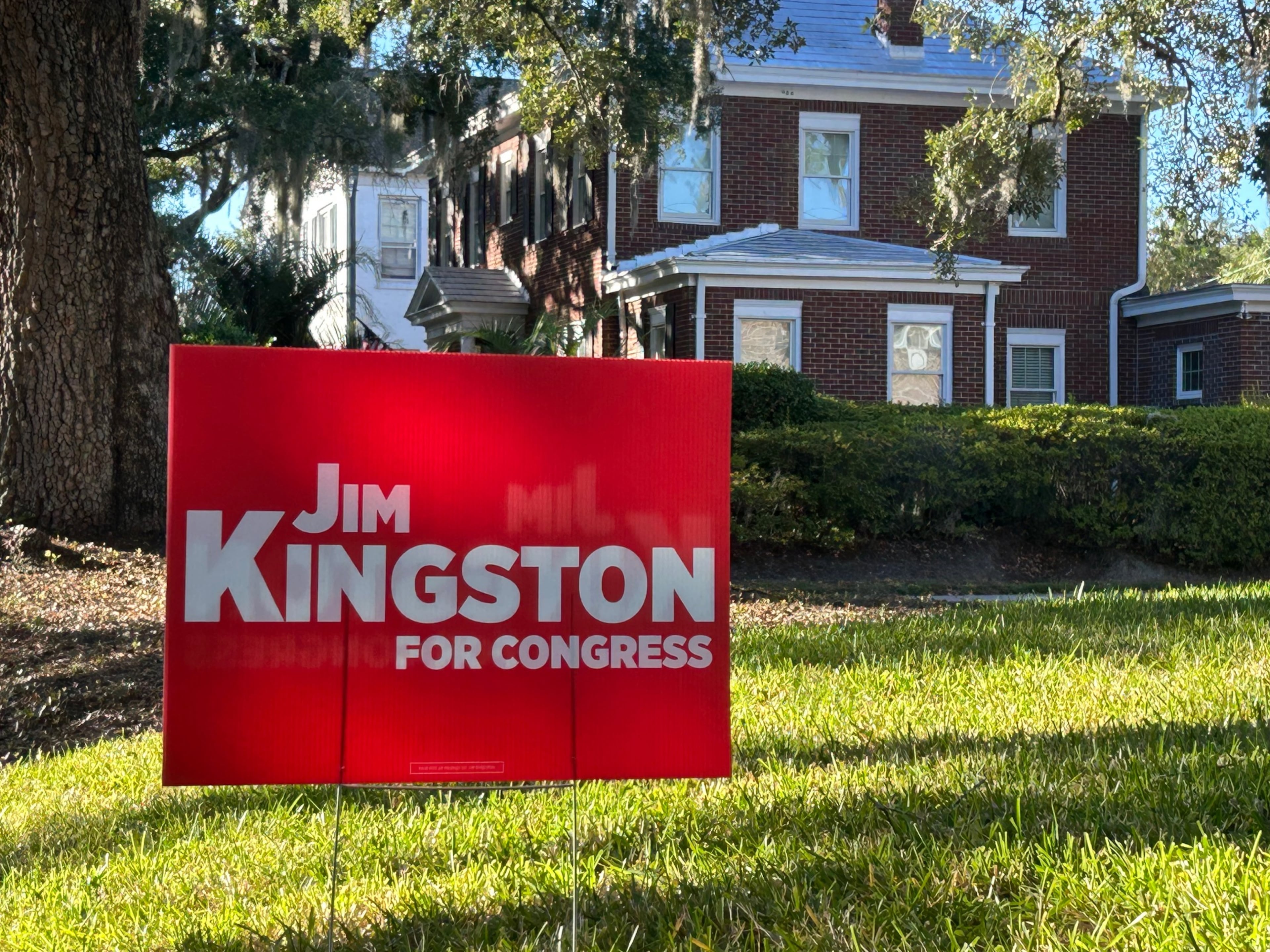
There’s even a dearth of candidate campaign yard signs littering the 15-county district that stretches the length of the coast.
“It’s unusually quiet given that the seat’s open for the first time in more than a decade,” said Adot Whitely, a Democratic Party leader in Savannah. “We’ll see who that favors.”
Low-profile general election contests for U.S. House seats are a trend in Georgia. But it has become especially noticeable in this year’s midterms where there are four open seats with no incumbent on the ballot and a fifth occupied by a newbie in office less than a year.
Still, not one of Georgia’s congressional contests is considered a tossup. Political parties, consultants, pollsters and statisticians predict that the nine seats currently held by Republicans will stay that way, as will the five seats held by Democrats.
This is by design.
All 14 of Georgia’s congressional districts were drawn by the state’s Republican-led General Assembly for one party to win or another. With no swing districts, it means only a political tidal wave or a jaw-dropping scandal would flip a district.
Matthew Gunning, a Georgia Gwinnett College political science professor, said such a “tsunami-level Democratic wave” is unlikely although not impossible.
“Some states have congressional seats that have the capacity to change parties the way they are drawn,” he said. “Georgia is not one of those states.”
Some Democrats, and even some Republicans, believe the party officials and pollsters are ignoring the undercurrents. They say strong turnout among left-leaning voters coupled with President Donald Trump’s low approval ratings could allow seats deemed firmly red to go blue.
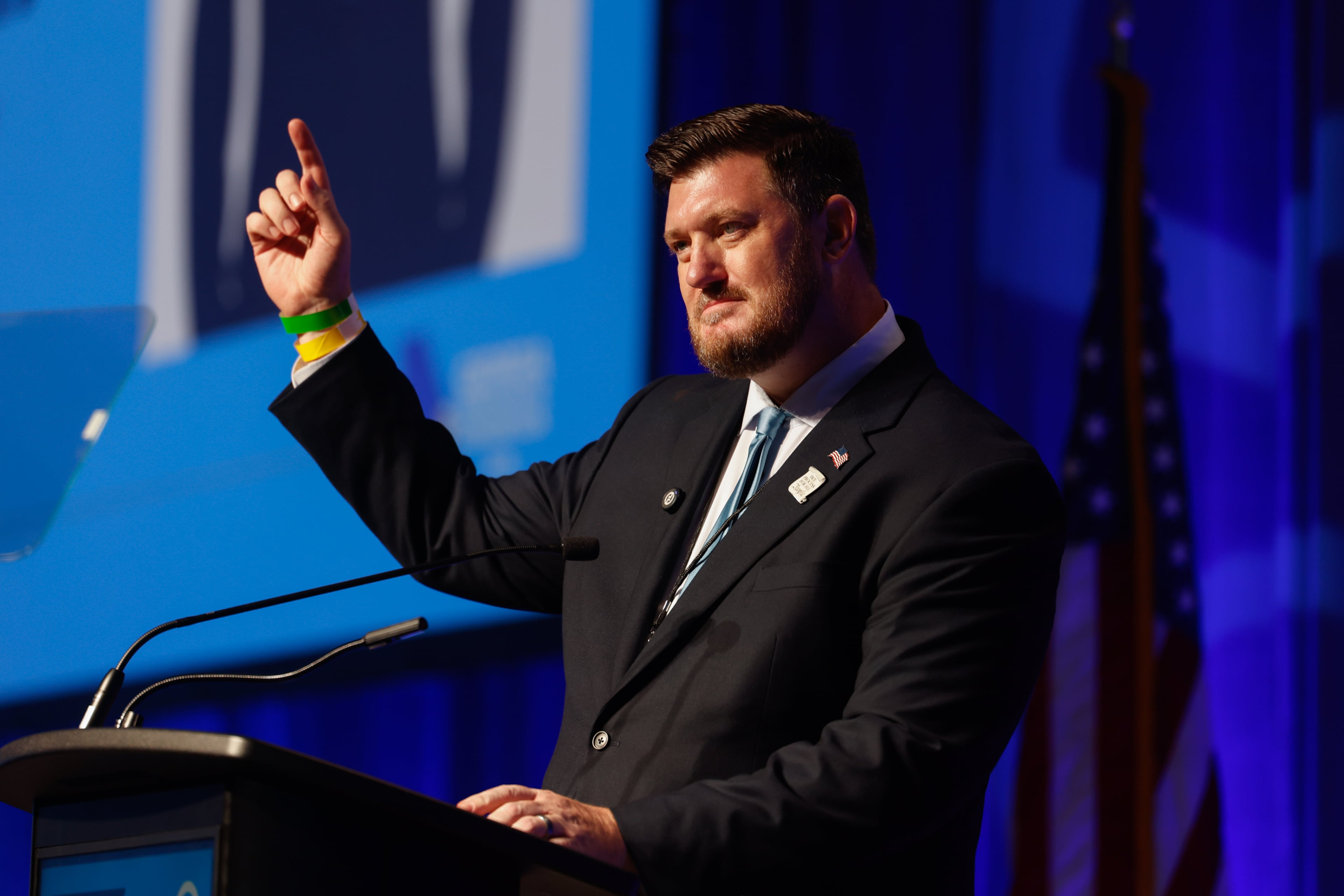
Chris Harden, who is running in the open 11th Congressional District in the metro Atlanta exurbs, commissioned an internal poll that showed him in a dead heat against the Republican nominee, Dr. John Cowan. That seat became open when U.S. Rep. Barry Loudermilk decided not to seek another term.
Harden said his upbringing in a working-class family in rural northwest Georgia, his job as a defense attorney specializing in helping families navigate juvenile courts and a family-focused platform can help him reach independents and even some Republicans who are disappointed with Trump.
“I grew up with conservatives,” Harden said. “They’re my family; they’re my friends; they’re my neighbors. So, I know how to talk with them. I’ve lived among them.”
Kentucky Gov. Andy Beshear and former Georgia gubernatorial candidate Stacey Abrams traveled to the district to campaign alongside Harden. California Rep. Adam Schiff is coming Wednesday.
But Harden is still in an uphill battle in a district that Trump carried by 23 points in 2024, according to the left-leaning election analysis site The Downballot. Loudermilk beat his Democratic opponent 63% to 37% during the last midterm election in 2022.
Harden is also at a fundraising disadvantage, raising $139,283 compared with Cowan’s $2.8 million, which includes $1.75 million in self-funding.
The same mismatch in money and historical trends exists in Kingston’s race versus Hollowell and the two other open seats where Republican Houston Gaines in northeast Georgia’s 10th District and Democrat Jasmine Clark in metro Atlanta’s 13th District are expected to coast victory.
That has left Democrat Pamela DeLancy, Gaines’ opponent, and Republican Jonathan Chavez, who is challenging Clark, wanting for attention.
The same can be said for Democrat Shawn Harris, who drew national attention and raised millions of dollars ahead of this spring’s special election to determine who would complete U.S. Rep. Marjorie Taylor Greene’s term in office.
Although Harris finished much stronger than Democrats typically do in northwest Georgia’s 14th District, he lost the low-turnout April runoff against Republican Clay Fuller by 12 percentage points.
Harris’ general election rematch against Fuller, who is now running as an incumbent, has not drawn the same amount of attention or energy.
Down in the 1st Congressional District, there is hand-wringing that this year’s election could be more competitive than it’s been in decades.
Some GOP insiders have expressed concern about anti-Trump sentiment and sagging Republican turnout during early voting.
The Republican candidate has won every District 1 general election with a minimum of 57% of the vote since Jack Kingston — Jim’s father — flipped the seat in 1992 and was succeed by Carter in 2015.
“No one has paid attention to this race; people have written it off,” said Hollowell, a public policy professional making her first run for elected office. “This is an open race. This man is not his father or Buddy Carter.”
While there is chatter that Kingston may be in trouble, observers on the ground in Savannah and elsewhere in the district say he remains a heavy favorite. Others suspect that the rumors Hollowell is surging are actually a ploy meant to drive turnout to help top-of-ticket Republican candidates in a battleground state where candidates from both parties have legitimate pathways to victory.
And like many of the other front-runners in Georgia’s congressional race, Kingston skipped debates and forums.
Instead, he has attended smaller events like local political party meetings, business roundtables and cattlemen’s association gatherings.
Emory University political science professor Andra Gillespie said Georgia only has one congressional district that is somewhat competitive, the 2nd District in southwest Georgia. Even so, U.S. Rep. Sanford Bishop, a Democrat who has been in office since 1993, is expected to win easily.
In seats held by Republicans where Democrats hope to ride the wave, they should prepare for a moral win and not necessarily an outright one, Gillespie said.
“I expect that the margins between Democrats and Republicans across the state are going to be different than they normally would be,” she said. “But over-performance does not necessarily mean a campaign victory.”