5 Catholic martyrs move closer to sainthood 400 years after Georgia deaths

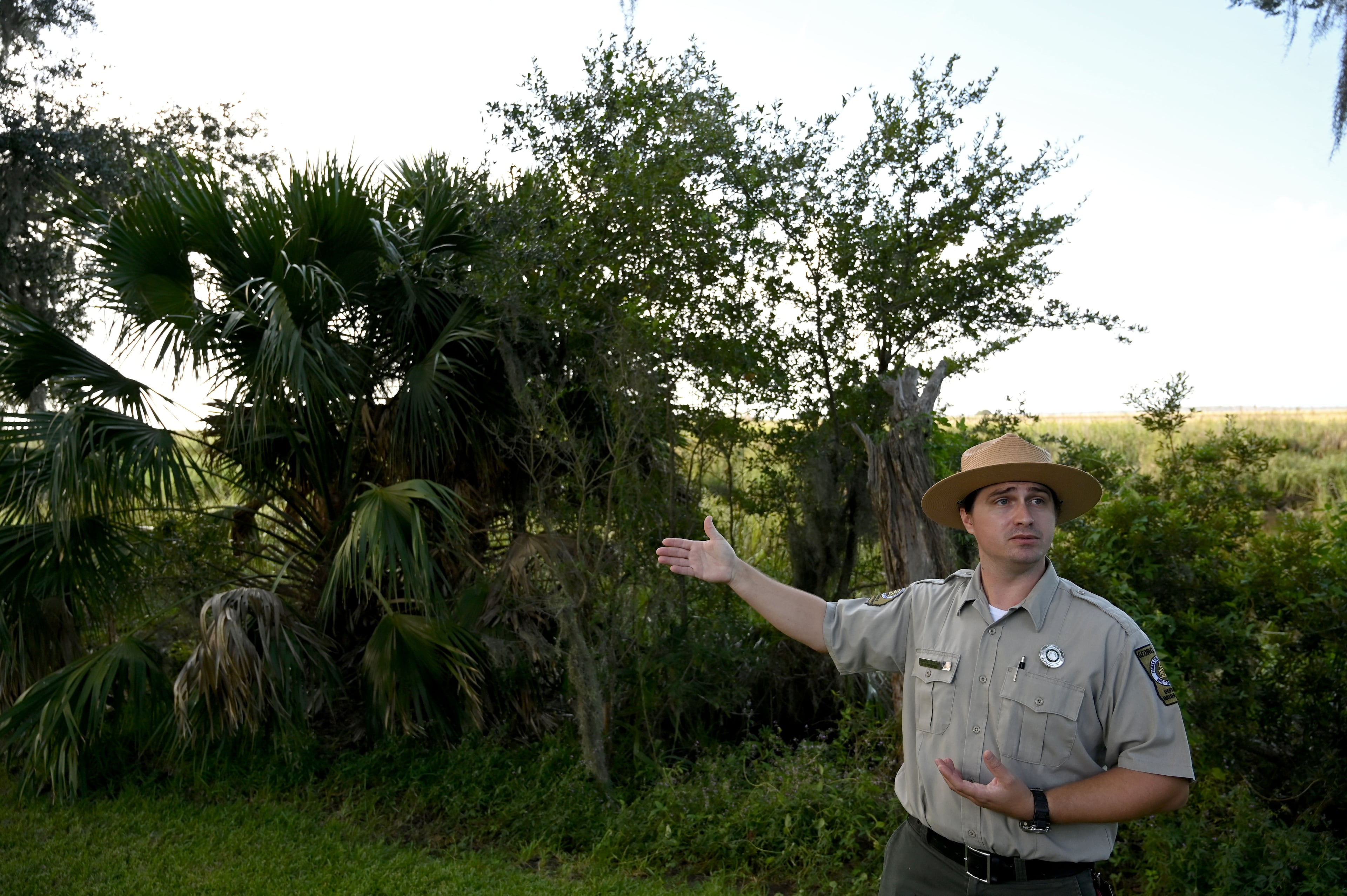
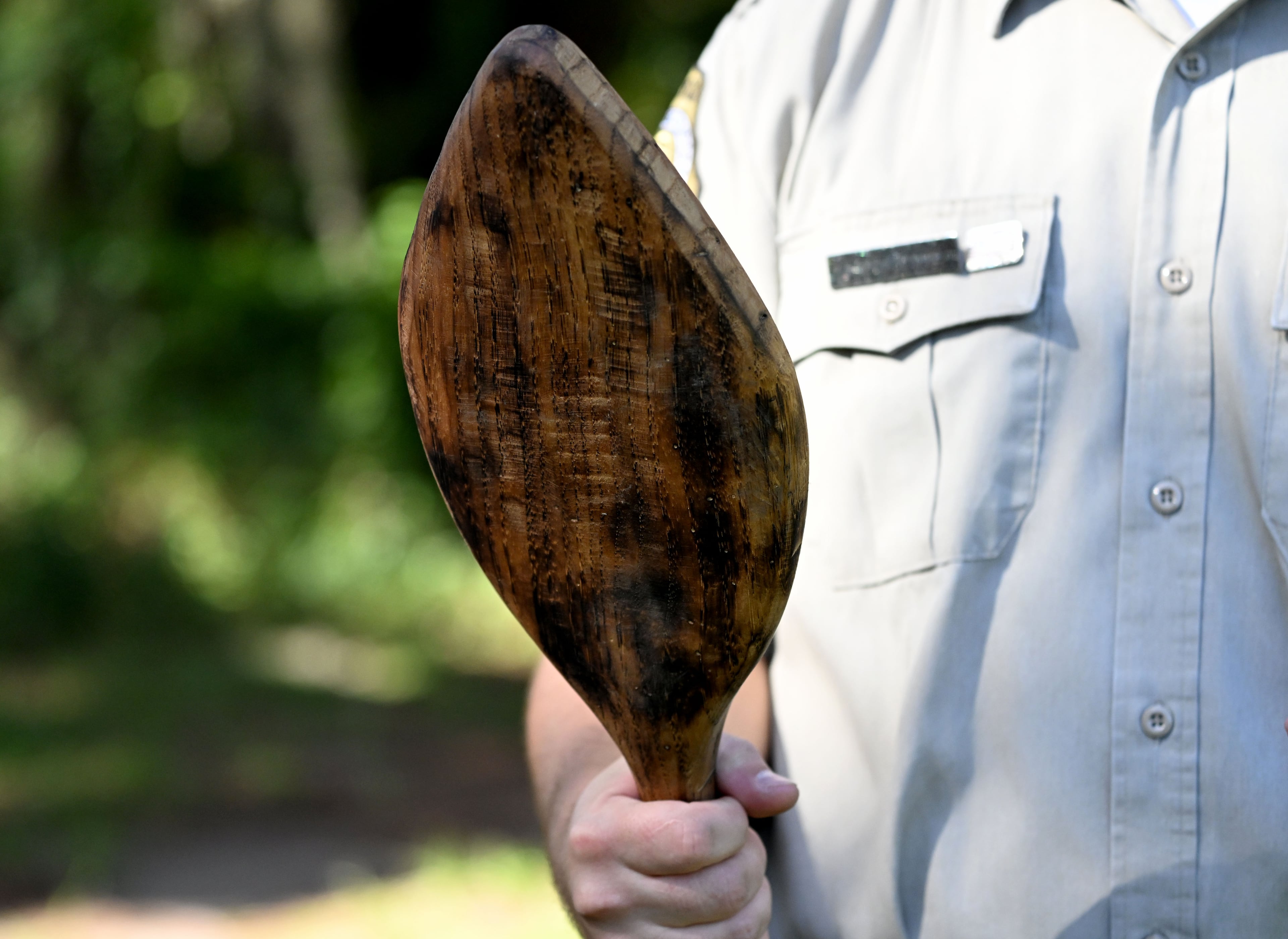
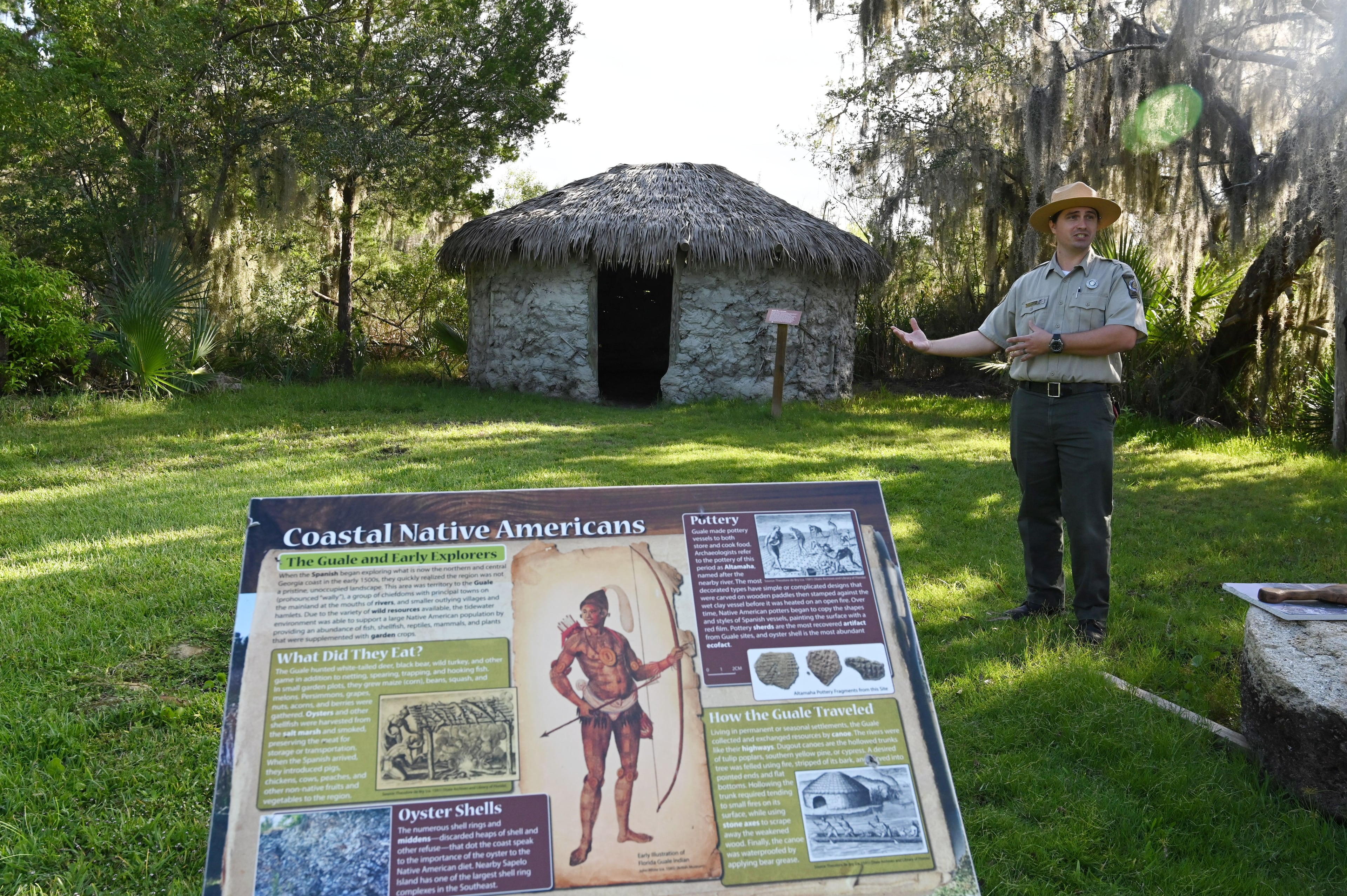
DARIEN ― Michael Putnam lightly slaps the wooden club against the palm of his hand as he relays what happened here 429 years ago. Standing with him on this creek bank, you can visualize Friar Francisco de Veráscola, a Spanish missionary priest in a wide-brimmed straw hat, paddling a supply-laden canoe around the last bend before the Guale village of Talaje.
Veráscola is a towering, burly man known to be as fond of wrestling matches with Guale warriors as he is of preaching the gospel. But on this day in 1597, the Native Americans aren’t waiting on this shore to playfully grapple with him. As Putnam, a Georgia State Parks ranger, demonstrates, they’re here to take a club similar to the one he holds, known as a macana, and strike the priest just above the bridge of the nose and kill him.
And make him, in the eyes of the Roman Catholic Church, someone killed because of his defense of the faith.
A martyr.
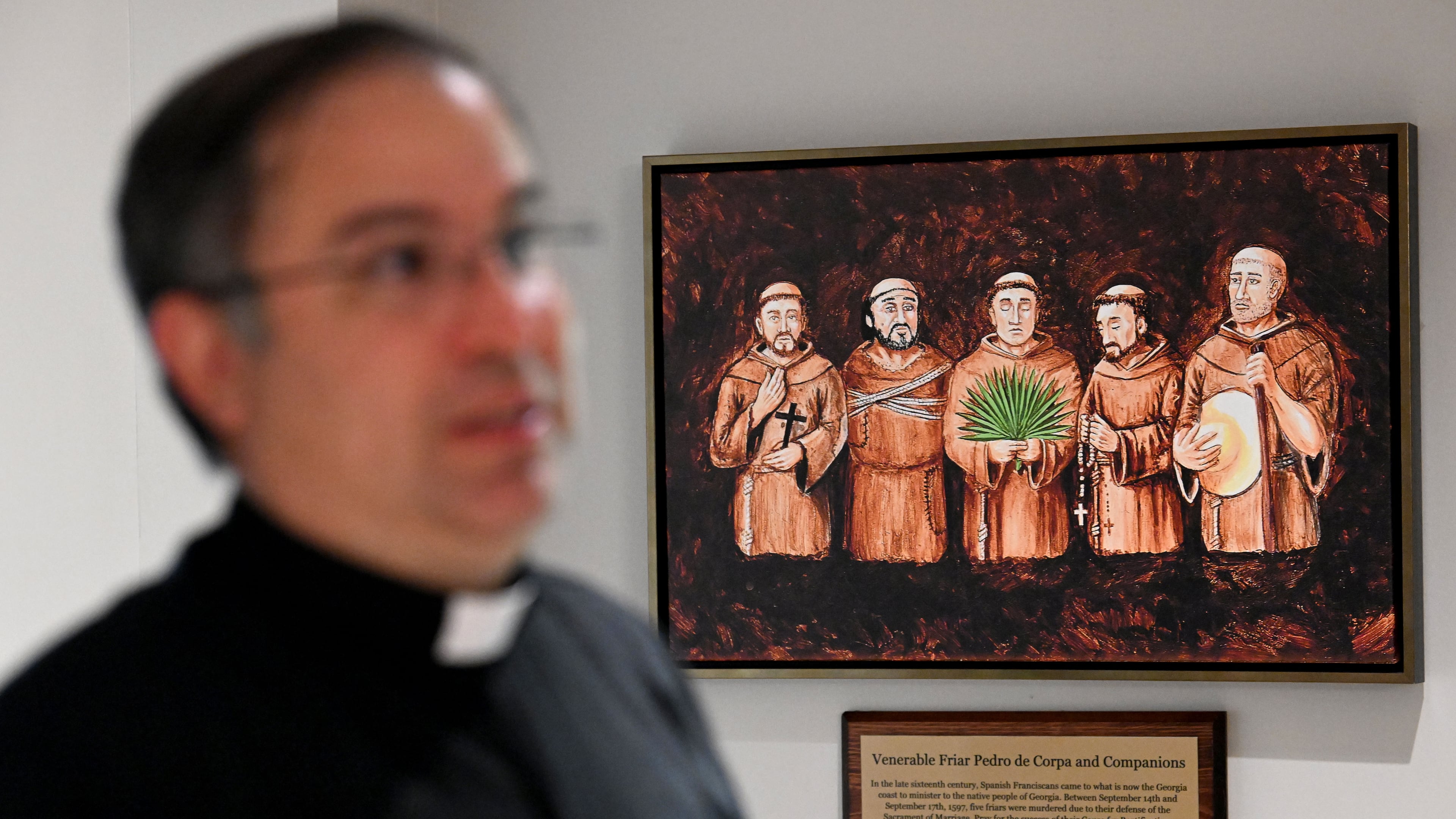
Later this month, Veráscola, and four other Spanish missionaries known collectively as the Georgia Martyrs, will be beatified — to be recognized as “blessed” — at a ceremony in Savannah.
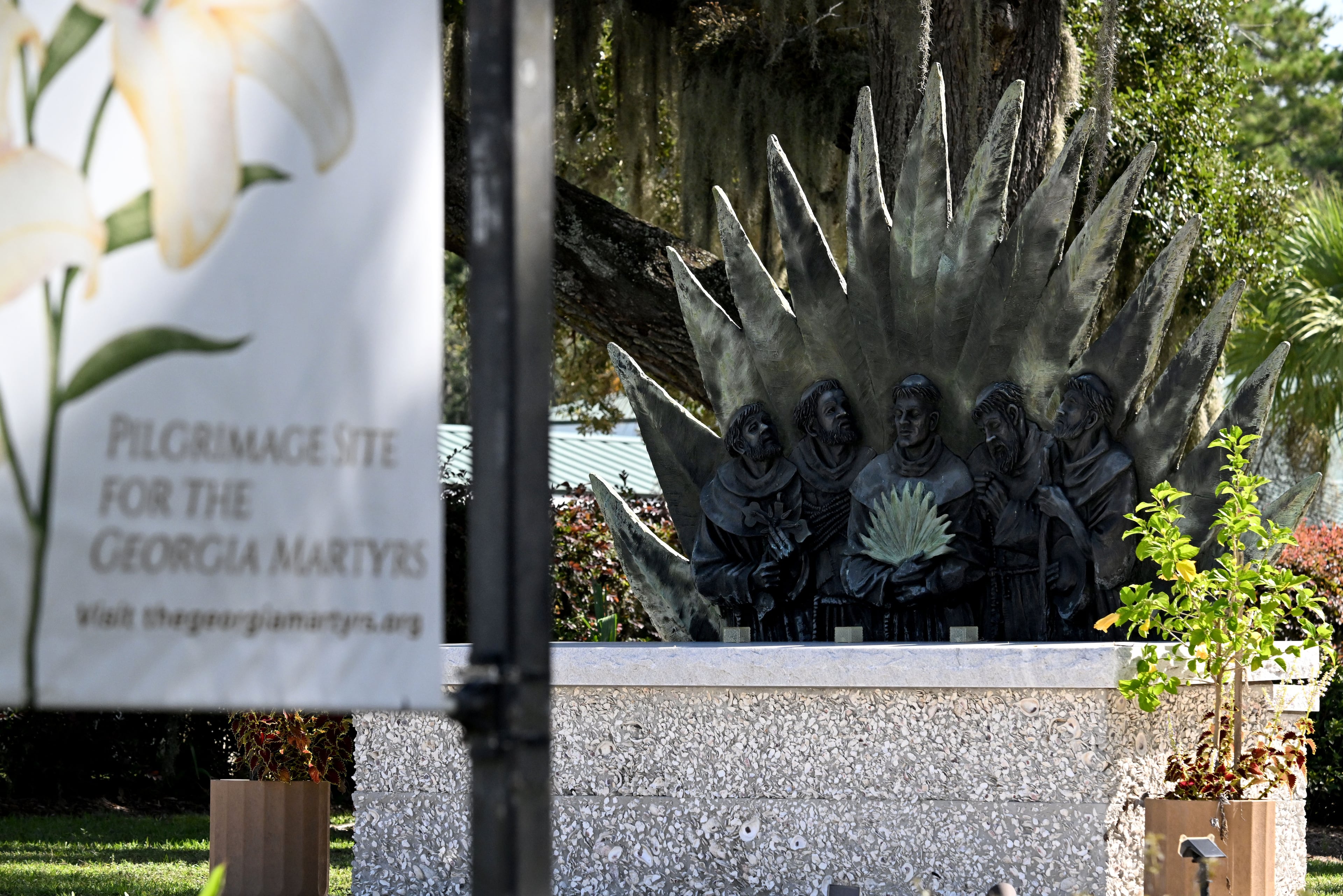
Cardinal Frank Leo of Toronto and Stephen Parkes, the bishop of Savannah, will officiate the Oct. 31 beatification, only the sixth such ceremony in U.S. history. Thousands of Catholics from around the world are expected to attend, including from Veráscola’s home parish in Spain.
Georgia’s first beatification ranks, in the words of Atlanta Archbishop Gregory Hartmayer, as the biggest event in history for the state’s Catholic community. Only a visit from a Pope or a canonization — where someone blessed is made a saint — would rival it.
Beatification makes the 16th century friars eligible for sainthood but does not guarantee it. They’d need to be tied to a post-death miracle for consideration. An example would be the miracle that prompted Mother Teresa’s canonization: 11 years after her death, a dying Brazilian man recovered after his family prayed asking for the nun’s help.
The Georgia Martyrs’ journey from missionary work to sainthood’s doorstep is long and remarkable — and controversial. Some historians challenge the Vatican’s martyrdom narrative and say instead the missionaries were killed as part of an intratribal power play that eventually ended in a bloody change in leadership.
Even as the hows and whys of the friars’ demise might forever be debated, the Catholic Church’s recognition of their deaths spotlights the little-known episode of Georgia history and the 40-year effort to honor them four centuries later.
A challenge to power sparks an uprising
Veráscola had no idea what he was paddling into as he returned to Talaje, which today is the Fort King George State Historic Site, from his supply run to the Spanish colonial capital at St. Augustine.
He didn’t know his fellow priest, Father Pedro de Corpa, had forbidden the Guale chief’s nephew and heir, Juanillo, from taking a second wife, as the Catholic Church’s history reads. Or that Juanillo responded by ordering the execution of de Corpa and the other missionaries ministering to the Native American tribe in the nearby villages of Tolomato, Tupiqui, Talapo and Santa Catalina.
Veráscola came ashore assuming Talaje was as he left it weeks earlier: a village welcoming to him, where he’d learned the language and culture, built a church and converted many Guale to the Catholic faith.
Instead, “He’s met at the boat — and meets the macana,” said Putnam, the historic site manager.
History tells us missionary work is a dangerous vocation — never more so than in colonized lands. The Spanish controlled the Guale territory on present-day Georgia’s coast and kept the peace through trade and by providing protection. Along with the conquistadors and the merchants came the clergymen tasked with spreading the Catholic faith.
In instances elsewhere, such as in California in the late 1700s, missionaries coerced Indigenous peoples to convert through forced labor or confinement, part of the broader usurping of Native American lands and the widespread killing of Natives by Europeans.
Violence wasn’t the only tool. According to a spokesperson for the Association on American Indian Affairs, a nonprofit rights group, Spanish colonialists frequently used Christian missions to suppress native religious and cultural practices while holding up European beliefs as more legitimate, meaningful and valuable.
Spanish records and archaeological evidence speak to the assimilation approach used with the Guale. Those friars were the Peace Corps volunteers of the day, said professor John Worth of the University of West Florida, considered among the foremost academic experts on the Guale.
Worth describes the missionaries as “cultural brokers” through whom village leaders could maintain relationships with the Spanish authorities. The friars lived among the tribe without a garrison of soldiers for protection or enforcement.
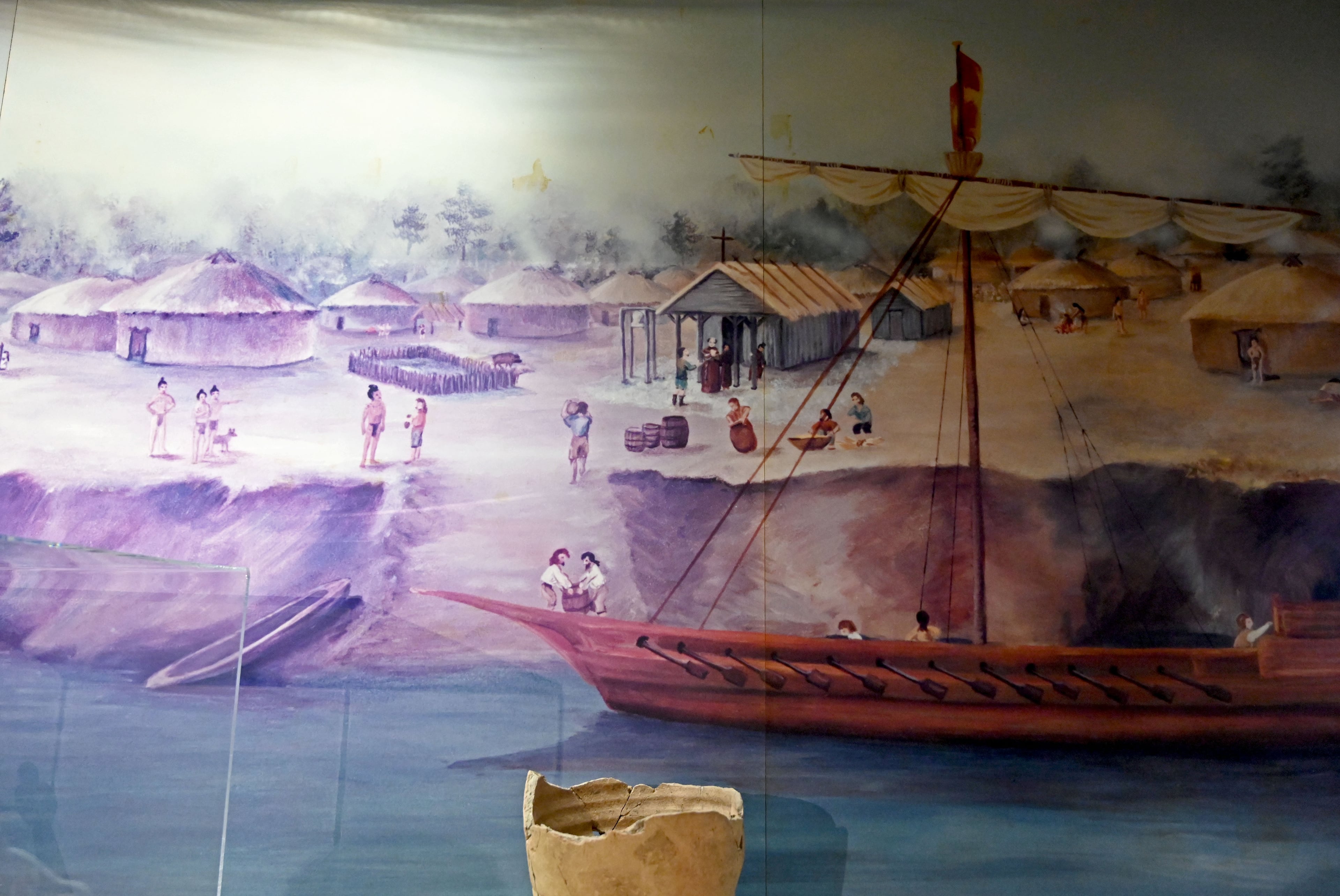
The Guale prospered along the coastline, with its fertile fisheries and rich soil. Families lived in circular-shaped, wattle-and-daub houses with thatch roofs. Spanish records say roughly 40 Guale villages stretched from the Ogeechee River near present-day Savannah south to Brunswick’s Altahama River.
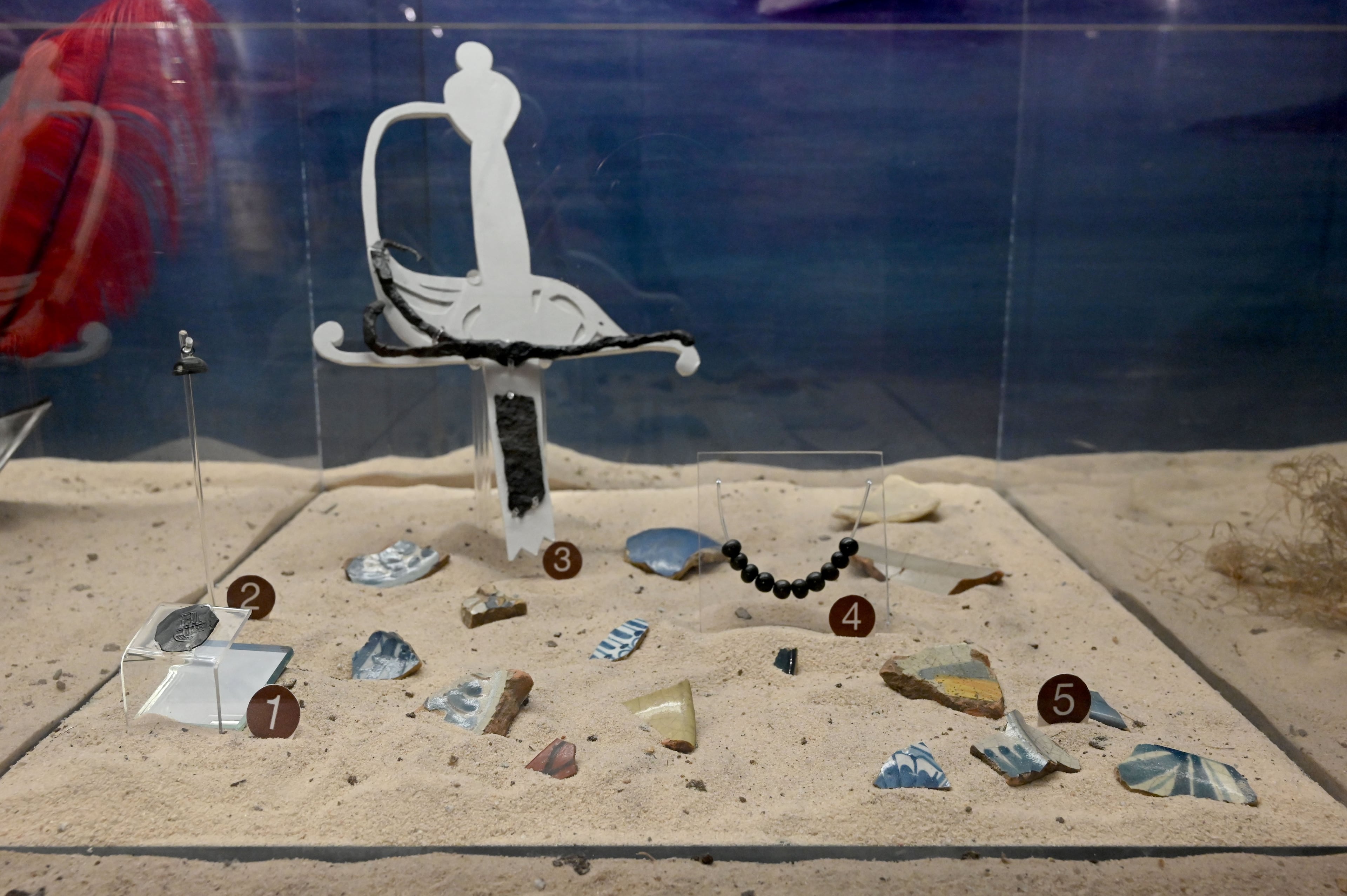
The missionaries built churches in six Guale villages — three have been rediscovered, the most recent on Creighton Island in McIntosh County — and kept records of natives they baptized. Evidence from mission ruins discovered over the past 80 years indicate the converted Guale embraced their new faith.
When Catholic tradition clashed with Guale custom, the friars often showed flexibility with those who converted. Guale burials were allowed on church grounds, and families could inter their loved ones with prized possessions, as was their tradition. Catholic artifacts, such as prayer beads and crucifixes, were found among Guale remains discovered at St. Catherines Island.
But on one Catholic tenet the friars refused to budge: marriage. One man, one wife — even in a culture where polygamy was a practical matter. Guale family wealth passed down through women, so the more wives a man had, the greater his stature.
Father de Corpa condemned Juanillo for his intention to take a second wife and told him the Spanish government would not recognize him as chief once his uncle died.
According to historical accounts, that denial sparked an uprising against Catholicism and Spanish rule, with the friars as the first casualties.
Some historians suspect the missionaries were pawns in a power play orchestrated by a Guale leader and rival to Juanillo named Domingo. Not long after the friars were killed, Domingo led a coup d’etat, killing Juanillo, his uncle and all the chief’s other heirs. He seized power and made peace with the Spanish.
“We have to look at the Guale not just as victims of colonization but also as agents acting in their own interests,” Worth said. “They were forced to interact, but they often made the best out of the situations.”
The Guale began to decline in the 1600s and were driven from their lands by English pirates and rival Native Americans backed by the British between 1660 and 1684. Many of those who survived the decades of attacks settled elsewhere along the coast and were absorbed by the Muscogee (Creek) tribe.
Others fled to St. Augustine and left with the Spanish for Cuba when the British in the mid-1700s ended Spain’s nearly 300-year presence in what would become the United States.
Making the case for beatification
Four centuries after the five missionaries were killed in present-day Georgia, Father Pablo Migone stood in a library-like room stuffed with bookcases at the Vatican’s Dicastery for the Causes of Saints in Rome.
Migone is an aide to Hartmayer, who on this day in 2016 was still the bishop of Savannah, a position he’d hold until 2020, when Pope Francis appointed him Atlanta’s archbishop. A dicastery official explained to them how each file box contained reports related to one petition for beatification or canonization, known as a cause. About 1,500 causes, submitted by Catholic communities the world over, are under or awaiting review at this clearinghouse for would-be blesseds and saints.
The Savannahians marveled at the inventory, but their focus was narrow: the cause of Father Pedro de Corpa and his four companions, also known as the Georgia Martyrs. Savannah bishops had championed their cause since the 1980s, working with the religious order, the Franciscans, that had sent the friars to the New World in the late-1500s.
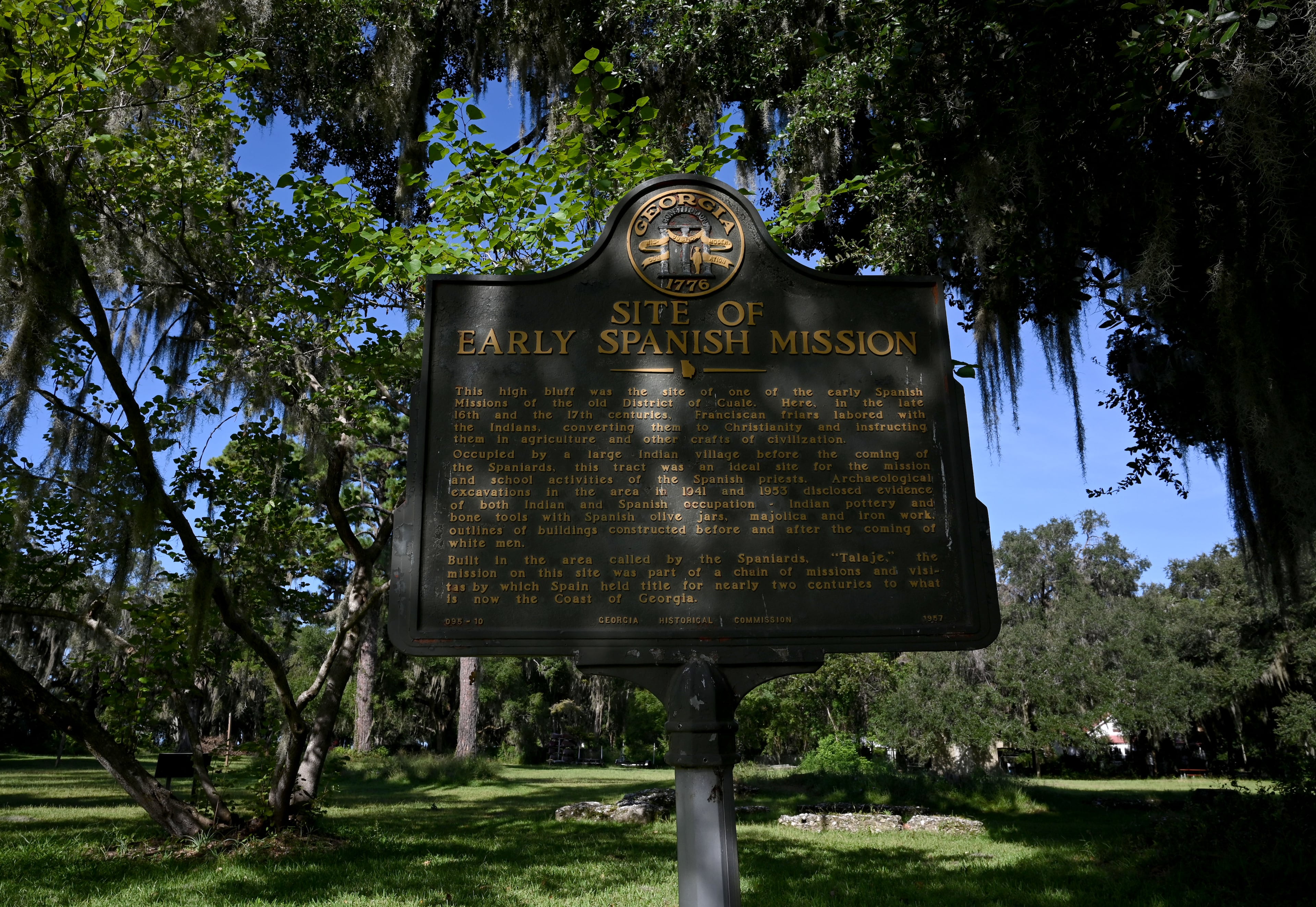
It took 25 years of research and report writing to make the cause submission ready. The written and archaeological records had to be authenticated. The circumstances around the friars’ deaths — that they were killed defending marriage and the Catholic faith — had to be established beyond a doubt.
In 2007, the cause was filed with the Vatican. Nine years later, while in Rome on another matter, Migone and Hartmayer visited the dicastery hoping for an update.
The response renewed their hopes.
“This should have been done already,” Migone said they were told. “This is a straightforward, historical matter.”
It’s been said the Catholic Church invented bureaucracy, but the Vatican’s notoriously meticulous processes weren’t to blame in the Georgia Martyrs case. Each beatification petition is assigned a postulator, an official who operates independently of the Vatican and is tasked with championing the cause. The Georgia Martyrs’ postulator had taken an extended leave because of a dementia diagnosis.
Hartmayer recruited a replacement postulator and renewed the push for beatification. Himself a member of the Franciscan order, Hartmayer felt a kinship with the friars. At the postulator’s advice, he tasked the diocesan staff with promoting the cause.
The Georgia Martyrs remained a priority under Hartmayer’s successor, Parkes, who became Savannah’s bishop in 2020.
The marketing effort ranged from renewed distribution of martyrs’ prayer cards and launching a Georgia Martyrs website to producing a 30 minute documentary film. A friars’ monument at Nativity of Our Lady Catholic Church, half a mile from where Veráscola was martyred, was erected as a pilgrimage site.
In 2022, the dicastery notified the Savannah diocese that the Georgia Martyrs’ cause had been approved by the first of three beatification committees. It took two years more to clear the other panels. Then, in January 2025, Pope Francis formally acknowledged the friars as martyrs and authorized their beatification.
A ceremony four centuries in the making is finally approaching, and at a time when interest in America’s Catholic history is peaking. Another beatification, for 1960s Catholic televangelist Archbishop Fulton Sheen, attracted 50,000 celebrants to a domed football stadium last month in St. Louis.
Many of today’s Catholics grew up watching Sheen’s “Life is Worth Living” program and don’t have the same connection to the five 16th century missionaries. But Savannah’s ceremony will be staged at the convention center with capacity for up to 11,000 attendees.
Hartmayer said the martyrs’ backstory resonates because it challenges today’s Christians to follow the friars’ example.
“As we celebrate them, does it change our lives and how we live our faith?” he said. “It’s a different time. We don’t have to give our lives, our blood, for what we believe. But can we do more to demonstrate what faith means to us?”
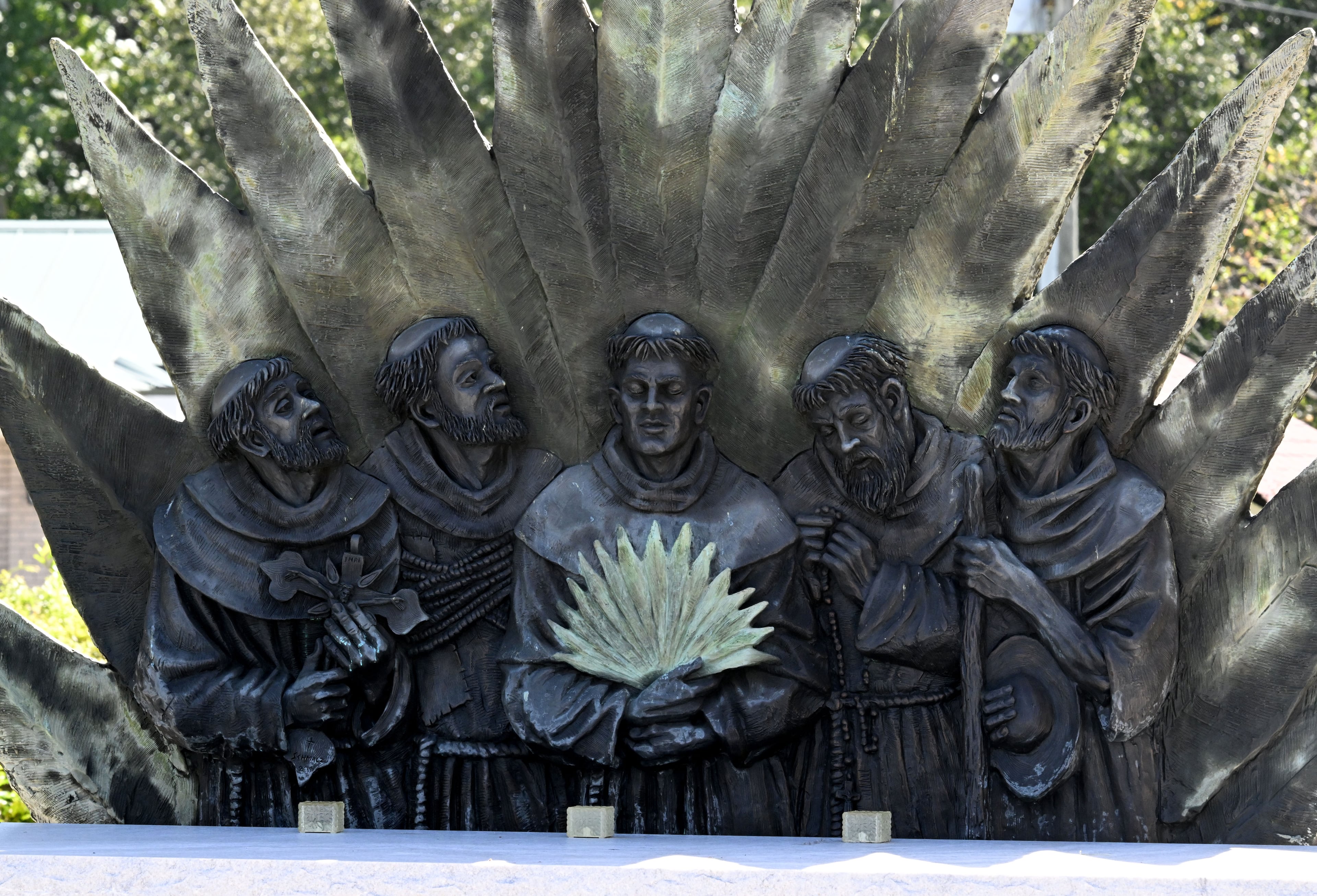
The Georgia Martyrs
Friar Pedro de Corpa
The most senior of the missionaries, he served the village of Tolomato, home to the Guale chief. He forbade the chief’s heir, a baptized Guale named Juanillo, from taking a second wife and was the first friar killed in the uprising.
Friar Blas Rodríguez de Cuacos
He was preparing to celebrate Mass when his executioners arrived at his village, Tupiqui. He was allowed to conduct the service, after which his chapel was destroyed and he was killed, two days after de Corpa was slain.
Friar Miguel de Añon
One of two missionaries killed at Santa Catalina de Guale on modern-day St. Catherines Island, he is said to have been a talented singer. His executioners burned the church and the friar’s dwelling after his killing, three days after de Corpa was killed.
Friar Antonio de Badajoz
The only of the five martyrs not ordained as a priest, Badajoz spent a decade with the Guale before his death and spoke the tribe’s language fluently. He was assigned to Santa Catalina as Friar Miguel de Añon’s interpreter and died alongside him.
Friar Francisco de Veráscola
The last of the friars killed, he was attacked on his return to the village of Talaje near modern-day Darien from a supply run to the Spanish colonial capital of St. Augustine. Large and athletic, he was known to engage Guale warriors in wrestling contests.