Stone spear tip unearthed in Georgia narrowed scope of human arrival here
Editor’s note: “Dispatches” are occasional snapshots of people, places, scenes or moments from around Georgia that our reporters come across. They aren’t always tied to a news event.
MACON — On a recent day Robin Barker, the lead interpretive ranger of Ocmulgee Mounds National Historical Park, happened through the lobby and was asked by a visitor to describe what he considered to be one of its most precious remnants.
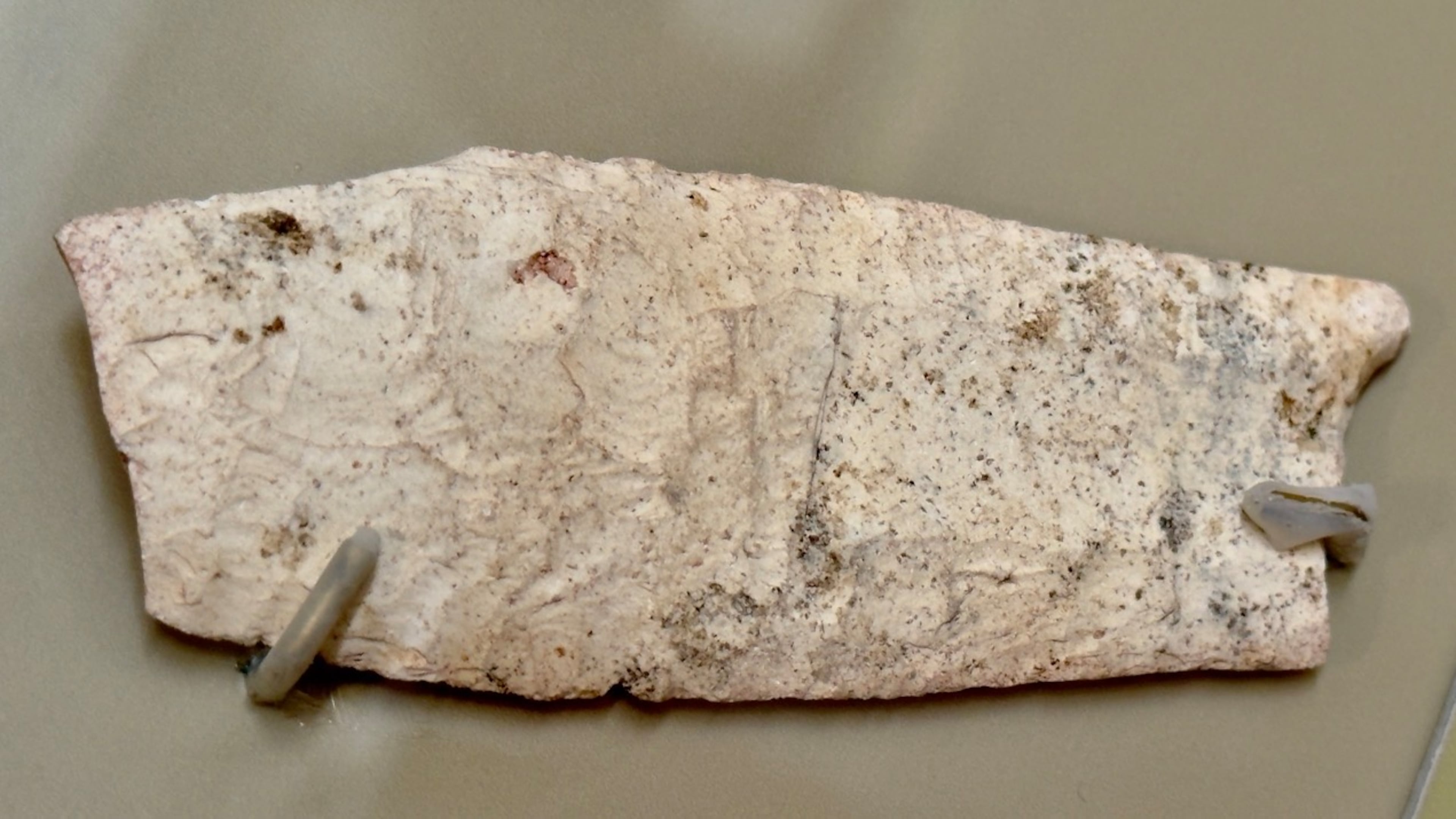
“The white point in that case right there,” said Barker, motioning to the spear tip discovered here on Macon’s east side in the summer of 1935 during what was and remains the largest archaeological dig in U.S. history.
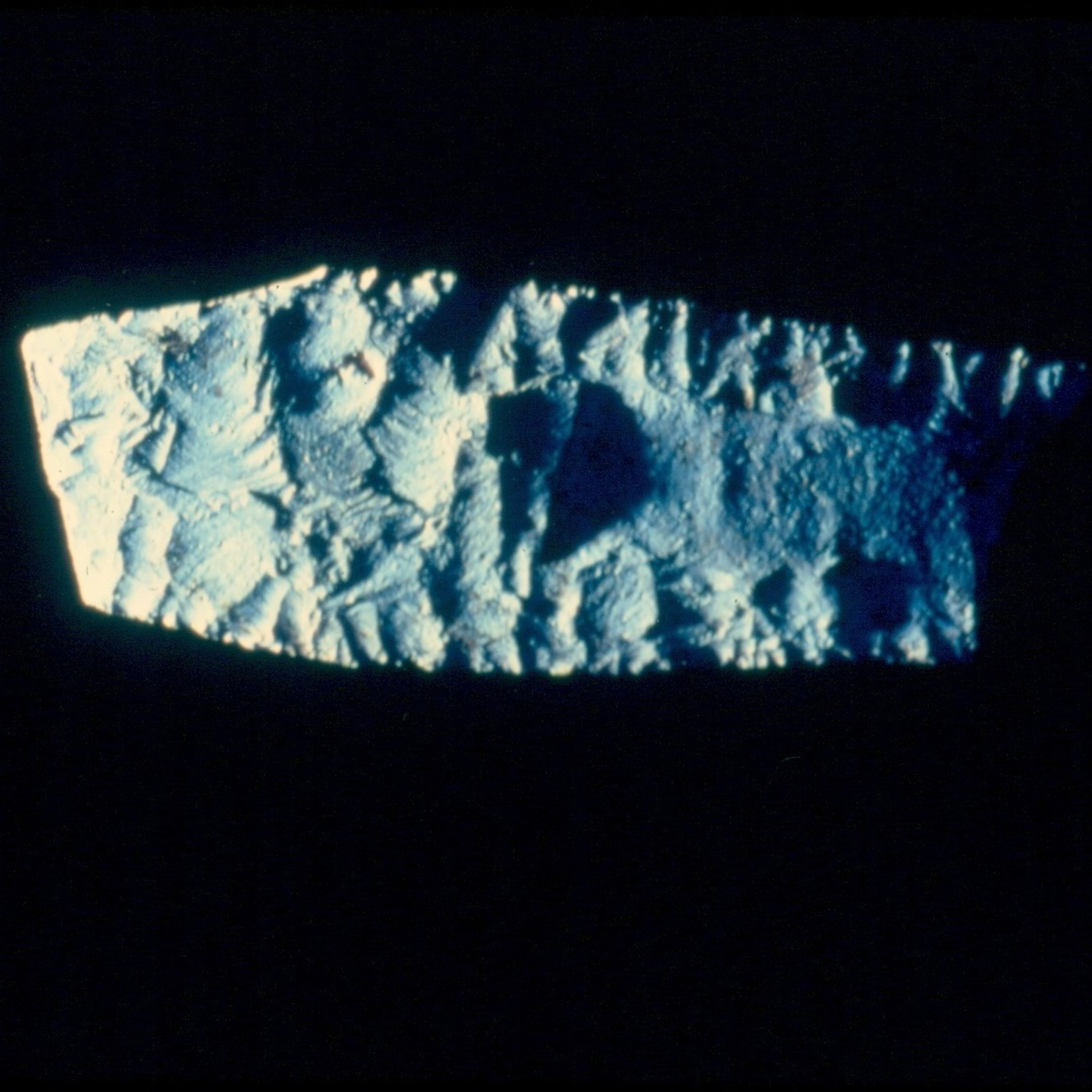
The cream-colored shard of hand-carved stone stands out. As it should. It is a significant artifact. The once-sharpened rock was part of a spear tip likely used by a mammoth hunter who was among the earliest humans to set foot in the Southeast.
The distinctive spear point, the few-inch-long piece of it that survived, has long been on prominent display at this park, known for its mounds, which were built about 1,000 years ago by Native American members of the Mississippian culture that flourished here.
The relic, from a far earlier time and now encased in a plastic cover, hangs on a wall in the center’s entry rotunda. Amid murals and timelines depicting this region’s earliest inhabitants, it is, not unlike the park itself, a touchstone to the past.
It was discovered when a Roosevelt-era program sent more than 800 workers to excavate the ancient site on what are now park grounds. Until then, narrowing the time of human arrival in these parts had been something of a guessing game.
“It changed the entire narrative of North American archaeology,” Barker said. “Before that, people didn’t have any evidence of people living in the South, or really in the East prior to that era.”
The discovery of the so-called Clovis point, or spear tip, provided proof that people had migrated this far east sometime around 9,000 B.C.
“It was one of those paradigm shifts in archaeology. … It turned the whole field on its head,” Barker said.
A book published in 2018, “Ocmulgee National Monument: A Brief History with Field Notes,” articulated the significance of the spear point’s 1935 discovery: “It proved the antiquity of human occupation on the Macon Plateau.”
The book further mentioned that Clovis points were named for the New Mexico town where the first such “fluted stone point” like it was found six years before the one unearthed here in 1935.
According to the book, the one in Macon, dug up near the historical site’s Council Chamber, was found by “an unnamed laborer” working with a team of archaeologists and is considered “one of the most important finds ever to be unearthed at Ocmulgee.”
Middle Georgia State history professor Matthew Jennings, who co-wrote the book, said recently that the importance of the 1935 find is “kind of hard to overstate, to be frank. … It moves back the timeline for human occupation in the Southeast by a long, long time.”
Read more AJC ‘Dispatches’ from around Georgia
“Dispatches” are occasional snapshots of people, places, scenes or moments from around Georgia that our reporters come across. They aim to be immersive and aren’t always tied to a news event.
Here are some more dispatches from different corners of the state:
Stone spear tip unearthed in Georgia narrowed scope of human arrival here
Georgia beach town kicks off summer with 3-mile-long water fight
Georgia lost and found: How a phone missing at sea turned up 7 months later
St. Patrick’s highway checkpoint ruse: Fiery crash, ‘chill’ women, man afoot
‘SANTA IS WATCHING YOU,’ mysterious signs say. Suspect has a white beard.
Roadwork killed its business. Can famously misspelled fruit stand rebound?
Farewell to the king of Cabbagetown, who sometimes meowed at Dexter the cat
Mystery at Murder Creek: The vanishings no one noticed
Forrest Gump’s hard-to-find bench is in Savannah. Just not where you think.
This sight in a Georgia town’s skyline just might bring tears to your eyes
Some might have forgotten ‘World’s Strongest Man.’ Not in this Georgia town.
2 hours aboard the slowest ride at the fair for a bird’s-eye view of America
On Jimmy Carter birthdate, gravesite is portrait of peace, shutdown fallout
America’s ‘smallest church’ is a bit of a big deal on Georgia coast
In melon mecca, watermelon wizards’ ears are sweetly attuned
At a store that never closes, an armed comedian keeps the midnight watch
Green space over greenbacks: Family protects land by selling to Watkinsville
Otis Redding statue, in new spot, conjures up famous tune
Atop Stone Mountain, on the longest day of the year
Georgia’s most blue-collar diner? Psst, it’s near a landfill.
Jekyll Island ‘cottage’ on millionaire’s row escapes ruin
A kazoo ensemble tried to set a world record. It was an earful.