Delta sees record revenue on higher fares, but fuel costs cut into profit
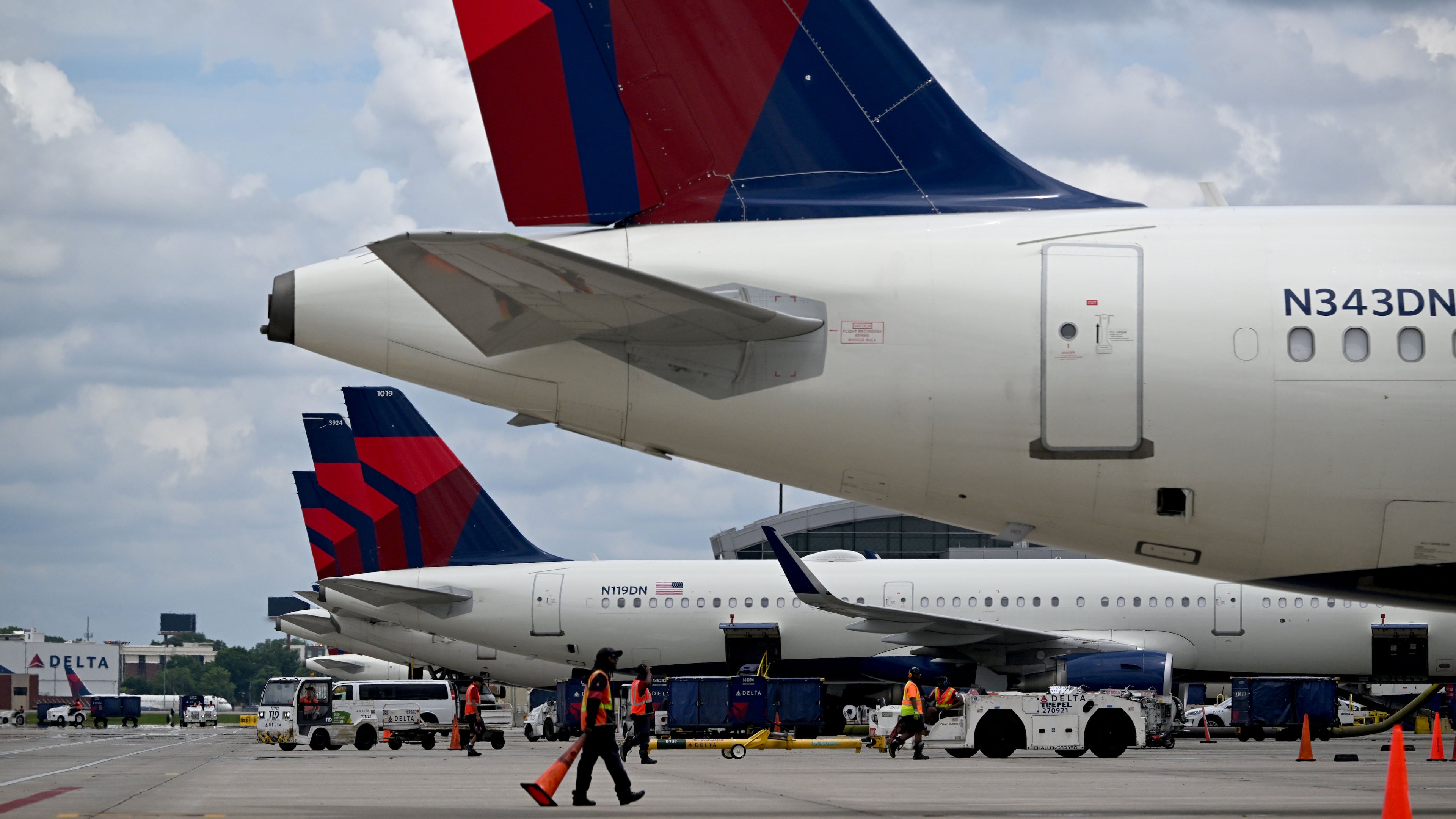

Delta Air Lines reported record revenue in the second quarter of the year as travelers paid significantly higher airfares. But high jet fuel costs caused by the Iran war continue to take a toll on the carrier’s bottom line.
Atlanta-based Delta saw revenue climb to $19.8 billion, up 19% compared with the second quarter a year ago.
But its profit declined 25%, falling to $1.6 billion from $2.1 billion a year ago, as its fuel costs rose by two-thirds.
Delta CEO Ed Bastian said the company managed to report its profit “while absorbing the highest quarterly fuel expense in our history,” adding in his written statement that the results reflect strong demand and the strength of the airline’s brand and business.
Bastian said he expects the momentum to continue in the second half of the year, forecasting “double-digit margins and a return to earnings growth.” He affirmed that the company expects to grow earnings by 20% this year, “overcoming a multi-billion dollar fuel headwind.”
“The U.S. economy remains resilient, supported by strong employment, rising household incomes and strong, significant wealth accumulation,” Bastian said during a conference call with analysts Friday.
Airlines have been increasing fares as demand for travel continues, particularly among high-income consumers, and amid decreased competition after the shutdown of Spirit Airlines in May.
An index for airline fares was up 26.7% in May year over year, according to the most recent data from the U.S. Bureau of Labor Statistics’ Consumer Price Index.
“What’s clear to us is that people are … disproportionately placing their disposable income in experiences and in travel,” Erik Snell, Delta’s chief financial officer, said.
The World Cup, for example, has helped to drive international travel demand.
“We’ve been pleasantly surprised with the inbound traffic to the U.S. to support the World Cup,” Snell said. “It’s gaining a lot of momentum on TV and in the stadiums. They’re pretty filled, and so we’ve certainly been a beneficiary of that travel.”

“You couldn’t have asked, I think, for a better advertisement to come to the USA,” Bastian said, adding he expects that will drive more people to visit in the next year.
Delta’s passenger mile yield, a reflection of how much more passengers are paying for tickets, was up 12% in the second quarter compared with a year earlier.
Still, the airline’s unit costs were up even more — 21% — with average fuel prices up 66% in the quarter.
Average jet fuel prices have declined over the past few months, but as of last week, they were still up 32.3% year over year, according to a Jet Fuel Price Monitor from energy data firm Platts and the International Air Transport Association. U.S. airlines spent $6.66 billion on fuel in May, according to the U.S. Bureau of Transportation Statistics. That’s up nearly 84% from a year earlier.
For Delta, which owns its own oil refinery in Pennsylvania, its total revenue includes $2 billion in refinery sales to third parties. Its refinery delivers jet fuel primarily to Delta’s hubs in the Northeast, and Delta isn’t immune to the high cost of jet fuel across the U.S. and around the world.
The refinery also had an outage and fire last month that disrupted its production and continues to take a toll as the operation recovers.
Higher jet fuel costs have prompted Delta and other carriers to reduce flying and raise fares. The launch of airstrikes by the United States against Iran on Thursday, and President Donald Trump’s comment that he believes the ceasefire is over, is driving increased concerns about fuel price volatility.
“Fuel remains volatile for the full year,” Snell said. “Our fuel bill will be approximately $4 billion higher than we had last year, and we know that the dynamics will continue to change as we move forward.”
Fares could also continue to rise as Delta seeks to cover its higher fuel costs.
Snell said airfare increases remain “well below overall inflation” when looking at the last five or six years post-COVID.
He said Delta “recaptured” only about 60% of the fuel cost increase in the second quarter, and “we certainly need to recapture that fuel bill.”
“We think we’ll have great momentum on that percentage this quarter,” Snell said.
And, Bastian said, “we believe current revenue momentum should remain sustainable, even if fuel prices moderate.”