Atlanta Beltline study biased toward autonomous shuttles, complaint alleges
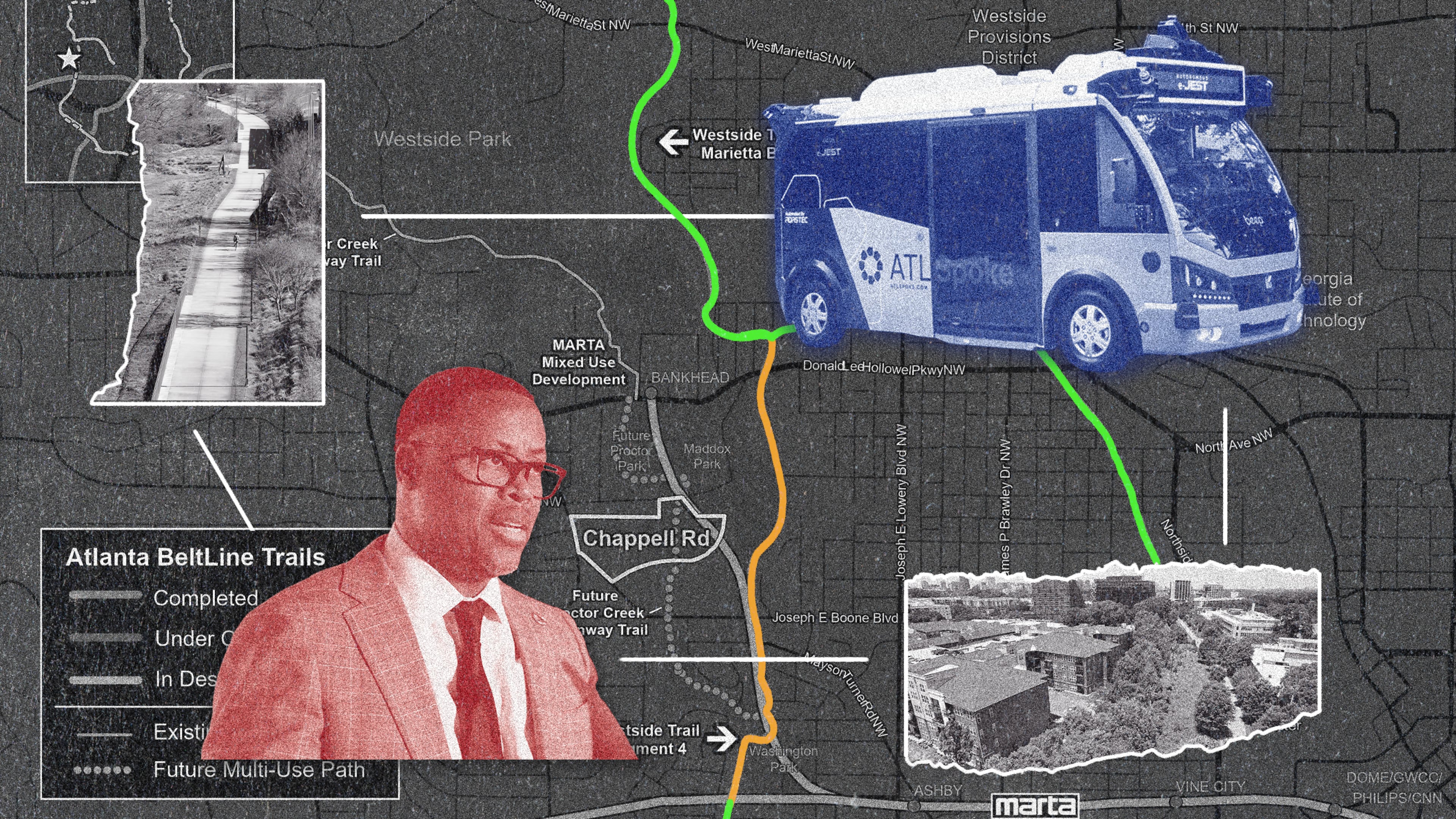

The CEO of the autonomous bus company Beep introduced Atlanta Beltline CEO Clyde Higgs to consultants he called “our partners,” and who later recommended autonomous buses serve as the backbone of the Beltline corridor’s transit network.
In his emailed introduction in fall 2024, Beep’s then-CEO Joe Moye told Higgs the consultants’ agency could be a “valuable source of information and assistance,” records reviewed by The Atlanta Journal-Constitution show.
Higgs and one of the agency’s consultants talked soon after, and within a few months — even before a contract was signed — the company had made its recommendation in favor of autonomous buses as “the preferred solution” for the Beltline, according to study reports previously obtained by the AJC through the Georgia Open Records Act.
It was this study that Atlanta Mayor Andre Dickens referenced in March when he announced he was pulling his support from the Eastside Beltline light-rail project. Dickens said he wanted to start light-rail construction along the Southside trail instead, and that “independent” consultants believed the Beltline should be a multimodal project with different types of transit along the 22-mile loop.
The study was not complete when Dickens cited it, and it is still unfinished.
While the study did not directly address where along the Beltline to start building light rail, the mayor’s announcement effectively put the Eastside rail project in limbo until a few months later, when a small group of officials from the city, the Beltline and MARTA voted privately to stop all work. That secret vote was not announced publicly until the AJC published a story about it in January.
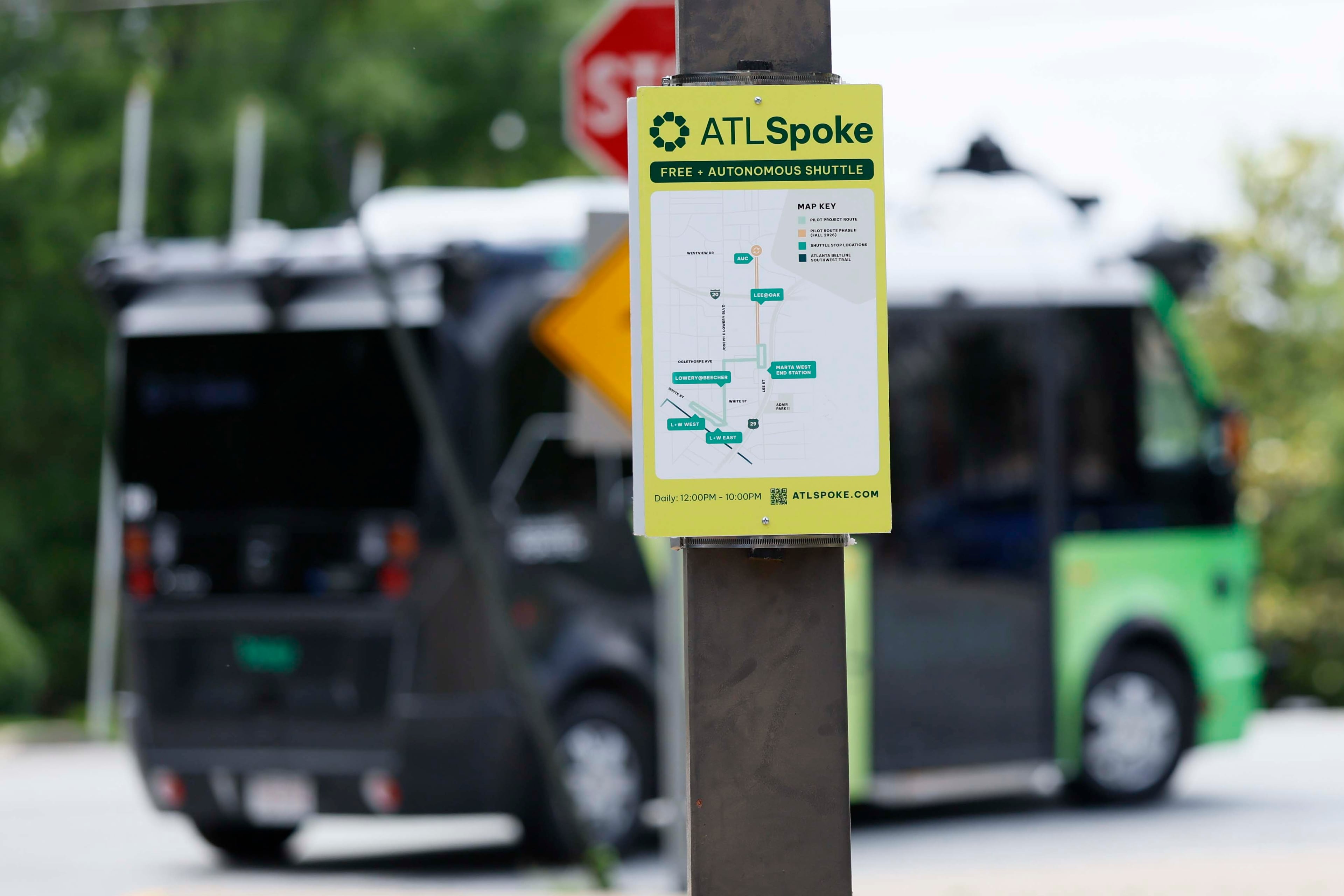
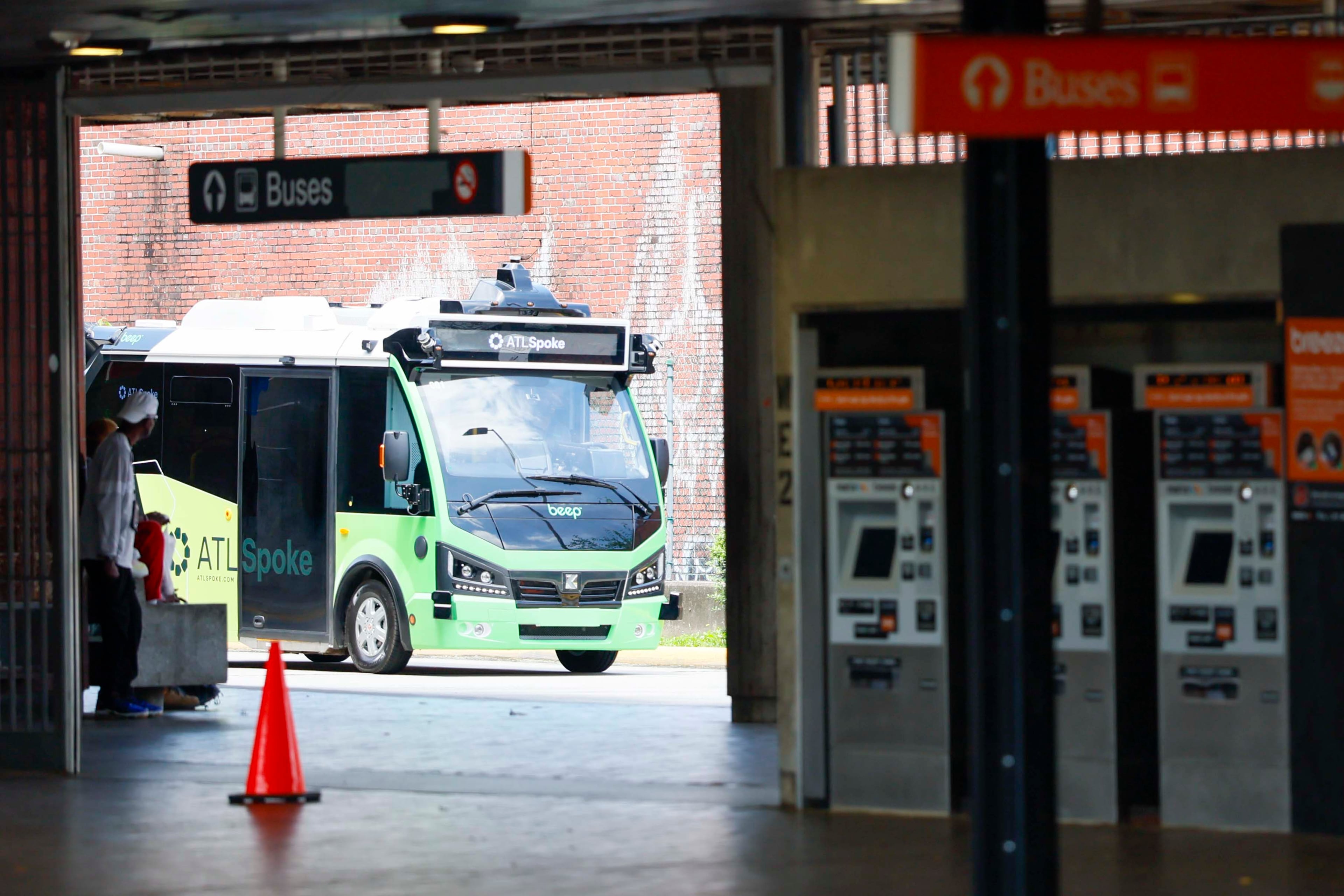
By that point, the Beltline and Beep had publicly announced a $3 million pilot to ferry riders to the Southwest Trail in autonomous shuttles, a project Higgs described as a test to guide future transit decisions. The state agreed to cover more than half the costs with a grant from the transit trust fund, and the ATL Spoke, as the shuttle is called, began carrying riders this week.
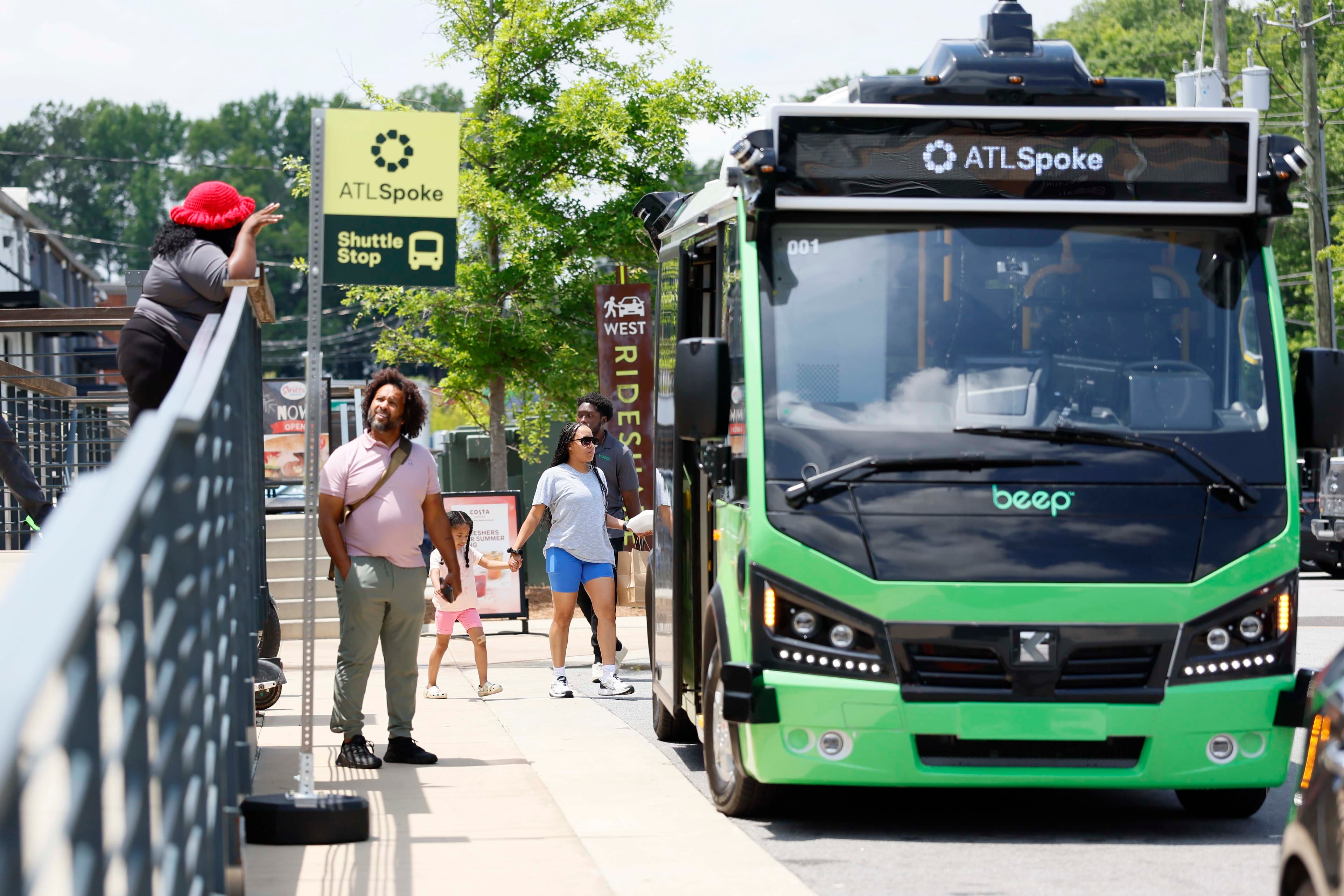
More than a year since Dickens’ announcement, the Beep pilot is the only Beltline transit project to move forward. The stop order on Eastside rail, which officials described as a pause after the AJC’s story, has not been lifted. Southside light rail does not have approval yet from the More MARTA committee, which is supposed to meet quarterly but has not met this year.
The consultant recommended by Beep’s former CEO now serves as vice president of transit innovation for the Beltline, the public-private entity tasked with building the planned loop of trails and transit around the city.
Complaint filed to Atlanta City Council
The circumstances behind the emailed introduction, the study’s recommendation and the Beltline’s pilot with Beep are now the subject of a complaint by a Midtown resident. It was made to the Atlanta City Council, alleging that a conflict of interest influenced the Eastside decision.
Complainant Zach Biles, who discovered the email introduction through a public records request, said it was a troubling find.
“I looked at that a number of times trying to decide how you could read that differently in such a way that it doesn’t come across as: ‘This is our guy that we know. If you want to do autonomous vehicles, this is the guy to help you get where you want to go,’” Biles said in an interview. “It just reads bad.”
Emails provided to Biles, which he shared with the AJC, also suggest the Beltline handled the consulting work unusually, with a significant chunk completed before the contract was inked. Final reports were never prepared, despite the contract’s extension by more than six months.
Atlanta Beltline and city of Atlanta officials said there was nothing inappropriate about the study or the introduction. Beltline attorney Reginald Snyder said in a statement to the AJC that Beltline officials decided to hire two consulting groups specifically to ensure “no single viewpoint dominated the study.” Snyder described the work as exploratory and said the outcome was not predetermined.
“There was no conflict of interest or impropriety in ABI’s process of analyzing various transit options for the Beltline,” Snyder said in the statement, adding that Beltline staff talk regularly with a “wide range” of stakeholders, vendors and subject-matter experts.
“Indeed, it is both common and appropriate for ABI’s team to meet with industry leaders, receive introductory recommendations, and discuss the broader transit landscape.”

Higgs and Joe Iacobucci, the consultant who was later hired by the Beltline to lead transit innovation, did not respond to requests for comment.
A spokesperson for the mayor described the allegations of a conflict of interest as “completely false” and “baseless speculation.” Dickens did not know who was hired for the study until after the work was complete, said Michael Smith, the mayor’s deputy chief communications officer.
“The mayor’s decision regarding Beltline transit was straightforward: prioritize building rail where it is most needed by transit-dependent communities — many of which have been underserved and waiting for investment for decades,” Smith said in a statement. “Mayor Dickens has discussed that decision publicly, including in detail before the MARTA Board, and we stand by it.”

Moye, who now serves as vice chairman of Beep’s board of directors, also denied anything improper with his emailed introduction, and said in an interview that he considers many people in the relatively close-knit transportation industry to be partners.
“That was merely an introduction to a partner in industry that has a good reputation in supporting planning efforts, nothing more than that,” Moye said. “I don’t remember exactly how we got introduced to them, but it was no formal relationship that we tied to this introduction.”
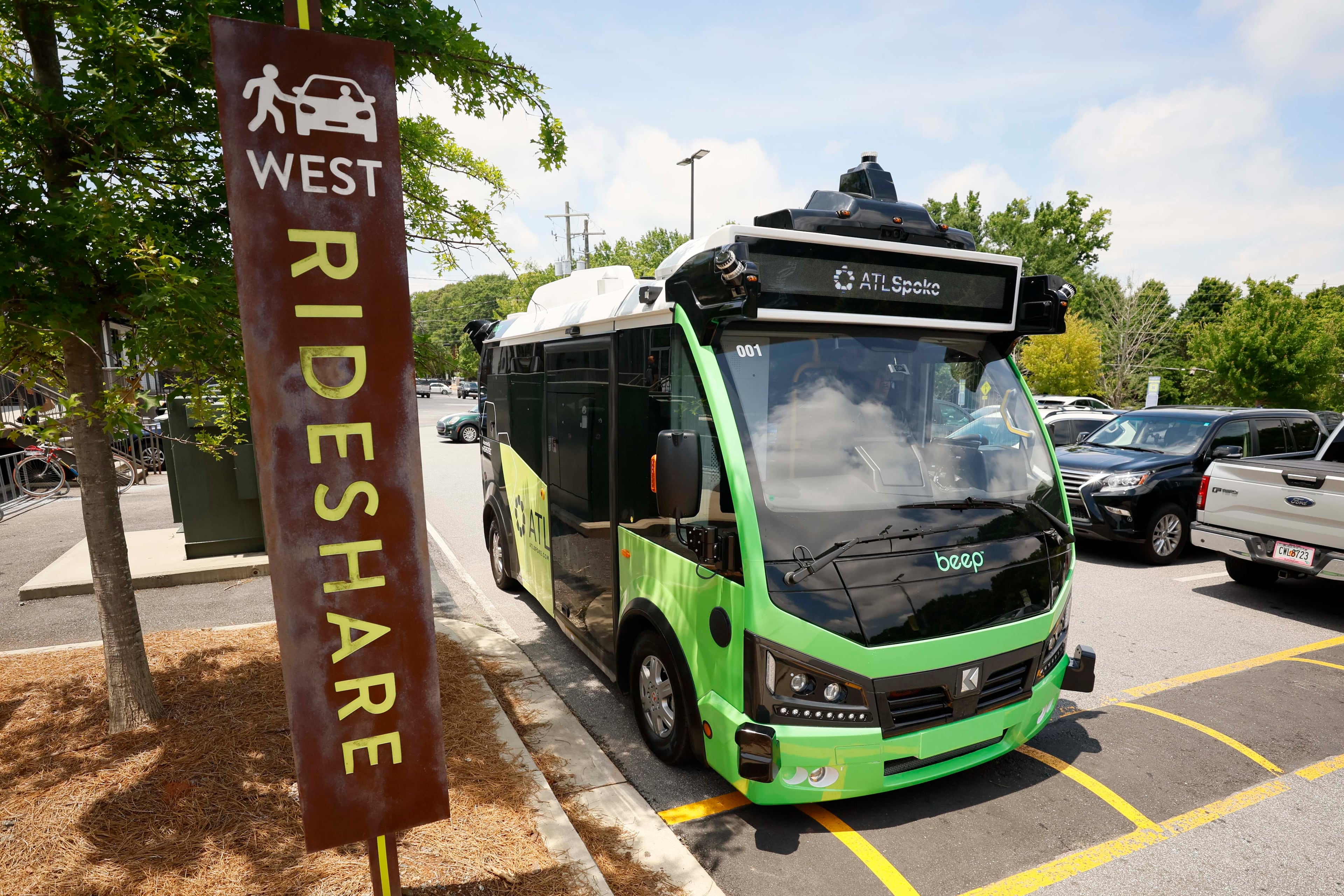
Beep’s work with the Beltline has been focused on the ATL Spoke pilot program, he said. The Florida-based company has not made any other proposals to Beltline leadership, and Moye said developing a route for the entire 22-mile Beltline isn’t currently a goal. Moye said he didn’t know consultants had recommended autonomous buses until a reporter told him.
“It’s not about moving lots of people long distances,” he said. “It’s about that first-mile, last-mile connectivity. That’s what our company is focused on.”
Officials with TYLin, the consulting firm that recommended autonomous buses serve as the “backbone” of the Beltline, did not respond to a request for comment.
Matthew Rao, who leads the pro-light rail advocacy group Beltline Rail Now, said the Eastside plans have been studied extensively already. The latest study looks like an attempt to justify privatizing public transportation, he said.
“What’s going on is the undermining of a 25-year plan,” he said. “It’s appropriate City Council look into whether there was an inappropriate bias toward a mode and toward a vendor.”
Dickens asked Beltline for more research
Light rail has been part of the Beltline vision from the start, when graduate student Ryan Gravel pitched turning abandoned rail lines into a loop of transit and trails.
The Eastside segment was prioritized by city, Beltline and MARTA officials after voters approved the More MARTA sales tax in 2016. The proposed route would extend the Atlanta Streetcar to the Beltline and build tracks along a grass bed to Ponce City Market, roughly two miles in all.
Opposition to the light-rail plans has grown since the final route was unveiled, with some residents and business owners saying the plans are too expensive, too disruptive and too dated.
Dickens, who campaigned for the proposal as a mayoral candidate, said in early 2024 that he wanted more study before the city decided whether to proceed. He tasked Beltline officials with that research.
Moye’s email to Higgs, introducing consultants who could study the light-rail issue, came in October 2024, records show. Moye suggested Higgs hire Iacobucci, who was then working for TYLin, a California-based engineering and consulting firm with offices in Atlanta.
“I wanted to introduce you to our partners at TYLin,” Moye wrote. “Joe Iacobucci is copied on this note. He and I spoke about the possible opportunity you mentioned regarding the various inputs to consider with light rail. They have extensive experience in this area so I know they can be a valuable source of information and assistance.”
Beltline staff scheduled a call that month with Iacobucci and a Beep official, emails show.
In December 2024, the Beltline formally sought proposals for a transit mobility improvement plan to help guide future decisions about transit modes. The budget was not to exceed $85,000.
TYLIn and another group, a partnership between the Cincar Consulting Group and InfraStrategies, submitted proposals in January. The Beltline ultimately awarded $75,000 contracts to both TYLin and the Cincar team.
Both consultants submitted draft reports in February 2025, according to records obtained by the AJC. The Cincar presentation didn’t make a specific recommendation but said that “no single transit mode” would address the Beltline’s needs and that different options would cater to different riders. It described autonomous buses as “emerging” technology. The TYLin report recommends autonomous buses as “the preferred solution for the Beltline corridor” but said there was potential to incorporate other options.
The autonomous Beep shuttles were one of five transit modes TYLin looked at, alongside light rail, rapid bus transit, self-driving pods from a company called Glydways and a gondola-style Skytrain. Autonomous buses from Beep and its partner, Holon, were reported to have the lowest cost per mile and the technology was said to have the benefit of being able to operate both on the Beltline and on streets in adjacent neighborhoods.
“This option represents the most cost-effective transit investment, balancing financial sustainability with the flexibility needed to adapt to evolving mobility demands,” the TYLin report states. “Autonomous bus technology is highly scalable, allowing the system to expand incrementally as ridership grows, avoiding the high up-front costs associated with rail-based alternatives.”

Higgs and Dickens made plans to meet with staff from both consulting firms in late February, emails show.
TYLin submitted a second report, also labeled “draft,” in March, records show.
That report concluded that “potential extensions to Eastside and Southside neighborhoods would enhance the reach of transit into population centers and transit-dependent populations.” The report does not recommend a mode for either segment.
A few days later, Dickens told MARTA’s board of directors he no longer wanted to start rail construction on the Eastside. He said “two independent consultants” had recommended the Beltline should be multimodal.
“There will be some places where there are light rail and maybe there are some places where there’s other types of transit in the short term because it takes so long to build out 22 miles,” Dickens said to the MARTA board. “There’s a lot of disruption that will happen if you try to do it all at once.”
The selection of Beep for the autonomous pilot program came later, after “extensive research” into other vendors, including Waymo, Glydways and Skytrain, according to Snyder, the Beltline attorney.
“Beep was the only provider capable of delivering a high-frequency, fixed-route, ADA-accessible connection in time for the FIFA 2026 World Cup matches,” he said.
Consultants’ reports were not finished
The initial reports were submitted in February, before either consultant had a contract with the Beltline, records show.
TYLin’s contract was signed in late April, after the firm had submitted invoices topping $51,000. The Cincar contract was signed in early April, after the firm submitted an invoice for roughly $34,000.
Synder said work began before the contracts were signed to meet “urgent planning timelines” for the FIFA World Cup. He said the contracts were signed after standard administrative and legal reviews.
All of the reports are still considered preliminary, or draft. The firms did not submit any other findings, Snyder said.
The last TYLin invoice, dated December 2025, said the firm was 66% done with its final recommendations. The charges to that point totaled $70,595. The final Cincar invoice is dated January 2026; charges totaled $64,120. That invoice doesn’t say how much work was completed.
Snyder said the reports will be added to the Beltline’s online library of documents when final findings are complete, as is typical. He did not directly respond to questions asking who would complete the work and when. The contracts for both groups expired in January, he said.
Council: more investigation needed
Biles, the Midtown resident, began requesting records to learn more about how Dickens came to his conclusion that rail should start on the Southside.
The decision felt “unilateral,” Biles said. The records he received from the Beltline included the email from Beep’s CEO introducing TYLin as “our partners.”
Biles said he wrote to City Council members earlier this year and asked them to investigate because they were not involved in the decision to stop or shift the work.
Multiple council members contacted by the AJC said the allegations in Biles’ letter concern them.
Kelsea Bond, one of the council’s most outspoken rail advocates, said there should be an investigation into whether TYLin’s recommendations were independent.
“If they are truly working with Beep, then they’re not a neutral party, and I don’t think we should take their recommendations seriously,” Bond said. “It seems a bit troubling how this might have been arranged to create a certain outcome from the start.”
Council member Liliana Bakhtiari said she is also concerned that TYLin’s recommendation seems predetermined. Bakhtiari said she would like to see the contracting and procurement process examined more closely.
Both council members said they plan to refer the matter to the city’s Office of the Inspector General.
Jason Dozier, whose council district includes the Westside, where the Beep shuttles are being piloted, said he also wants more investigation into the issue.
“On its face, this is deeply concerning,” Dozier wrote in an email to the AJC. “But I’m confused about the timing of everything.”
Council President Marci Collier Overstreet said the complaint highlights the need for the City Council to have a greater role in the intergovernmental agreement overseeing More MARTA. Members have long chafed over their exclusion, which limits their say in project prioritization.
Council was in the dark because neither MARTA nor the Beltline have to include the council in negotiations about the projects, Overstreet said in an email.
“Council is actively working to change this dynamic,” she wrote.