The Iran war sent fuel prices soaring. It’s giving EV sales a boost.

The electric vehicle market got a jolt in March, and not from new models or fresh incentives. This time, the spark came from the gas pump.
After a sluggish February, U.S. EV sales rebounded sharply in March across both new and used vehicles. Cox Automotive estimates new EV sales reached 82,629 units for the month, up 20.2% from February, and used EV sales rose even more dramatically, to 42,924 units, a 53.9% month-to-month jump.
That kind of bounce is hard to miss. What is harder to judge is if it marks the beginning of a lasting shift or merely a temporary reaction to another burst of sticker shock at service stations.
One clue came from Hyundai. The maker of the IONIQ series and Kona Electric said its U.S. EV sales jumped 40% from February to March, and Chief Executive José Muñoz explicitly linked at least part of that gain to rising fuel prices, which have been pushed higher by turmoil in the Middle East. In other words, consumers may not have suddenly fallen in love with battery-powered driving; they may simply be doing the math again.

That matters because it helps explain the paradox now shaping the EV market. On one hand, high gasoline prices appear to be nudging shoppers back toward electric models. On the other, the broader new EV market remains weaker than it was a year ago when buyers still enjoyed a $7,500 tax credit on qualifying models, a credit that was killed by a tax and spending bill championed by the Trump administration.
March new EV sales were still down 24.7% from a year earlier, and EVs accounted for 5.9% of total new vehicle sales, slightly above February’s 5.8% but still well below the 6.8% share seen a year ago. So yes, March was better. But no, the market has not fully recovered.
Tesla remains the dominant player, with an estimated 41,055 units sold in March. Yet even Tesla’s commanding position is starting to look a bit less absolute. Its sales rose from February, but its EV market share fell to 49.7% in March from a revised 56.3% the month before. Nearly half the market is still a staggering share for one company, but the direction is telling. As more legacy automakers and mainstream brands fill in the field, Tesla is increasingly carrying the burden of setting the market tone without quite monopolizing the market the way it once did.
Hyundai’s March stands out for precisely that reason. It was not merely another automaker posting a seasonal improvement. It was one of the clearest examples of how quickly consumer demand can swing when the price of gasoline rises enough to make an EV’s operating cost advantage feel immediate, not theoretical.
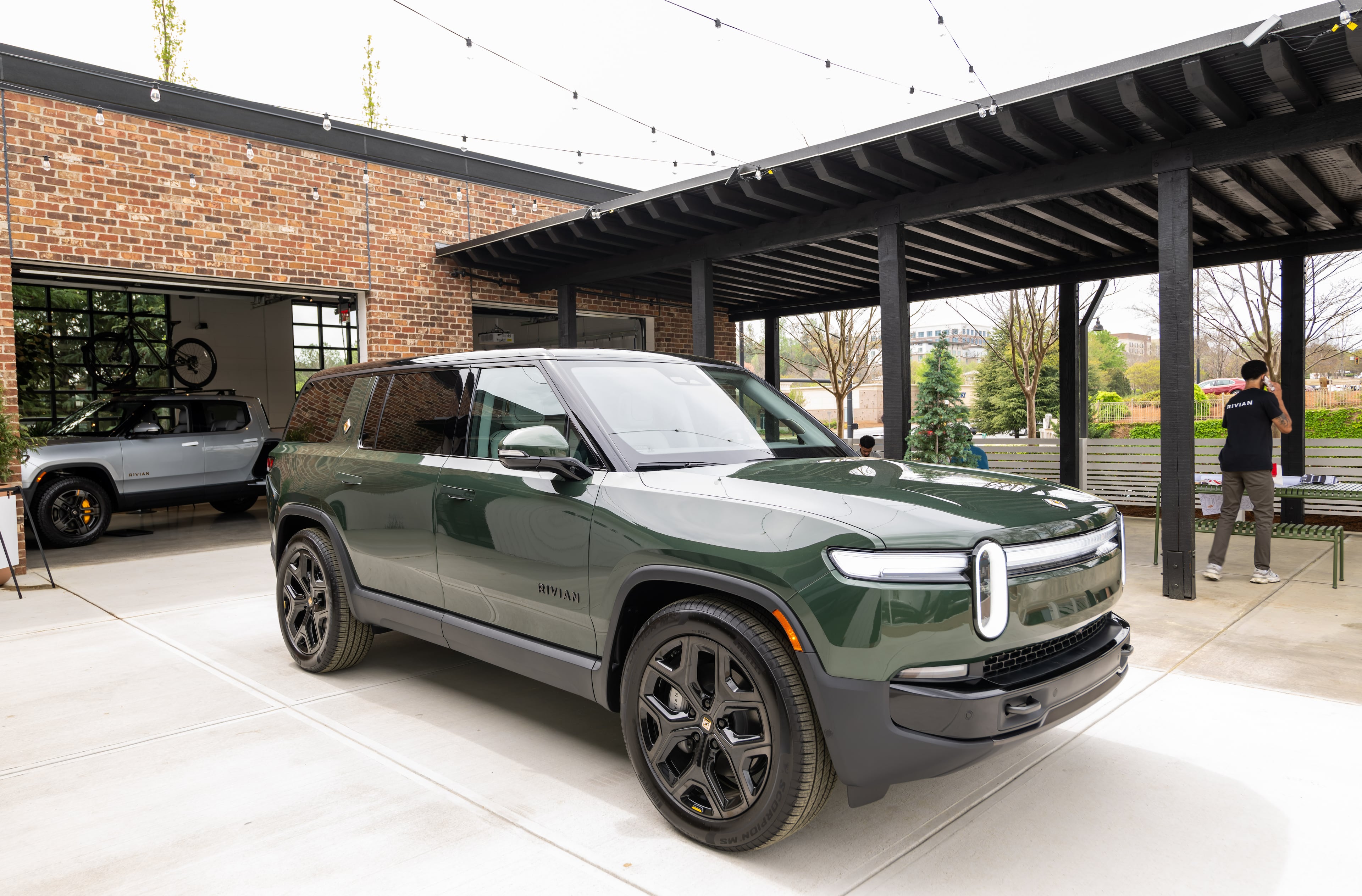
Reuters reported last week that surging gasoline prices tied to the Middle East conflict are expected to give EV demand a lift this summer, even after the loss of federal subsidies dulled momentum earlier in the year.
Still, anyone tempted to declare a turning point should look beyond the new car showroom. The more interesting story in March may be the used EV market, which continues to strengthen in ways that look more durable.
Used EV sales rose 27.7% from a year earlier, and used EV market share climbed to 2.5%. More important, the category is beginning to solve one of the industry’s most stubborn problems: affordability. The average listing price for a used EV in March was $34,653, down 6.1% from a year ago. That narrowed the price premium over comparable internal-combustion vehicles to just $1,012, pushing used EVs closer to true price parity with gasoline models.
That is where the market starts to become genuinely interesting for ordinary consumers, rather than just early adopters or affluent households. A new EV still carried an average transaction price of $54,508 in March. Even with manufacturer incentives averaging $7,967, that is real money. The premium over gasoline-powered vehicles has narrowed to about $5,800, a record low, but it remains a premium.
Used EVs, by contrast, are moving into range for far more buyers, and the growing variety of secondhand inventory means shoppers can now find more sizes, brands and price points than even a year ago.
The supply picture reinforces that point. New EV days’ supply fell to 75 days in March, down sharply from February and much closer to the rest of the market. Used EV days’ supply dropped to 31 days, even tighter than comparable gasoline vehicles. That suggests dealers are not just stocking electric models and hoping for the best. Vehicles are moving.
None of this means high gas prices alone can rescue the EV market. History suggests fuel costs have to remain elevated for a long time before consumer behavior changes in a sustained way.
Indeed, that argument gained some support when Energy Secretary Chris Wright suggested recently that lower gasoline prices may not return quickly, reinforcing the idea that fuel costs could stay high long enough to influence shopping behavior. Weeks of higher prices may stir interest and web searches. Years of higher prices change buying patterns. Consumers also still weigh charging convenience, range confidence and upfront price, all of which remain obstacles for many households.
So, March should probably be read not as a breakthrough but as a stress test. When gasoline prices become painful enough, Americans do show more interest in electric vehicles. Hyundai’s 40% monthly jump says that plainly.
But the strongest evidence of a healthier EV future is not in the flashy month-to-month rebound for new models. It is in the quieter expansion of the used market, where prices are falling, inventory is broadening and EV ownership is beginning to look less like a statement and more like a practical choice.
Chris Hardesty is a veteran news researcher and editor who provides advice on buying, owning and selling cars for Kelley Blue Book and Autotrader.
The Steering Column is a weekly consumer auto column from Cox Automotive. Cox Automotive and The Atlanta Journal-Constitution are owned by parent company Atlanta-based Cox Enterprises.