Police credit cameras, tech in catching suspect after shootings left 2 dead
A Brookhaven homeowners association’s security camera is partially to thank for police catching a suspect in three shootings overnight in the metro Atlanta area, law enforcement said Monday.
Police said that at least one of the three shootings was a random attack on a homeless person sleeping in front of a Kroger store at Cherokee Plaza along Peachtree Road in Brookhaven. Authorities said that they didn’t yet know whether the victims in the two other shootings, spread about six hours apart in unincorporated DeKalb County, knew their assailant.
DeKalb County Police Chief Greg Padrick said the spree began at about 12:50 a.m. when 26-year-old Olaolukitan Adon Abel allegedly shot a woman multiple times outside a Checkers restaurant. She later died in the hospital. She has not yet been identified by authorities.
Abel fled the scene in a rented silver Volkswagen Jetta, which was later spotted just before 2 a.m. leaving the scene at the Brookhaven Kroger where a sleeping 48-year-old man was ambushed and shot multiple times, police said. The Kroger and all other stores in the shopping center were closed at the time.
Brookhaven Police Chief Brandon Gurley credited the city’s investments in technology and interagency partnerships among law enforcement for the department’s quick response to that scene.
Brookhaven uses a service called Live 911 that streams the audio of 911 calls directly to patrol cars, allowing officers to respond quicker to a scene instead of waiting to hear from dispatch, Gurley said.
Officers arrived at the Kroger within three minutes and rendered aid to the victim there, according to police. He was taken to Grady Memorial Hospital in critical condition. On Tuesday morning, Brookhaven officials said the man remained at Grady.
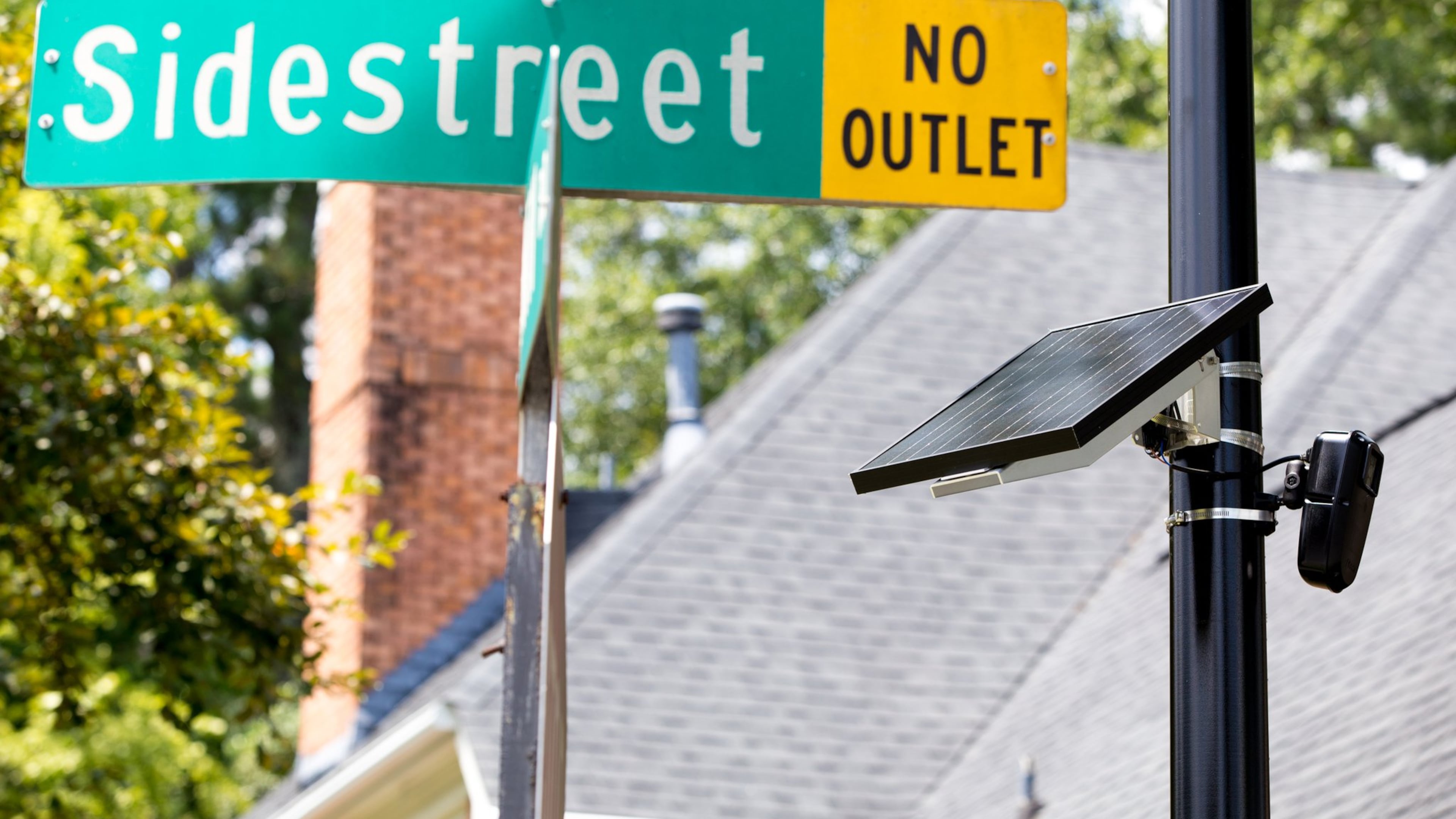
To track the suspect, Brookhaven said it used its Operation Plugged In camera network, a system through which residents and businesses can register their security cameras with technology company Flock Safety to make footage available to law enforcement agencies and others with access to Flock’s network.
In this case, Gurley said, a local HOA’s camera caught an image of the Jetta that allowed law enforcement to track it across the network of license plate-reading cameras and ultimately connect Abel to all three shootings.
In the third incident, 40-year-old Lauren Bullis was shot and stabbed at around 6:50 a.m. on Battle Forrest Drive in DeKalb County, according to police. She was pronounced dead on the scene, other details were not available Monday evening.
“This case highlights the importance of strong interagency partnerships and real-time information sharing, which were critical in quickly identifying and apprehending a dangerous individual,” Padrick said in a statement.
Abel was picked up Monday afternoon in Troup County by Georgia State Patrol officers as all three agencies worked together to track the Jetta across the license plate camera network, police said.
“Had it not been for this city’s investment in technology,” Gurley said at a news conference Monday evening, “I have no doubt that this offender would still be on the street.”
Flock Safety is an Atlanta-based company that has touted its fast expansion in Georgia and across the nation, saying about a year ago it was valued at nearly $8 billion. The company says its services are used by more than 5,000 law enforcement agencies across 49 states.
The company has also run into some pushback from cities as evidence of misuse by police and others has been made public. Cities including Flagstaff, Arizona, and Santa Cruz, California, have terminated their contracts with Flock.
Closer to home, Braselton’s police chief was arrested in November and charged with using license plate reading cameras on the Flock network to stalk multiple victims.
Journalist Benn Jordan and online news outlet 404 Media reported that Flock employees were not properly protecting users’ data, including allowing the cameras to be accessed by anyone online. The reports also claimed that Flock employees were accessing cameras at a Jewish Community Center in Dunwoody.
On Monday night, Dunwoody was considering a vote on keeping its contract with the company after hearing comment from dozens of people calling out the privacy and misuse issues with the network.
During the meeting, Mayor Lynn Deutsch said the city had looked into the claims about the JCC cameras and found that Flock was using the camera as a demonstration in its sales pitches to other law enforcement agencies. The city asked to be excluded from future demos, she said.
Josh Thomas, Flock’s chief communications officer, has cited the company’s 30-day data retention policy as an example of its safety.
He told The Atlanta Journal-Constitution the cameras can act as a crime deterrent.
People are far less likely to commit crimes if they know they can be easily identified, he said.
“The certainty of being caught changes you psychologically,” he said.
License plate readers are typically mounted on poles, streetlights and overpasses and the data collected is frequently used to track wanted suspects or stolen vehicles. State law restricts what can be done with information collected from the high-speed cameras and how long that data can be stored if it isn’t being used for “law enforcement purposes.”
Law enforcement agencies and cities have expanded their surveillance beyond their explicit municipal contracts by launching initiatives like Brookhaven’s, where businesses and residents can add their own cameras to the network.
Correction
April 18, 2026This story has been updated to correct the age of the man shot in Brookhaven after police corrected information previously provided.