ICE whistleblower interview: Hiring surge, training cuts harm agency culture
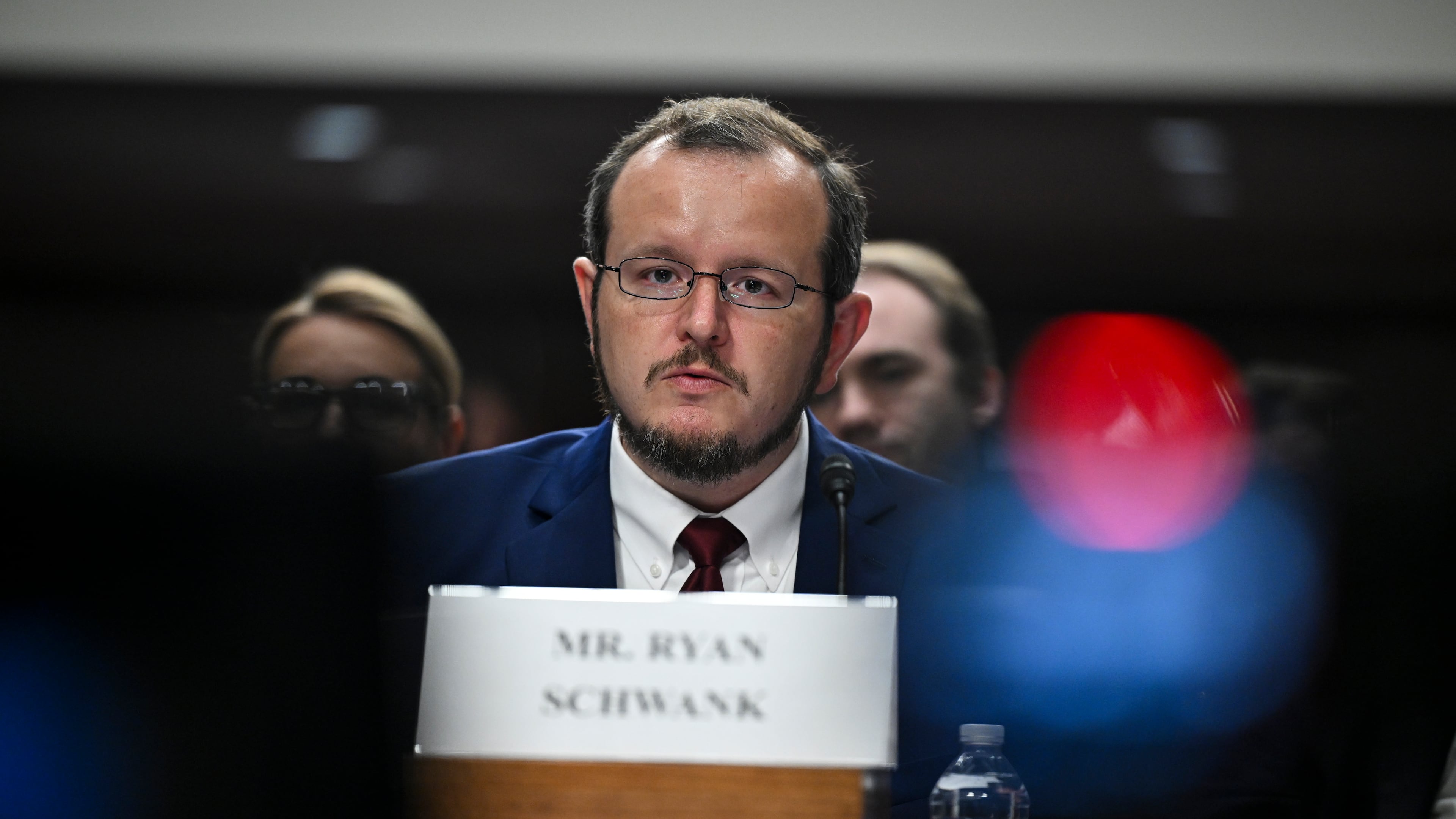
Ryan Schwank’s fears began the day he reported for work as a constitutional law instructor at the Immigration and Customs Enforcement Academy in Brunswick.
First, he says, he heard a discussion among staffers about poorly done background checks on new recruits. Then, he was told by his supervisor that his two predecessors, including an academy veteran of 15 years, had left because they objected to some of the material they were asked to teach.
Then, Schwank says he was shown the policy memo at the center of his whistleblower testimony to federal lawmakers last week regarding the legality of forcibly entering private residences without a judicial warrant.
“I realized that the reason they told me about the other two attorneys was so that I would understand that I was looking at my job right now,” he said, “that my choice was to go forward and read this memo and agree to do what it said, or I could lose my job.”
Schwank spoke about his experiences at the ICE Academy, within the Federal Law Enforcement Training Center on Georgia’s coast, in a nearly hourlong video interview Wednesday with Atlanta Journal-Constitution journalists. He reiterated his allegations of changes to the ICE cadet training program he aired at a Feb. 23 forum held by congressional Democrats, where he described the academy as “deficient, defective and broken.”
Schwank testified 10 days after resigning from ICE. He joined the agency in 2021 and spent his final five months as an academy instructor at Brunswick’s huge training center, also known as FLETC.
The campus is the primary education hub for 105 federal agencies, ranging from the Secret Service to the Marshals Service. Homeland Security estimates 4,000 officers and agents recruited as part of its heightened immigration crackdown will have completed training at FLETC from January 2025 to September 2026.
After Schwank’s testimony, the Department of Homeland Security rebutted allegations of training shortcomings as “false,” saying hours weren’t reduced and courses weren’t shortened. Candidates “meet the same high standards ICE has always required,” DHS added in a statement.
However, documents outlined in a story published earlier this week in The Washington Post corroborated Schwank’s account. On Thursday, President Donald Trump fired Homeland Security Secretary Kristi Noem amid broad criticism of her leadership.
The AJC contacted DHS with follow-up questions after Schwank’s interview, but the agency hadn’t responded as of Friday morning.

In his AJC interview, Schwank also shared his impressions of ICE recruits and explained why even veteran agents are challenged by surge operations, like the one in Minneapolis earlier this year that resulted in the deaths of two Americans.
Schwank’s attorneys with whistlebloweraid.org arranged the virtual interview. Schwank noted the nonprofit took him on as a client when many other attorneys wouldn’t for fear of reprisal from the government.
“I don’t think I could have come forward without their help,” he said.
Here are key takeaways from the AJC’s interview with Schwank.
ICE’s evolving applicant requirements mean recruits face ‘lowest barriers’
Federal law enforcement jobs have long been considered “the most prestigious” in the field, Schwank said, but the push to more than double the size of ICE’s workforce has resulted in the hiring of agents without prior law enforcement experience or education beyond high school.
The agency also is wooing applicants with entry-level salaries ranging from $51,632 to $84,277, according to postings on the ICE website, and some jobs offer signing bonuses up to $50,000.
“The jobs have the lowest barriers to entry and one of the highest salaries and bonuses attached to it for any job in law enforcement or even the federal service,” Schwank said. “I think the decision to be an ICE officer is heavily influenced by how much money is paid for the job and how much easier it is to get into the ICE Academy than into the New York Police Department or the L.A. Police Department or even the state police in my home state of Kentucky.”

Recruits’ backgrounds compound the effects of the training cuts
Many of the cadets Schwank taught had limited or no knowledge of the U.S. Constitution, he said.
The gap accentuates the dangers around eliminating or reducing training courses around legal authority, use of force, and ethics and integrity, as Schwank alleges and government documents indicate ICE has done since shortly after the surge hiring began last year.
“They don’t know what they don’t know,” Schwank said. “If we don’t tell them what they’re not allowed to do but tell them to go out and make an arrest, if we’re lucky they’ll do it and not break the Constitution. If we’re unlucky, they are.”
ICE is tasked with an expanded mission
Veteran ICE agents have been involved in several high-profile incidents, including the killing of Renee Good, a Minneapolis motorist shot in her car during an immigration operation.
Before the surge, ICE’s deportation officers typically arrested suspected undocumented immigrants in nonconfrontational environments, Schwank said. It’s why ICE training at FLETC was already shorter than courses taken by Alcohol Tobacco and Firearms agents and Drug Enforcement Agency officers before the accelerated ICE program was launched last fall.

As a result, even veteran agents are not as well trained as other federal law enforcement officers to operate in confrontational situations, Schwank said.
“These officers don’t have the background for the type of arrest they are making or the crowd control that they are doing,” he said. “You will never meet a law enforcement officer who doesn’t believe they’re the best at it, who doesn’t believe they’re part of an elite trained unit. So they will make their best effort to still try to accomplish the mission they’re given.”
Schwank thought he ‘could make a difference’
Even with the first-day-on-the-job shocks he described, Schwank stayed at the training center in Brunswick for five months, and not just out of fear for his career, he said.
Schwank had worked for ICE for four years before taking the temporary assignment as an instructor at FLETC. He earlier spent three years at an immigration detention center in Texas and a year working cases in Indianapolis. He said the agency culture had always been one where he felt comfortable challenging policies and directives he thought unlawful.
He sensed a shift when he saw the first-day memo but thought he could “make a difference” through his teaching.
“I saw what was happening. I had my concerns,” he said. “I did what I think a lot of the faculty there are doing to this day, which is you’re trying to patch a broken system. I stayed as long as I thought I was making a difference.
“But at some point, the best way I could help the cadets, the best way I could help the public was to resign and say what I had seen.”
Narrative around ICE ‘more complicated’
ICE agents have been painted by some critics as white supremacists out to engage in Trump’s personal goals — a false narrative, with many cadets being people of color, Schwank said.
“The narrative has to be more complicated; you can’t simplify it,” he said. “And I met many cadets who said (the academy) was too short, who wanted more training. I met multiple officers who came into it with the mentality that this is a job that requires professionalism and they wanted to be professionals.”
About the Authors

Adam Van Brimmer is a journalist who covers politics and Coastal Georgia news for The Atlanta Journal-Constitution.


