What’s next for two Savannah architectural landmarks? Feds consider sale.

SAVANNAH ― One is an architectural treasure. The other is an eyesore known unkindly as the “bathroom tile building.”
Both sit in prominent locations in Savannah’s urban time capsule, its 1-square-mile National Historic Landmark District. And both could soon be for sale in real estate transactions that could mark the latest evolution of a downtown born during Colonial times, spared from Union Gen. William T. Sherman’s torch during the Civil War and saved from the forces of progress by preservation-minded leaders and organizations over the past 70 years.
Savannah’s U.S. Custom House and Juliette Gordon Low Federal Building are among the dozens of government-owned properties nationwide under evaluation by the Public Buildings Reform Board. Known by the acronym PBRB, the decade-old federal agency is tasked with identifying and reviewing underused and costly to maintain real estate.
The PBRB held a public meeting Thursday in Charleston, South Carolina, to highlight several properties under review in South Carolina, Georgia and Florida. The federal real estate ranged from custom houses to courthouses and office buildings to a parking deck.
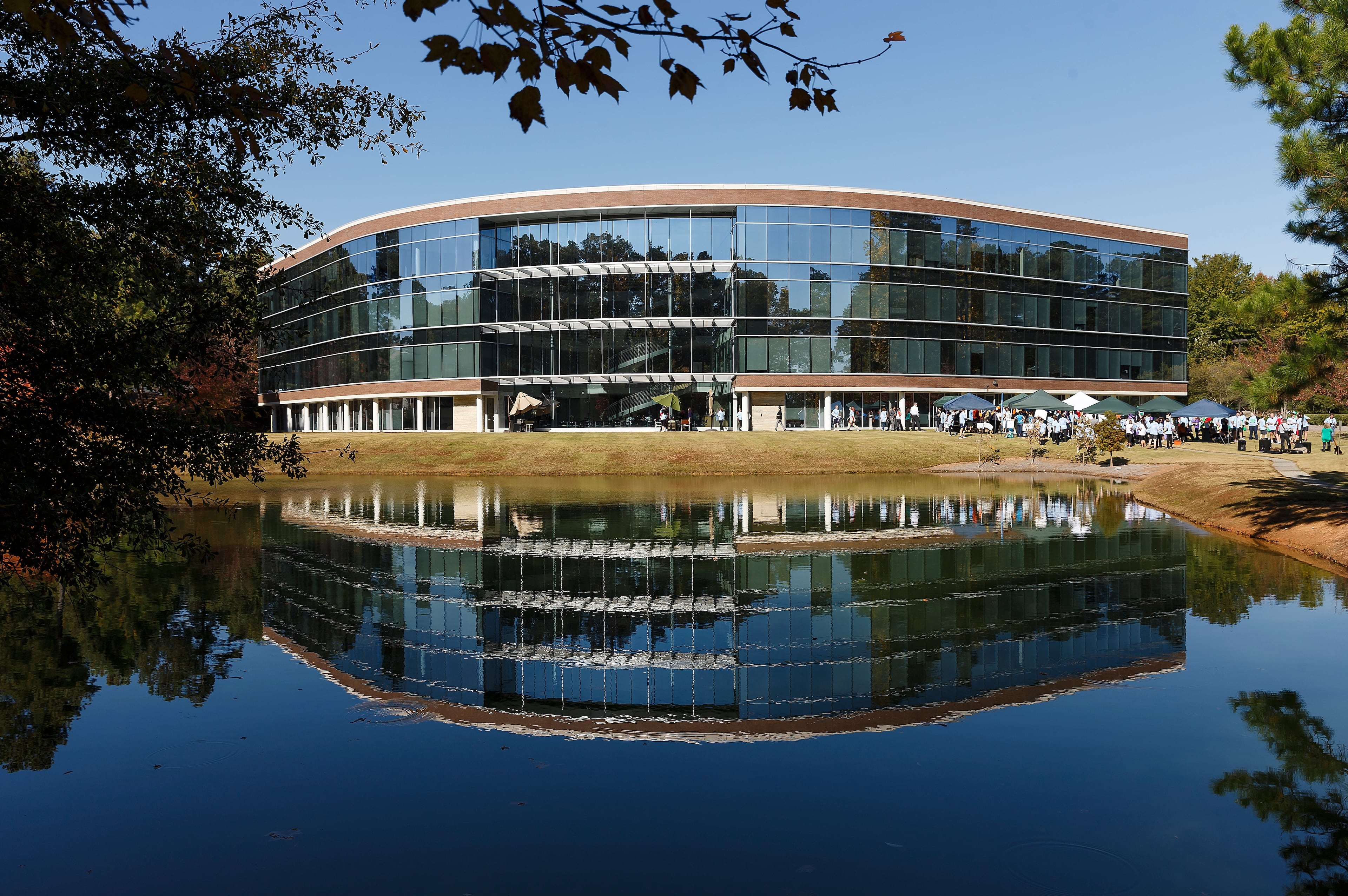
That list will mark the fourth round of buildings from across the country suggested for sale, all since 2000. The federal government has collected $193 million in sales proceeds thus far, with other properties expected to generate an additional $250 million. A 2025 PBRB report recommended the sale of Atlanta’s Peachtree Summit Federal Building, which houses the offices for about 2,000 federal workers employed with the Internal Revenue Service, Atlanta Immigration Court and Social Security Administration.

1850s Custom House famous for columns
The Savannah properties, particularly the circa-1850 U.S. Custom House, have significant resale potential, the PBRB indicated Thursday. The all-granite building, designed in the Greek Revival style, is fronted by six Corinthian columns estimated to weigh 15 to 20 tons each — so big and heavy it took three months to roll them from the nearby riverfront to a prominent location on Bay Street and another three months to raise them into position.
For decades, the building housed a U.S. post office and federal courtrooms, as well as the Customs Service. The post office and courts moved out around 1900. In recent decades, Customs and Border Protection has relocated to facilities closer to the Port of Savannah’s main terminals north of downtown.
Today, only about 20 staffers work at the U.S. Custom House, the PBRB found. The 30,000-square-foot building’s maintenance and operations’ cost per employee — a key metric in the PBRB’s review process — is $158,000, far exceeding the $10,000 per employee cost incurred at federal properties in the Washington D.C. area.

The U.S. Custom House’s location and architectural significance has drawn interest from Savannah’s preservation community, the PBRB said.
Collier Neeley, CEO of the Historic Savannah Foundation, the organization that jump-started Savannah’s preservation movement in the late 1950s, acknowledged his group met with PBRB last fall and that the building is attractive as a redevelopment opportunity.
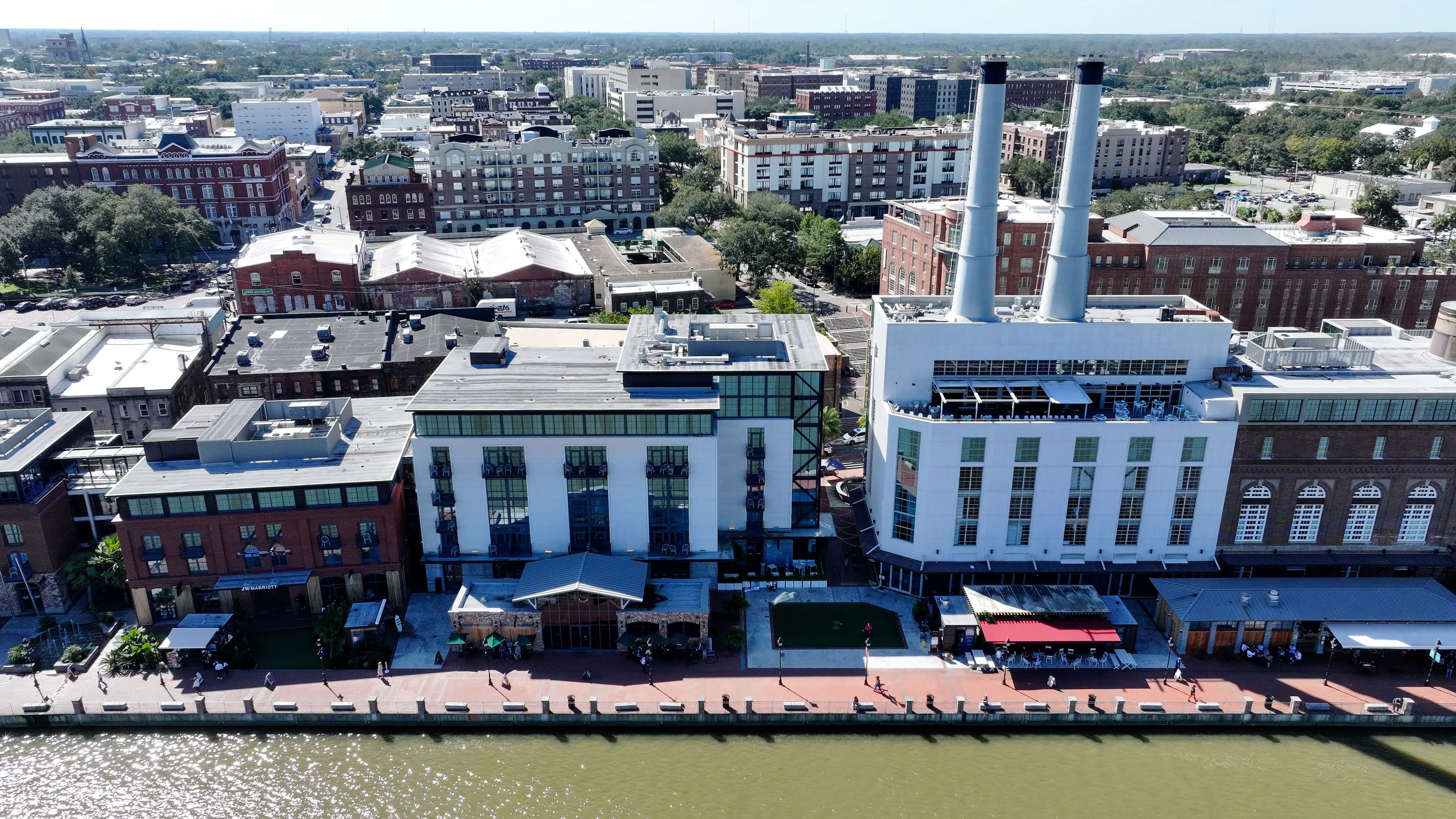
Savannah is home to many historical structures that have been reimagined for new uses in recent years. They include the shuttered riverfront powerplant that is now home to the Plant Riverside District hotel, dining and entertainment complex, and the architecturally stunning Scottish Rite Masonic Center bought and converted for use by the Savannah College of Art and Design.
“The hard thing with the U.S. Custom House, as with so many properties downtown in recent times, is it is such a monumental building you have to have an institutional user,” Neeley said. “SCAD can’t be the answer every time one of these buildings is on the market.
“Fortunately, the preservation ethos is a deep part of our culture in Savannah.”
One institutional use for the Custom House mentioned by Neeley, a museum, has gained traction around Savannah since the PBRB began its review last year. Savannah-based hotelier Richard Kessler in 2024 explored buying another large, historical building — a school built in the 1800s — and converting it to a Collectors’ Museum that would showcase Smithsonian-quality artwork and artifacts collections.
That property’s owner, the Savannah-Chatham Public School System, ultimately decided against selling the building, leaving Kessler without a home for his museum.
Reached by telephone Thursday, Kessler said he was largely unfamiliar with the Custom House but said it would make a “beautiful museum” and that he would be interested if it were put up for sale.

1980s Juliette Gordon Low building polarizes
As for the Low building, the location is more attractive than the structure. Built in the mid-1980s along a full square block of Oglethorpe Street, it houses several hundred employees of the U.S. Army Corps of Engineers’ Savannah District offices. It fronts picturesque Telfair Square and sits across the green space from the renowned Telfair Academy art museum.
The Low, named after the founder of the Girl Scouts of America, is notorious among Savannah’s architecture aficionados because of its pink tile facade, which resembles the interior of many mid-20th century washrooms.
It drew PBRB interest because occupancy averaged 9% and topped out at 17% before President Donald Trump ordered federal employees to return to working in the office in January 2025.
According to the PBRB, the Savannah city government has expressed interest in the property for office space. The city has broached the idea of constructing an administrative office building two blocks east of the Low building along Oglethorpe Avenue.
A nearby vacant building, also considered part of the Low federal complex, is slated for demolition this summer. The federal government will raze the structure but has no plans to sell the property because of security precautions related to its proximity to the federal courthouse and courthouse annex. The building is next door to the annex, and both back up to the courthouse. The annex connects to the courthouse through an underground tunnel.

About the Author

Adam Van Brimmer is a journalist who covers politics and Coastal Georgia news for The Atlanta Journal-Constitution.