Low-level offenders still languish in Fulton jail, ACLU finds

More than a year after it opened, Fulton County’s jail diversion program is still woefully underutilized, causing many low-level offenders to languish behind bars for months at a time, Georgia’s ACLU said in a new report published Tuesday.
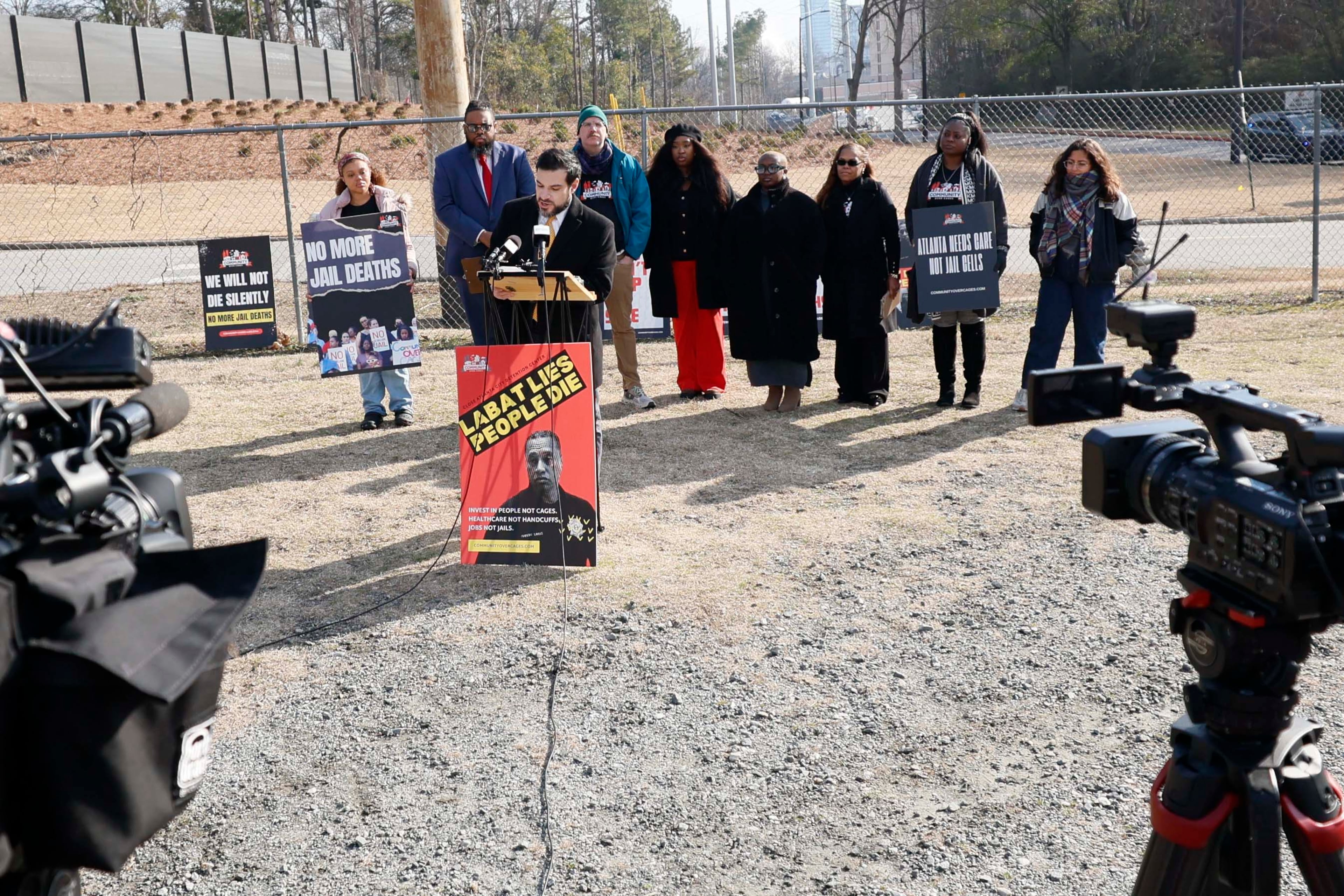
A coalition of local organizations that have long pushed for jail reforms unveiled the findings at a news conference outside the troubled Rice Street facility.
Some of those findings detailed issues local rights groups and other stakeholders have struggled for years to address: people facing minor, quality-of-life offenses make up a growing portion of the jail’s population.
Since the organization’s last report three years ago, Fulton County has made “limited progress” in reducing the number of people locked up, said Akiva Freidlin, senior staff attorney for ACLU Georgia.
On any given day, hundreds of people are jailed on misdemeanor offenses and many end up spending weeks or even months behind bars simply because they can’t afford bond, the group found.
Indictment delays have improved slightly and county officials have created new diversion programs since the ACLU’s last report, but far more could be done to improve conditions or keep people out of jail altogether, several activists said.
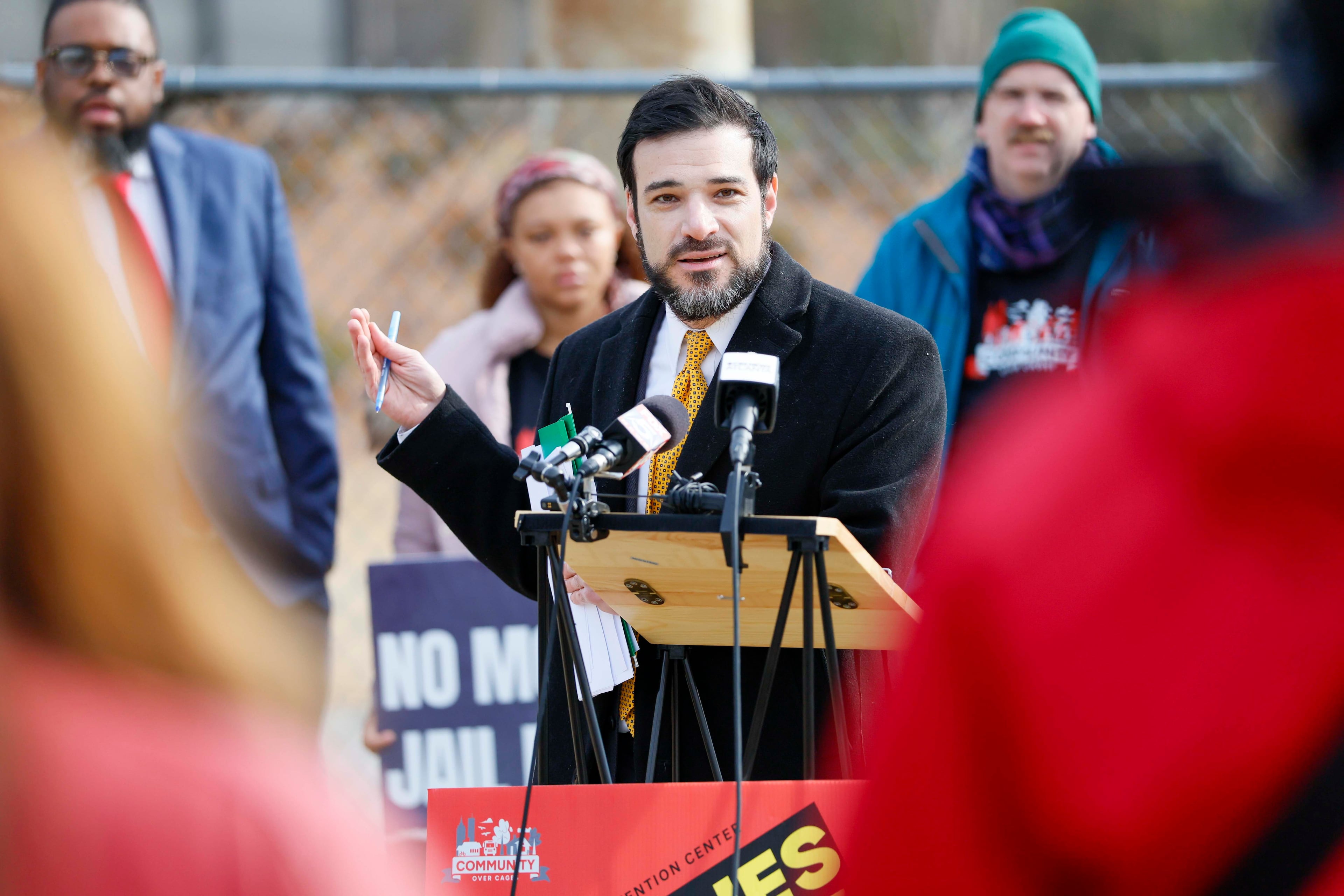
“The county has not yet adequately addressed the causes or the consequences of chronic overcrowding, which is an over-incarceration problem,” Freidlin told reporters. “They’re captives of an unjust system.”
Meanwhile, people continue to die in custody. Since 2021, 37 detainees have died behind bars in Fulton County, including five people last year, according to the sheriff’s office. The most recent detainee death occurred New Year’s Eve. Officials said Joseph England, 58, was serving a 48-day sentence on probation violation charges.
The jail remains under a federal consent decree that followed a U.S. Department of Justice investigation that found conditions there were “abhorrent” and unconstitutionally poor.
Black people make up a disproportionate percentage of the jail’s population, representing 88.8% of those incarcerated over the summer despite comprising just 43% of Fulton’s population, the ACLU said in its report.
Robyn Hasan-Simpson, executive director for the Hapeville-based criminal reform group Women On The Rise, said people were regularly taken to jail when their cases could have been diverted by arresting officers.
Fulton County’s Center for Diversion and Services was designed to serve more than 40 people a day, she said. On average, it’s serving just three people.
Meanwhile, county leaders have continue to grapple over what to do with a jail that’s in constant need of repairs.
Last weekend, the sheriff’s office said it was forced to shut off water to the entire jail after a pipe coupling failed during a third-floor repair. Footage of the massive leak showed some 70,000 gallons of water pouring underneath doors and spewing through ceiling light fixtures into hastily arranged barrels and trash bins.
In its report, the ACLU cautioned against recent proposals aimed at expanding the jail or building an entirely new facility, citing research that shows expanding capacity has historically led to increased jail populations, even when crime rates stay stable.
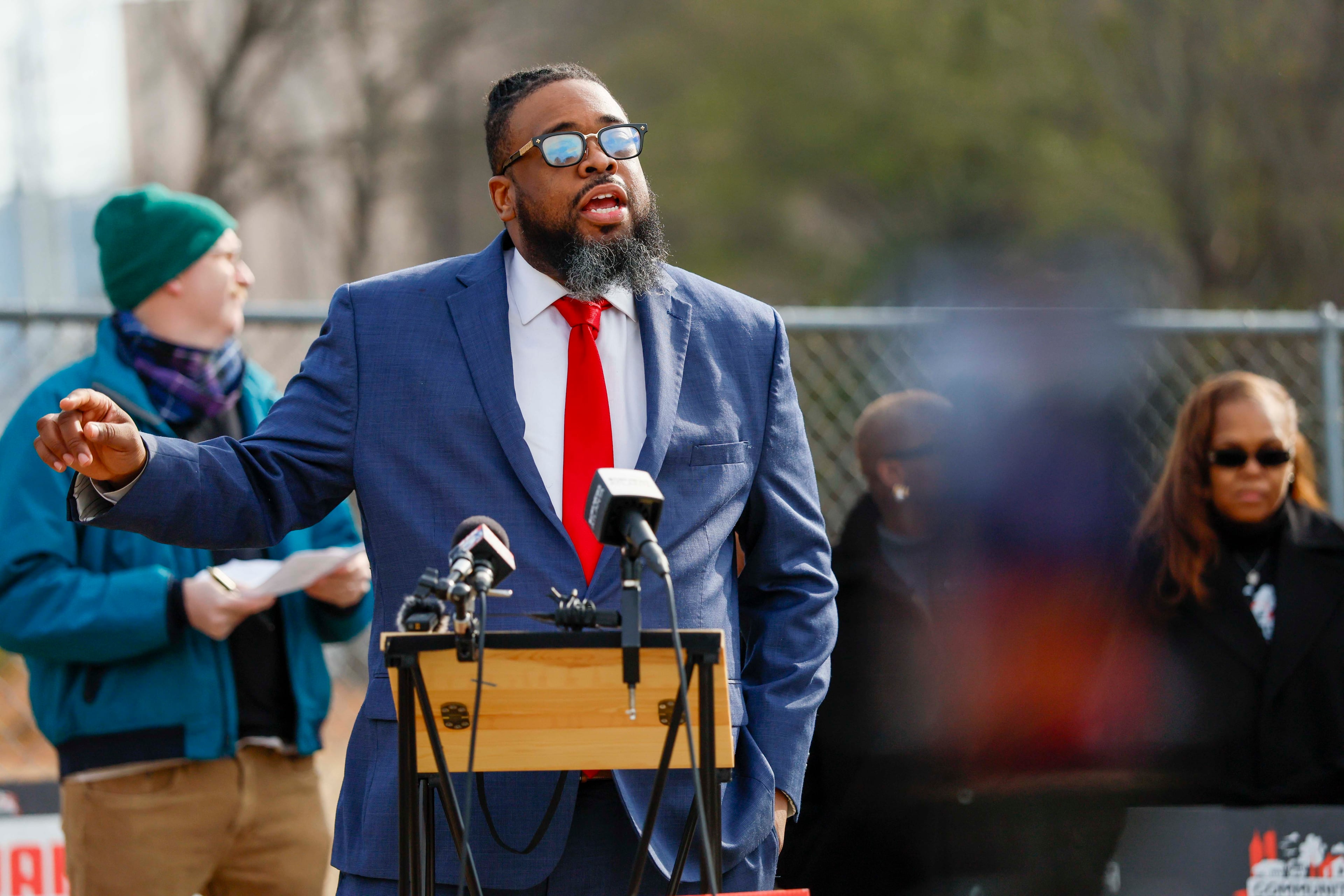
“For too long, policymakers have ignored the root causes of what is ailing the individuals incarcerated in this building,” said Devin Franklin, a former public defender who now works as senior movement policy counsel for the Southern Center for Human Rights.
A spokesperson for the Fulton County Sheriff’s Office said the department has little control over who is arrested and brought to the jail.
The ACLU’s report, the agency said, outlines “systemic drivers” that extend beyond its authority. That includes issues like delayed indictments and the inability for certain inmates to make bond.
“The Sheriff’s Office shares the community’s urgency on this issue and is committed to continued collaboration with our justice partners,” the agency said in a statement.
It said it’s created an Inmate Advocacy Unit that serves as a liaison between jail detainees and local justice system partners who can help with their cases.
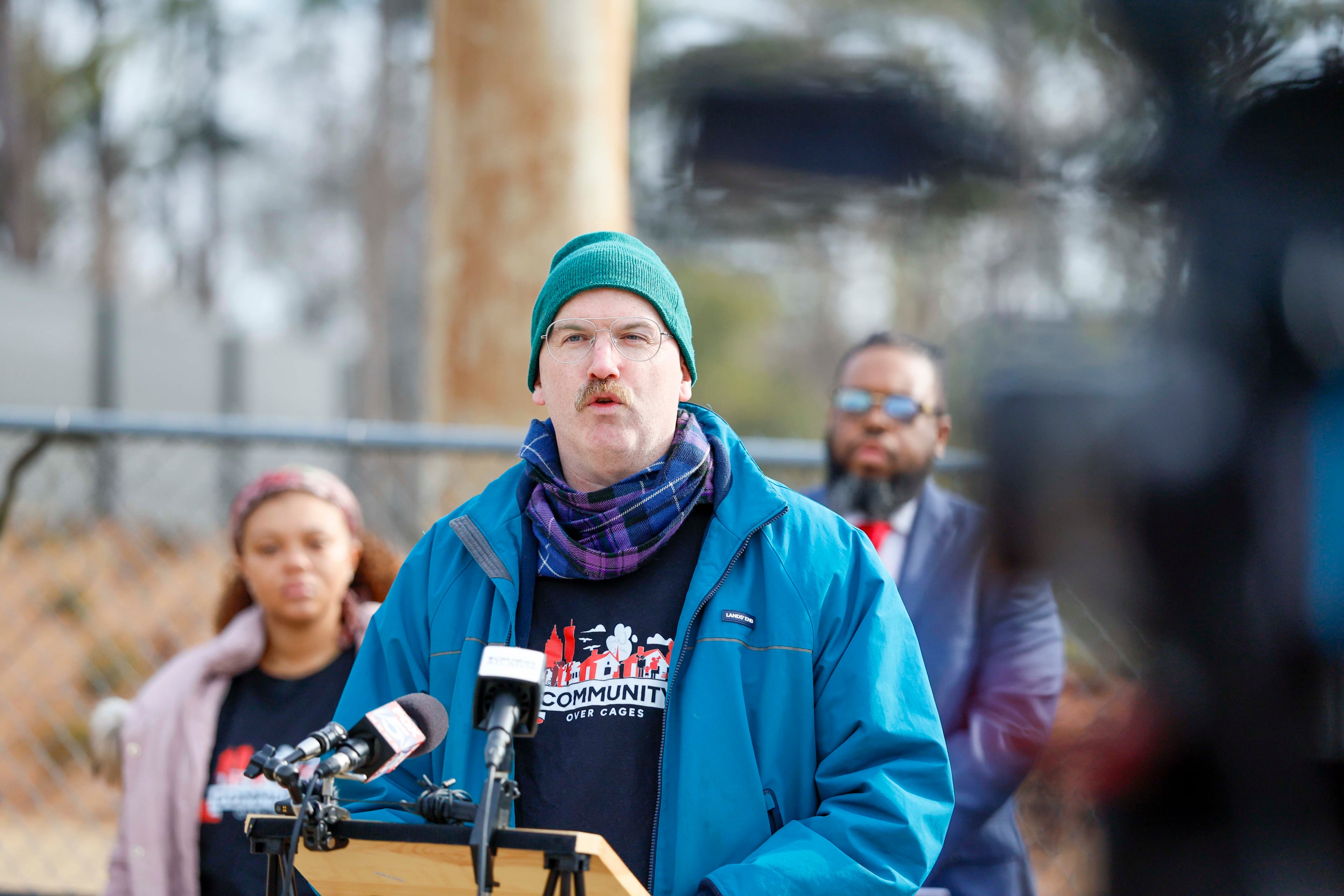
Michael Collins is the director of Play Fair ATL, a group focused on the city’s treatment of human rights issues ahead of the FIFA World Cup coming to Atlanta this summer.
Collins called Rice Street “a death trap” and “an unconstitutional hellhole,” and said one of the most significant drivers of Fulton’s overcrowding is its failure to move criminal cases through the system.
“People are languishing in cells, not because they’ve been convicted and found guilty, but because the system is stalled,” Collins said.
He said Fulton’s “human rights crisis” contradicts the image Atlanta is selling to the world in its bid to lure hundreds of thousands of fans here this summer for the World Cup.
About the Author