What comes next for Venezuelans in Atlanta after Maduro’s capture?

Andrea Paiva was brought to tears Saturday morning as she caught up on overnight messages from loved ones informing her that Venezuelan leader Nicolás Maduro and his wife had been captured in a U.S. operation.
The 32-year-old, who moved to metro Atlanta when she was 3, has only seen her family a few times during the regimes of Maduro and his predecessor, Hugo Chávez. But after waking up to the news inside her apartment near The Battery, Paiva said she felt hopeful for the future.
“It’s really sad our family hasn’t been able to be united because eight million Venezuelans are displaced because of the regime we’ve been under,” Paiva told the Atlanta Journal-Constitution on Sunday. “This is something we’ve been waiting for my whole life.”

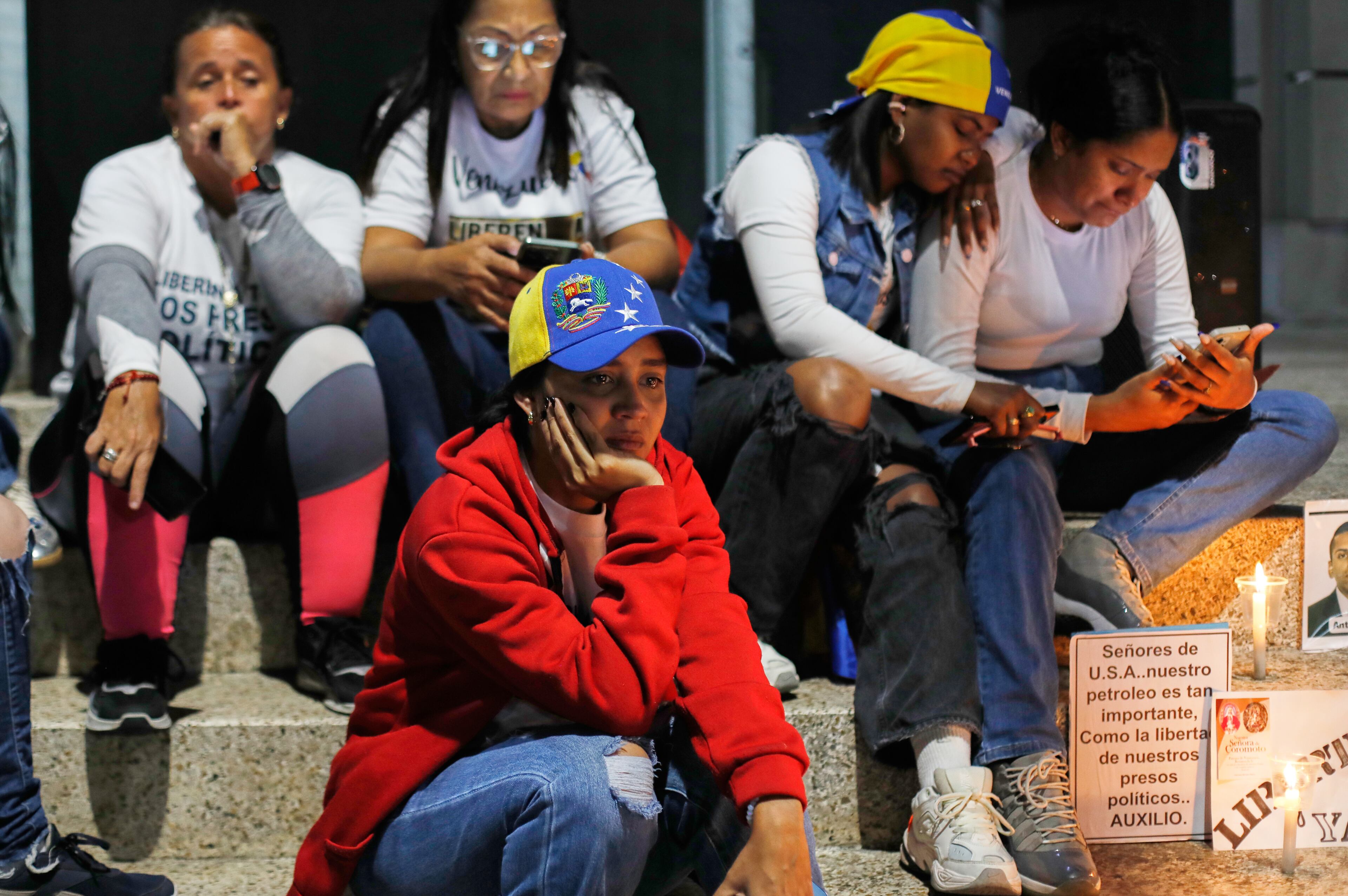
Paiva was one of dozens of Venezuelans on the Atlanta Beltline who proudly waved flags and dressed up in the yellow, blue, and red.
Many chanted “Viva Venezuela” and “Afuera Maduro” during the gathering near Monroe Drive. It was organized by Comando Con Vzla, which supports Venezuela’s opposition leaders Maria Machado and Edmundo González.
Roberto Almeida, 32, said he attended the rally after seeing dozens of Venezuelans killed during the protests against Maduro in 2014. Freedom is limited in the country, and anyone who speaks out against that administration would be put in jail or silenced, he said.
So after living in Atlanta for about 10 years, the thought of Maduro being gone seemed impossible. Almeida learned the news at about 2 a.m., though his excitement kept him up for another five hours.
Others called it a surprise and a new beginning.
“People are not free in Venezuela,” he said. “We hope to get a good transition of the government so they can run the country as Venezuela deserves. I have my kids here; they were born here. In the future, they’ll be able to go and visit when it’s safe.”
A few Venezuelans held up signs at the rally supporting President Donald Trump, who announced the capture Saturday after an escalation by the U.S. military against the South American country in recent months.
After the operation, Trump said the U.S. would temporarily run the country and tap its vast oil reserves to sell to other nations. He also vowed to fix Venezuela’s oil infrastructure and said oil companies would pay for its rebuilding.
While most Venezuelans at Sunday’s gathering were optimistic, some are skeptical about the transition.
The Trump administration recently terminated the Temporary Protected Status of Venezuelans that had allowed them to live in the U.S. and escape the regime. So their opinion of Trump has been mixed, said Euclides Martinez, who has lived in Atlanta for about six years.
“They don’t have the protection right now, and they don’t want to take the risk of being here and, you know, ICE can be around that kind of thing,” Martinez said.
“That’s why we can say we are in that love and hate position about the Trump administration, because it’s really difficult for people that is here.”
The attack and capture have also led to concerns from Atlantans who worry about Trump’s priorities and getting into another conflict.
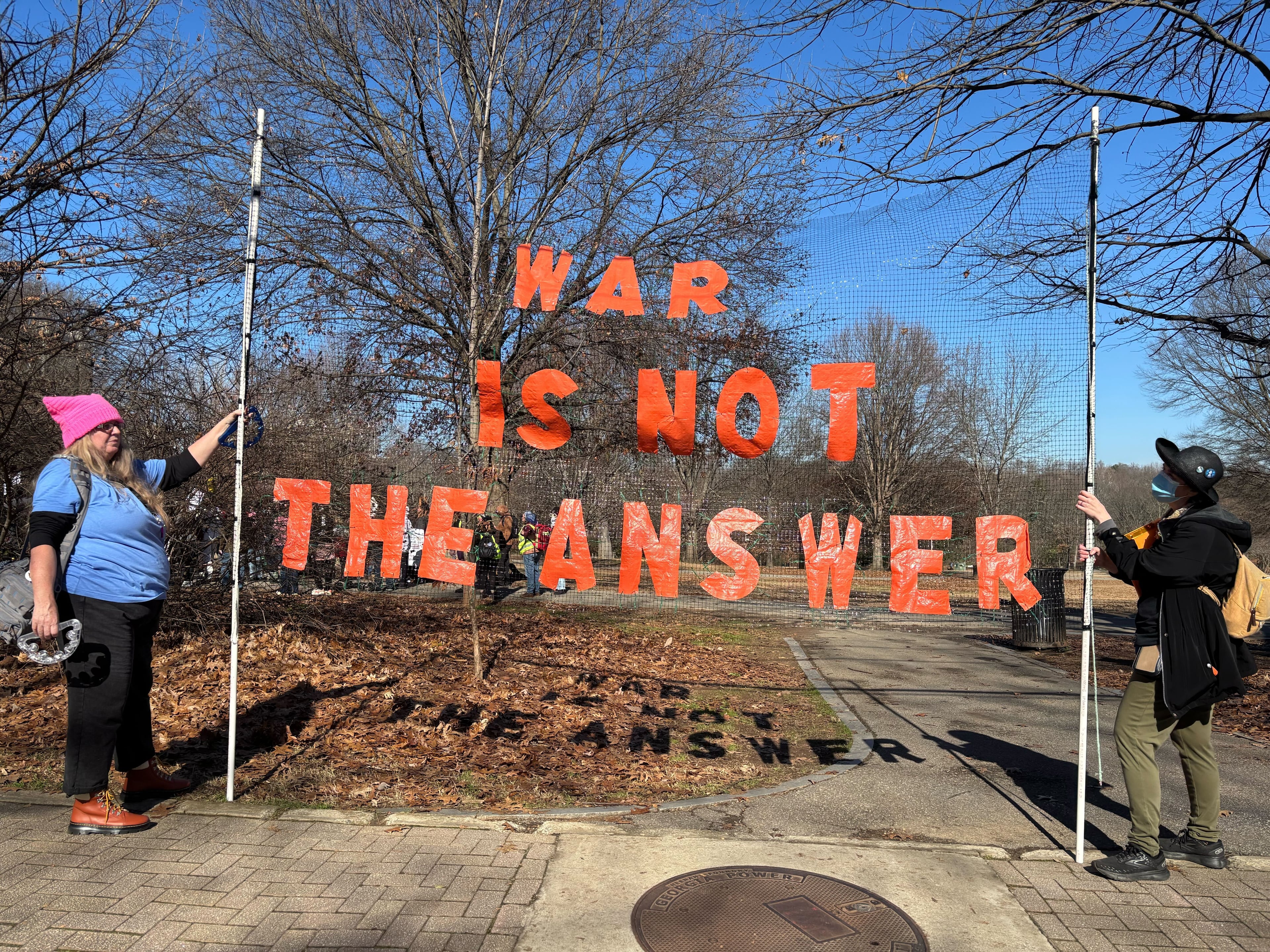
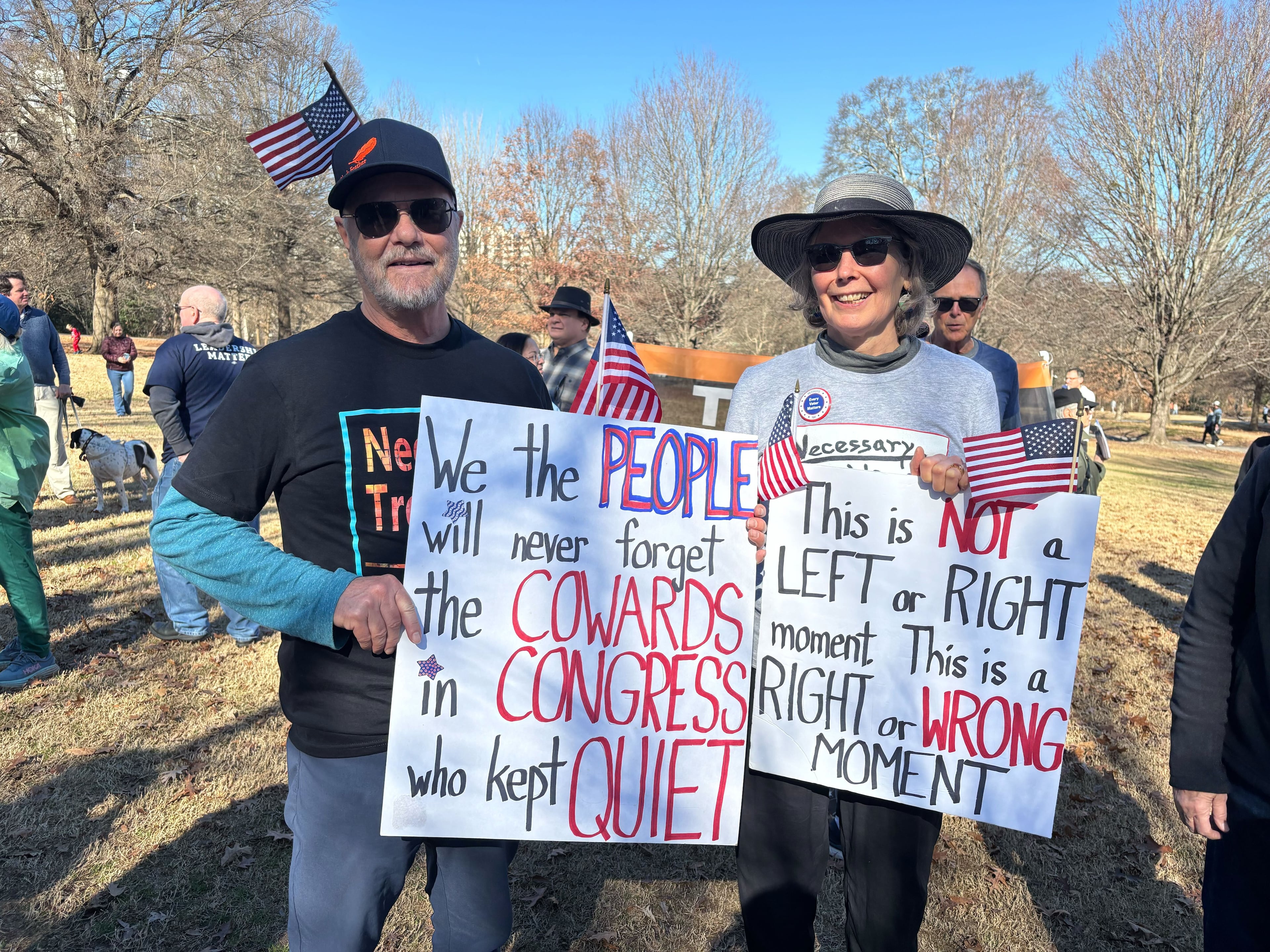
Sunday, dozens of Atlantans attended a separate rally at Piedmont Park to protest the operation and the actions by the current administration.
It was organized by the Democratic Socialists of America and the 50501 Movement, with the attendees shouting “no justice no peace” and holding signs that read “no blood for oil,” among others.

“I understand Venezuelans want change. That’s great. But the way we’ve done it is not the way to do things. This is Putin-esque. You want to change things in Ukraine, you invade,” longtime DeKalb County resident Michael Beach told The Atlanta Journal-Constitution at the park.
“I mean, come on. What we want to support is the U.N. International order and help get rid of dictators. Unfortunately, we now have one of our own, and that, to me, is really troubling.”
Trump’s actions likely violated international law, exceeded his constitutional authority in domestic law, and were an “expansion of presidential power beyond almost all recognition,” said Laurie Blank, a professor of law and Director of the International Humanitarian Law Clinic at Emory University School of Law.
She said the president can use power when attacked, like after 9/11, but that wasn’t the case here. He also needs authorization from Congress, which didn’t happen.
The history of World War II shows why that rule matters, she said, with Russia currently violating it in the war in Ukraine. She urged Congress to step in and for the people of Venezuela to be able to pick their own government.
“So it seems like we’ve gone back a couple 100 years in terms of how the world order works and what the rules are,” Blank told the AJC.
“We have a very firm and established prohibition in international law on one state using force against another state that was violated rather dramatically by these attacks. There was no U.N. Security Council authorization, and there was no self-defense basis. I’m not really even seeing one attempted to be made here.”
Paiva’s mother, Antonella Dauri, 65, said she hoped that Machado would be put in charge of the country instead of Delcy Rodríguez, who has since taken command and is also the minister of finance and oil.
Until then, Venezuelans in metro Atlanta will ride that wave of optimism into an unknown future.
“Maybe in one year, we can have real democracy in Venezuela,” Dauri said. “But we don’t know exactly what is going to happen.”