Lawmakers seed study to deepen Savannah port amid environmental questions

Editor’s note: This article was updated with additional information from the U.S. Army Corps of Engineers.
SAVANNAH ― Georgia’s bustling world trade route, the Savannah River, moved toward a deeper and wider future this month, albeit with lawmakers, not dredge ships, digging in.
The United States Congress recently passed a budget bill that includes $500,000 to fund the start of a 3-year feasibility study to deepen the 40-mile shipping channel that serves the Georgia Ports Authority’s Savannah terminals. The deepening project was prioritized as part of the Water Resources Development Act of 2024 passed in December 2024.
Savannah is the nation’s third-busiest cargo container port, and its sister facility in Brunswick is the U.S.’s leader for autos and wheeled and tracked vehicles. Port facilities support 651,000 jobs and contribute $174 billion in sales activity annually in the state, a 2025 University of Georgia study showed.
The deepening study’s launch comes four years after the last harbor expansion, which dredged the channel from 42 feet to 47 feet. Port authorities are celebrating the news, but critics are concerned about the potential environmental impact.
Deepening would allow bigger ships
Georgia Ports Authority officials say the channel needs to be deepened to 50 feet or more for the terminals to remain competitive with other ports along the coast, especially in terms of attracting larger ships. Rivers leading to ports facilities in New York; Norfolk, Virginia; Charleston, South Carolina; and Miami all measure 50 feet or deeper.
Savannah is seeing increasing port calls from vessels traveling trans-Atlantic trade routes originating in India, Vietnam and other ports in southwest Asia. Ocean carriers typically use wider ships along those tracks because they don’t have to traverse the narrow locks of the Panama Canal. Those vessels can carry up to 9,000 more containers than those that call on Savannah via the Panama Canal and ride deeper in the water.
On average, 31 of those larger ships dock in Savannah monthly, or about 22% of all vessel calls. They access the port during higher tides or with lighter loads to account for the channel depth. Trans-Atlantic routes from Asia accounted for 35% of Savannah’s cargo traffic in 2025.

Ports Authority CEO Griff Lynch told his board of directors in a meeting Tuesday the study funding is the “first step” toward “another big win.” In an interview afterward, he said the Savannah port’s profile should ensure the deepening process moves faster than the previous one, which stretched more than 25 years from study to completion because of funding lapses.
“In the 1990s, Georgia’s ports weren’t what they are today — we’re on the map,” Lynch said. “I believe this deepening will be done in a fraction of the time as the last one.”
The review results will contribute to the timing. The U.S. Army Corps of Engineers conducts the study and would manage the deepening project. Typically, the agency employs a “three-three-three” approach to major infrastructure improvements: three years for review, three years for planning and permitting and three years for digging.
A Corps spokesperson said the study would begin once the appropriated funds are received and an agreement is reached with the state on a feasibility cost-sharing agreement. The review is projected to cost $3 million.
Environment concerns include Floridan aquifer
The study, once published, will be heavily scrutinized by conservationists and environmentalists. Concerns about what deepening the channel would mean to the Savannah River fisheries, the Savannah National Wildlife Refuge and saltwater intrusion into the Floridan aquifer marked the review of the last dredging project.
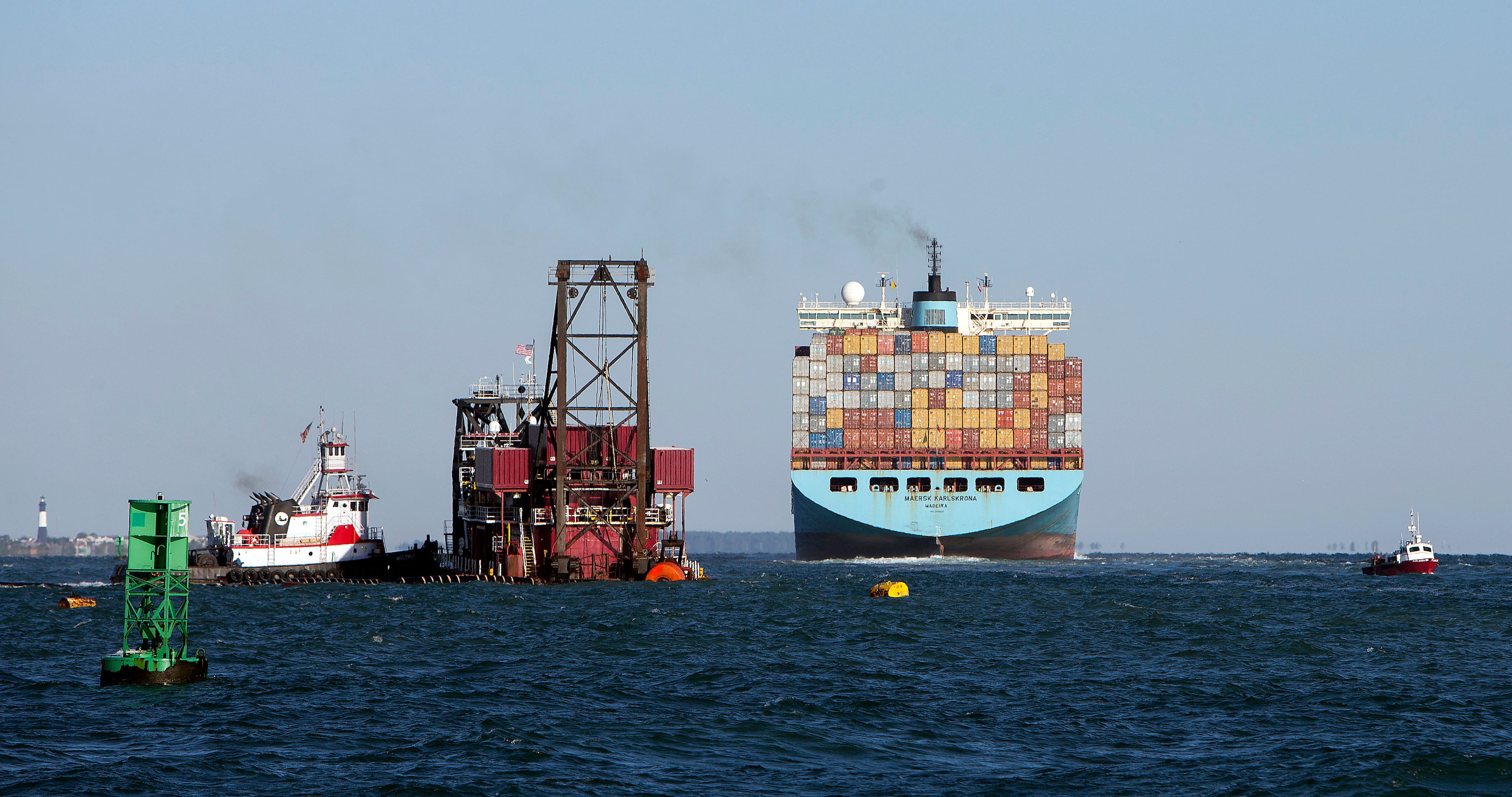
In the 2022 deepening, the U.S. Army Corps of Engineers ultimately decided to limit the dredging to 47 feet — versus a request for 49 feet — and implemented several environmental mitigation measures, such as a system to inject dissolved oxygen into the river to counter the effects of more seawater coming upstream.
Going deeper will magnify those worries, said Tonya Bonitatibus with the Savannah Riverkeeper, a nonprofit focused on water management and environmental issues along the 300-mile river. Removing more of the riverbed will mean digging into the confining layer above the Floridan aquifer, a drinking water source for about 10 million people in the Southeast.
It would also allow saltwater to move farther upstream and near a new drinking water intake being built in Effingham County. The access facility is part of a $500 million, state-backed project meant to cut coastal residents’ reliance on the aquifer.
Meanwhile, planned data center projects near Augusta will also draw water from the river.
“It’s going to be a massive race to see who controls the water because whoever does will make the most money,” Bonitatibus said. “Here we go again.”
Chris DeScherer of the Southern Environmental Law Center, another watchdog group, echoed Bonitatibus’ concerns and said the new study should take into account something the last review didn’t: how harbor expansion-driven growth impacts a region.
“During the last deepening, the agencies refused to consider how the expansion project would fuel sprawl, including the proliferation of commercial warehouses,” he said. “The next deepening must carefully evaluate these and other concerns to ensure protection of the Savannah River and the communities it supports.”
About the Author

Adam Van Brimmer is a journalist who covers politics and Coastal Georgia news for The Atlanta Journal-Constitution.

