Fill ‘er up. At the pump, is premium or regular best for your ride?
Choosing between regular and premium gasoline is one of the most common — and most misunderstood — decisions drivers make. The confusion is expensive, because “premium” sounds like an upgrade even when it isn’t.
Here’s the simple rule that saves real money: buy the fuel your engine is designed to use. If the owner’s manual says regular is fine, premium won’t give you extra horsepower, extra mileage or extra engine life. It will mostly give you a bigger receipt.
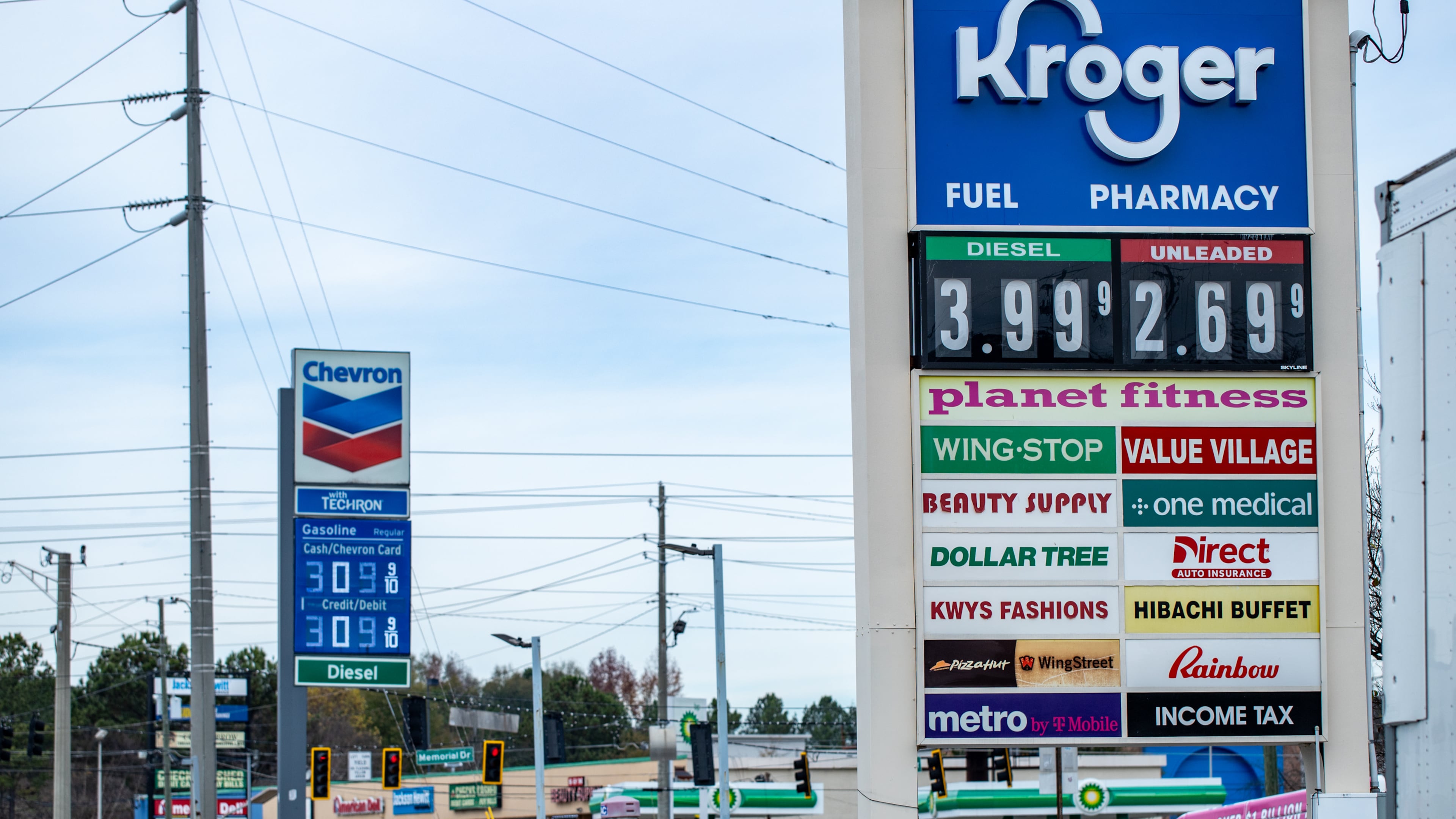
And that receipt can add up quickly. According to AAA, the average price of regular unleaded in Georgia was about $2.66 per gallon on Monday, compared to $3.53 for premium — a gap of 87 cents. Fill a 15-gallon tank and you’re paying roughly $13 more for premium. Do that weekly, and you’re well into “new tires” money over a year.
Car shopping tip: Before you buy, check whether the engine needs premium. Over a few years, that fuel bill can materially change the cost of owning the vehicle.
What ‘premium’ actually means
Premium gasoline is mostly about octane, the number on the yellow pump sticker. In much of the country, regular is 87 and premium is typically 91 to 94.

Octane is not a measure of how “strong” the gas is. It is a measure of the fuel’s resistance to knocking, also called pinging or detonation. Knock happens when the air-fuel mixture ignites at the wrong time inside the cylinder. Mild, occasional knocking is not always catastrophic, but sustained knocking can damage an engine.
Why some engines need it
Many modern engines squeeze more power from less fuel by raising pressure and heat in the combustion chamber. Turbochargers and high compression ratios are two common ways to do that. Higher octane fuel is better at handling those conditions without knocking, which is why premium is often specified for performance cars and some turbocharged family vehicles, too.
But “often” is not “always.” Plenty of turbocharged engines are designed to run on regular, and some luxury models are tuned to work on regular even if they deliver their best numbers on premium. There is no reliable rule of thumb based on brand, price or whether the vehicle is “sporty.”
Required vs. recommended
What matters is the language in your owner’s manual and any label inside the fuel door. Automakers might say premium is “required” or “recommended.”
Required means the engine was designed around higher octane. The vehicle’s computer can sometimes protect the engine if you use regular in a pinch, but it will usually reduce spark timing and boost to prevent knock. That protection can mean slower acceleration and lower fuel economy, and it is not a good long-term plan.
Recommended means the engine can run on regular, but premium might deliver full advertised performance — especially in hot weather, at high altitude, while towing or when you demand hard acceleration. If you don’t notice a difference, your wallet has the best vote.
If your vehicle is designed for 87, premium generally doesn’t provide a measurable benefit.
What happens if you use the ‘wrong’ fuel?
- If your car is designed for regular and you buy premium:
Nothing bad happens mechanically. You simply spend more money for little to no return.
- If your car requires premium and you buy regular once:
In most cases, you won’t immediately damage the engine. You might notice sluggish acceleration, and the engine may pull timing to prevent knock.
- If you do it regularly in an engine that requires premium:
That’s where the risk rises. Persistent knock can mean hotter operation, more stress and potentially expensive issues over time. The real-world impact varies by engine design and driving conditions, but it’s not a smart place to gamble.
Can you mix grades?
Topping off with a different grade is generally OK. If you mix half a tank of 87 with half a tank of 93, you’ve effectively created something in between.
What mixing won’t do is create a “best of both worlds” bargain if your car only needs regular. The engine can’t “unlock” extra benefits from octane it doesn’t need.
What about ethanol?
Ethanol content is separate from octane.
Many stations sell blends such as E10, which is about 10% ethanol, and sometimes E15. Premium fuel may or may not contain ethanol depending on local supply. E85 is a high-ethanol fuel intended only for flex-fuel vehicles. Check your manual and the pump label before choosing a higher-ethanol blend.
A smarter upgrade: detergents
If you want to spend a little extra where it can help, consider gasoline that meets the Top Tier detergent standard. The pitch is simple: more cleaning additives can reduce deposits that build up in fuel injectors and intake valves. Those deposits can affect drivability and emissions over time. The key point for consumers is that the detergent standard applies across grades. You can often buy regular that is Top Tier and get the same cleaning benefit as premium.
The takeaway
Premium is not “better” for every engine. It is the right tool for engines that need knock resistance. For everyone else, it is mostly a pricey myth. Before you tap the premium button, take a few seconds to check the manual, the fuel-door label or the automaker’s website. Your car will run the way it was designed, and your fuel budget will, too.
Chris Hardesty is a veteran news researcher and editor who provides advice on buying, owning and selling cars for Kelley Blue Book and Autotrader.
The Steering Column is a weekly consumer auto column from Cox Automotive. Cox Automotive and The Atlanta Journal-Constitution are owned by parent company, Atlanta-based Cox Enterprises.